
Dangerous Drugs Lawsuits 2026: Product Liability Claims & Settlements
Dangerous drugs lawsuits can involve prescription medications, consumer products, infant formula, cosmetic products and other manufactured products alleged to have caused serious injury. Start by identifying the product and injury, then continue to the matching claim guide, settlement research or calculator.
Key Facts About Dangerous Drug and Product Liability Lawsuits
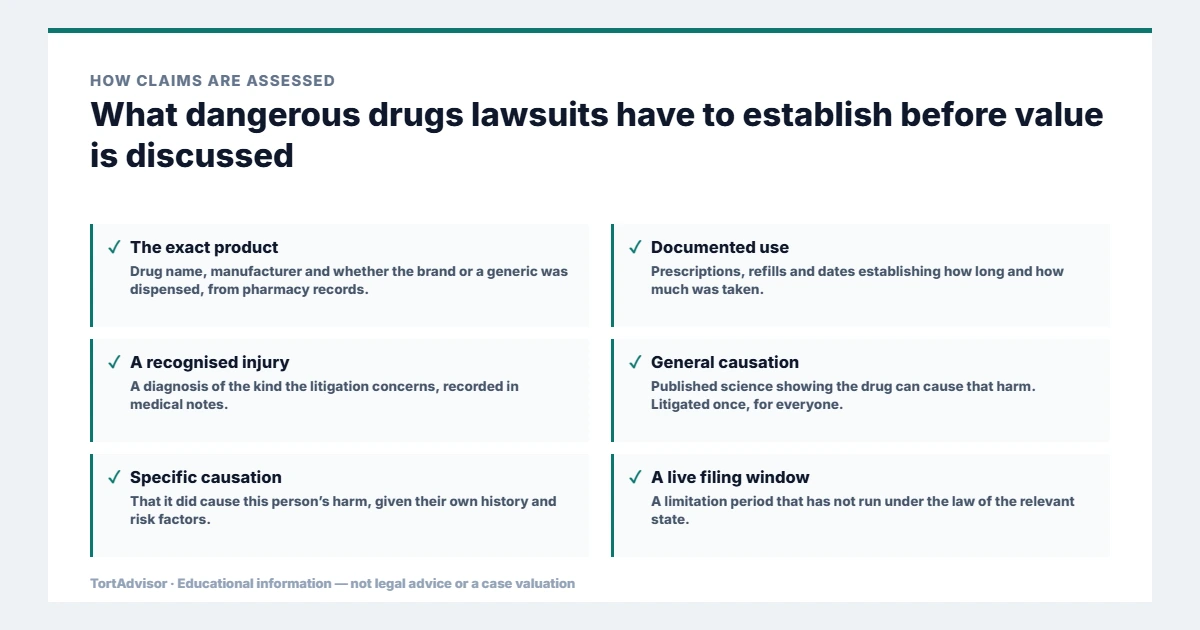
Dangerous drugs lawsuits can involve different legal theories and different types of evidence. The most important first step is identifying exactly what product was used and preserving records showing the injury, exposure and resulting medical treatment.
Prescription records, packaging, receipts, product labels, lot numbers or other records may help establish exactly what drug or product was involved.
Medical records, diagnoses, imaging, surgery records and treatment history may help document the alleged injury and its severity.
A claim generally requires evidence supporting a connection between the product or medication and the injury alleged in the lawsuit.
Statutes of limitation, discovery rules and court-specific deadlines can affect whether a claim may still be filed.
Dangerous Drugs Lawsuits: Drug & Product Liability Claim Guides
Use this directory of dangerous drugs lawsuits to review allegations, potential eligibility considerations, medical evidence, litigation developments and claim-specific information. A topic appearing here does not mean every person qualifies or that compensation is guaranteed.
The dockets below show where dangerous drugs lawsuits are currently pending. A pending count describes caseload at a point in time, not the number of claims that will recover anything.
Depo-Provera Lawsuit
Meningioma allegations, use history, medical proof, MDL 3140 and filing considerations.
Suboxone Lawsuit
Dental injury allegations involving buprenorphine/naloxone film, treatment history, medical records and MDL 3092.
Ozempic Lawsuit
Gastroparesis and intestinal-injury allegations, medication history, treatment records, warnings and litigation developments.
Talcum Powder Lawsuit
Ovarian-cancer and mesothelioma allegations, talc product-use evidence and current litigation considerations.
Hair Relaxer Lawsuit
Chemical hair-straightener use, cancer allegations, diagnosis evidence, exposure history and claim considerations.
NEC Baby Formula Lawsuit
Claims involving premature infants, cow’s-milk-based formula, necrotizing enterocolitis, surgery and long-term complications.
Tylenol Autism Lawsuit
Research claims alleging an association between prenatal acetaminophen exposure and autism or ADHD diagnoses, including litigation and evidence developments.
Oxbryta Lawsuit
Claims involving Oxbryta (voxelotor), treatment history, vaso-occlusive crisis, serious complications and product withdrawal developments.
Dangerous Drugs Lawsuits: Settlement Amounts & Claim-Value Resources
Use claim-specific settlement research only where TortAdvisor currently maintains an independent live settlement page. These pages distinguish educational projections from confirmed settlements, verdicts or court-approved programs.
There is no published per-claim figure for dangerous drugs lawsuits as a category. What a claim is worth depends on the drug, the injury and the state whose law applies, so any single number quoted for dangerous drugs lawsuits as a whole averages unlike things.
Depo-Provera Settlement Amounts
Review projected meningioma claim tiers, evidence factors and confirmed-versus-projected MDL 3140 settlement information.
Talcum Powder Settlement Amounts
Compare educational ovarian-cancer and mesothelioma value tiers, product-use evidence and damages factors.
Settlement Amounts
Browse TortAdvisor’s current settlement-value research across dangerous drugs, toxic exposure, personal injury, abuse and other claim categories.
Dangerous Drug Settlement Calculators
Compare all eight current drug, formula and product-liability calculators from the main settlement calculator directory.
How Dangerous Drug and Product Liability Lawsuits Work
Dangerous drugs lawsuits and related product liability claims can involve allegations such as failure to warn, defective design, manufacturing defects, misrepresentation or other conduct depending on the facts and governing law. Attorneys typically begin by identifying the product, injury, exposure timeline and potential defendants.
Start by identifying the specific medication, product, manufacturer, model, lot number or other identifying information whenever possible.
Collect medical records showing the diagnosis, symptoms, hospitalization, procedures, medications and ongoing treatment.
Organize when the product was used, when symptoms began, when the injury was diagnosed and when a potential connection was discovered.
An attorney can review potential defendants, available legal theories, jurisdiction, filing deadlines and any applicable MDL orders.
Evidence That May Support a Drug or Product Injury Claim
Evidence in dangerous drugs lawsuits and product liability claims is claim-specific. Preserving product and medical records early can make it easier to evaluate whether the facts match the allegations involved in a particular lawsuit.
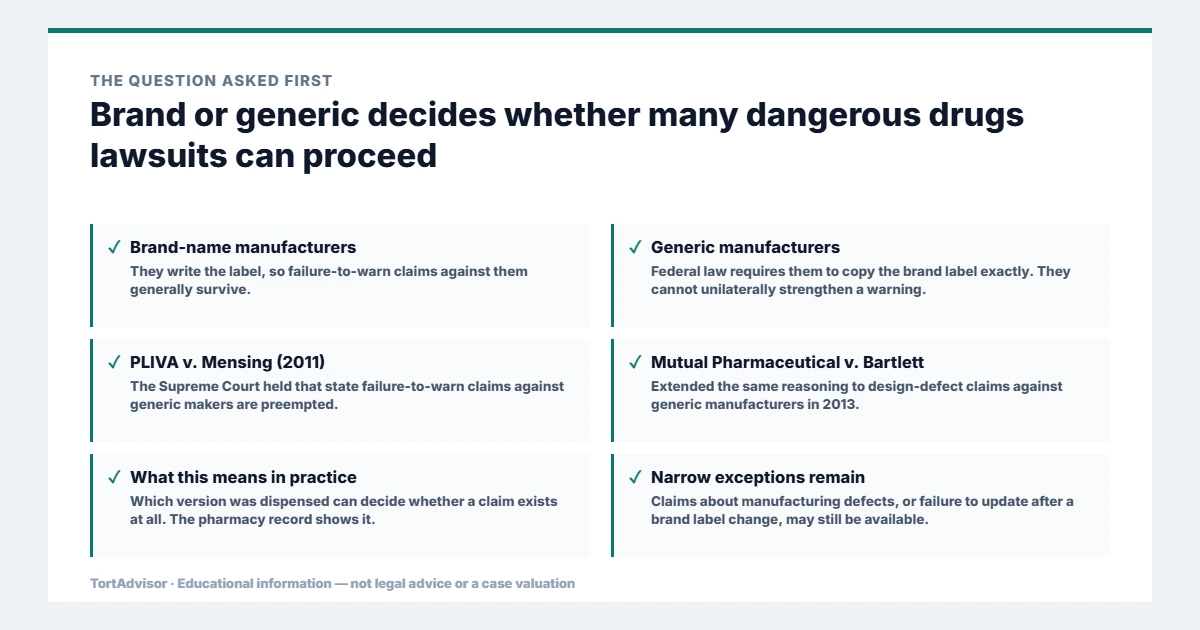
Evidence in dangerous drugs lawsuits is unusual in that most of it already exists before anyone considers a claim. Pharmacy and prescribing systems hold it, and dangerous drugs lawsuits often turn on obtaining those records before they are purged.
Product & Exposure Records
- Prescription and pharmacy records
- Product packaging, labels or receipts
- Lot, model or serial numbers when available
- Medication start and stop dates
- Dosage and duration of use
- Purchase or exposure history
- Photos of the product or packaging
Medical & Damages Records
- Diagnosis and treatment records
- Hospital and emergency-room records
- Imaging, pathology and laboratory results
- Surgery and procedure records
- Medical bills and out-of-pocket costs
- Lost wage or disability documentation
- A dated symptoms and treatment timeline
Compensation Factors in Drug and Product Injury Claims
There is no universal settlement amount for dangerous drug and product liability lawsuits. Potential compensation depends on the injury, medical causation, liability evidence, economic losses, applicable law, available defendants and the individual facts of the case.
Compensation in dangerous drugs lawsuits is assessed claim by claim rather than by any schedule, because two people taking the same medicine can have entirely different outcomes and histories.
Economic Damages
- Past medical expenses
- Future medical treatment
- Lost wages
- Reduced earning capacity
- Rehabilitation and long-term care
- Other documented financial losses
Other Potential Damages
- Pain and suffering
- Permanent impairment or disability
- Disfigurement or loss of function
- Loss of enjoyment of life
- Wrongful-death damages where applicable
- Punitive damages where permitted and supported
For broader payout research, compare TortAdvisor’s Settlement Amounts hub. To organize claim-specific value factors, use the Dangerous Drugs & Product Liability settlement calculators. For the broader litigation hierarchy, return to the Mass Tort Lawsuits hub.
Official Drug Safety and Federal Litigation Sources
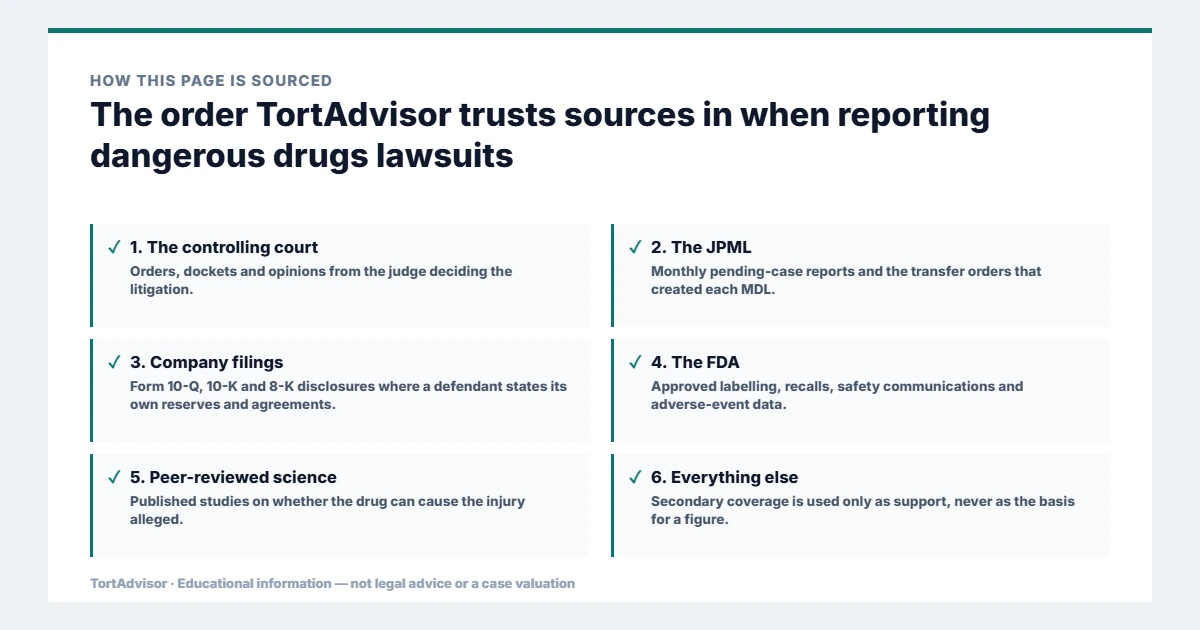
For dangerous drugs lawsuits, use primary regulatory and federal-court sources to verify safety communications, labeling changes, MDL status, and major procedural developments before relying on secondary reporting.
Every status and figure published here about dangerous drugs lawsuits is traced to a primary source before it appears on the page.
Source review date: August 20, 2026. FDA safety information, federal MDL status, recalls, court orders and filing requirements can change after publication.
Dangerous Drugs Lawsuits FAQ
What is a dangerous drug lawsuit?
Dangerous drug and product liability lawsuits may allege that a medication caused injury and that a manufacturer or another responsible party is legally liable under a theory such as failure to warn, defective design, manufacturing defect or another product-related claim.
These are the questions readers ask most often about dangerous drugs lawsuits.
SourceFDAAEMS / FAERS
What is a product liability lawsuit?
Dangerous drug and product liability lawsuits can seek to hold manufacturers, sellers or other potentially responsible parties accountable for injuries allegedly caused by defective or unreasonably dangerous products. The exact legal requirements differ by state and claim type.
How long do I have to file dangerous drug and product liability lawsuits?
Filing deadlines vary by state, injury and circumstances. Discovery rules may affect when a limitations period begins, and some coordinated cases can have additional court deadlines. A claim-specific deadline review is important.
SourceN.Y. CPLRSec. 214-c
Do I have to report a side effect to the FDA before filing a lawsuit?
An FDA adverse-event report is a separate process from filing a civil lawsuit. Consumers and health professionals may voluntarily report certain medical-product problems through FDA MedWatch, but legal filing requirements depend on the particular claim and jurisdiction.
SourceFDAMedWatch
What is multidistrict litigation (MDL)?
MDL is a federal procedure that can centralize civil cases involving common factual questions for coordinated pretrial proceedings. Centralization does not automatically turn the lawsuits into one case or establish that a defendant is liable.
How much are dangerous drug and product liability lawsuits worth?
There is no standard payout for dangerous drug and product liability lawsuits. Potential value can depend on injury severity, medical causation, surgeries or long-term treatment, lost income, permanent impairment, liability evidence, venue and other case-specific factors.
SourceJPML1 Sep 2026
Does every lawsuit listed on this page currently accept new claims?
No. Litigation status, attorney screening criteria, jurisdictional requirements and filing deadlines can change. A topic appearing on TortAdvisor means it is a legal claim or litigation topic that readers may need to research; it does not guarantee that a new claim can be filed or accepted.
SourceJPML1 Sep 2026
How much does it cost to have a potential claim reviewed?
Initial case reviews are commonly offered without an upfront consultation fee. Attorney fees, representation terms and contingency arrangements should be confirmed directly in the written agreement with the attorney handling the matter.
Request a Free Drug or Product Claim Review
If you are researching dangerous drugs lawsuits because a medication or consumer product may have contributed to a serious injury, you can submit the product, diagnosis, treatment and timing information you know now for review.
- No fee to submit information
- Claim-specific intake questions
- Attorney representation is not guaranteed
- Submitting information does not create an attorney-client relationship
See Whether Your Claim May Qualify
Answer what you know. Avoid submitting unnecessary sensitive information.