
Ozempic Lawsuit 2026: MDL 3094, Gastroparesis & GLP-1 Claims
Ozempic lawsuit claims allege that manufacturers of GLP-1 medications failed to adequately warn patients and prescribers about serious gastrointestinal injuries, including gastroparesis and other severe digestive complications. The federal GI-injury litigation is centralized in MDL 3094 in the Eastern District of Pennsylvania, and the manufacturers deny the allegations.
From here you can work through the Ozempic settlement calculator, compare reported settlement amounts across torts, and read the 2026 Ozempic gastroparesis update.
Choose the Ozempic Lawsuit Information You Need
Use the lawsuit guide for eligibility and litigation status, then move to the matching calculator, settlement research or dated update when you need a narrower answer.
What the Ozempic Lawsuit Alleges
Federal GLP-1 gastrointestinal-injury cases allege that manufacturers knew or should have known that certain GLP-1 receptor agonists could cause gastroparesis and other serious gastrointestinal injuries, and that warnings or representations about those risks were inadequate. The Eastern District of Pennsylvania describes MDL 3094 as involving common questions concerning gastroparesis and other GI injuries, warnings to patients and prescribers, and allegedly false, misleading or incomplete safety representations. The Novo Nordisk defendants and Eli Lilly deny the allegations.
Failure to Warn
Plaintiffs contend that warnings did not adequately communicate the risk or severity of certain gastrointestinal complications during relevant periods.
Delayed Gastric Emptying
GLP-1 drugs can delay gastric emptying. Product labels also address severe GI reactions and gastroparesis-related precautions.
Liability Is Disputed
The manufacturers contest liability. Medication use, diagnosis, alternative causes, warnings, causation and damages remain case-specific.
Who May Qualify for an Ozempic Lawsuit?
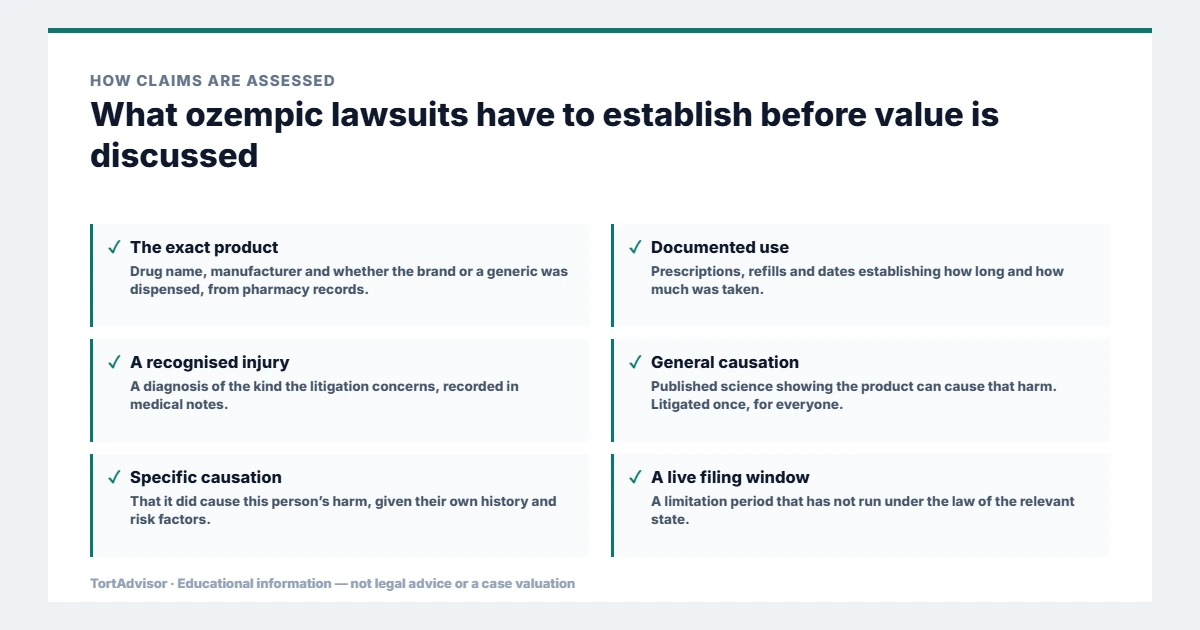
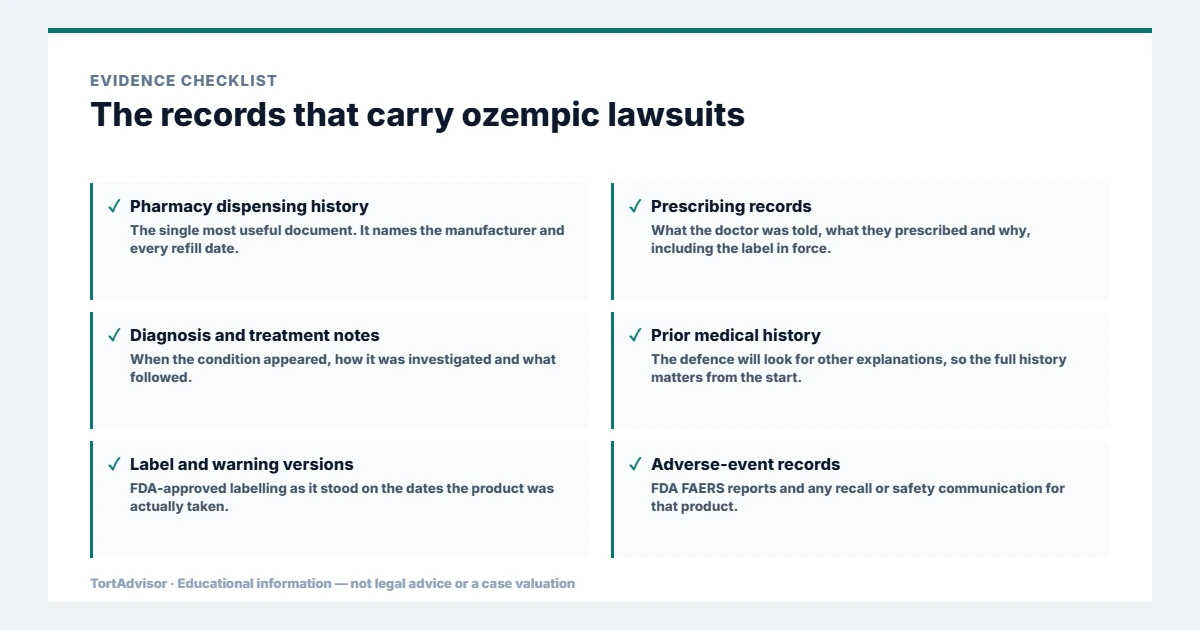
There is no single public eligibility rule that automatically determines whether someone has a viable Ozempic or GLP-1 claim. A case review generally considers medication use, diagnosis, symptom timing, medical history, treatment, warnings in effect at the time, state law and the evidence connecting the claimed injury to the drug.
Medication Evidence
- Pharmacy or prescription records identifying the GLP-1 medication.
- Approximate start/stop dates and dose changes.
- Prescribing clinician and treatment indication.
Injury Evidence
- Documented gastroparesis or delayed gastric emptying.
- Severe vomiting, dehydration, hospitalization or nutrition complications.
- Intestinal obstruction, ileus or another serious documented GI injury.
Timing & Alternative Causes
Timing matters, but so can diabetes, prior GI disease, surgery, other medications and other potential causes of delayed gastric emptying.
Off-Label Use
Off-label use does not automatically decide whether a claim is valid. Product, warning history, diagnosis, causation and applicable state law still require case-specific review.
Ozempic MDL 3094 Status in August 2026
GLP-1 gastrointestinal-injury cases are coordinated in the Eastern District of Pennsylvania before Judge Karen S. Marston as MDL No. 3094. As of October 1, 2026, JPML reports 4,025 pending actions and 4,139 historical actions.
February 2024 — MDL 3094 Created
Federal GLP-1 gastrointestinal-injury cases were centralized for coordinated pretrial proceedings.
January 2026 — Streamlined Docket
The court created a related streamlined docket for master pleadings, core orders, dispositive motions and Rule 702 materials.
April 30, 2026 — Expert Schedule Amended
Case Management Order No. 32 first set Rule 702 hearings for September 10–18, 2026; an order of August 28, 2026 rescheduled the evidentiary hearing to September 14–18, 2026.
October 1, 2026 — 4,025 GI Actions Pending
JPML listed 4,025 pending MDL 3094 actions and 247 pending actions in separate NAION MDL 3163.
Gastroparesis and Other Gastrointestinal Injuries
The National Institute of Diabetes and Digestive and Kidney Diseases defines gastroparesis, also called delayed gastric emptying, as a disorder that slows or stops movement of food from the stomach to the small intestine without a mechanical blockage. Symptoms can include early fullness, prolonged fullness after meals, nausea, vomiting, bloating and upper abdominal pain.
Every status, deadline and figure published on this page about ozempic lawsuits is traced to a primary source before it appears.
Gastroparesis
Diagnosis generally requires more than symptoms alone. Clinicians may exclude obstruction and use testing that measures gastric emptying.
Severe Vomiting
Repeated vomiting can contribute to dehydration, electrolyte problems, weight loss, emergency treatment and hospitalization.
Nutrition Complications
Severe delayed gastric emptying may contribute to poor intake, malnutrition, weight loss and difficulty controlling blood glucose.
GLP-1 Drugs Identified in the Federal GI Litigation
The Eastern District of Pennsylvania’s MDL 3094 description specifically identifies Ozempic, Wegovy, Rybelsus, Trulicity and Mounjaro when describing the centralized GI-injury cases. Product identity should be verified from pharmacy records rather than assumed from drug class alone.
| Medication | Active ingredient | Manufacturer | MDL 3094 court description |
|---|---|---|---|
| Ozempic | Semaglutide | Novo Nordisk | Specifically identified |
| Wegovy | Semaglutide | Novo Nordisk | Specifically identified |
| Rybelsus | Semaglutide | Novo Nordisk | Specifically identified |
| Mounjaro | Tirzepatide | Eli Lilly | Specifically identified |
| Trulicity | Dulaglutide | Eli Lilly | Specifically identified |
What the Current Ozempic Label Says About GI Risks
The current FDA-approved Ozempic prescribing information states that Ozempic use has been associated with gastrointestinal adverse reactions, sometimes severe, and that severe GI reactions have also been reported postmarketing with GLP-1 receptor agonists. The label states that Ozempic is not recommended in patients with severe gastroparesis.
The prescribing information also states that Ozempic delays gastric emptying and may affect absorption of oral medications. These statements are important regulatory and medical context, but they do not establish individualized legal causation by themselves.
Evidence That May Matter in an Ozempic Lawsuit
Pharmacy Records
Prescription fills, dose changes and dates help document actual product exposure.
Diagnostic Records
Gastric-emptying tests, endoscopy, imaging, hospital and specialist records may document the injury and alternatives.
Timeline Evidence
Symptom onset, dose escalation, discontinuation and clinical course can help evaluate timing.
Damages Records
Medical bills, wage loss, nutrition support and ongoing-care records may be relevant to damages.
Ozempic Lawsuit Settlement Amounts and Value Factors
There is no publicly established universal Ozempic or GLP-1 settlement amount in MDL 3094. Published dollar figures should not be treated as an official average, court-approved matrix, settlement offer or guaranteed payout.
Injury Severity
Documented gastroparesis, hospitalization, nutrition complications, procedures and permanent impairment may affect claimed damages.
Causation Evidence
Medical history, alternative causes, timing, dose history and expert evidence can materially affect the claim.
Economic Loss
Medical expenses, wage loss, reduced earning capacity and future care may be relevant where legally recoverable.
Warning History
The label and warning language in effect during the treatment period can matter to a failure-to-warn theory.
Jurisdiction
State product-liability law, deadlines and defenses can materially change claim value and viability.
Expert Rulings
Rule 702 rulings may affect which expert opinions can be used on common scientific or legal issues.
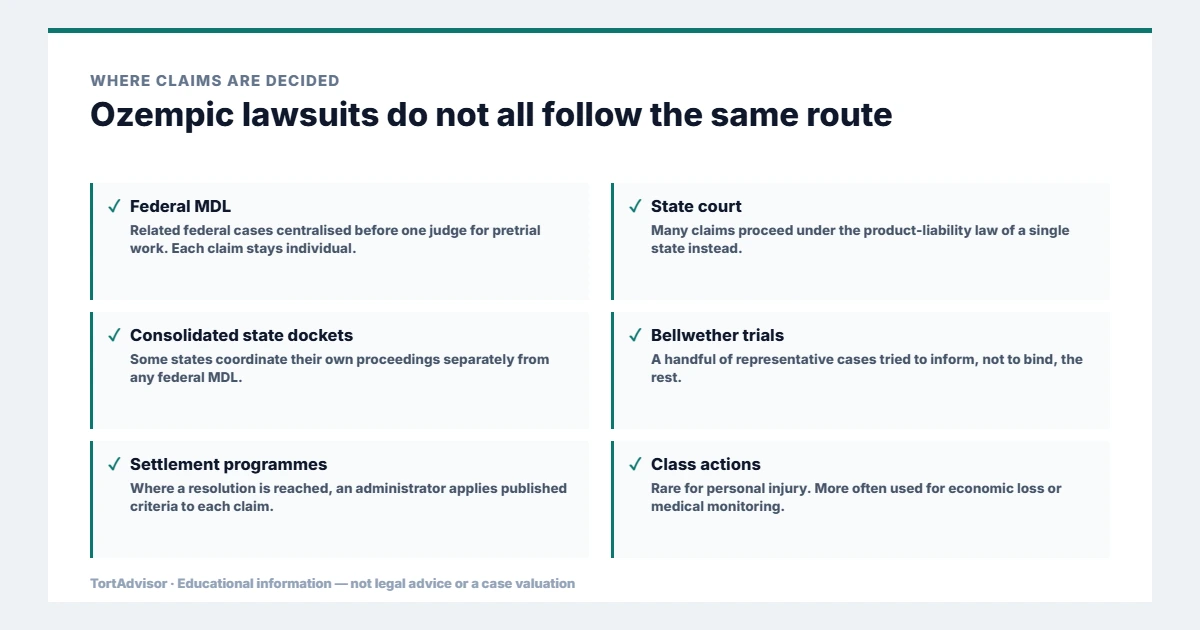
How an Ozempic or GLP-1 Injury Claim Is Evaluated
Identify the Drug
Confirm product, prescriber, pharmacy history and approximate dates.
Document the Injury
Collect diagnosis, testing, hospitalization and treatment records.
Review Causation
Consider diabetes, prior GI disease, surgery, other drugs and other causes.
Check Filing Rules
State-specific statutes and discovery rules can affect timing.
Determine Venue
A lawyer may assess federal MDL, state court or another forum.
Preserve Damages Proof
Keep records of medical expenses, work loss and ongoing limitations.
Ozempic Lawsuit Statute of Limitations
There is no single nationwide filing deadline for every Ozempic or GLP-1 claim. Product-liability statutes of limitation vary by state, and the date a period begins can depend on injury, diagnosis, discovery, product use, defendant, jurisdiction and other facts.
Ozempic Lawsuit FAQ
How many Ozempic and GLP-1 GI lawsuits are pending?
JPML’s October 1, 2026 report lists 4,025 actions pending in MDL 3094.
SourceJPML1 Sep 2026
Has the Ozempic lawsuit settled?
There is no publicly established universal settlement amount or court-approved per-claim payout schedule for MDL 3094.
SourceJPML1 Sep 2026
Can I file if Ozempic was prescribed off-label for weight loss?
Off-label prescribing does not automatically decide claim validity. Medication, injury, warning history, causation and state law remain important.
SourceFDAOff-label use
Is gastroparesis the same as ordinary nausea?
No. NIDDK defines gastroparesis, also called delayed gastric emptying, as a disorder that slows or stops the movement of food from the stomach to the small intestine. Nausea and vomiting on their own can have many causes.
SourceNIDDKGastroparesis
What is the difference between MDL 3094 and MDL 3163?
MDL 3094 coordinates GLP-1 gastrointestinal injury claims. MDL 3163 is a separate proceeding focused on NAION vision-loss allegations.
SourceJPML1 Sep 2026
What is the next major MDL 3094 event?
Rule 702 evidentiary hearings are set for September 14–18, 2026, followed by the next listed status conference on October 13, 2026.
SourceE.D. Pa.28 Aug 2026
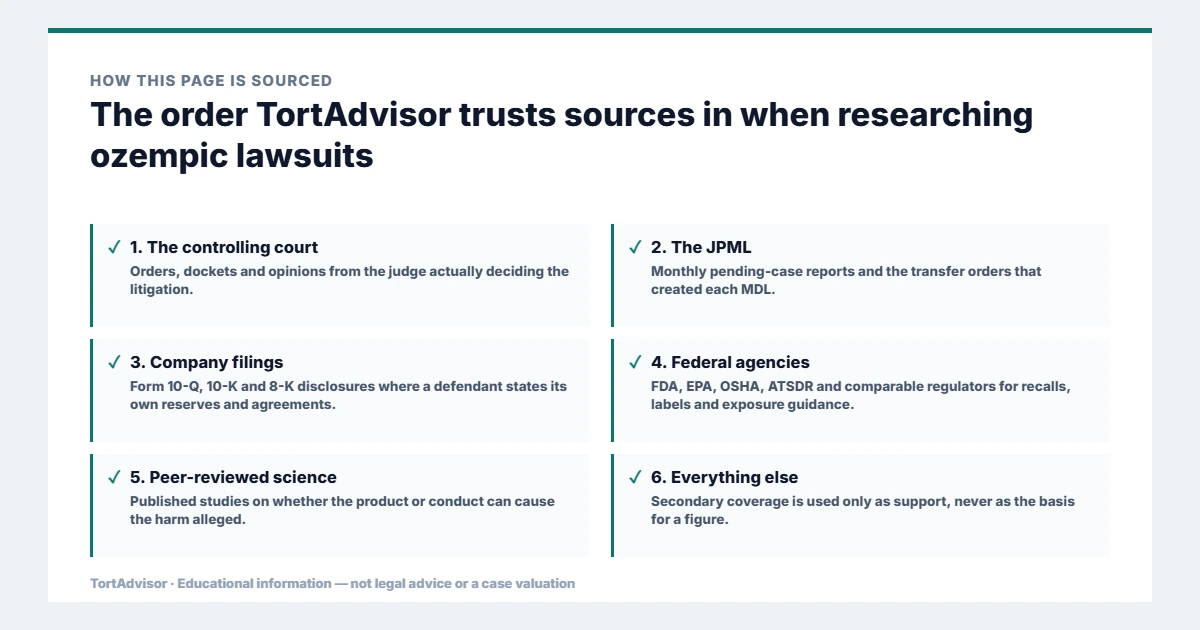
Ozempic Lawsuit Sources and Official References
- JPML — Pending MDL Dockets by Actions Pending, October 1, 2026. Lists 4,025 pending actions in MDL 3094 and 247 in MDL 3163.
- Eastern District of Pennsylvania — MDL 3094 official page. Describes GI-injury allegations and defendants’ denials.
- Case Management Order No. 32. First set the Rule 702 hearings, later moved to September 14–18, 2026.
- Amended 2026 Monthly Conference Schedule. Lists October 13, November 17 and December 15, 2026 conferences.
- Eastern District of Pennsylvania — MDL 3163. Separate GLP-1 NAION proceeding.
- FDA-approved Ozempic prescribing information. Severe GI reactions, severe gastroparesis and delayed gastric emptying.
- NIDDK — Gastroparesis Definition & Facts. Medical definition and complications.
Request a Confidential Ozempic Case Review
If you used Ozempic or another GLP-1 medication and later developed a serious documented gastrointestinal injury, submit the medication, diagnosis, treatment and timing information you know now for review.