
Settlement Calculators 2026: Lawsuit & Injury Claim Estimates
Settlement calculators help organize the facts that may affect a potential claim, including injury severity, diagnosis, treatment, evidence, liability, lost income, exposure history, available coverage, program rules and other damages or benefit factors. This hub currently contains 28 claim-specific tools across accidents, dangerous drugs, medical devices, toxic exposure, survivor claims, digital harm, disability and 9/11 compensation.
What These Settlement Calculators Are Designed to Do
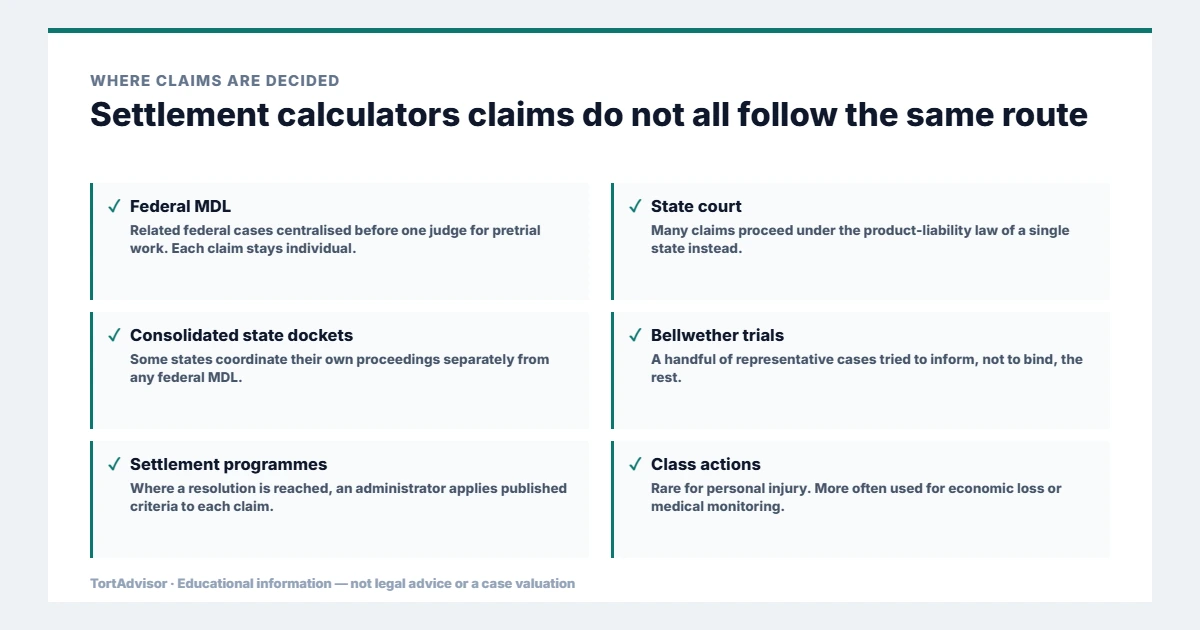
Each calculator focuses on a different evidence pattern. A crash tool may emphasize medical treatment, fault and insurance. A drug or device tool may emphasize product use, diagnosis, warnings and causation. A benefits tool may use program-specific criteria rather than personal-injury damages.
Settlement Calculators by Claim Type
Start with the category that most closely matches the source of harm. The page keeps every calculator link crawlable in the HTML on both desktop and mobile.
Accidents & Property Loss Settlement Calculators
3 tools
Car Accident Settlement Calculator
Estimate injury claim value based on crash severity, liability, medical bills, lost income, pain and suffering, and available insurance coverage.
Truck Accident Settlement Calculator
Estimate injury claim value based on crash severity, FMCSA liability factors, medical bills, lost income, and available commercial insurance coverage.
California Wildfire Settlement Calculator
Estimate wildfire compensation based on property loss, evacuation, smoke injury, displacement, and economic damages.
Dangerous Drugs & Product Liability Settlement Calculators
8 tools
Talcum Powder Settlement Calculator
Estimate potential ovarian cancer claim value connected to long-term talcum powder use, diagnosis, treatment, damages, and evidence strength.
Depo-Provera Settlement Calculator
Estimate potential meningioma claim value after Depo-Provera or medroxyprogesterone acetate use, diagnosis, treatment, and long-term impact.
Ozempic Settlements Calculator
Estimate potential GLP-1 drug injury claim value involving serious side effects, treatment, evidence, and damages.
Tylenol Settlement Calculator
Estimate potential prenatal acetaminophen exposure claim value based on diagnosis allegations, records, and damages.
Oxbryta Settlement Calculator
Estimate potential Oxbryta claim value connected to reported serious health outcomes, medical history, and damages.
Suboxone Settlement Calculator
Estimate potential Suboxone dental injury compensation based on use history, dental damage, treatment, and evidence.
NEC Settlement Calculator
Estimate possible infant formula NEC claim value based on diagnosis, feeding history, NICU treatment, and damages.
Hair Relaxer Settlement Calculator
Estimate potential claim value for cancer allegations connected to chemical hair relaxer exposure and medical evidence.
Medical Devices & Implants Settlement Calculators
3 tools
Bair Hugger Settlement Calculator
Estimate potential surgical infection claim value involving Bair Hugger warming devices, treatment history, evidence, and damages.
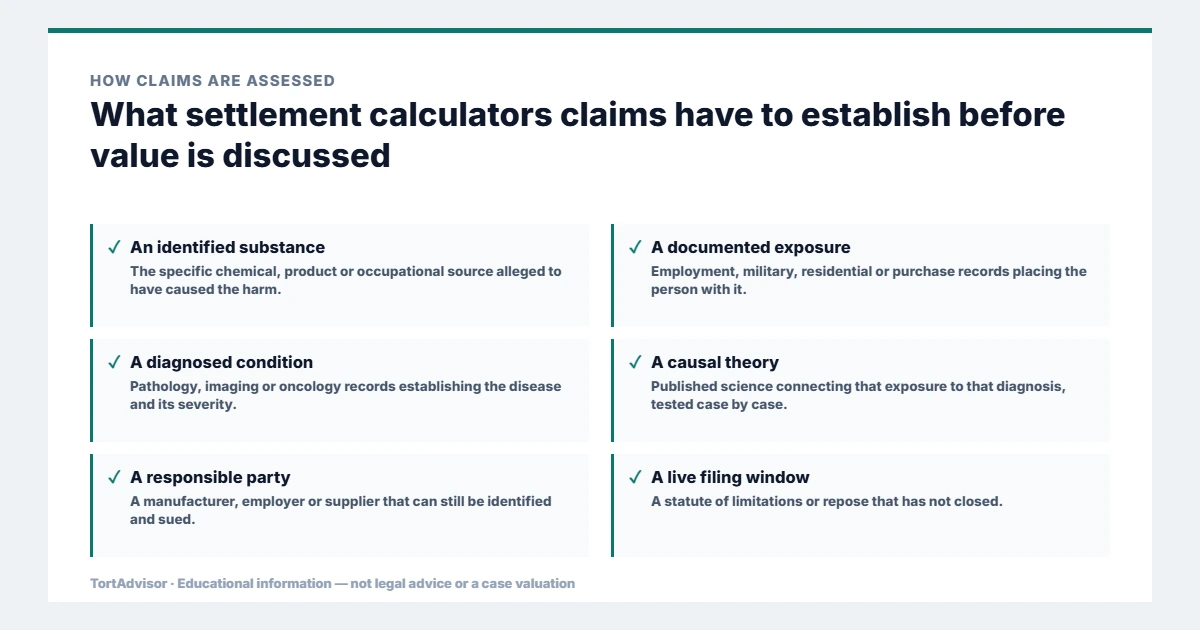
Every status, deadline and figure published on this page about settlement calculators claims is traced to a primary source before it appears.
Breast Implant Settlement Calculator
Estimate claim value for breast implant complications, revision surgery, illness allegations, medical costs, and long-term harm.
Hernia Mesh Settlement Calculator
Estimate potential hernia mesh claim value based on implant history, complications, revision surgery, and damages.
Toxic Exposure, Asbestos & 9/11 Settlement Calculators
7 tools
WTC 9/11 Settlement Calculator
Estimate a potential September 11th Victim Compensation Fund claim based on exposure history, certified illness, WTC Health Program status, economic loss, disability, wrongful death factors, and documentation strength.
Mesothelioma Settlement Calculator
Estimate asbestos-related mesothelioma compensation based on exposure history, diagnosis, worksite proof, medical costs, and damages.
PFAS Settlement Calculator
Estimate PFAS claim value based on exposure source, diagnosed injury, medical records, evidence, and damages.
AFFF Settlement Calculator
Estimate potential firefighting foam compensation for PFAS exposure, cancer diagnosis, military or firefighter history, and damages.
Roundup Settlement Calculator
Estimate possible Roundup claim value based on herbicide exposure, diagnosis, treatment history, and causation evidence.
Asbestos Settlement Calculator
Estimate asbestos claim value based on exposure history, diagnosis, worksite records, product identification, and damages.
Paraquat Compensation Calculator
Estimate potential Paraquat claim value based on herbicide exposure, diagnosis history, medical evidence, and damages.
Abuse, Rideshare & Digital Harm Settlement Calculators
6 tools
Rideshare Sexual Assault Settlement Calculator
Estimate possible Uber or Lyft sexual assault claim value based on incident severity, evidence, injuries, emotional harm, and damages.
Sexual Abuse Settlement Calculator
Estimate potential claim value for sexual abuse, assault, harassment, or institutional negligence based on harm, evidence, and reporting factors.
Roblox Sexual Abuse Settlement Calculator
Estimate potential claim value for grooming, exploitation, or child safety allegations connected to Roblox-related harm.
Snapchat Settlement Calculator
Estimate potential compensation for harm connected to Snapchat use, exploitation allegations, or related social-media injury claims.
Social Media Addiction Settlement Calculator
Estimate a potential social media addiction claim value based on platform use, harm type, diagnosis, and evidence.
Video Game Addiction Settlement Calculator
Estimate possible compensation for gaming addiction harms, treatment needs, family impact, and related litigation factors.
Disability & Benefits Settlement Calculators
1 tool
SSDI Benefit Payment Calculator
Estimate Social Security Disability Insurance benefits based on earnings history, disability status, work credits, and benefit factors.
Prefer a Person to Review the Numbers?
A calculator can only work from averages. If you want your own facts looked at — your diagnosis, your timeline, what you still have documented — share a few details below. A trained case advisor reviews every submission FREE and with no obligation, and nothing you send is published on this site.
- Free — no cost, no obligation
- About a minute to complete
- Reviewed by a trained case advisor
- Nothing you submit is published on this site
Call 855-664-8713Text 855-664-8713
How the Settlement Calculators Work
Different claims require different inputs, but the calculators follow the same basic workflow: identify the claim type, organize relevant facts, review an educational estimate and then decide whether more detailed research or professional review is appropriate.
1. Select the Claim Type
Choose the calculator tied most directly to the accident, product, exposure, condition, platform or benefit program involved.
2. Enter Value Drivers
Provide the requested injury, diagnosis, treatment, evidence, liability, exposure, loss or benefit information.
3. Review the Estimate
Use the result as an educational organization tool—not as a prediction, legal opinion or guaranteed settlement value.
4. Verify the Claim
Review the related lawsuit guide and current official sources before making decisions about filing, settlement or benefits.
What Can Change a Settlement or Compensation Estimate?
Medical Proof
Diagnosis, imaging, surgery, prescriptions, therapy, future care and prognosis can materially affect injury valuation.
Economic Loss
Medical bills, wage loss, reduced earning capacity, property loss, caregiving and other documented expenses may matter.
Liability & Causation
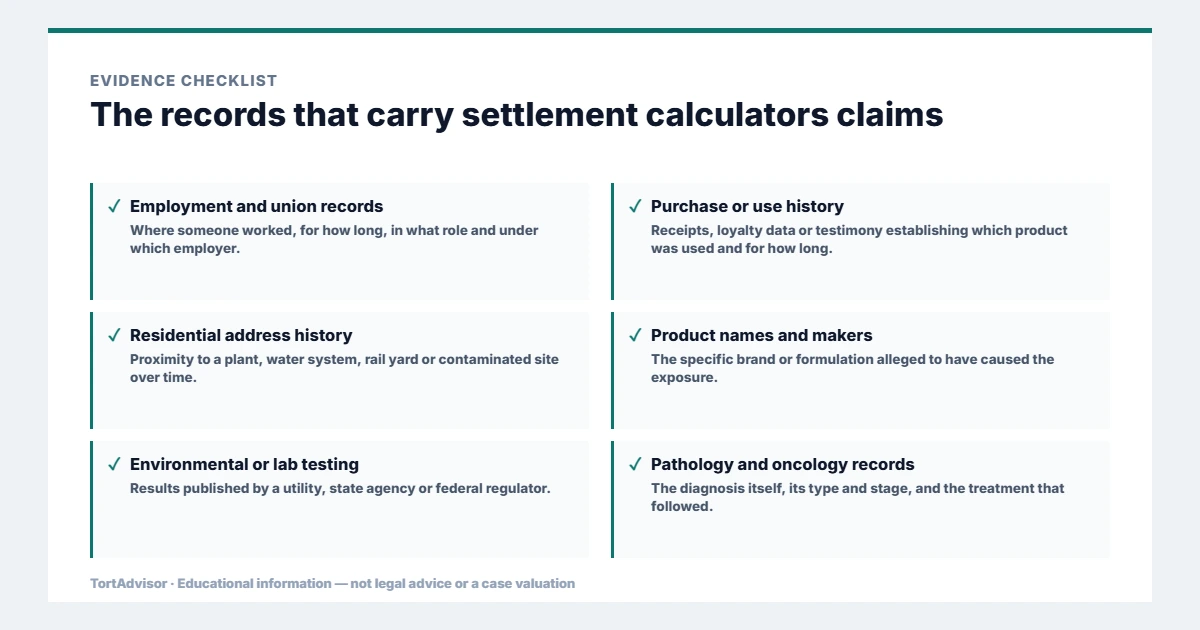
Police reports, warnings, exposure records, product identification, witnesses and other evidence may connect the alleged harm to a defendant.
Program Rules & Offsets
Benefits and special compensation programs may use statutory formulas, eligibility rules, offsets and documentation requirements rather than tort-style damages.
WTC 9/11 Settlement Calculator & VCF Compensation
The WTC 9/11 calculator is different from a typical lawsuit calculator because the September 11th Victim Compensation Fund is a federal compensation program. VCF eligibility and award calculations depend on program rules, eligible conditions, exposure presence, individual loss and other statutory factors.
Use the matching lawsuit or benefits guide before relying on a calculator result, then compare claim-specific settlement research where a dedicated amount guide is available.
Related Lawsuit, Settlement & Claim Research
How TortAdvisor Builds & Reviews Settlement Calculators
TortAdvisor calculators are educational tools designed to organize claim facts. They are not trained to replace a lawyer, judge, medical professional, government benefit specialist or official compensation program.
Claim-Specific Inputs
Questions are tailored to the evidence and damages factors associated with the relevant claim category rather than using one generic formula for every case.
Primary-Source Context
Where relevant, individual calculator pages should link to official court records, agency warnings, recalls, statutes or program rules.
Visible Limitations
Calculator outputs are labeled as estimates and should not be presented as guaranteed settlements, eligibility decisions or legal advice.
Substantive Updates
Review dates should change when calculator logic, legal context, sources or material page content receives a substantive update.
Primary Legal, Safety & Benefits References
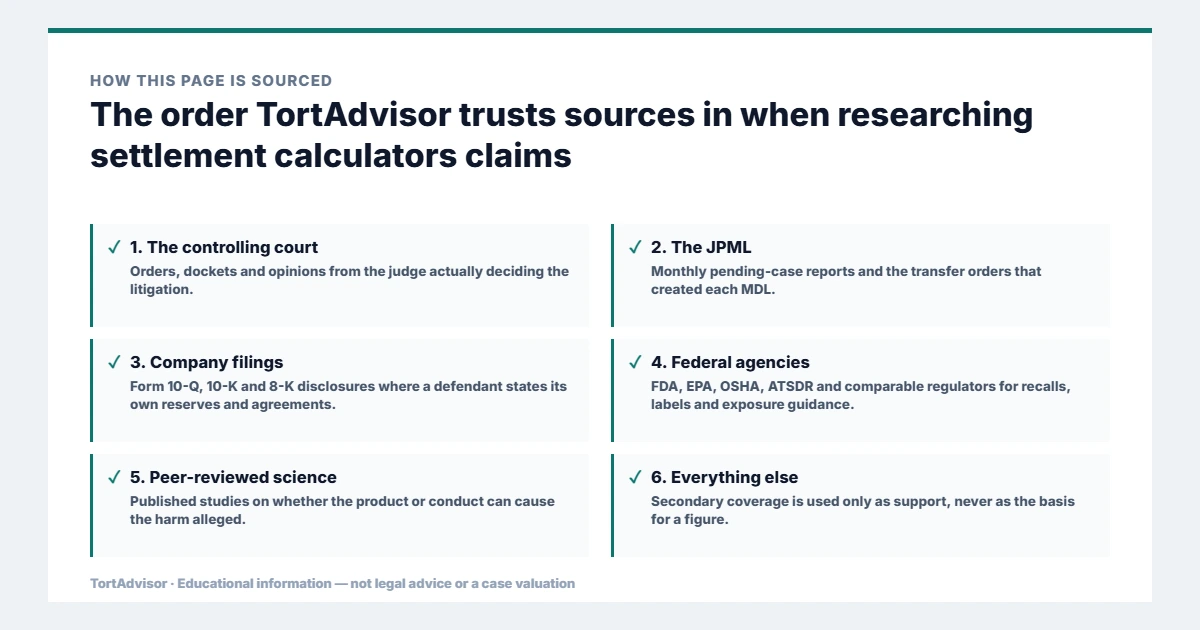
These broad official resources support the categories represented in this hub. Individual calculators should also cite the exact source relevant to that specific tool.
United States Courts
General federal civil-case process and court structure.
U.S. Judicial Panel on Multidistrict Litigation
Official federal MDL coordination and pending-MDL reports.
U.S. Food & Drug Administration
Official drug, medical-device and regulated-product recalls and safety alerts.
National Highway Traffic Safety Administration
Official vehicle and equipment recall information.
Social Security Administration
Official disability and SSDI program information.
September 11th Victim Compensation Fund
Official VCF eligibility, filing and compensation policy information.
WTC Health Program
Official information about eligible groups, certified conditions and treatment.
Consumer Product Safety Commission
Official consumer-product hazard and recall notices.
Settlement Calculator FAQ
How accurate are settlement calculators?
They are educational tools. Actual claim value can change after records, liability, causation, jurisdiction, insurance, offsets, defendants and future damages are reviewed.
Are TortAdvisor settlement calculators free?
Yes. The calculators in this hub are free to use. A user may separately choose to request a confidential case review.
Which calculator should I use first?
Choose the calculator tied most closely to the main cause of harm. If more than one category may apply, compare the relevant tools and related lawsuit guides.
Does a calculator tell me whether I qualify for a lawsuit?
No. Eligibility depends on current legal criteria, evidence, deadlines, jurisdiction and claim-specific facts. Calculator availability does not establish eligibility.
Does using a calculator create an attorney-client relationship?
No. Use of a calculator or this website does not create an attorney-client relationship. Representation requires acceptance by a licensed attorney and an engagement agreement.
Should I accept a settlement based on an online estimate?
No. An online estimate should not be the sole basis for accepting an offer, signing a release or waiving legal rights.
Start With the Calculator That Matches Your Claim
Use a claim-specific calculator, save the information you entered and review the matching lawsuit, benefits or settlement guide before making important decisions.