
SSDI Benefits 2026: Eligibility, Payments, Work Credits and Appeals
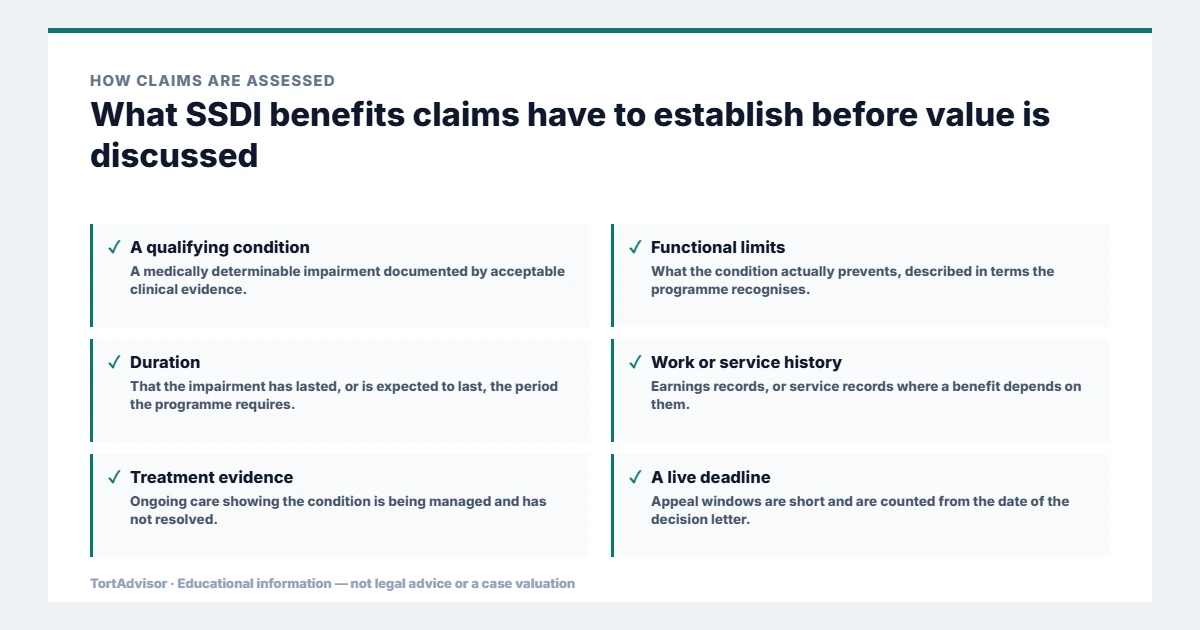
SSDI benefits provide monthly payments to workers who have a qualifying disability and enough covered work history under Social Security rules.
This source-linked guide explains SSDI eligibility, 2026 substantial gainful activity limits, work credits, payment estimates, the five-step disability evaluation, applications, medical evidence, denials, appeals and possible settlement offsets.
Key SSDI Benefits Facts for 2026
SSDI is based on covered work history and disability status, not household income or assets. SSI follows separate needs-based rules.
Who May Qualify for SSDI Benefits?
Applicants generally need a qualifying disability or blindness and enough covered work history. The condition must affect the ability to work for at least one year or be expected to result in death.
How SSDI Benefit Amounts Are Calculated
Monthly SSDI payments are based primarily on a worker’s covered earnings record. The severity of the diagnosis does not create a higher payment by itself.
Swipe horizontally to review the full table on mobile.
| 2026 SSDI Topic | Amount or Rule | Why It Matters |
|---|---|---|
| Non-blind SGA | $1,690 per month | Countable work above SGA may affect an application or ongoing eligibility. |
| Blind SGA | $2,830 per month | SSA applies a higher SGA amount to statutory blindness. |
| One work credit | $1,890 in covered earnings | Credits help determine insured status. |
| Four annual credits | $7,560 in covered earnings | Four is the maximum number of credits earned in one year. |
| Monthly payment | Varies by earnings record | Use a my Social Security account or benefit estimate for individualized figures. |
The Five-Step SSDI Disability Evaluation
- Current work: Is the applicant performing substantial gainful activity?
- Severity: Does the impairment significantly limit basic work activities?
- Medical listings: Does the condition meet or medically equal an SSA listing?
- Past work: Can the applicant perform past relevant work considering residual functional capacity?
- Other work: Can the applicant adjust to other work considering age, education, work history and functional capacity?
How to Apply for SSDI Benefits
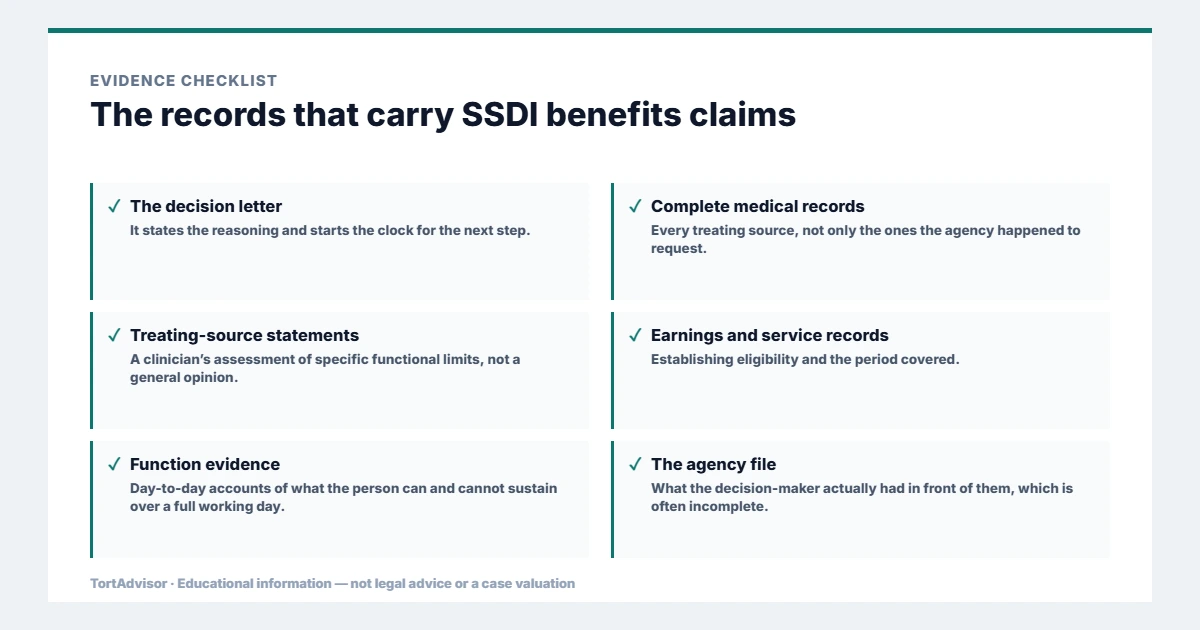
Applications may be started online, by phone or through Social Security. Accurate provider details, treatment history, work history and functional limitations can reduce avoidable delays.
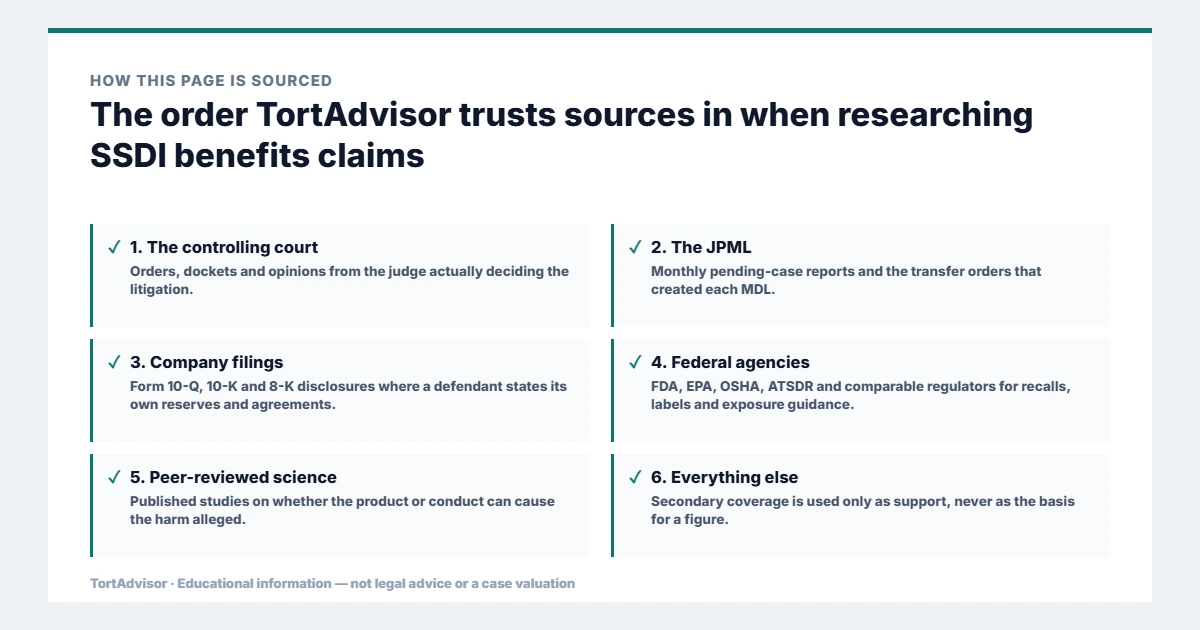
Every status, deadline and figure published on this page about SSDI benefits claims is traced to a primary source before it appears.
SSDI Denials and Appeals
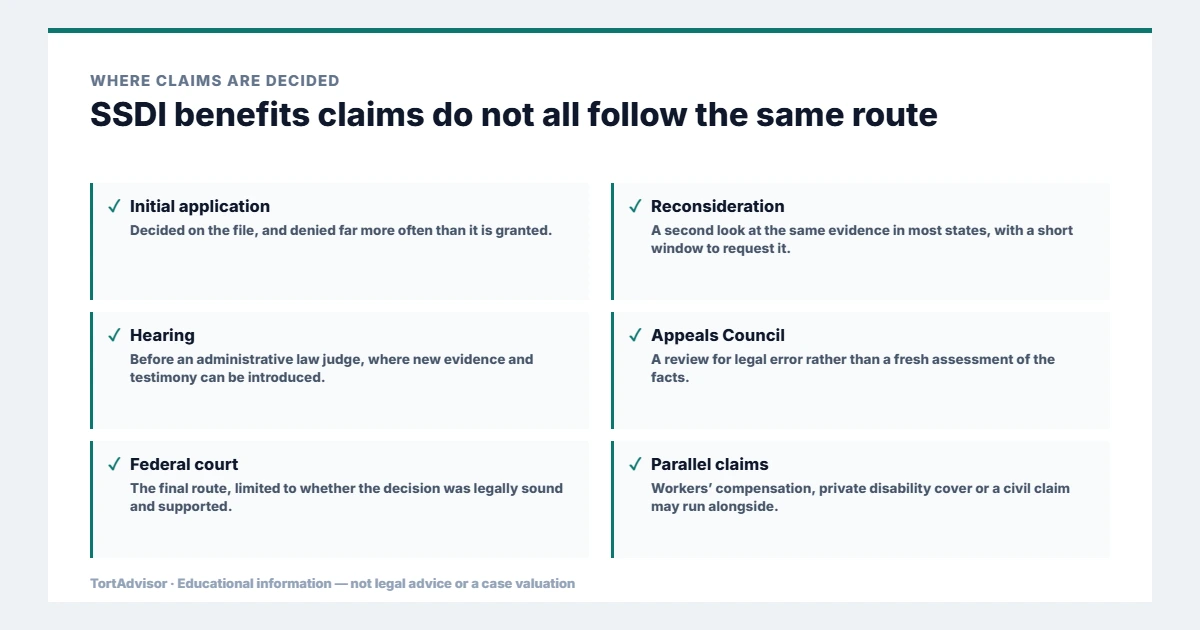
An initial denial does not necessarily end a claim. The Social Security appeals process may include reconsideration, an administrative law judge hearing, Appeals Council review and federal court review.
Can a Settlement Affect SSDI Benefits?
A third-party personal injury settlement generally is not offset against SSDI. Workers’ compensation and certain public disability benefits, however, may reduce SSDI payments. Lump-sum workers’ compensation settlements may also be subject to proration and offset rules.
SSI is different because it is needs-based. Settlement funds may affect SSI eligibility, Medicaid or other means-tested programs depending on the facts and applicable rules.
Evidence That May Strengthen an SSDI Claim
- Treatment notes from doctors, specialists, hospitals, therapists and clinics.
- Objective tests such as MRI, CT, X-ray, laboratory, pulmonary, cardiac or neuropsychological testing.
- Medication history, side effects, surgeries, injections, therapy and hospitalizations.
- Residual functional capacity evidence addressing physical and mental work limitations.
- Work records, job descriptions, wage records, failed work attempts and employer information.
- Consistent descriptions of daily activities, symptoms, treatment response and attendance limitations.
Related SSDI and Disability Resources
Official SSDI Sources and References
- Social Security Administration — Disability. Official program overview and application resources.
- SSA — Who Can Get Disability. Eligibility and 2026 SGA information.
- SSA — Substantial Gainful Activity. Official annual SGA amounts.
- SSA — Social Security Credits. Official 2026 credit amount.
- 20 C.F.R. § 404.1520. Five-step sequential disability evaluation.
- SSA Blue Book — Evidentiary Requirements. Claimant evidence responsibilities.
- SSA — Workers’ Compensation and Other Disability Payments. Official SSDI offset explanation.
- SSA POMS — Third-Party Settlements. Treatment of third-party settlements and workers’ compensation.
SSDI Benefits FAQ
What are SSDI benefits?
SSDI provides monthly payments to workers with a qualifying disability and enough covered work history.
What is the 2026 SGA amount?
SSA lists $1,690 per month for non-blind individuals and $2,830 per month for individuals considered blind.
How much is one work credit in 2026?
One Social Security credit is earned for each $1,890 in covered earnings, up to four credits per year.
Can someone work while receiving SSDI?
SSA work incentives may allow some work, but earnings and work activity can affect payments or eligibility.
Does a personal injury settlement affect SSDI?
A third-party personal injury settlement generally is not offset, but workers’ compensation and certain public disability benefits may reduce SSDI.
Does this page guarantee SSDI approval?
No. Approval depends on work history, medical evidence, functional limitations and SSA’s evaluation.
Need Help Reviewing an SSDI Claim?
SSDI claims may involve work credits, medical evidence, functional limitations, appeal deadlines and settlement interactions. A confidential intake can help organize the information needed for review.