
Car accident claims ask the at-fault driver's insurer, or your own coverage, to pay for crash injuries and losses. What usually decides value is the medical record, how fault is split under your state's rule, and the policy limits available. Police-reported traffic crashes injured an estimated 2.42 million people in the U.S. in 2024, according to NHTSA.
Updates on Car Accident Claims
Understand the difference between pursuing the driver and investigating an alcohol provider. This guide explains compensation, criminal-case evidence, and contrasting state liability rules.
Was the other driver using a phone? Learn how a lawsuit can connect phone activity, video and witness testimony to the collision, with clearly labeled state-law examples.
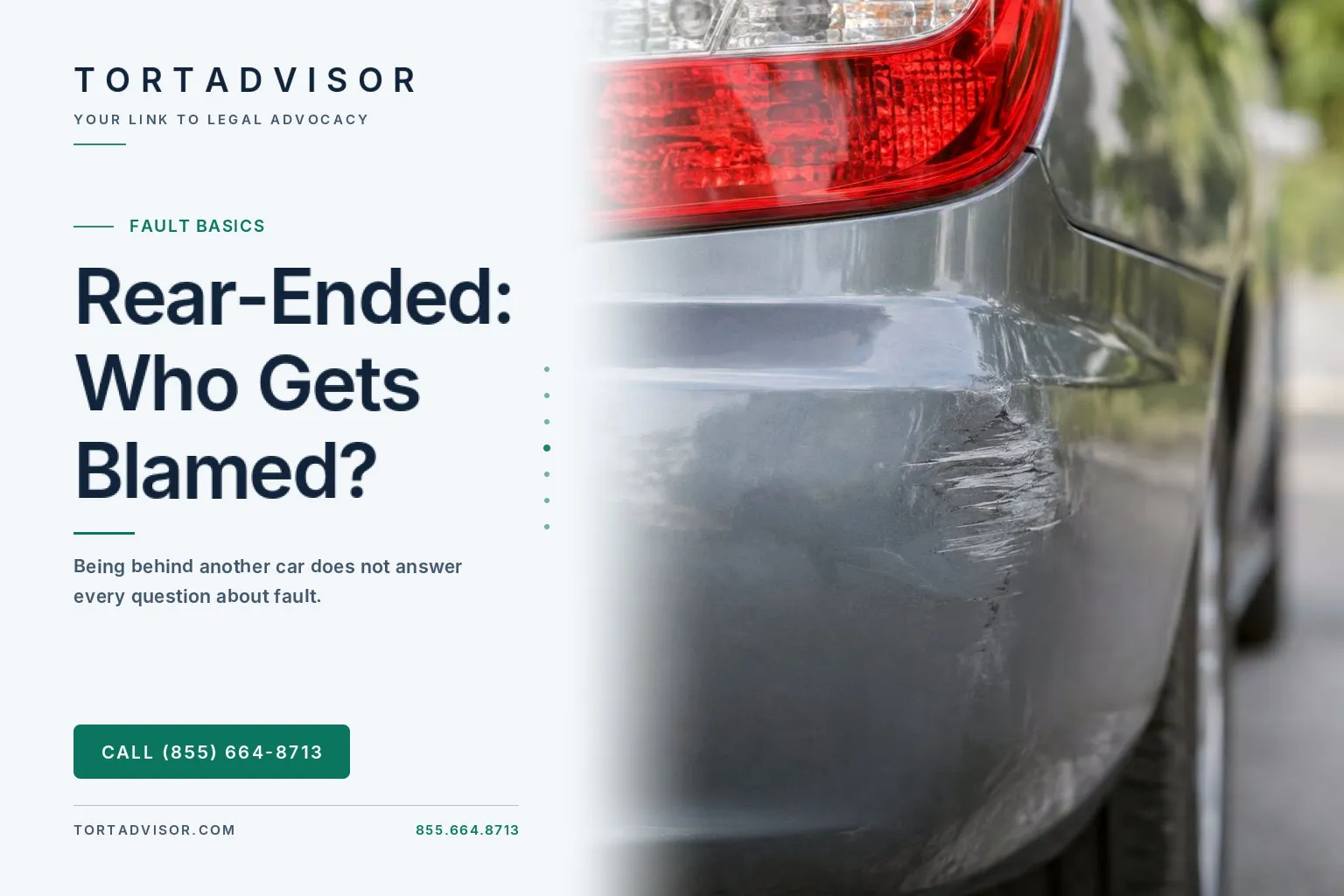
Being behind another car does not answer every question about fault. Explore the evidence, front-driver conduct and state negligence rules that matter when evaluating rear-end accident liability.
Received lawsuit papers after a crash? Understand the questions to ask about your response deadline, insurance defense, policy limits, and your own injuries.
Head-on crashes usually happen when one driver crosses the centerline or goes the wrong way. This guide covers how fault gets proven, how shared fault can cut a recovery, and what injured people and families can claim.
A concussion claim needs more context than the diagnosis alone. Learn which medical and work records to gather and what questions to ask before discussing a settlement.
Who had the right of way is the starting question—not simply whose vehicle struck the other. Explore intersection scenarios, evidence and clearly labeled state-law examples before researching compensation.
A hospital stay raises practical questions about bills, missed work and continuing care. This California-focused guide explains the evidence behind injury compensation and distinguishes medical coverage from a damages claim.
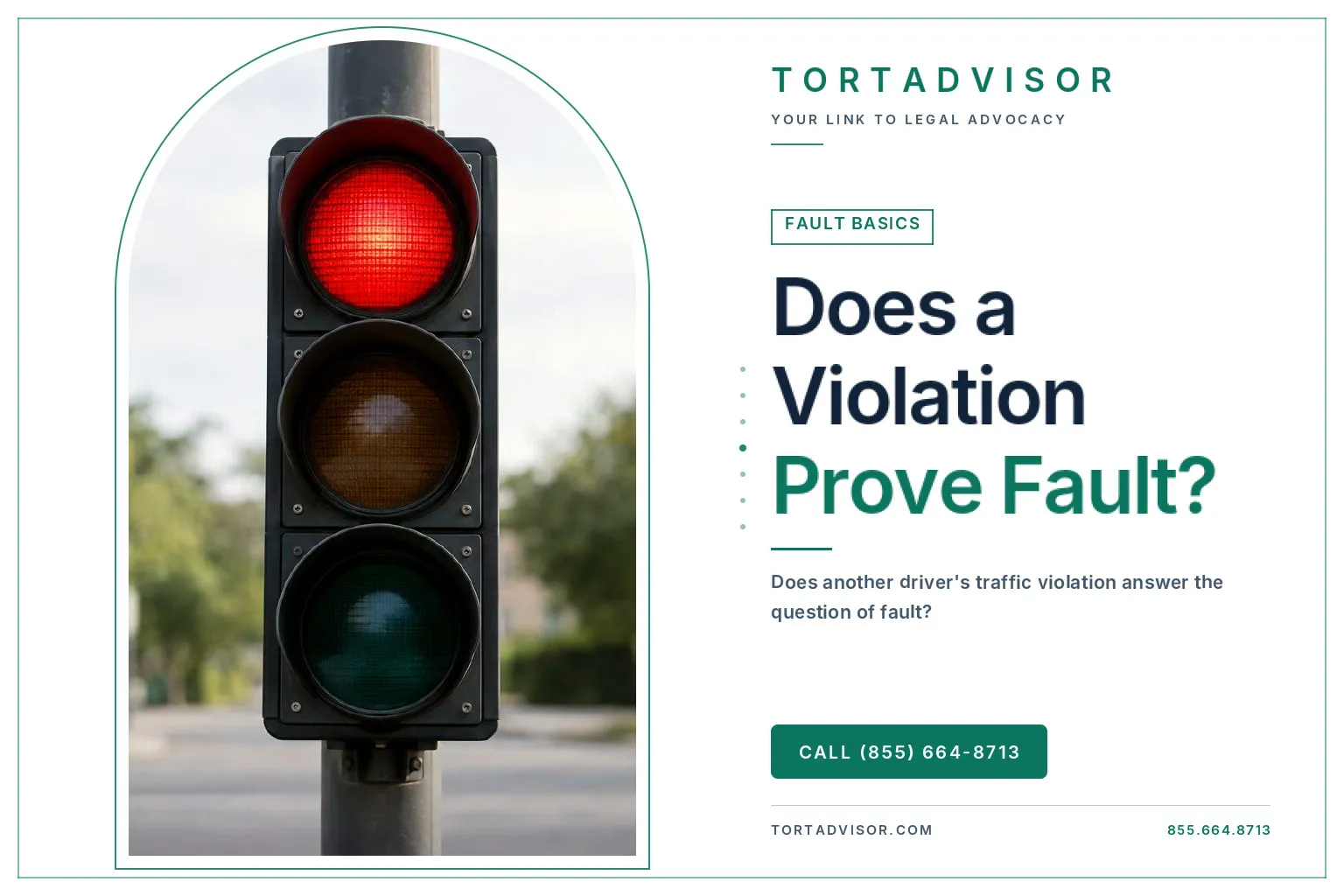
Does another driver's traffic violation answer the question of fault? This guide examines negligence per se through clearly labeled state examples, with attention to causation, exceptions and shared responsibility.

Confused by the wording after another driver left a crash? This guide compares official state examples and helps you organize questions about the incident, your records, and possible insurance coverage.

Understand how to estimate driving speed from distance and elapsed time—and why a calculation needs context after a crash. Learn about unit conversions, stopping distance and vehicle-recorded evidence.

A practical checklist for collecting crash details and organizing medical, insurance and expense records. Start with safety, then use the record prompts when you are able.

Explore the deadline, shared-fault and medical-expense questions to discuss before pursuing a Florida crash injury claim. This guide focuses on liability and compensation, not PIP benefit applications.
There is no formula for pain and suffering in a car accident. What jury instructions say, which no-fault states limit it, which states cap it, and how it is taxed, with every rule sourced.
If an uninsured or underinsured driver hits you, the claim usually runs through your own policy. What UM and UIM coverage pay, how a claim works, hit-and-run rules and the deadlines to watch.

How accident claim lawyers evaluate a case, how insurers approach it, and what California law actually allows you to recover.
Key facts (as of October 2026)
- Since March 24, 2023, a Florida claimant more than 50 percent at fault recovers nothing (Fla. Stat. § 768.81(6)).
- New York's 2026 amendment bars a no-fault motor vehicle injury claimant whose fault exceeds the defendant's (CPLR 1411(b)).
- Alabama, Maryland, North Carolina, Virginia and D.C. keep contributory negligence (Cornell LII); Maryland's 2026 reform bill went to interim study.
- Twelve states plus Puerto Rico have no-fault insurance; New Jersey, Pennsylvania and Kentucky let drivers choose (III).
- 15.4 percent of motorists were uninsured in 2023, from 5.7 percent in Maine to 28.2 percent in Mississippi (NAIC).
Fault rules: how shared blame changes a claim
| Rule | If you were partly at fault | Examples |
|---|---|---|
| Pure comparative | Award reduced by your share of fault, at any level | California; New York outside no-fault motor vehicle suits |
| Modified comparative | Award reduced, then barred at the state's 50 or 51 percent threshold | Florida (since 2023); New York no-fault motor vehicle suits (since 2026) |
| Contributory negligence | Any fault can bar recovery | Alabama, Maryland, North Carolina, Virginia, D.C. |
Insurers, and juries at trial, set the percentages from the evidence. The fault rules by state page lists each state.
No-fault, PIP and uninsured motorist coverage
In the no-fault states (Florida, Hawaii, Kansas, Kentucky, Massachusetts, Michigan, Minnesota, New Jersey, New York, North Dakota, Pennsylvania and Utah), your own personal injury protection pays medical costs and lost wages first, whoever caused the crash, and a pain-and-suffering claim against the other driver needs an injury that meets the state's threshold. Elsewhere, the at-fault driver's liability insurer pays. When that driver has no insurance or too little, your own UM/UIM coverage may pay up to your limits; see how UM and UIM claims work.
What decides the value of a claim
- Medical evidence: prompt diagnosis and consistent treatment tie the injury to the crash.
- Fault percentage: any share assigned to you reduces, and in some states bars, recovery.
- Policy limits: the at-fault driver's limit and your UM/UIM limits often set the ceiling.
Deadlines (statutes of limitations vary by state)
New York allows three years for most injury suits (CPLR 214). Florida allows two years for negligence claims arising after March 24, 2023, and four for older ones (HB 837 summary). Louisiana's two-year tort period (Civil Code art. 3493.1) took effect July 1, 2024; earlier injuries can fall under the prior rule. Policy notice requirements are separate and often shorter.
Evidence to keep
- Your policy's declarations page showing PIP, medical payments and UM/UIM limits.
- The crash report, photos, witness names and repair estimates.
- Medical records without gaps in treatment.
When people hire a lawyer
Claimants commonly consult a lawyer when fault is disputed in a modified or contributory negligence state, when injuries may cross a no-fault threshold or exceed the other driver's limits, or when their own insurer contests a UM/UIM claim. TortAdvisor is not a law firm; see the personal injury attorney guides.
Frequently asked questions
What if I was partly at fault for the car accident?
In a pure comparative state, your award is reduced by your share of fault, whatever it is. In a modified state, it is reduced until your share reaches the state's threshold and is then barred; Florida bars recovery above 50 percent. In Alabama, Maryland, North Carolina, Virginia and Washington, D.C., contributory negligence can bar recovery entirely.
Can I sue the other driver in a no-fault state?
Yes, but only for injuries that meet the state's threshold. Five no-fault states use a verbal threshold based on the type or severity of injury (Florida, Michigan, New Jersey, New York and Pennsylvania), and seven use a monetary threshold tied to medical costs. Below the threshold, your own personal injury protection pays your economic losses.
How long do I have to file a car accident claim?
It depends on the state and on who is responsible. Examples include three years for most New York injury suits, two years in Florida for negligence claims arising after March 24, 2023, and two years under Louisiana's 2024 rule. Crashes with government vehicles need earlier written notice, and insurance policies require prompt notice of any crash.
Sources
Car accident questions answered, with sources
Insurance and filing deadlines are short
Most states allow two or three years to file an injury lawsuit, and insurers and no-fault PIP require notice much sooner. Florida allows two years for negligence actions. Fla. Stat. 95.11
Free · Confidential · No obligation
Free car accident Case Review
Tell us what happened and a trained case advisor will review it. You choose whether you want to be contacted.
- 1Share the basicsThe crash, your injuries, treatment and insurance.
- 2A case advisor reviews itAgainst your state’s fault rules and deadline.
- 3You decide what happens nextNo cost and no obligation.
- Sourced to the dataTriple-I figures and state statutes
- Every answer is citedEach answer links its primary source
- Free and confidentialNo cost and no obligation to continue
- Not a law firmA trained case advisor makes the first contact
Prefer to talk it through?
TortAdvisor is not a law firm and does not give legal advice. A trained case advisor, not an attorney, may make the first contact. See our partner list and privacy policy.
Filter Posts
Browse by Category