
Who Is at Fault in a Rear-End Collision? Liability Rules
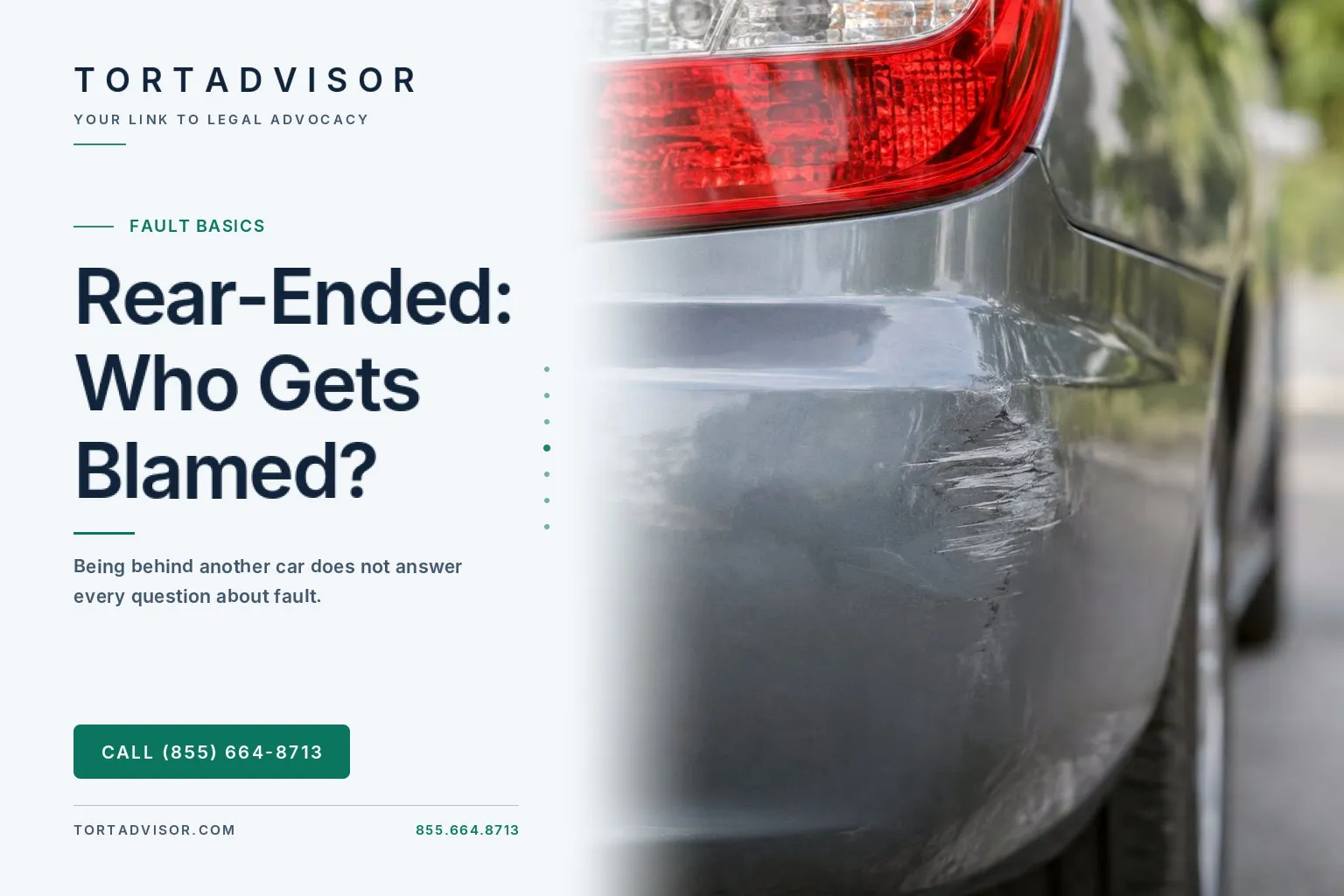
When deciding who is at fault in a rear-end collision, the rear driver’s duty is the starting point—not automatic liability; Michigan law, for example, requires a safe following distance and establishes a rear-end presumption with exceptions. The front driver or another driver—including one who pushes your car into the vehicle ahead—may bear responsibility if their negligence caused or contributed to the collision, consistent with Colorado’s negligence and concurrent-cause principles.
This article explains how front-driver conduct and chain-reaction crashes can affect fault, compares shared-fault rules in four states, and identifies evidence that can help resolve a dispute. It also explains what a fault finding can—and cannot—tell you about compensation, with a practical next step if responsibility remains unclear.
The rear driver’s duty is the starting point—not automatic liability
The rear driver can be presumed negligent, but being the vehicle behind does not automatically settle legal responsibility. The applicable state rule—and the circumstances of the collision—matter.
Michigan provides one example, not a nationwide rule. Under Michigan’s MCL 257.402, qualifying rear-end contact is prima facie evidence of negligence: an initial basis for finding negligence, rather than an automatic final determination. The provision also contains a nighttime exception involving a vehicle standing on the highway without legally required lighting. The same vehicle code, at MCL 257.643, requires a reasonable-and-prudent following distance, considering vehicle speed, traffic and highway conditions. That Michigan duty helps explain why the space a rear driver left before impact matters.
Contact and legal responsibility are different questions. Colorado’s negligence instructions separately require negligence, causation and damages. In other words, identifying which vehicle struck another does not, by itself, establish every element of a negligence claim; the negligent conduct must also have caused the claimed harm.
If you are trying to understand how those issues fit into a potential claim, TortAdvisor’s car accident lawsuit basics offer a broader starting point.
Find out if you may have a claim
Answer a few questions and a trained case advisor will review your situation — most people finish in about a minute.
- Free — no cost, no obligation
- About a minute to complete
- Reviewed by a trained case advisor
- Nothing you submit is published
Your details are sent over a secure connection and reviewed confidentially.
Can the front driver be at fault in a rear-end collision?
Yes, potentially—but an allegation that the front driver stopped suddenly, cut in or had broken brake lights does not settle fault. The circumstances and the connection between the conduct and the crash matter.
The Michigan Vehicle Code’s lane-change, stopping, lighting and rear-end-presumption provisions illustrate the distinctions worth investigating:
- Sudden stops or cutting in before braking: MCL 257.642 requires drivers to check that a lane movement can be made safely. MCL 257.648 addresses safe movements and signaling before stopping or suddenly slowing when there is an opportunity to signal. Investigate the lane change, available space, traffic conditions and warning—not just the fact that braking was abrupt. Sudden braking alone does not establish which duty was breached.
- Broken brake lights: Examine whether the vehicle met the applicable stop-lamp requirements in MCL 257.697 and 257.697b. That is a separate question from the narrower nighttime-lighting exception in MCL 257.402(b); a broken brake light should not automatically be treated as that exception.
- Reversing into a stationary vehicle: This differs from a following vehicle striking the car ahead. MCL 257.402 describes same-direction overtaking contact, so the vehicles’ actual movements matter when considering that presumption.
Each alleged mistake must also be connected to the collision. Colorado’s negligence and causation instructions distinguish negligent conduct from conduct that caused the injury and recognize that multiple causes can contribute. Our guide to traffic-law violations and negligence per se explores the violation question further.
If the dispute concerns a vehicle crossing another’s path and being struck in the side, T-bone collision fault and right-of-way evidence may better match the crash than a rear-end analysis.

What if another vehicle pushed your car into the one ahead?
Being pushed into the car ahead is different from independently hitting it before another impact. The liability question is whose negligence caused the harm—not simply which vehicles touched. Colorado’s instructions on causation and concurrent causes recognize that more than one person’s negligence can cause an injury. Consider these hypothetical sequences through that lens:
- A stopped middle car is pushed forward. Suppose you are stopped behind another vehicle when a driver hits you from behind, pushing your car into it. The investigation would need to distinguish your car’s movement from any independent driving action by you.
- The middle car hits first. Suppose you strike the lead vehicle before a third driver hits your car. That sequence raises different questions: what harm resulted from your initial impact, and what harm did the later impact cause or contribute to?
Neither hypothetical establishes a predetermined outcome. Nor is the answer simply that each driver pays for the vehicle immediately ahead. In Florida, section 768.81(3) bases judgment against each liable party on that party’s percentage of fault.
The sequence matters. Which impact happened first? Was the middle car stopped or moving? Where is the damage, and what did witnesses observe? NHTSA’s investigation methodology combines scene and vehicle inspections, photographs, damage analysis, final vehicle positions, witness interviews, police reports and available event data recorder information. Those evidence categories can help clarify what happened; the methodology itself does not determine legal fault.
For the insurance side of chain reaction crashes, our sister site’s guide explains multiple claims, adjuster communications, repair coverage, deductibles and disputes.
How shared fault changes recovery: four state examples
Sharing fault does not always prevent recovery. These four examples show different approaches—not a complete state survey. For a broader comparison, see car accident fault rules by state.
| State and system | Governing authority | Effect of claimant fault | Treatment of equal fault |
|---|---|---|---|
| Rhode Island: pure comparative negligence | R.I. Gen. Laws section 9-20-4 | Your negligence reduces damages proportionately rather than barring recovery. | A 50–50 division reduces damages by 50%; it does not bar recovery. |
| Colorado: modified comparative negligence with a 50% bar | C.R.S. section 13-21-111 and Colorado instructions 9:26–9:28 | Recovery is barred when your negligence equals or exceeds the opposing negligence being compared. Below that threshold, damages are reduced proportionately. The instructions explain the relevant combined comparison in multi-party cases. | An equal division between you and the opposing side being compared bars recovery. |
| Florida: modified comparative fault with a greater-than-50% bar | Fla. Stat. section 768.81(2) and (6) | Fault greater than 50% bars recovery in a negligence action covered by subsection (6). Otherwise, your fault reduces damages proportionately. | Exactly 50% does not trigger that bar; damages are reduced by 50%. |
| North Carolina: contributory negligence | Court explanations of contributory negligence and G.S. 1-139 | In an ordinary negligence claim, your own negligence contributing to the injury generally bars recovery. Exceptions exist. This is a common-law rule; G.S. 1-139 places the burden of proving contributory negligence on the defense, rather than setting a percentage threshold. | Equal fault generally bars recovery, subject to applicable exceptions—not simply because someone alleges shared fault. |
Which evidence helps resolve disputed rear-end collision fault?
The useful evidence depends on what drivers disagree about. Scene photographs, vehicle damage, final positions, witness statements, police reports and available event data recorder (EDR) information offer different pieces of the picture. NHTSA’s Special Crash Investigations methodology combines scene and vehicle inspections, photographs, damage analysis, interviews, reports and available EDR data rather than relying on one source alone.
- Was the front car moving backward? Compare witness recollections about movement with photographs, damage locations and documented final positions. Keep what someone saw separate from what an investigator infers from the physical evidence.
- Did a lane change precede braking? Look for accounts describing where each vehicle was before contact. Scene photographs and police-report diagrams can provide context, but distinguish an officer’s documented observations from statements supplied by drivers or witnesses.
- Which impact moved the middle car? Compare front- and rear-damage findings with witness descriptions of the impacts and final vehicle positions. Label a reconstructed impact sequence as an estimate if the sequence remains disputed.
- What do vehicle inspections and available EDR downloads corroborate? Identify the findings each source actually supports. Do not present an estimated speed as a confirmed measurement or assume an EDR download resolves every disputed movement.
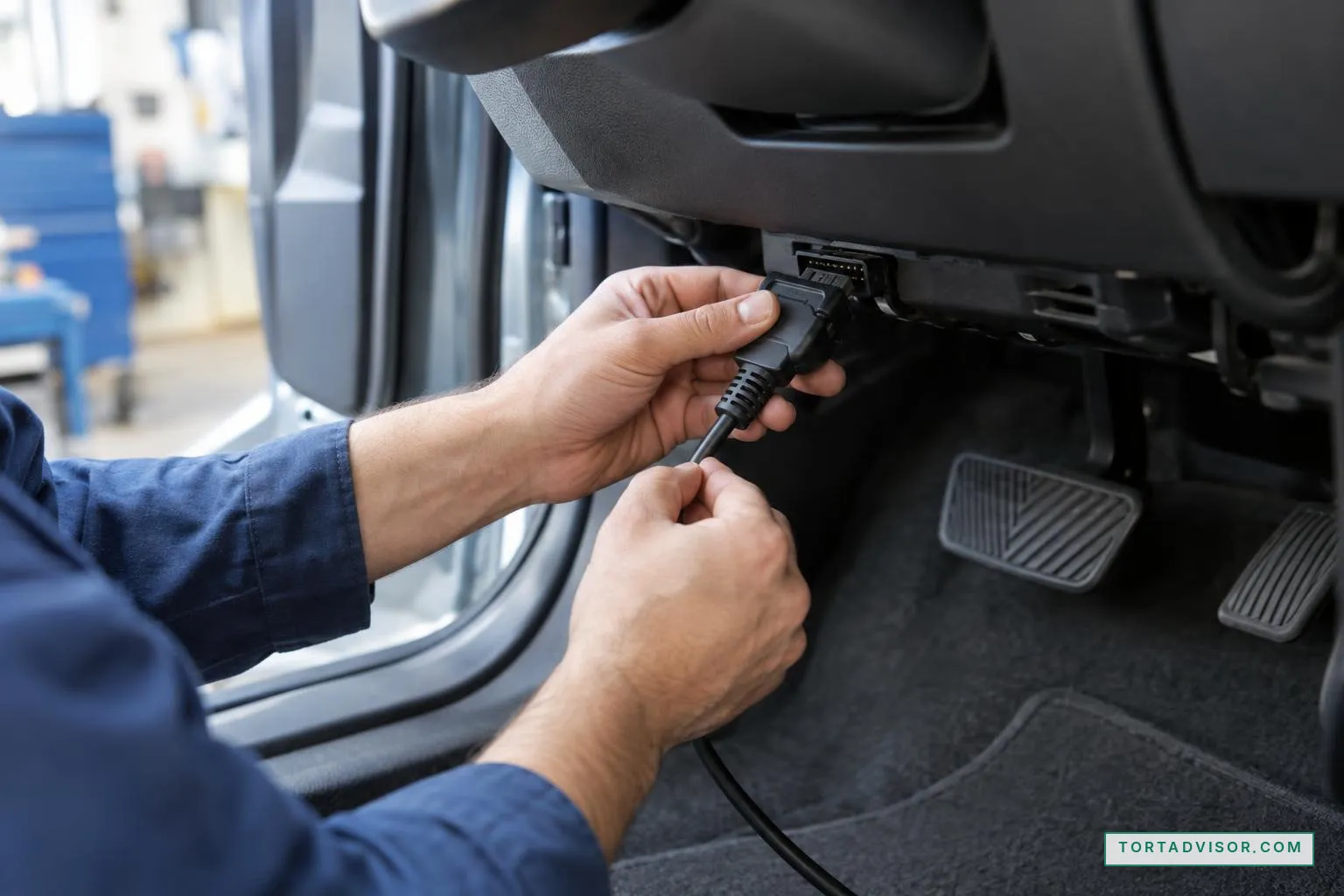
Two additional questions may matter: What did a brake-light inspection find, and, if phone use is alleged, what do phone activity records actually show? Assess those findings alongside the other evidence—not as automatic proof of fault. For a Michigan crash, the relevant stop-lamp and mobile-device duties appear in MCL 257.697 and 257.602b.
What a fault finding can—and cannot—tell you about compensation
A finding that another driver caused your rear-end collision does not, by itself, establish how much compensation you may recover. Colorado’s elements-of-liability instructions distinguish negligence, injury or loss, and causation: proving that a driver acted negligently is not the same as proving that the negligence caused the injuries or losses claimed. A fault decision therefore does not replace proof of those losses or their extent.
Your own share of fault can also affect recovery. Under Rhode Island’s statute, an injured person’s attributable negligence does not bar recovery, but damages are reduced in proportion to that negligence. That is Rhode Island’s rule—not a nationwide standard. The important distinction is between establishing the damages and applying any reduction required by the governing fault rule.
If you want to organize a claim-value discussion, TortAdvisor’s car accident settlement calculator is an optional starting point. It does not determine who caused the crash, resolve disputed evidence, or promise a payout. Keep any calculator output separate from the question of whether the evidence supports liability and the losses claimed.
For broader context, explore the car-accident information within TortAdvisor’s settlement amounts and compensation research. Use that context to frame questions about your claim, rather than treating another case’s result as a prediction for yours.
A helpful next step when fault remains disputed
If the drivers disagree about a rear-end collision, a useful next step is to separate what you know from what still needs support. Organize your questions around three points:
- What happened before contact? Write down the sequence as you remember it, including any lane change, stop or earlier impact. Separate what you personally observed from what someone else told you.
- What supports each account? List the photographs, witness information, vehicle damage and other records available. These are among the evidence categories described in NHTSA’s crash-investigation methodology; that methodology is not itself a legal fault determination.
- Which state’s fault rule applies? Keep this as an unresolved question if you are unsure, rather than assuming that a rule described for another state governs your claim.
TortAdvisor provides independent lawsuit research; it is not a law firm. Its rear-end collision lawsuit and compensation guide can help you explore the next questions about your situation and provides access to a free case review.
Requesting a review is optional. It does not promise that you qualify for a claim, will receive compensation or will reach a particular outcome. You can also use the research simply to organize your records and identify what you still need to understand.
Frequently asked questions
Is the rear driver automatically at fault in a rear-end collision?
No—not automatically. Michigan, for example, treats a qualifying rear-end collision as prima facie evidence of negligence by the rear driver under MCL 257.402, rather than a conclusive finding. That is a Michigan-specific starting point, not a nationwide rule that settles every rear-end collision claim.
Can the front driver be at fault for stopping suddenly or having broken brake lights?
Potentially, but neither detail alone settles responsibility. The question is whether the front driver acted negligently and whether that conduct contributed to the collision and injuries. Colorado’s negligence instructions require proof of negligence, causation and damages and recognize that more than one cause can contribute to an injury. A sudden stop or broken brake light therefore needs to be considered in context.
Who may be responsible if another vehicle pushed my car forward?
The driver who initiated the chain reaction may be responsible; your car’s contact with the vehicle ahead does not explain the whole sequence. Responsibility may also be divided if more than one driver contributed. For example, Florida generally bases each liable party’s judgment on that party’s percentage of fault, rather than making one driver automatically responsible for everyone else’s share.
Can I recover compensation if I share fault for a rear-end accident?
Possibly—the answer depends on the state’s rules. Rhode Island reduces damages in proportion to the injured person’s negligence rather than barring recovery because of shared fault. By contrast, North Carolina generally applies a contributory-negligence bar, subject to recognized exceptions. A disputed fault percentage therefore cannot tell you whether recovery is available without identifying the applicable state rule.
What evidence helps establish the sequence of rear-end impacts?
Useful evidence includes photographs, vehicle damage, final vehicle positions, witness accounts, police reports and event data recorder information when available. NHTSA’s Special Crash Investigations methodology uses these materials alongside scene and vehicle inspections. Together, they can help reconstruct how impacts occurred; that investigative process is different from deciding legal fault.
Sources
- Michigan Vehicle Code, Act 300 of 1949 · Michigan Legislature
- R.I. Gen. Laws § 9-20-4: Comparative Negligence · Rhode Island General Assembly
- Colorado Civil Jury Instructions, Chapter 9: Negligence—General Concepts · Colorado Judicial Branch
- North Carolina Court of Appeals Reports, Volume 119 · North Carolina Judicial Branch
- Special Crash Investigations: Data Collection Methodology · National Highway Traffic Safety Administration
This article is general information, not legal advice. Laws and deadlines vary by state and change over time; check the linked sources or request a free case review to talk your situation through with a trained case advisor.
Received lawsuit papers after a crash? Understand the questions to ask about your response deadline, insurance defense, policy limits, and your own injuries.
Head-on crashes usually happen when one driver crosses the centerline or goes the wrong way. This guide covers how fault gets proven, how shared fault can cut a recovery, and what injured people and families can claim.
A concussion claim needs more context than the diagnosis alone. Learn which medical and work records to gather and what questions to ask before discussing a settlement.