
Head-On Collision Lawsuit: Proving Fault and Damages
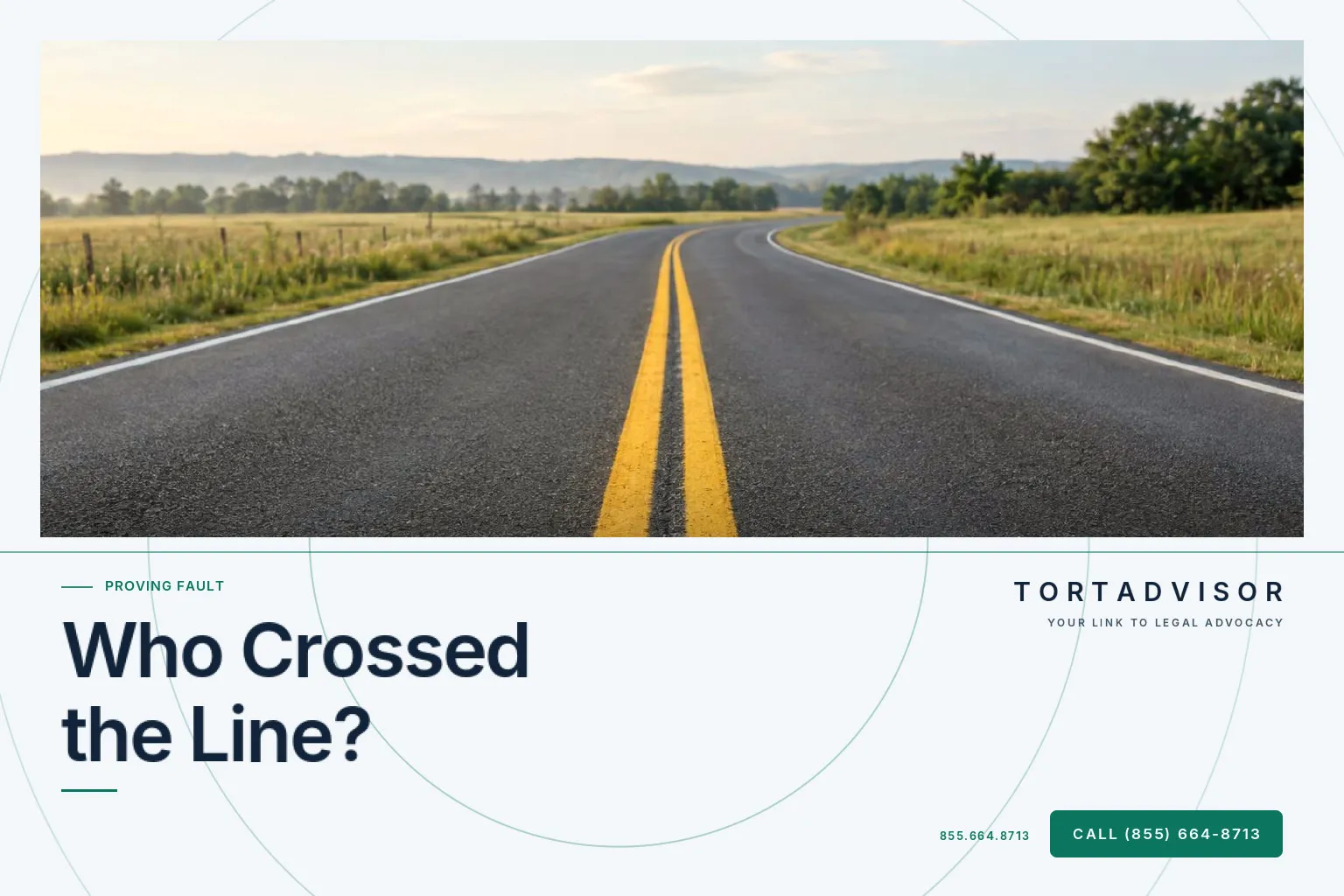
Yes, in many cases you can sue after a head-on crash. If another driver drifted over the centerline, entered a road going the wrong way, or otherwise caused the impact, a head-on collision lawsuit may let you or your family seek compensation for injuries and losses. Proving it usually comes down to evidence that the other driver was careless and that this carelessness caused the crash. That evidence can include police reports, witness accounts, scene photos and, in many vehicles, an event data recorder that captures information such as speed just before and during a crash.
Head-on crashes are among the most dangerous on the road. Federal Highway Administration data from 2016 to 2018 show that head-on collisions were the most harmful event in 15,744 roadway departure deaths, or 27% of all such fatalities. Crashes caused by drivers going the wrong way on divided highways and ramps often happen at high speed and tend to be more severe. Because the injuries can be so serious, it helps to understand your options early.
This guide explains how head-on crashes typically happen, how fault is proven, and what happens if both drivers share some of the blame. It also covers the kinds of damages you may be able to claim, how wrongful death claims work when a crash takes a loved one’s life, and practical steps to protect a possible claim. Laws differ from state to state, so we point out where the rules depend on where the crash happened.
Can You File a Lawsuit After a Head-On Collision?
In many cases, yes. If another driver’s carelessness caused the head-on crash that injured you, you may have a claim for compensation. A claim usually rests on two things: showing that the other driver was at fault, for example by drifting across the centerline into your lane or driving the wrong way, and showing that their conduct caused your injuries.
Fault is not always obvious after a head-on crash. Both drivers may say the other crossed over, and the evidence on the road and in the vehicles often matters. The sections below explain how fault is proven, what happens when blame is shared, and which losses may be recoverable.
Why head-on crashes often lead to serious injury claims
Two vehicles meeting front to front combine their forces, which is why these crashes are among the most dangerous on the road. The Federal Highway Administration’s analysis of 2016–2018 fatal crash data on head-on crashes found that head-on collisions were the most harmful event in 15,744 roadway departure deaths. That is 27 percent of all roadway departure fatalities. The same report identifies a vehicle leaving its lane and entering opposing traffic as a cause of these crashes. People who survive may face lasting injuries, long recoveries and significant costs.
Insurance claim or lawsuit?
Seeking compensation usually begins with an insurance claim against the at-fault driver’s coverage rather than a court filing. A lawsuit is the option if that claim does not resolve. For the general step-by-step process, see our guide to how car accident injury claims work. This article focuses on what makes head-on cases different.
Find out if you may have a claim
Answer a few questions and a trained case advisor will review your situation — most people finish in about a minute.
- Free — no cost, no obligation
- About a minute to complete
- Reviewed by a trained case advisor
- Nothing you submit is published
Your details are sent over a secure connection and reviewed confidentially.
Wrong-Way Driving and Lane Departure: How Head-On Crashes Happen
Most head-on crashes start in one of two ways: a driver drifts or swerves out of their lane into oncoming traffic, or a driver travels the wrong way on a divided highway. Knowing which one happened in your crash helps show who caused it.
Lane departure: crossing into oncoming traffic
The Federal Highway Administration (FHWA) treats a vehicle that crosses an edge line or centerline, or otherwise leaves its travel lane, as a roadway departure. When that vehicle crosses the centerline, it can end up directly in the path of oncoming cars. Head-on crashes are a major part of this problem. According to FHWA’s fact sheet on head-on crashes, from 2016 to 2018 head-on collisions were the most harmful event in 15,744 roadway departure deaths, or 27% of all roadway departure fatalities. The same fact sheet lists centerline rumble strips, which warn drivers when they begin to drift over the center of the road, among the countermeasures.
Wrong-way driving: against the flow of traffic
FHWA defines a wrong-way driving crash as one in which a vehicle traveling against the legal flow of traffic on a high-speed divided highway or access ramp hits a vehicle going the correct direction. FHWA notes that these crashes involve high-speed head-on or opposite-direction sideswipe impacts, which tend to be more severe than other types of crashes.
Why the cause matters for your claim
The way a crash happened often points toward who may be responsible. A driver who crosses the centerline or enters a highway ramp going the wrong way is usually the one investigators look at most closely. That is a starting point, not a final answer. A driver may have swerved to avoid something, or another vehicle may have played a part. Every case depends on its own facts, which is why the evidence covered in the next section matters so much.

How Fault Is Proven in a Head-On Crash
Fault in a head-on collision usually comes down to one question: which vehicle crossed into the other’s path? The answer is built from several kinds of evidence that, taken together, show what happened in the seconds before impact.
Physical evidence at the scene
The roadway itself often shows where the vehicles met. Investigators look at:
- Debris fields: broken glass, plastic and fluids tend to collect near the point of impact.
- Gouge and scrape marks: metal parts digging into the pavement can show where the collision happened relative to the centerline.
- Final resting positions: where each vehicle came to a stop can help reconstruct its path and direction of travel.
Together, these clues can show which vehicle was over the centerline or traveling the wrong way.
Reports, witnesses and video
The police crash report records the officer’s observations, diagrams and statements taken at the scene. Accounts from other drivers, passengers or bystanders can confirm which lane each vehicle was in. Dashcam, traffic camera or nearby security footage, if any exists, can be especially persuasive.
Event data recorder information
Many vehicles carry an event data recorder (EDR). Under federal Event Data Recorder rules (49 CFR Part 563), an EDR is a device that records vehicle data from just before and during a crash, such as speed over time, so it can be retrieved afterward. Part 563 sets uniform requirements for vehicles that are equipped with an EDR. It does not require every vehicle to have one. Reading the data takes specialized retrieval tools and access to the vehicle itself, so keeping your vehicle preserved, rather than repaired or scrapped right away, can matter.
Driver conduct
When the evidence shows that a driver was impaired, distracted, fatigued or speeding, those facts can help support a finding that the driver acted negligently and caused the crash.
What If Both Drivers Share the Blame?
Sharing some of the blame does not always end your claim, but it can shrink it or, in some cases, block it entirely. The rules for shared fault differ from state to state, so where the crash happened matters a great deal.
A Texas Example
Texas is one example of how these rules work. Under the Texas Civil Practice and Remedies Code Chapter 33 on proportionate responsibility:
- The cutoff: A claimant cannot recover damages if their share of responsibility is greater than 50 percent (§33.001).
- The reduction: If the claimant is not barred, the court reduces their damages by their own percentage of responsibility (§33.012).
In practice, every percentage point assigned to you lowers what you can recover. Crossing the 50 percent line can mean recovering nothing at all. Other states use different rules, so the Texas approach should not be taken as the rule where you live.
How Shared Fault Comes Up in Head-On Cases
Even when the other driver clearly crossed into your lane, their insurer may try to shift part of the blame to you. Common arguments include:
- Speed: that you were going too fast to avoid the collision.
- A delayed reaction: that you were distracted or braked or steered too late.
- Your position in the lane: that you drifted toward the centerline yourself.
The evidence described in the previous section is how you answer these arguments. Event data recorder readings, scene measurements, witness accounts and police findings can show how fast each vehicle was moving and when each driver reacted. Strong, early evidence can keep your share of responsibility low, and in a state like Texas, that can decide whether you recover anything at all.
Damages You May Be Able to Claim
If another driver caused your head-on crash, you may be able to seek money for the losses it caused. Which damages are available, and whether any caps limit them, depends on the law of the state where you bring your claim.
Categories commonly included in a head-on collision claim are:
- Medical bills: emergency care, hospital stays, surgery, rehabilitation and future treatment.
- Lost income: wages you missed while you were recovering.
- Reduced earning capacity: if your injuries limit the work you can do in the future.
- Property damage: repair or replacement of your vehicle and other damaged belongings.
- Pain and suffering: physical pain, emotional distress and loss of enjoyment of life.
Punitive (Exemplary) Damages
Punitive damages, also called exemplary damages, are meant to punish especially serious misconduct rather than to repay your losses. They are limited, and the rules vary by state. In Texas death cases, for example, Chapter 71 of the Texas Civil Practice and Remedies Code allows exemplary damages when the death was caused by the defendant’s willful act or omission or gross negligence.
Why There Is No “Typical” Payout
We don’t give an average head-on collision payout here because there isn’t a reliable one to give. What a claim may be worth depends on how badly you were hurt, what the evidence shows, the insurance limits involved and the state where the claim is filed.
For a rough starting point, you can try our free car accident settlement calculator. Our guide to lawsuit settlement amounts explains how payouts are generally figured, and you can read about how TortAdvisor compiles settlement estimates to see where those numbers come from.
If your injuries keep you from working long term, you may also want to look into SSDI benefits for long-term disability. SSDI is a separate benefit from any injury claim.

Wrongful Death Claims After a Fatal Head-On Collision
If a head-on crash took the life of someone you love, your family may be able to bring a wrongful death claim against the driver or other party responsible. These claims come from state law, so each state decides who may file, which losses can be recovered, and how fault is divided. The law of the state where the crash happened usually controls.
A Texas Example: Liability for a Death
Texas shows how one state handles these claims. Under Texas Civil Practice and Remedies Code Chapter 71, a person is liable for damages when an injury that causes death was caused by their wrongful act, neglect, carelessness, unskillfulness, or default (§71.002). The same chapter allows exemplary damages when the death was caused by a willful act or gross negligence (§71.009).
Texas also keeps a separate survival action (§71.021). The injured person’s own personal injury claim does not end with their death. This is important when the person survived for a time after the crash. The survival claim belongs to the person who died, while the wrongful death claim covers the family’s own losses.
The Deceased Person’s Share of Fault Still Counts
Shared-fault rules can apply even when the person who was hurt has died. Under Texas’s proportionate responsibility statute, Chapter 33, recovery is barred if the claimant’s percentage of responsibility is greater than 50 percent (§33.001). If it is 50 percent or less, damages are reduced by that percentage (§33.012). In a head-on crash, the evidence about which vehicle crossed into the other lane can shape the family’s claim.
Who Can File in Your State
The rules about which relatives may bring a claim differ from state to state. If you are trying to work out whether you can file, this guide to a wrongful death claim after a fatal car accident explains who can file, the steps for the family, Florida deadlines and survivors, and the insurance that may pay.
Practical Next Steps After a Head-On Crash
You don’t have to do everything at once. A few steady steps can protect your health and keep your options open while you decide whether a claim makes sense for you.
- Get medical care and keep every record. See a doctor even if your injuries seem minor at first. Save visit summaries, test results, bills, prescriptions and notes about any time missed from work. These records are often the clearest link between the crash and what it has cost you.
- Preserve the vehicle and its data. Many vehicles carry an event data recorder. Under federal rules on event data recorders, this is a device that records vehicle data, such as speed over time, just before and during a crash so it can be retrieved afterward. If you can, keep your vehicle from being repaired, sold or scrapped until you know whether that data matters to your case.
- Gather the basics. Keep your photos of the vehicles, the road and your injuries. Get a copy of the police report. Write down the names and contact details of any witnesses.
- Consider whether work was involved. If the crash happened while you were working or driving for your job, you may be able to bring workers’ compensation claims for on-the-job crashes. That coverage may apply alongside a claim against the other driver, or in place of one.
- Check the filing deadline where the crash happened. Each state sets its own deadlines, and they can differ by type of claim. An injury claim and a wrongful death claim may follow different rules, so look up the rule for the state where the collision occurred.
TortAdvisor provides research tools, not legal representation. A licensed attorney in your state can review your specific facts and tell you which rules apply. If you’d like more background first, you can browse legal insights with practical guides on car accident claims, including reporting, deadlines and insurer rules.
Frequently asked questions
Who is usually at fault in a head-on collision?
Fault often points to the driver who left their lane. Federal safety data identifies lane departure into opposing traffic as a cause of head-on crashes, and a driver going the wrong way on a divided highway or ramp is another common scenario. Still, fault is never automatic. It depends on evidence such as police reports, witness accounts, vehicle damage and crash data. Sometimes the other driver also shares some responsibility.
Can I still recover money if I was partly at fault for a head-on crash?
Possibly, depending on your state’s rules. Texas is one example. Under its proportionate responsibility law, a claimant cannot recover if their share of responsibility is greater than 50 percent, and any recovery is reduced by the claimant’s percentage of responsibility. If you were found 20 percent responsible, your damages would be reduced by 20 percent. Other states handle shared fault differently, so the law where the crash happened matters.
Can my family file a lawsuit if a loved one was killed in a head-on collision?
In many cases, yes. Texas offers one example. Its wrongful death statute makes a person liable when a death is caused by their wrongful act, neglect, carelessness, unskillfulness or default. It also allows exemplary damages when the death resulted from a willful act or gross negligence. Separately, the injured person’s own personal injury claim survives their death. Who may file and the deadlines vary by state.
What does a car’s event data recorder show after a crash?
An event data recorder, or EDR, is a device that records vehicle data just before and during a crash, such as speed over time, so the data can be retrieved afterward. Federal rules set uniform requirements for vehicles that have an EDR, including requirements for the tools used to retrieve the data. In a head-on crash, this information can help show how fast each vehicle was going and what happened in the final seconds.
Are wrong-way crashes more severe than other crashes?
They tend to be. The Federal Highway Administration notes that wrong-way driving crashes on high-speed divided highways and ramps involve high-speed head-on or opposite-direction sideswipe impacts that tend to be more severe. Because both vehicles are moving toward each other, the forces involved can be extreme. That is one reason injuries from these crashes are often serious, and why careful documentation of medical care and losses matters when you pursue a claim.
Sources
- Head-On Crashes (FHWA-SA-21-025), Roadway Departure Safety · Federal Highway Administration, U.S. DOT · 2022-06-01
- About Intersection Safety: Wrong-Way Driving Crashes · Federal Highway Administration, U.S. DOT
- 49 CFR Part 563: Event Data Recorders · Electronic Code of Federal Regulations (NHTSA regulation)
- Texas Civil Practice and Remedies Code Chapter 33: Proportionate Responsibility · Texas Legislature
- Texas Civil Practice and Remedies Code Chapter 71: Wrongful Death; Survival · Texas Legislature
This article is general information, not legal advice. Laws and deadlines vary by state and change over time; check the linked sources or speak with a licensed attorney about your situation.
A concussion claim needs more context than the diagnosis alone. Learn which medical and work records to gather and what questions to ask before discussing a settlement.
Who had the right of way is the starting question—not simply whose vehicle struck the other. Explore intersection scenarios, evidence and clearly labeled state-law examples before researching compensation.
Start with official sources for San Antonio crash updates, then learn how to interpret their limitations. This guide keeps live incident information separate from the records needed to research an injury claim.