
Car accident claims ask the at-fault driver's insurer, or your own coverage, to pay for crash injuries and losses. What usually decides value is the medical record, how fault is split under your state's rule, and the policy limits available. Police-reported traffic crashes injured an estimated 2.42 million people in the U.S. in 2024, according to NHTSA.
Updates on Car Accident Claims
A concussion claim needs more context than the diagnosis alone. Learn which medical and work records to gather and what questions to ask before discussing a settlement.
Who had the right of way is the starting question—not simply whose vehicle struck the other. Explore intersection scenarios, evidence and clearly labeled state-law examples before researching compensation.
Start with official sources for San Antonio crash updates, then learn how to interpret their limitations. This guide keeps live incident information separate from the records needed to research an injury claim.
A hospital stay raises practical questions about bills, missed work and continuing care. This California-focused guide explains the evidence behind injury compensation and distinguishes medical coverage from a damages claim.
Does another driver's traffic violation answer the question of fault? This guide examines negligence per se through clearly labeled state examples, with attention to causation, exceptions and shared responsibility.

Confused by the wording after another driver left a crash? This guide compares official state examples and helps you organize questions about the incident, your records, and possible insurance coverage.

Si el seguro dice que usted tuvo parte de la culpa en el choque, eso no siempre termina su reclamo. Le explicamos en lenguaje sencillo cómo funciona la falla comparativa, en qué cambian las reglas según el estado y qué pasó en Florida en 2023.

Understand how to estimate driving speed from distance and elapsed time—and why a calculation needs context after a crash. Learn about unit conversions, stopping distance and vehicle-recorded evidence.

A practical checklist for collecting crash details and organizing medical, insurance and expense records. Start with safety, then use the record prompts when you are able.

Explore the deadline, shared-fault and medical-expense questions to discuss before pursuing a Florida crash injury claim. This guide focuses on liability and compensation, not PIP benefit applications.
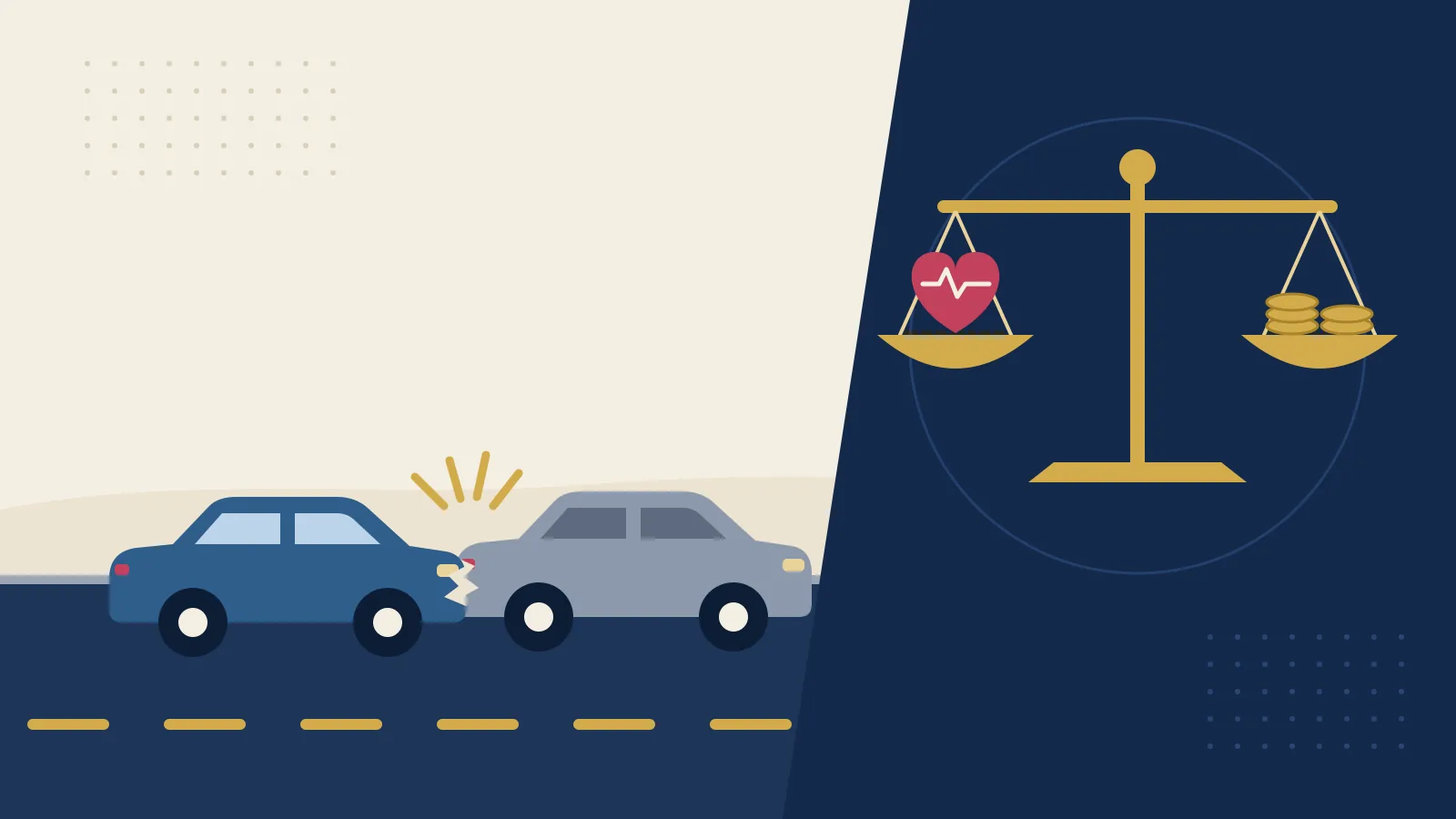
There is no formula for pain and suffering in a car accident. What jury instructions say, which no-fault states limit it, which states cap it, and how it is taxed, with every rule sourced.

If an uninsured or underinsured driver hits you, the claim usually runs through your own policy. What UM and UIM coverage pay, how a claim works, hit-and-run rules and the deadlines to watch.
Anyone comparing settlement outcomes for a rear-end collision lawsuit needs to understand how fault is decided, what similar claims have recovered, and which evidence moves an insurer off a lowball offer. Quick Answer: In most states, the rear driver is presumed at fault in a rear-end collision because drivers have a legal duty to maintain [...]

How accident claim lawyers evaluate a case, how insurers approach it, and what California law actually allows you to recover.
If you were hurt in a semi-truck accident lawsuit, understanding federal trucking regulations and liability rules is the first step toward valuing a claim properly. Hurt in a semi-truck or 18-wheeler crash? Commercial truck accidents involve federal safety rules and corporate insurance policies that don't apply to ordinary car crashes. A free, no-obligation review can [...]
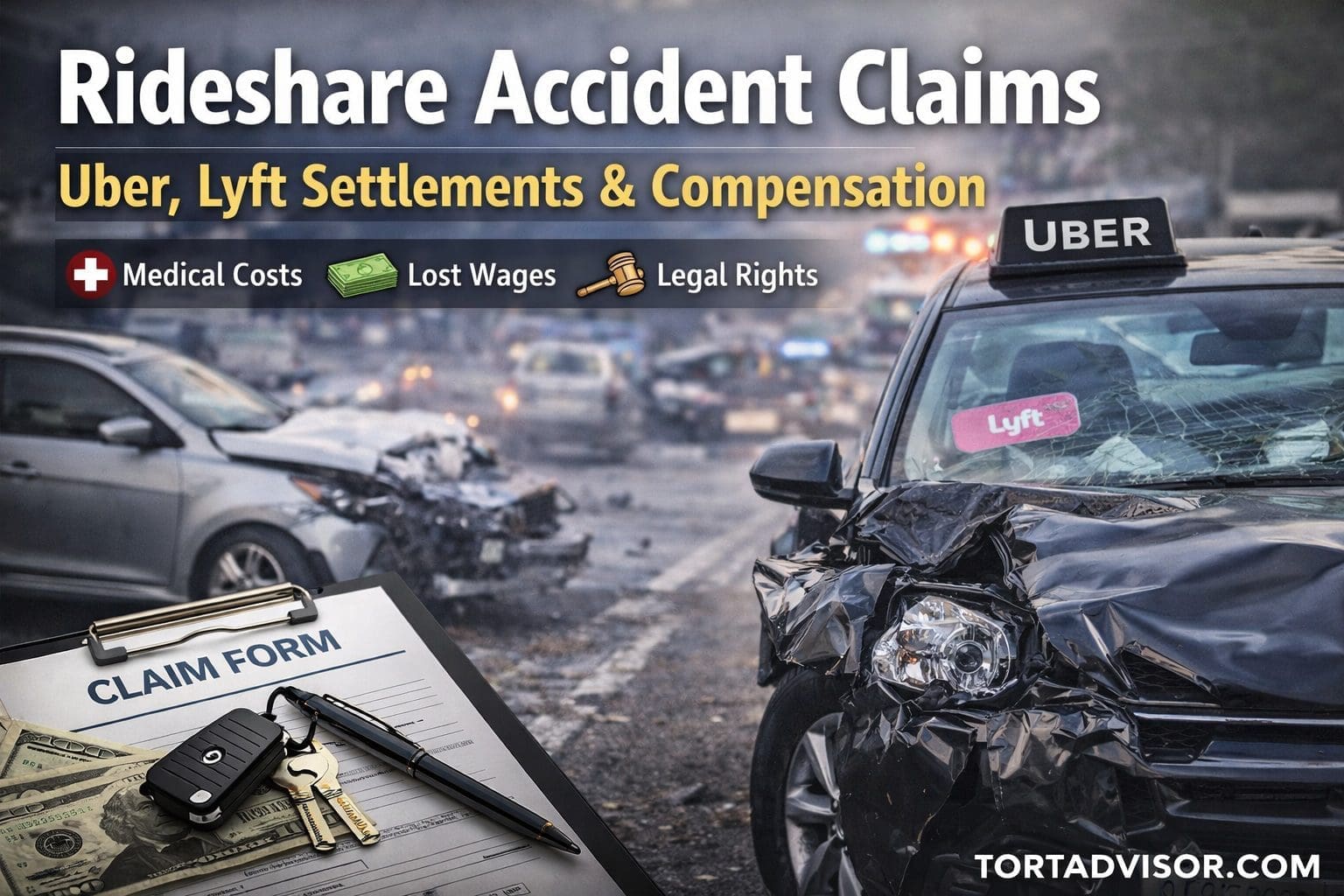
Anyone researching who is liable in a rideshare accident after a recent crash needs to understand how commercial rideshare insurance layers work, since the answer changes depending on the driver's app status at the moment of impact. Who Is Liable in a Rideshare Accident? Rideshare crashes involve layers of corporate insurance that don't apply to [...]
Key facts (as of October 2026)
- Since March 24, 2023, a Florida claimant more than 50 percent at fault recovers nothing (Fla. Stat. § 768.81(6)).
- New York's 2026 amendment bars a no-fault motor vehicle injury claimant whose fault exceeds the defendant's (CPLR 1411(b)).
- Alabama, Maryland, North Carolina, Virginia and D.C. keep contributory negligence (Cornell LII); Maryland's 2026 reform bill went to interim study.
- Twelve states plus Puerto Rico have no-fault insurance; New Jersey, Pennsylvania and Kentucky let drivers choose (III).
- 15.4 percent of motorists were uninsured in 2023, from 5.7 percent in Maine to 28.2 percent in Mississippi (NAIC).
Fault rules: how shared blame changes a claim
| Rule | If you were partly at fault | Examples |
|---|---|---|
| Pure comparative | Award reduced by your share of fault, at any level | California; New York outside no-fault motor vehicle suits |
| Modified comparative | Award reduced, then barred at the state's 50 or 51 percent threshold | Florida (since 2023); New York no-fault motor vehicle suits (since 2026) |
| Contributory negligence | Any fault can bar recovery | Alabama, Maryland, North Carolina, Virginia, D.C. |
Insurers, and juries at trial, set the percentages from the evidence. The fault rules by state page lists each state.
No-fault, PIP and uninsured motorist coverage
In the no-fault states (Florida, Hawaii, Kansas, Kentucky, Massachusetts, Michigan, Minnesota, New Jersey, New York, North Dakota, Pennsylvania and Utah), your own personal injury protection pays medical costs and lost wages first, whoever caused the crash, and a pain-and-suffering claim against the other driver needs an injury that meets the state's threshold. Elsewhere, the at-fault driver's liability insurer pays. When that driver has no insurance or too little, your own UM/UIM coverage may pay up to your limits; see how UM and UIM claims work.
What decides the value of a claim
- Medical evidence: prompt diagnosis and consistent treatment tie the injury to the crash.
- Fault percentage: any share assigned to you reduces, and in some states bars, recovery.
- Policy limits: the at-fault driver's limit and your UM/UIM limits often set the ceiling.
Deadlines (statutes of limitations vary by state)
New York allows three years for most injury suits (CPLR 214). Florida allows two years for negligence claims arising after March 24, 2023, and four for older ones (HB 837 summary). Louisiana's two-year tort period (Civil Code art. 3493.1) took effect July 1, 2024; earlier injuries can fall under the prior rule. Policy notice requirements are separate and often shorter.
Evidence to keep
- Your policy's declarations page showing PIP, medical payments and UM/UIM limits.
- The crash report, photos, witness names and repair estimates.
- Medical records without gaps in treatment.
When people hire a lawyer
Claimants commonly consult a lawyer when fault is disputed in a modified or contributory negligence state, when injuries may cross a no-fault threshold or exceed the other driver's limits, or when their own insurer contests a UM/UIM claim. TortAdvisor is not a law firm; see the personal injury attorney guides.
Frequently asked questions
What if I was partly at fault for the car accident?
In a pure comparative state, your award is reduced by your share of fault, whatever it is. In a modified state, it is reduced until your share reaches the state's threshold and is then barred; Florida bars recovery above 50 percent. In Alabama, Maryland, North Carolina, Virginia and Washington, D.C., contributory negligence can bar recovery entirely.
Can I sue the other driver in a no-fault state?
Yes, but only for injuries that meet the state's threshold. Five no-fault states use a verbal threshold based on the type or severity of injury (Florida, Michigan, New Jersey, New York and Pennsylvania), and seven use a monetary threshold tied to medical costs. Below the threshold, your own personal injury protection pays your economic losses.
How long do I have to file a car accident claim?
It depends on the state and on who is responsible. Examples include three years for most New York injury suits, two years in Florida for negligence claims arising after March 24, 2023, and two years under Louisiana's 2024 rule. Crashes with government vehicles need earlier written notice, and insurance policies require prompt notice of any crash.
Sources
Filter Posts
Browse by Category