Hit by an Uninsured Driver? Your Rights, UM/UIM Coverage & Claims in 2026

If an uninsured driver causes a crash, you may be able to recover injury damages through uninsured motorist (UM) coverage, another applicable policy, or a claim against the driver. If the driver has liability insurance but its limits are insufficient, underinsured motorist (UIM) or supplementary coverage may help. Eligibility depends on the state, policy language, who was injured, liability, damages and available limits. Check your declarations page and report the collision promptly; do not assume UM or UIM automatically pays every loss.
SourceNAIC11 Jun 2026Fla. Stat. 627.727Current law
Being hit by an uninsured driver is not rare. The National Association of Insurance Commissioners (NAIC), citing Insurance Research Council data, reports that 15.4% of motorists, or about one in seven drivers, were uninsured in 2023, with state rates ranging from 5.7% in Maine to 28.2% in Mississippi. This guide explains what UM and UIM cover, whether you are required to carry them, how a claim works step by step, what changes after a hit-and-run, and the deadlines that can put your coverage at risk.
SourceNAIC30 Jul 2025
Editorial review, 12 October 2026: This page was expanded with a coverage comparison, first-steps checklist, separate New York no-fault versus UM notice rules, and dispute documentation guidance. Sources include the 2026 Florida Statutes, New York Insurance Law, state insurance regulator guidance and NAIC consumer material. State law, policy wording and accident facts control. TortAdvisor publishes legal information, not individualized legal advice.
What happens if an uninsured driver hits you?
If your policy provides applicable UM bodily injury coverage, you can notify your own insurer and pursue an injury claim based on the at-fault driver's liability and your legally recoverable damages, subject to policy and state-law limits. Other coverage, including no-fault benefits or a resident family member's policy, may also require review. Your insurer can investigate fault, coverage and the value of the claim; you should not assume payment is automatic.
If you have no UM coverage: your health insurance, any personal injury protection (PIP) or medical payments coverage, and a claim against the driver personally may still help. A case review can sort out which applies to you.
What to do first after a crash with an uninsured driver
- Get to safety and call for emergency help where needed. Seek appropriate medical evaluation; symptoms may develop after the collision.
- Report the crash and collect evidence. Record the police report number, location, photos, witness contacts, vehicle details and any information the other driver gives you.
- Notify the appropriate insurers promptly. Tell your insurer about the collision and ask which UM, UIM, PIP, MedPay, collision or UMPD provisions may apply. Obtain the policy declarations and endorsements.
- Preserve your claim record. Save insurer emails, claim numbers, appointment records, out-of-pocket costs and work absences; do not guess at the value of your injuries before treatment is clear.
- Check consent and reporting deadlines before settling. State rules and policy conditions can affect hit-and-run claims and settlements involving an underinsured driver's insurer.
Bottom line: Taking these steps protects evidence, but it does not guarantee coverage or compensation. A licensed lawyer in your state can evaluate a disputed claim.
UM and UIM: what each coverage does
Uninsured motorist (UM) bodily injury coverage and underinsured motorist (UIM) coverage can protect injured people when the at-fault driver has no applicable bodily-injury insurance or too little coverage. Availability and terms vary by state. Vehicle repairs are a separate question: collision insurance or uninsured-motorist property-damage (UMPD) coverage may apply, depending on the policy and jurisdiction. Do not assume UM bodily injury insurance pays for car damage.
SourceNAIC11 Jun 2026NAIC30 Jul 2025
State law can blur the line between the two. Florida's statute treats a vehicle as uninsured for this coverage even when it is insured, if the at-fault driver's insurer "has provided limits of bodily injury liability for its insured which are less than the total damages sustained by the person legally entitled to recover damages." In other words, Florida's uninsured motorist coverage also does the job of underinsured coverage. New York handles underinsured drivers through separate supplementary uninsured/underinsured motorists (SUM) coverage, which a policy provides "at the option of the insured."
SourceFla. Stat. 627.727Current lawN.Y. Ins. Law 3420Current law
UM vs. UIM vs. PIP: which coverage may pay?
| Coverage | Typical purpose | Important limitation |
|---|---|---|
| UM bodily injury | Injuries when the legally responsible driver lacks applicable coverage | Must be purchased or supplied under state law; fault, damages and UM limits matter. |
| UIM / SUM | Injuries when the at-fault driver's liability limits are inadequate | Offsets, exhaustion, consent requirements and available limits vary. |
| PIP / no-fault | Certain treatment expenses and wage losses regardless of fault | Only applies where provided; deadlines and statutory limits can be strict. |
| MedPay | Covered medical costs, sometimes regardless of fault | Optional in many jurisdictions; usually has a relatively modest limit. |
| Collision / UMPD | Vehicle damage, where coverage applies | Deductibles, availability and hit-and-run conditions can differ. |
| Health insurance | Covered care under a health plan | Network rules, deductibles and possible reimbursement claims may apply. |
Ask your insurer for the declarations page and the full policy, including endorsements. UM/UIM bodily injury, property damage and no-fault benefits are not interchangeable.
Is uninsured motorist coverage required?
It depends on your state. The NAIC says that "in some states, you're required to have uninsured and underinsured motorist coverage." New York is one of them. Its Insurance Law bars insurers from issuing an auto liability policy there unless it includes uninsured motorist coverage, paying up to $25,000 for injury to one person and up to $50,000 for the death of one person in any one accident. Protection above those amounts, and protection against underinsured drivers, comes from the optional SUM coverage described above.
SourceNAIC11 Jun 2026N.Y. Ins. Law 3420Current law
Florida takes an opt-out approach. A Florida auto policy that includes bodily injury liability coverage must also include uninsured motorist coverage, unless "an insured named in the policy makes a written rejection of the coverage on behalf of all insureds under the policy." That means a Florida driver may have UM coverage or may have rejected it in writing when buying the policy. The only reliable way to know what you have is to check the declarations page or ask your insurer for a full copy of the policy.
SourceFla. Stat. 627.727Current law
What an uninsured motorist claim pays
Uninsured motorist bodily injury coverage pays what you could have recovered from the at-fault driver. Florida's statute describes the people it protects as those "legally entitled to recover damages from owners or operators of uninsured motor vehicles because of bodily injury, sickness, or disease, including death." New York's standard endorsement uses the same test. So the claim is measured by your injury damages under your state's law, including the rules on what an injured person may recover, and the payment is limited by the UM coverage limit on your policy.
SourceFla. Stat. 627.727Current lawN.Y. DFS UM endorsement
No-fault states add another layer. Florida auto policies must provide personal injury protection of up to "$10,000 in medical and disability benefits and $5,000 in death benefits." Its medical benefit pays 80% of reasonable expenses for medically necessary care, but only if the injured person receives initial services and care "within 14 days after the motor vehicle accident." Losses that PIP does not pay, and that the law lets you recover from the at-fault driver, are what the UM claim is for. Our fault rules by state table shows which states use no-fault insurance.
SourceFla. Stat. 627.736Current lawNAIC11 Jun 2026
Hit-and-run crashes
Uninsured motorist coverage can also apply when the driver who hit you cannot be identified; the NAIC's definition covers being hit by "an uninsured or a hit-and-run driver." Policies can attach conditions to that. New York's standard uninsured motorists endorsement, published by the Department of Financial Services, covers a hit-and-run vehicle only where the injury arises out of "physical contact" with you or the vehicle you were in, and it requires the accident to be reported "within 24 hours or as soon as reasonably possible" to a police, peace or judicial officer or the Commissioner of Motor Vehicles.
SourceNAIC11 Jun 2026N.Y. DFS UM endorsement
In practice, that means calling the police from the scene or as soon as you safely can, photographing the damage and the location, and getting the names and numbers of anyone who saw the crash. If no vehicle touched yours, for example when a driver forced you off the road and kept going, read your policy's hit-and-run definition closely, because a physical-contact rule like New York's can decide whether the claim is covered. Our step-by-step guide to what to do after a car accident covers the scene in more detail.
How an uninsured motorist claim works, step by step
The details differ by state and by policy. These steps use the New York and Florida rules above as examples of the conditions to look for in your own policy.
- Get medical care and keep the records. Treatment records are the core evidence of your injuries. In Florida, PIP medical benefits depend on initial care within 14 days of the crash.
- Report the crash to the police and get the report number. After a hit-and-run, your policy's reporting deadline may be as prompt as New York's 24-hour reporting condition (or as soon as reasonably possible).
- Confirm the other driver's insurance status. The police report, the driver's own statement and any denial letter from an insurer the driver named can all show that there was no coverage, or too little.
- Give your insurer written notice of a UM claim promptly. New York's endorsement requires written notice "within 90 days or as soon as practicable." Other policies set their own terms.
- Document your losses: medical bills, lost pay, repair estimates and a record of how the injuries affect daily life.
- Do not settle with an underinsured driver's insurer without telling your own. In Florida, a proposed settlement must be sent to your underinsured motorist insurer by certified or registered mail, and that insurer "then has a period of 30 days after receipt thereof to consider authorization."
- Expect negotiation, and possibly arbitration. Under New York's endorsement, if you and your insurer disagree about whether you are entitled to recover or about the amount, either side can make a written demand for arbitration under American Arbitration Association rules.
SourceFla. Stat. 627.736Current lawN.Y. DFS UM endorsementFla. Stat. 627.727Current law
Deadlines that can put your coverage at risk
Two different clocks run after a crash with an uninsured or underinsured driver. The first is set by your policy. Notice requirements, such as New York's written notice of a UM claim "within 90 days or as soon as practicable" and its police report for hit-and-runs "within 24 hours or as soon as reasonably possible," are conditions of the coverage, so missing them can put the claim at risk. The second clock is the law's deadline for bringing a claim or lawsuit, which varies by state and by type of claim. Our state-by-state table lists each state's general personal injury deadline.
SourceN.Y. DFS UM endorsement
Florida adds a medical deadline that is easy to miss: PIP medical benefits depend on getting initial care within 14 days of the crash. And while your insurer is reviewing the claim, do not assume that the legal clock has stopped. If the review is dragging on, or the insurer has disputed fault or the value of your injuries, that is the point to have your deadlines checked by a lawyer who handles uninsured motorist claims in your state, before any of them can pass.
SourceFla. Stat. 627.736Current law
New York and Florida: examples of different deadlines
New York: The Department of Financial Services explains that its no-fault benefits generally require written notice within 30 days unless an acceptable justification applies. That is a different claim from the state's standard uninsured motorist endorsement, which calls for written UM notice within 90 days or as soon as practicable. Its hit-and-run provisions can require prompt police reporting and additional sworn information. These are examples of different legal and policy clocks—not one nationwide deadline.
Sources N.Y. DFS no-fault FAQ N.Y. DFS UM endorsement
Florida: Section 627.736 generally requires initial medical care within 14 days for PIP medical benefits. Section 627.727 addresses UM coverage and special procedures when settling with an underinsured driver's liability insurer; a 30-day response period applies in the statutory proposed-settlement process. Neither rule is a universal deadline for filing every lawsuit or UM claim.
Sources Fla. Stat. § 627.736 Fla. Stat. § 627.727
Can you sue the uninsured driver?
Yes. A driver's lack of insurance does not change who caused the crash, and Florida's UM statute itself is built on the fact that you can be "legally entitled to recover damages from owners or operators of uninsured motor vehicles." The practical question is collection: a court judgment is only worth what can actually be recovered from the driver's income or assets. That is why your own UM coverage can be the more dependable source of payment, and why a case review looks for every possible source, including other policies, an employer and, in crashes involving Uber, Lyft or commercial vehicles, company coverage.
SourceFla. Stat. 627.727Current law
TortAdvisor's free, confidential case review connects people hurt by uninsured and underinsured drivers with participating law firms. TortAdvisor is not a law firm and does not give legal advice itself. A lawyer can read your policy, check the deadlines that apply in your state, deal with your insurer on your behalf, and tell you whether a claim against the driver is worth pursuing alongside your UM claim. Asking does not commit you to anything. You can start with the form on this page, or read our car accident lawsuit guide first.
What if you did not buy uninsured motorist coverage?
Do not assume the claim is over. Depending on where the collision happened and whose policy applies, possible sources of payment may include PIP or other no-fault benefits, medical-payments coverage, health insurance, an applicable policy held by a household member, insurance covering an employer or commercial vehicle, or a direct legal claim against a responsible party. None of those is automatic. Eligibility, coverage priorities and who may sue depend on the facts and state law.
Ask for your policy and any signed UM selection or rejection forms, especially if you believed you had coverage. Keep copies of all insurers' written coverage decisions.
What if your insurance company denies or undervalues the UM claim?
- Request the decision in writing and ask the insurer to identify the policy clauses and facts relied upon.
- Request the complete policy with declarations, endorsements and coverage-selection forms.
- Organize contrary evidence: police report, photos, witness information, medical records, bills, wage documentation and proof of the other driver's coverage status.
- Ask about internal review or appeal procedures and keep a dated record of submissions and conversations.
- Consider your state insurance department's complaint process and a licensed attorney's assessment of contractual and legal deadlines.
For help understanding injury claim valuation, see the car accident settlement calculator. It is an educational tool, not a prediction of what an insurer must pay.
Documents to gather for a UM/UIM case review
- Declarations page, complete policy, UM/UIM/PIP/MedPay endorsements, and any rejection or selection form.
- Crash report and incident number, vehicle information, scene photos and witness contact details.
- Other driver's insurer information, coverage denial or limits confirmation, if available.
- Medical visit dates, records, bills, prescriptions, rehabilitation and future-care recommendations.
- Pay stubs, tax or employment records showing verified lost earnings.
- Written insurer notices, adjuster emails, settlement offers and communications.
- Vehicle repair estimates, rental bills and proof of other out-of-pocket losses.
Still unsure where you stand?
Have a trained case advisor review your own facts — free, confidential, and with no obligation.
- Free — no cost, no obligation
- About a minute to complete
- Reviewed by a trained case advisor
- Nothing you submit is published
Your details are sent over a secure connection and reviewed confidentially.
Frequently asked questions about uninsured driver claims
What happens if I'm hit by an uninsured driver?
If your policy includes uninsured motorist coverage, you claim against your own insurer for the injury damages you could have recovered from the at-fault driver, up to your limit. You still have to show that the other driver was at fault and what your losses were.
SourceNAIC11 Jun 2026Fla. Stat. 627.727Current law
What is the difference between UM and UIM coverage?
Uninsured motorist (UM) coverage applies when the at-fault driver has no insurance or is an unidentified hit-and-run driver. Underinsured motorist (UIM) coverage applies when the driver has insurance, but not enough to cover your loss. Florida folds both into its uninsured motorist coverage.
SourceNAIC11 Jun 2026Fla. Stat. 627.727Current law
Does uninsured motorist coverage pay for a hit-and-run?
The NAIC's definition of UM coverage includes hit-and-run drivers, but policies attach conditions. New York's standard endorsement requires physical contact with the hit-and-run vehicle and a police report within 24 hours or as soon as reasonably possible.
SourceNAIC11 Jun 2026N.Y. DFS UM endorsement
Is uninsured motorist coverage required?
In some states. New York requires it on every auto liability policy issued there, and Florida requires it on policies with bodily injury liability coverage unless a named insured rejects it in writing.
SourceN.Y. Ins. Law 3420Current lawFla. Stat. 627.727Current law
Is it worth suing an uninsured driver?
It can be, but a judgment only turns into money if the driver has income or assets to collect from. That is why a UM claim against your own policy can be the more dependable route. A lawyer can check whether the driver, an employer or another policy could also pay.
How long do I have to report an uninsured motorist claim?
It depends on your policy and your state. New York's standard endorsement requires written notice of a UM claim within 90 days or as soon as practicable, and the deadline to file a lawsuit is set separately by state law.
SourceN.Y. DFS UM endorsement
Does uninsured motorist insurance pay for vehicle repairs?
UM bodily injury coverage generally addresses injuries, not car repairs. Depending on your state and policy, collision insurance or uninsured-motorist property-damage coverage may pay qualifying vehicle damage. Ask about deductibles and exclusions before authorizing repairs.
Can I use my own coverage if I was a passenger?
Possibly. Coverage can depend on the vehicle's policy, your own policy, any applicable resident-relative policy and state priorities. Do not assume the driver's policy is the only available source.
Can I settle with the other driver's insurer before bringing a UIM claim?
Check your own insurer's policy and applicable state procedure first. For example, Florida law contains a written-notice and 30-day process in certain proposed underinsured-motorist settlements. Settling or signing a release without the required steps can jeopardize rights.
What can I do if my UM claim is denied?
Request a written explanation with the specific policy provisions, preserve records, review the appeal or dispute process, and seek qualified legal advice before deadlines expire. The policy and state law may provide avenues for contesting the decision.
Related car accident research
If you were hurt in a crash, our car accident lawsuit guide explains how insurance claims become lawsuits, and what to do after a car accident walks through the first steps at the scene. Fault rules and injury filing deadlines for every state are in our state-by-state table. To see which factors affect an injury claim's value, try the car accident settlement calculator or read how motor vehicle accident settlement amounts are estimated.
Editorial note: This page explains how uninsured and underinsured motorist coverage works using state statutes, a state-prescribed policy endorsement and insurance regulators' consumer guidance. It is legal information, not legal advice. Your own policy wording and your state's law control your claim, and they can differ from the New York and Florida examples used here.
Primary sources
- National Association of Insurance Commissioners, What Does Auto Insurance Cover?, 11 June 2026
- New York Department of Financial Services, Consumer FAQs About No-Fault Insurance
- National Association of Insurance Commissioners, Insurance Topics: Uninsured Motorists, updated 30 July 2025
- New York Insurance Law § 3420(f)
- New York Department of Financial Services, Uninsured Motorists Endorsement – New York
- Florida Statutes § 627.727 (2026)
- Florida Statutes § 627.736 (2026)
- New York Department of Financial Services, Auto Insurance Information for Consumers
Related Posts

There is no formula for pain and suffering in a car accident. What jury instructions say, which no-fault states limit it, which states cap it, and how it is taxed, with every rule sourced.

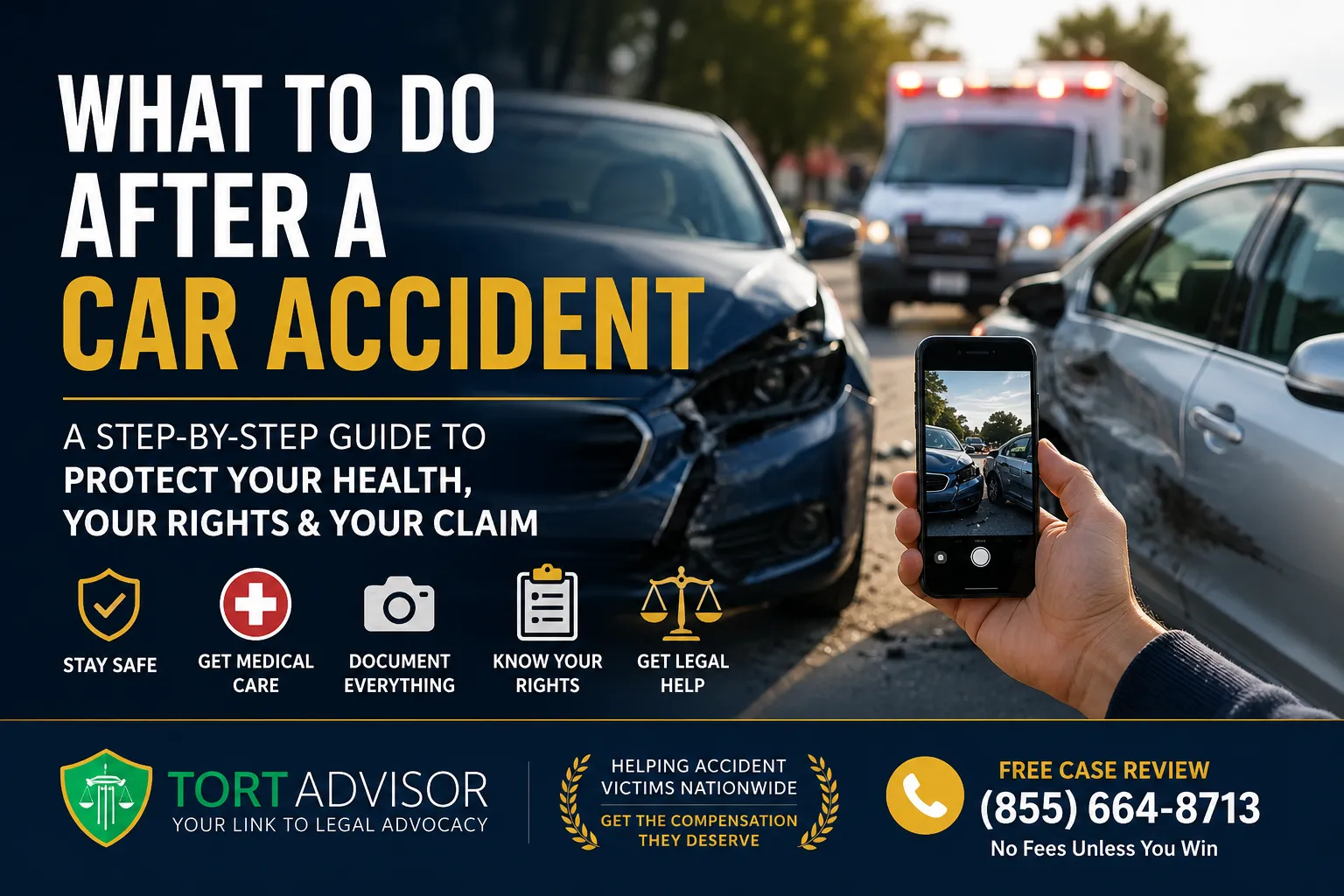
Involved in a crash? Follow this step-by-step guide on what to do after a car accident — from the scene to your settlement — to protect your health and your rights.

Anyone comparing settlement outcomes for a rear-end collision lawsuit needs to understand how fault is decided, what similar claims have [...]