
Car Accident Fault Rules & Statute of Limitations by State
Compare no-fault vs. at-fault insurance rules, comparative and contributory negligence laws, and personal-injury filing deadlines that apply to car, truck, motorcycle, and boating accident claims in all 50 states and Washington, D.C.
On This Page
Fault-system and negligence-rule classifications reflect the general rule for motor vehicle accident claims as of the “Last Updated” date above. State legislatures amend these rules periodically & individual claims can have exceptions (e.g., government-entity notice deadlines, minors, discovery rule tolling) — confirm current law with a licensed attorney before relying on any figure below.
Fault System by State: No-Fault vs. At-Fault
Most states use an at-fault (tort) system: the driver who caused the crash, and their liability insurer, are responsible for the other driver’s medical bills, lost wages, and pain and suffering. A smaller group of states use a no-fault system: each driver’s own Personal Injury Protection (PIP) coverage pays their medical bills regardless of who caused the crash, and you can only step outside no-fault to sue the other driver if your injury meets a state-specific severity or cost “threshold.” Three of the twelve no-fault states let drivers choose a traditional at-fault policy instead.
| Category | States |
|---|---|
| No-Fault (mandatory PIP) | Florida, Hawaii, Kansas, Massachusetts, Michigan, Minnesota, New York, North Dakota |
| Choice No-Fault (PIP with at-fault opt-out) | Kentucky, New Jersey, Pennsylvania |
| At-Fault (Tort) | All other states — see full table below |
Negligence Rule by State
If you share some blame for causing the accident, your state’s negligence rule determines whether — and how much — you can still recover. There are four general categories used across the 50 states and D.C.:
| Rule | How It Works | States |
|---|---|---|
| Pure Contributory Negligence | Any fault by the plaintiff — even 1% — bars recovery entirely. | Alabama, D.C., Maryland, North Carolina, Virginia |
| Pure Comparative Negligence | Plaintiff can recover even if 99% at fault; recovery is reduced by their percentage of fault. | Alaska, Arizona, California, Florida, Kentucky, Louisiana, Mississippi, Missouri, New Mexico, New York, Rhode Island, South Dakota, Washington |
| Modified Comparative (50% Bar) | Plaintiff recovers a reduced amount if 49% or less at fault; recovers nothing at 50% or more. | Arkansas, Colorado, Georgia, Idaho, Kansas, Maine, Nebraska, North Dakota, South Carolina, Tennessee, Utah, West Virginia |
| Modified Comparative (51% Bar) | Plaintiff recovers a reduced amount if 50% or less at fault; recovers nothing at 51% or more. | Connecticut, Delaware, Hawaii, Illinois, Indiana, Iowa, Massachusetts, Michigan, Minnesota, Montana, Nevada, New Hampshire, New Jersey, Ohio, Oklahoma, Oregon, Pennsylvania, Texas, Vermont, Wisconsin, Wyoming |
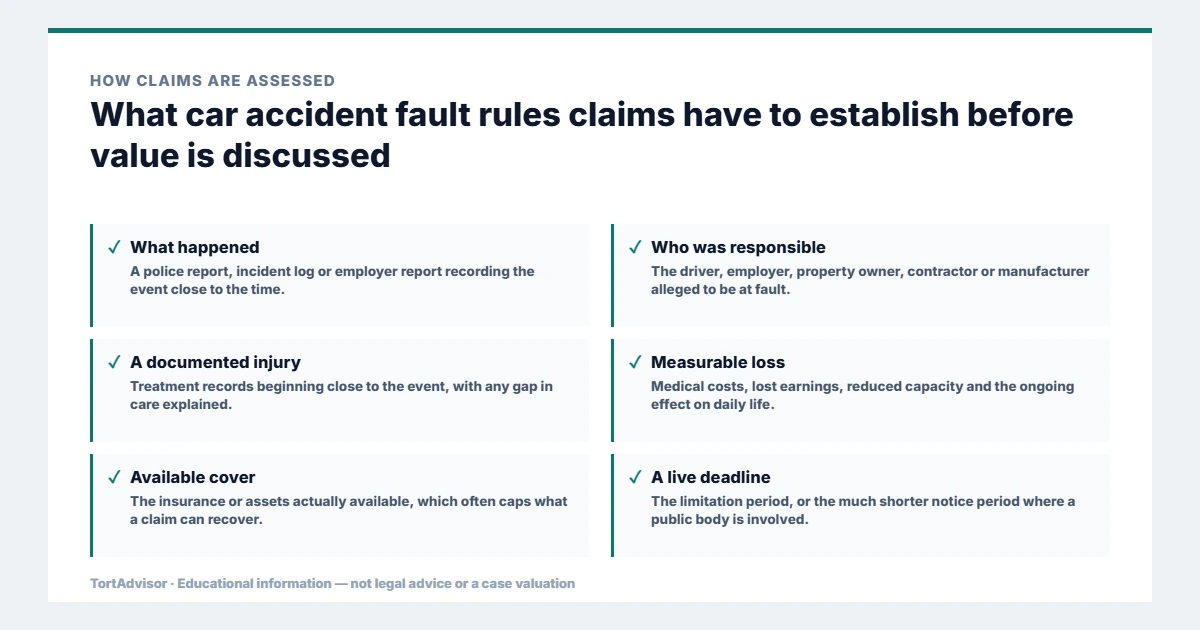
Full State-by-State Table: Fault System, Negligence Rule & PI Statute of Limitations
This table covers all 50 states and the District of Columbia for general personal-injury claims (which include car, truck, motorcycle, and boating accidents). Citations link to the governing statute; click through to read the current text before relying on any deadline.
| State | Fault System | Negligence Rule | PI Statute of Limitations | Citation |
|---|---|---|---|---|
| Alabama | At-Fault (Tort) | Pure Contributory Negligence | 2 years | Ala. Code § 6-2-38 |
| Alaska | At-Fault (Tort) | Pure Comparative Negligence | 2 years | Alaska Stat. § 09.10.070 |
| Arizona | At-Fault (Tort) | Pure Comparative Negligence | 2 years | A.R.S. § 12-542 |
| Arkansas | At-Fault (Tort) | Modified Comparative (50% Bar) | 3 years | Ark. Code § 16-56-105 |
| California | At-Fault (Tort) | Pure Comparative Negligence | 2 years | Cal. Civ. Proc. Code § 335.1 |
| Colorado | At-Fault (Tort) | Modified Comparative (50% Bar) | 2 years | Colo. Rev. Stat. § 13-80-102 |
| Connecticut | At-Fault (Tort) | Modified Comparative (51% Bar) | 2 years | Conn. Gen. Stat. § 52-584 |
| Delaware | At-Fault (Tort) | Modified Comparative (51% Bar) | 2 years | 10 Del. Code § 8119 |
| District of Columbia | At-Fault (Tort) | Pure Contributory Negligence | 3 years | D.C. Code § 12-301(a)(8) |
| Florida | No-Fault (PIP) | Pure Comparative Negligence | 2 years | Fla. Stat. § 95.11(5)(a) |
| Georgia | At-Fault (Tort) | Modified Comparative (50% Bar) | 2 years | Ga. Code § 9-3-33 |
| Hawaii | No-Fault (PIP) | Modified Comparative (51% Bar) | 2 years | Haw. Rev. Stat. § 657-7 |
| Idaho | At-Fault (Tort) | Modified Comparative (50% Bar) | 2 years | Idaho Code § 5-219(4) |
| Illinois | At-Fault (Tort) | Modified Comparative (51% Bar) | 2 years | 735 ILCS 5/13-202 |
| Indiana | At-Fault (Tort) | Modified Comparative (51% Bar) | 2 years | Ind. Code § 34-11-2-4 |
| Iowa | At-Fault (Tort) | Modified Comparative (51% Bar) | 2 years | Iowa Code § 614.1(2) |
| Kansas | No-Fault (PIP) | Modified Comparative (50% Bar) | 2 years | Kan. Stat. Ann. § 60-513(a)(4) |
| Kentucky | Choice No-Fault | Pure Comparative Negligence | 1 year | Ky. Rev. Stat. § 413.140(1)(a) |
| Louisiana | At-Fault (Tort) | Pure Comparative Negligence | 2 years | La. Civ. Code art. 3493.11 |
| Maine | At-Fault (Tort) | Modified Comparative (50% Bar) | 6 years | Me. Rev. Stat. tit. 14 § 752 |
| Maryland | At-Fault (Tort) | Pure Contributory Negligence | 3 years | Md. Code, Cts. & Jud. Proc. § 5-101 |
| Massachusetts | No-Fault (PIP) | Modified Comparative (51% Bar) | 3 years | Mass. Gen. Laws ch. 260, § 2A |
| Michigan | No-Fault (PIP) | Modified Comparative (51% Bar) | 3 years | Mich. Comp. Laws § 600.5805 |
| Minnesota | No-Fault (PIP) | Modified Comparative (51% Bar) | 6 yrs (negligence) / 2 yrs (intentional) | Minn. Stat. § 541.05 |
| Mississippi | At-Fault (Tort) | Pure Comparative Negligence | 3 years | Miss. Code Ann. § 15-1-49 |
| Missouri | At-Fault (Tort) | Pure Comparative Negligence | 5 years | Mo. Rev. Stat. § 516.120 |
| Montana | At-Fault (Tort) | Modified Comparative (51% Bar) | 3 years | Mont. Code Ann. § 27-2-204 |
| Nebraska | At-Fault (Tort) | Modified Comparative (50% Bar) | 4 years | Neb. Rev. Stat. § 25-207 |
| Nevada | At-Fault (Tort) | Modified Comparative (51% Bar) | 2 years | Nev. Rev. Stat. § 11.190(4)(e) |
| New Hampshire | At-Fault (Tort) | Modified Comparative (51% Bar) | 3 years | N.H. Rev. Stat. Ann. § 508:4 |
| New Jersey | Choice No-Fault | Modified Comparative (51% Bar) | 2 years | N.J. Stat. § 2A:14-2 |
| New Mexico | At-Fault (Tort) | Pure Comparative Negligence | 3 years | N.M. Stat. § 37-1-8 |
| New York | No-Fault (PIP) | Pure Comparative Negligence | 3 years | N.Y. C.P.L.R. § 214 |
| North Carolina | At-Fault (Tort) | Pure Contributory Negligence | 3 years | N.C. Gen. Stat. § 1-52(5) |
| North Dakota | No-Fault (PIP) | Modified Comparative (50% Bar) | 6 years | N.D. Cent. Code § 28-01-16(5) |
| Ohio | At-Fault (Tort) | Modified Comparative (51% Bar) | 2 years | Ohio Rev. Code § 2305.10 |
| Oklahoma | At-Fault (Tort) | Modified Comparative (51% Bar) | 2 years | Okla. Stat. tit. 12 § 95(A)(3) |
| Oregon | At-Fault (Tort) | Modified Comparative (51% Bar) | 2 years | Or. Rev. Stat. § 12.110(1) |
| Pennsylvania | Choice No-Fault | Modified Comparative (51% Bar) | 2 years | 42 Pa. Cons. Stat. § 5524 |
| Rhode Island | At-Fault (Tort) | Pure Comparative Negligence | 3 years | R.I. Gen. Laws § 9-1-14(b) |
| South Carolina | At-Fault (Tort) | Modified Comparative (50% Bar) | 3 years | S.C. Code Ann. § 15-3-530(5) |
| South Dakota | At-Fault (Tort) | Pure Comparative Negligence | 3 years | S.D. Codified Laws § 15-2-14(3) |
| Tennessee | At-Fault (Tort) | Modified Comparative (50% Bar) | 1 year | Tenn. Code Ann. § 28-3-104(a)(1) |
| Texas | At-Fault (Tort) | Modified Comparative (51% Bar) | 2 years | Tex. Civ. Prac. & Rem. Code § 16.003(a) |
| Utah | At-Fault (Tort) | Modified Comparative (50% Bar) | 4 years | Utah Code § 78B-2-307 |
| Vermont | At-Fault (Tort) | Modified Comparative (51% Bar) | 3 years | 12 V.S.A. § 512(4) |
| Virginia | At-Fault (Tort) | Pure Contributory Negligence | 2 years | Va. Code § 8.01-243(A) |
| Washington | At-Fault (Tort) | Pure Comparative Negligence | 3 years | Wash. Rev. Code § 4.16.080(2) |
| West Virginia | At-Fault (Tort) | Modified Comparative (50% Bar) | 2 years | W. Va. Code § 55-2-12(b) |
| Wisconsin | At-Fault (Tort) | Modified Comparative (51% Bar) | 3 years | Wis. Stat. § 893.54(1m) |
| Wyoming | At-Fault (Tort) | Modified Comparative (51% Bar) | 4 years | Wyo. Stat. § 1-3-105(a)(iv)(C) |
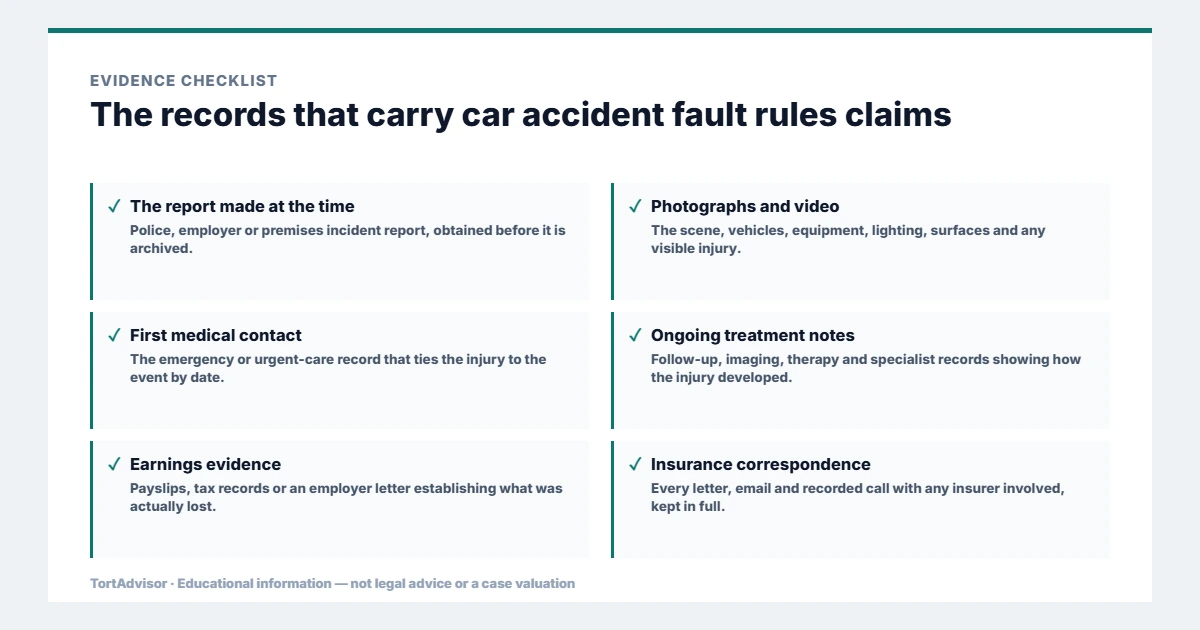
How These Rules Affect Your Claim
Your state’s fault system determines who you file a claim against first. In an at-fault state, you (or your attorney) typically file directly against the other driver’s liability insurer. In a no-fault state, you file with your own insurer under PIP first, and can only pursue the at-fault driver if your injury is severe enough to clear your state’s tort threshold (commonly a dollar amount spent on medical treatment or a “serious injury” definition such as permanent disfigurement, fracture, or death).
Your state’s negligence rule determines what happens if the other side argues you contributed to the crash — for example, by speeding, following too closely, or not wearing a seatbelt where that is admissible. In a pure comparative state, partial fault only reduces your recovery. In a modified comparative state, being found more than 49% or 50% at fault (depending on the state’s bar) eliminates your recovery entirely. In a pure contributory state, any amount of fault on your part can bar recovery completely, which is why insurers in those five jurisdictions litigate comparative-fault arguments aggressively.
Your statute of limitations is the outside deadline to file a lawsuit; it is unrelated to when you must report the accident or notify your own insurer, which are typically much shorter administrative deadlines. Missing the statute of limitations generally bars the claim permanently, with narrow exceptions for minors, incapacity, and cases where the discovery rule applies.
For the full claim path after a crash, from evidence and insurance claims to damages, settlement timing and filing in court, see our car accident lawsuit guide.
Sources & Citations
- Casefleet — Statute of Limitations Lookup by State (51-jurisdiction personal-injury dataset, cross-referenced against Nolo, Justia, and Matthiesen Wickert & Lehrer)
- Matthiesen, Wickert & Lehrer, S.C. — Understanding Comparative Fault, Contributory Negligence
- National Highway Traffic Safety Administration (NHTSA) — Fatality Analysis Reporting System (FARS)
- Insurance Institute for Highway Safety (IIHS) — state motorcycle & safety research
- No-fault state classifications cross-checked against WalletHub, Liberty Mutual, and Kiplinger 2026 insurance guides
- Individual state statutes and legislatures (fault system, negligence rule, statute of limitations)
Read our full editorial methodology & data-sourcing standards →
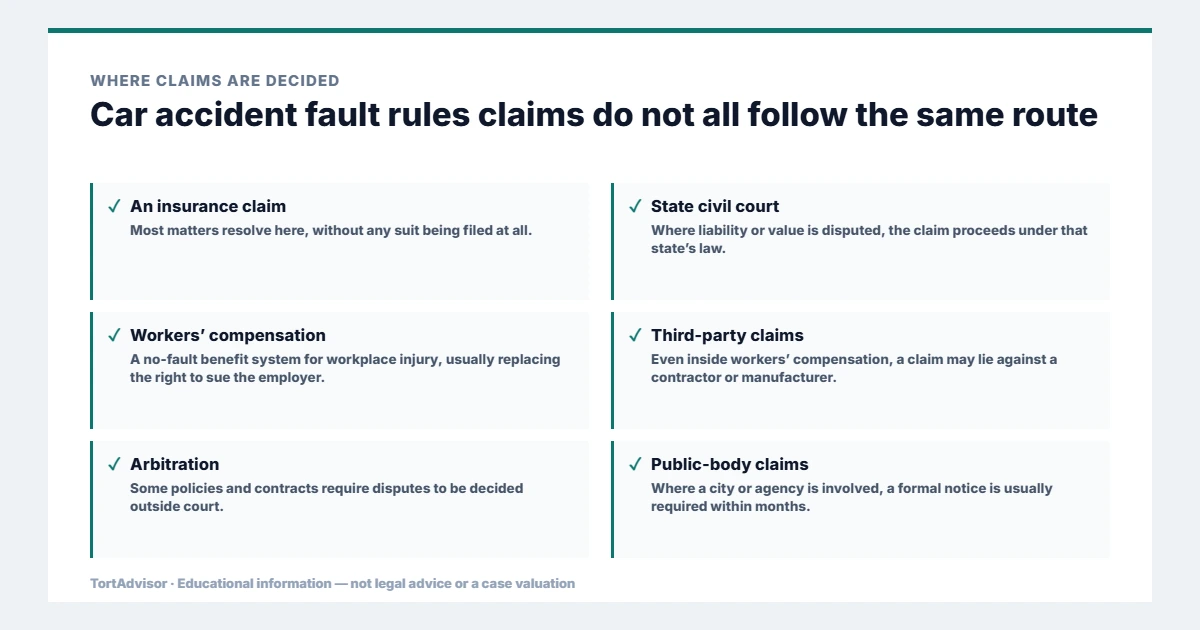
Every status, deadline and figure published on this page about car accident fault rules claims is traced to a primary source before it appears.
Frequently Asked Questions
What is the difference between an at-fault and a no-fault state?
In an at-fault (tort) state, the driver who caused the crash and their insurer are responsible for the other driver’s damages. In a no-fault state, each driver’s own Personal Injury Protection (PIP) coverage pays their medical bills regardless of fault, and you can only step outside no-fault to sue the other driver if your injury meets your state’s severity or cost threshold.
SourceN.Y. Ins. LawSec. 5104
What is pure comparative negligence vs. modified comparative negligence?
Under pure comparative negligence, you can recover damages even if you were 99% at fault, reduced by your percentage of fault. Under modified comparative negligence, you can only recover if your fault stays under a bar — either 50% or 51% depending on the state — and you recover nothing once you cross that line.
SourceN.Y. CPLRSec. 1411
What is pure contributory negligence, and why is it considered harsh?
Pure contributory negligence bars any recovery if you are even 1% at fault for the accident, no matter how much more at fault the other driver was. Alabama, D.C., Maryland, North Carolina, and Virginia are the only U.S. jurisdictions that still use this rule for most personal-injury claims.
SourceMd. Ct. App.9 Jul 2013
How long do I have to file a car accident lawsuit in my state?
It depends on your state’s personal-injury statute of limitations, which ranges from one year (Kentucky, Tennessee) to six years (Maine, North Dakota), with most states allowing two or three years. Use the table above to find your state, then confirm the current statute text and any exceptions with a licensed attorney.
SourceN.Y. CPLRSec. 214
Does this apply to truck, motorcycle, and boating accident claims too?
Generally yes — the fault system, negligence rule, and statute of limitations for a given state apply to motor vehicle accident claims broadly, including truck, motorcycle, and recreational boating accidents, unless a more specific statute (such as a government-claims notice period) applies. See our Motor Vehicle Accident Laws by State for category-specific settlement context.
SourceFMCSARegulations
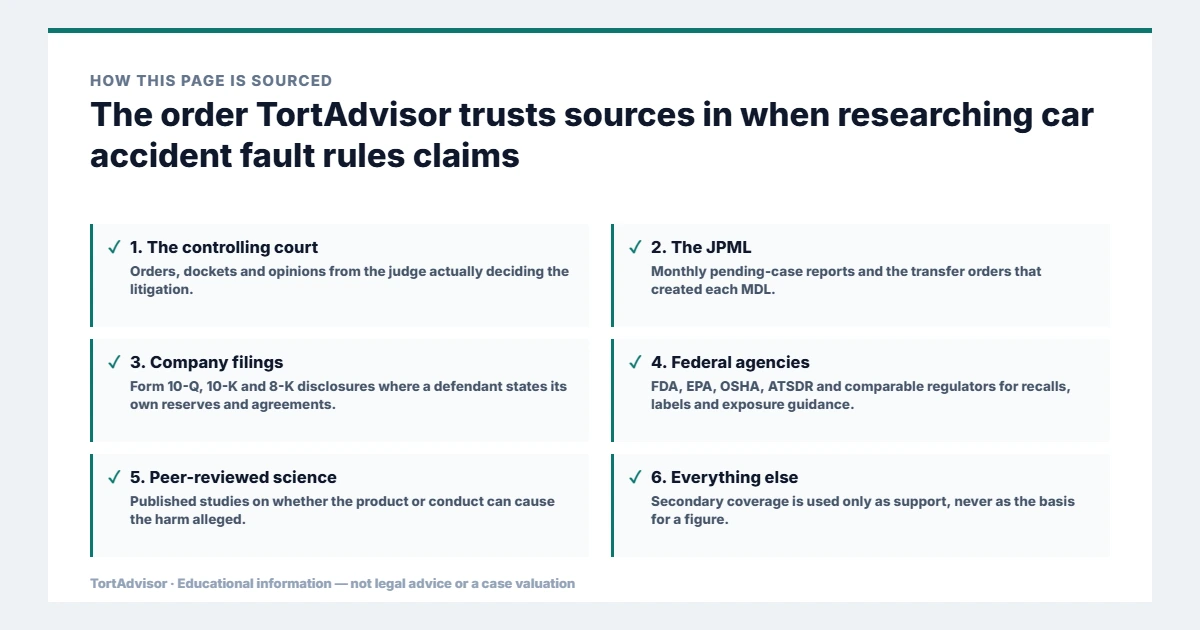
Get a Free Car, Truck, Motorcycle or Boating Accident Case Review
Not sure how your state’s fault rules or filing deadline apply to your situation? Tell us about your accident. There’s no cost and no obligation to find out if you have a claim.
This page is provided for general informational purposes only and does not constitute legal advice. Fault-system, negligence-rule, and statute-of-limitations summaries are general statements of the law as of the “Last Updated” date above and may not reflect exceptions, recent amendments, or how a court would apply the law to your specific facts. Laws vary by state and change over time; confirm current requirements with a licensed attorney in your jurisdiction before making any legal decision. TortAdvisor is not a law firm and does not provide legal representation.