
Personal injury attorney fees are often contingent on recovery, so the real cost depends on the percentage in the written agreement and whether case expenses come out before or after it. These guides also cover checking a lawyer's license and discipline record. As of 2026, federal law caps fees on tort claims against the U.S. government at 25 percent after suit.
Updates on Hiring a Personal Injury Attorney

This article supports TortAdvisor's Breast Implant Lawsuit Research and Medical Device Lawsuits Hub. For the broader lawsuit directory, visit Medical Device Lawsuits Research. Breast implant lawsuit: Patients considering a legal claim in 2026 may be researching Breast Implant-Associated Anaplastic Large Cell Lymphoma (BIA-ALCL), recalled textured implants, implant rupture, revision or explant surgery, or systemic symptoms [...]
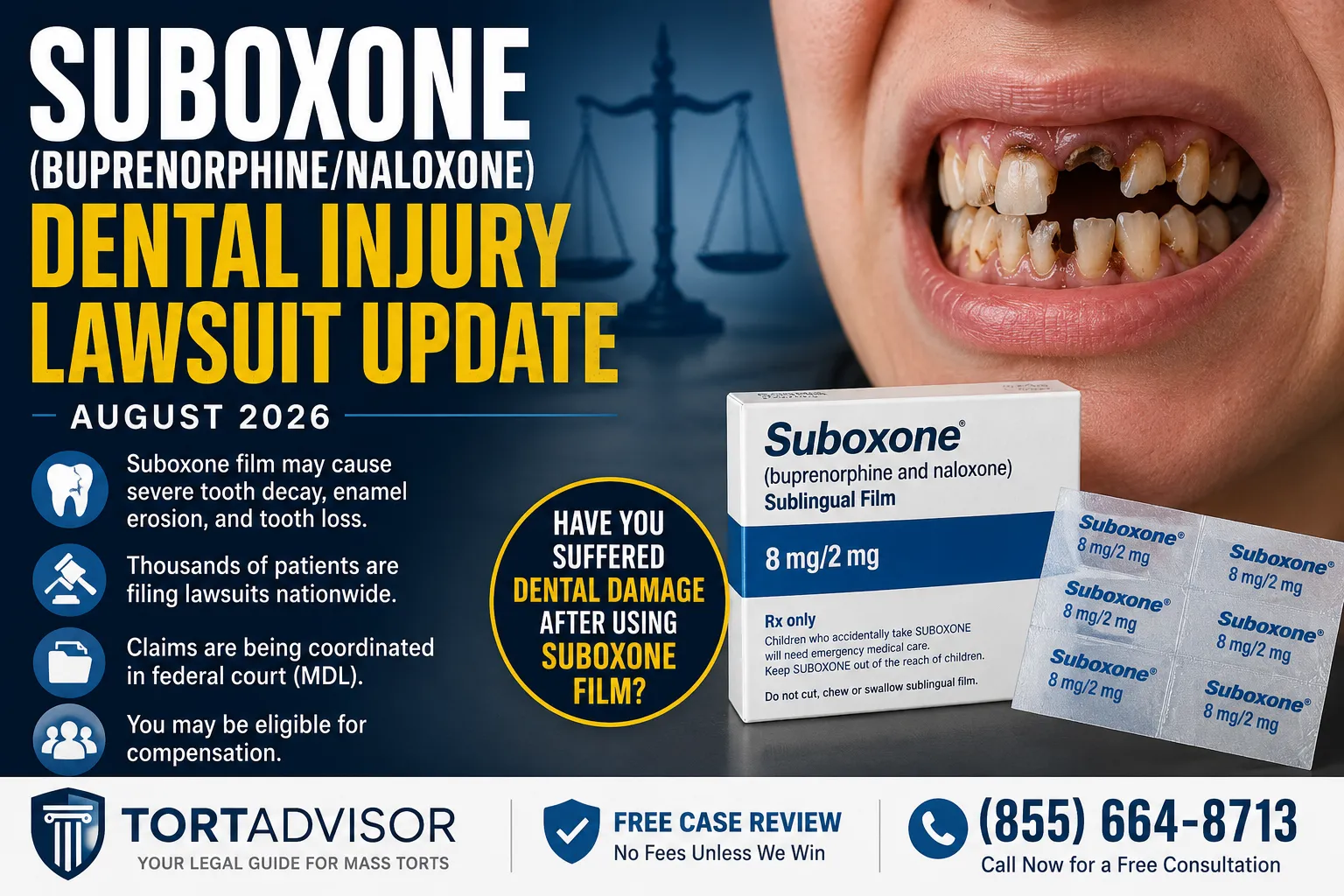
Quick Answer: The Suboxone dental injury lawsuit update for August 2026 centers on MDL 3092, the federal litigation involving claims that Suboxone (buprenorphine/naloxone) sublingual film caused serious dental injuries. Plaintiffs allege prolonged exposure to the film contributed to tooth decay, dental erosion, fractured teeth and tooth loss, and that adequate dental warnings were not provided [...]

Quick Answer: TortAdvisor is expanding its network of plaintiff law firms that are actively accepting new personal injury, motor vehicle accident, mass tort, product liability, toxic exposure and abuse-related cases. Our current partner opportunity is focused on organic claimant inquiries generated when consumers find TortAdvisor while actively researching specific injuries, lawsuits, settlement information or [...]

Anyone comparing options for a city with the most car accidents after a recent crash should understand how fault is determined, what evidence strengthens a claim, and how a case is typically valued before speaking with an insurance adjuster. Quick Answer: Allstate's 2026 Best Drivers Report ranks U.S. cities by how often drivers report a [...]

Consult cosmetic injury lawyers for botched procedures. Learn negligence proof, damages, & claims against surgeons today!

Did a North Dakota product cause harm? Understand product liability, your rights, and how to take action for defects.

Injured? Learn what can a personal injury lawyer do for you. Secure fair compensation, navigate legal complexities, and focus on recovery.

Master how to talk to personal injury lawyer effectively. Prepare, ask questions, and choose the right attorney for your injury claim.

Discover how much does a personal injury lawyer cost. Learn about contingency fees, no upfront costs, and maximizing your settlement.

Suffered a burn injury? Find justice & compensation. Contact a top burn injury lawyer near me today for a free case evaluation.

Learn how do i find a good personal injury lawyer. Pick a top attorney, interview them, and maximize your injury claim.

Is it a solo mission or do i need a personal injury lawyer? Discover when to hire an attorney for serious injuries and insurance disputes.

Discover how to find trusted personal injury attorneys easily. Learn vetting tips, checklists, and get peace of mind for your claim.
Key facts (as of October 2026)
- ABA Model Rule 1.5(c) requires a contingent fee agreement in a writing signed by the client, stating the percentage at settlement, trial or appeal and whether expenses come out before or after the fee (ABA).
- The agreement must also name expenses the client owes even if the case is lost.
- Federal Tort Claims Act fees are capped at 20 percent of an administrative settlement and 25 percent after suit (28 U.S.C. § 2678).
- The ABA does not discipline lawyers; states keep license and discipline records, and every state has a client protection fund (ABA).
How injury lawyers are paid
With a contingent fee, the lawyer takes a percentage of any recovery and no fee if there is none, while case expenses such as filing fees, records and expert costs are handled as the agreement says. There is no single national rate: the percentage is set in each agreement, may rise at trial or appeal, and must not be unreasonable under Model Rule 1.5(a). Deducting expenses before the fee is calculated leaves the client more than taking the fee from the gross recovery. States adopt their own versions of these rules.
Before you sign: what to check
| Check | Where | Why it matters |
|---|---|---|
| License and good standing | The lawyer regulation office or bar where the lawyer is licensed | States keep current registration and discipline records |
| Discipline elsewhere | ABA National Lawyer Regulatory Data Bank, by written request | Collects public regulatory actions nationwide |
| Fee terms | The written fee agreement | Shows percentages, expenses and what you owe if the case is lost |
| Who handles the case | Ask at the consultation | Splitting a fee with another firm needs your agreement, confirmed in writing |
Questions to ask at a consultation
- What percentage applies at settlement, after filing, and at trial?
- Are expenses deducted before or after the fee, and do I owe them if we lose?
- Who will work on my case, and will another firm be involved?
- How will settlement offers be brought to me?
If something goes wrong
The ABA suggests first raising a problem with the lawyer or another partner at the firm. A formal complaint goes to the disciplinary agency where the lawyer is licensed, which reviews ethics violations but cannot pursue your injury claim. Client protection funds cover money lost through a lawyer's dishonest conduct, and fee arbitration programs handle fee disputes.
When people hire a lawyer
People commonly consult an injury lawyer when injuries are serious, fault is disputed, several insurers are involved or a deadline is close; some with minor, healed injuries and clear fault deal with the insurer themselves. TortAdvisor is not a law firm and may be compensated when it connects readers with law firms; its editorial policy explains how.
Frequently asked questions
How much does a personal injury attorney charge?
There is no national standard rate. Many injury lawyers charge a contingent fee, a percentage of the recovery that is negotiated, written into the agreement and sometimes higher at trial or appeal. Some claims carry legal caps: fees in Federal Tort Claims Act cases are limited to 20 percent of an administrative settlement and 25 percent after suit.
Do I pay anything if I lose?
Under a contingent fee you normally owe no fee if there is no recovery, but you may still owe case expenses. The ABA model rule requires the agreement to tell you which expenses you must pay whether or not you win, so read that clause and ask how costs are handled before you sign.
How do I check whether a lawyer has been disciplined?
Start with the lawyer regulation office or bar of the state where the lawyer is licensed, because states maintain current registration and discipline records. The ABA's National Lawyer Regulatory Data Bank collects public regulatory actions from courts and agencies across the country and accepts written search requests from the public.
Sources
Filter Posts
Browse by Category