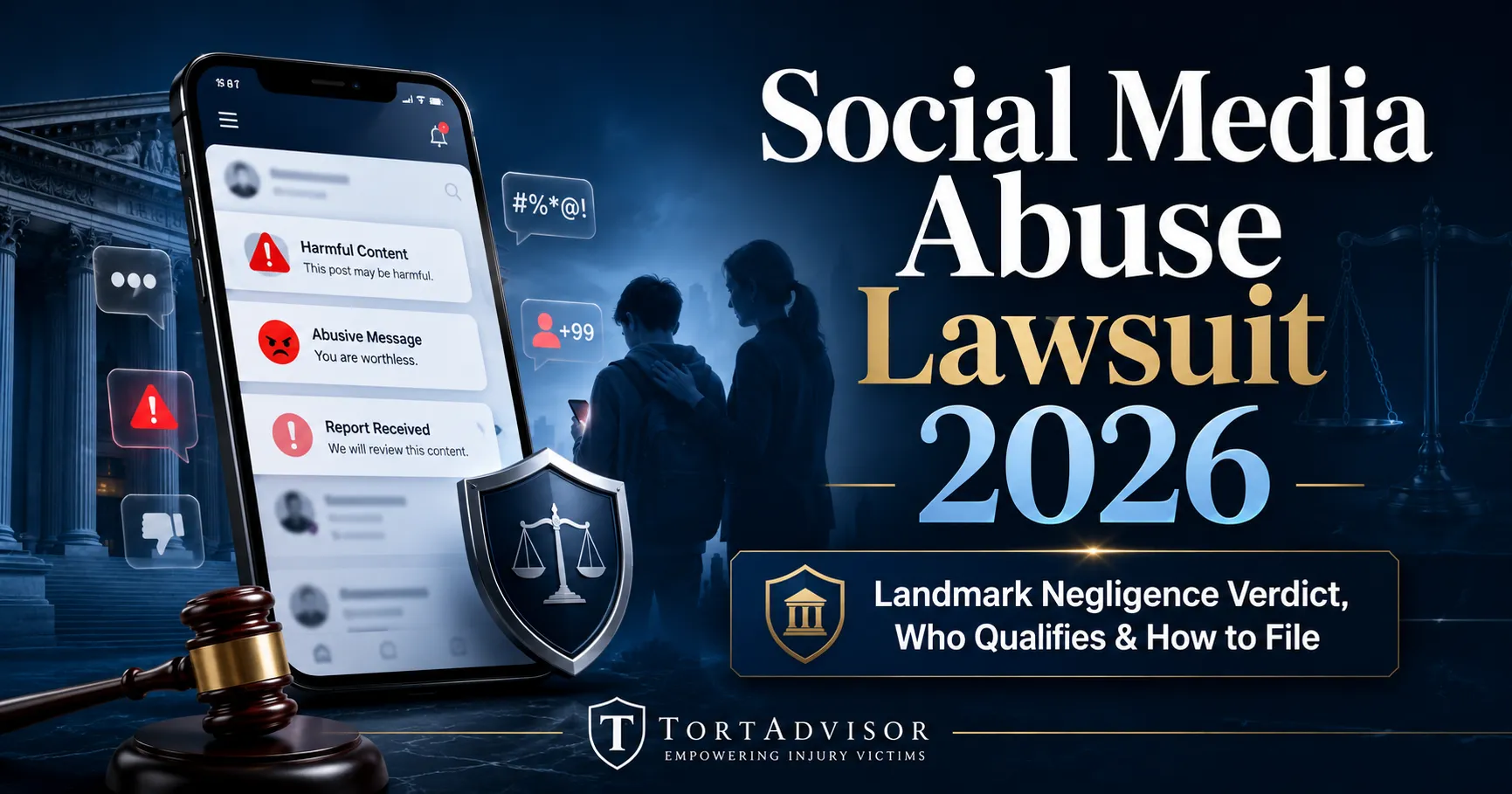
Social media addiction lawsuit claims allege that Meta, TikTok, Snap and YouTube designed their platforms to keep young users hooked, contributing to depression, anxiety and other harm. Federal cases are consolidated in MDL 3047 before Judge Yvonne Gonzalez Rogers in the Northern District of California, which listed 4,309 pending actions on November 2, 2026. Meta's proposed state settlement pays states, not individuals.
Updates on Social Media Addiction Lawsuit
This 2026 update supports TortAdvisor's Social Media Addiction Lawsuit Guide. You can also browse Active Lawsuits, Settlement Calculators, Social Media Settlement Amounts, and Legal Insights. Social media addiction lawsuit 2026 update: Federal claims alleging that major platforms used addictive design features that harmed children and adolescents continue in MDL No. 3047, In re: Social Media [...]
Key facts (as of November 2026)
- Nov. 2, 2026: 4,309 actions pending in MDL 3047 (JPML).
- Aug. 26, 2026: Meta announced a proposed settlement with 51 attorneys general: at least $12.1 billion and up to $17.1 billion, paid to states and subject to court approval.
- Aug. 10, 2026: The Ninth Circuit dismissed Meta's and TikTok's interlocutory appeals, holding that Section 230 is a defense to liability, not immunity from suit.
- March 25, 2026: A Los Angeles jury awarded $6 million ($3 million compensatory, $3 million punitive) against Meta and YouTube in the first trial in California's coordinated proceeding; Snap and TikTok settled before trial.
- 2023: The U.S. Surgeon General's advisory reported that up to 95% of 13- to 17-year-olds use a social media platform.
What the social media addiction lawsuits claim
Plaintiffs allege the companies built engagement-maximizing features they knew could foster compulsive use by children and teens, and failed to warn families about the risks. Claimed injuries include depression, anxiety and other mental health harms. The Surgeon General's advisory reports that adolescents who spend more than three hours a day on social media face double the risk of mental health problems, including symptoms of depression and anxiety. The companies deny the claims.
Where the litigation stands
MDL 3047 coordinates individual federal cases for pretrial purposes; it is not a class action. In California's coordinated state proceeding, a Los Angeles jury on March 25, 2026 found Meta 70% and YouTube 30% responsible for a $6 million award, as reported by ABC. On August 10, 2026 the Ninth Circuit declined to hear Meta's and TikTok's early Section 230 appeals, so those defenses will be reviewed after final judgment. Separately, Meta's proposed settlement with state attorneys general, announced August 26, 2026, days after the states' trial against Meta began in federal court in California, pays states and does not compensate individual families.
Who may qualify
Young people, or parents on behalf of minors, who used these platforms heavily and were diagnosed with a mental health condition such as depression or anxiety may qualify. Treatment records, diagnoses, account history and evidence of when heavy use began generally matter most.
Deadlines and next steps
Statutes of limitations vary by state, and many states pause the clock for minors until they reach adulthood, but rules differ. Compare the only documented figures on our social media settlement amounts page and read the full social media addiction lawsuit guide before deciding next steps.
Frequently asked questions
Does Meta's $17.1 billion settlement pay individual families?
No. The proposed settlement announced August 26, 2026 resolves claims by 51 attorneys general and pays states, not individuals; New York, for example, expects at least $819 million for education and mental health services. It remains subject to court approval and does not resolve individual personal-injury lawsuits in MDL 3047 or state court.
Has any jury found a social media company liable?
Yes. On March 25, 2026 a Los Angeles jury awarded a young woman identified as K.G.M. $3 million in compensatory and $3 million in punitive damages, assigning 70% of responsibility to Meta and 30% to YouTube. Snap and TikTok settled before trial. A verdict can be challenged after trial, so it is not the same as money paid.
What did the Ninth Circuit decide in August 2026?
In People of the State of California v. Meta Platforms, the Ninth Circuit dismissed Meta's and TikTok's interlocutory appeals for lack of jurisdiction. It held that Section 230 provides a defense to liability, not immunity from suit, so a denial of that defense can be reviewed after final judgment. The ruling keeps the cases moving in the trial courts.
Sources
- Judicial Panel on Multidistrict Litigation – Pending MDL Dockets by Actions Pending (Nov. 2, 2026)
- U.S. Court of Appeals for the Ninth Circuit – People of the State of California v. Meta Platforms, Inc. (Aug. 10, 2026)
- New York Attorney General – Settlement with Meta (Aug. 26, 2026)
- California Attorney General – Proposed settlement with Meta (Aug. 26, 2026)
- U.S. Surgeon General – Social Media and Youth Mental Health advisory
Social Media Addiction questions answered, with sources
Time limits depend on your state and age
Many states pause the clock until a minor turns 18, and some count from when the harm was discovered, but limits after that are often two or three years. A free review checks your dates.
Free · Confidential · No obligation
Free Social Media Addiction Case Review
Tell us what happened and a trained case advisor will review it. You choose whether you want to be contacted.
- 1Share the basicsThe platforms, the diagnosis and your state.
- 2A case advisor reviews itAgainst the time limit in your state.
- 3You decide what happens nextNo cost and no obligation.
- Built from court recordsMDL 3047 and published trial results
- Every answer is citedEach answer links the record it relies on
- No invented payoutsNo individual settlement values are public
- Checked Nov 12, 2026Against the JPML report of Nov 2, 2026
Prefer to talk it through?
TortAdvisor is not a law firm and does not give legal advice. A trained case advisor, not an attorney, may make the first contact. See our partner list and privacy policy.
Filter Posts
Browse by Category