
Snapchat sexual exploitation lawsuits are civil claims alleging that Snapchat features, such as friend suggestions, location sharing and disappearing messages, helped adults groom, sextort or abuse minors. As of October 2026 there is no dedicated federal MDL for these claims; they proceed as individual lawsuits and state enforcement actions, such as New Mexico's September 2024 suit against Snap.
Updates on Snapchat Sexual Exploitation Lawsuit
How to File a Snapchat Lawsuit 2026 If your child was sexually exploited, groomed, sextorted, or harmed on Snapchat, this guide explains How to File a Snapchat Lawsuit 2026 and what families need to know before time runs out. You may be entitled to significant compensation by filing a Snapchat lawsuit against Snap Inc. [...]
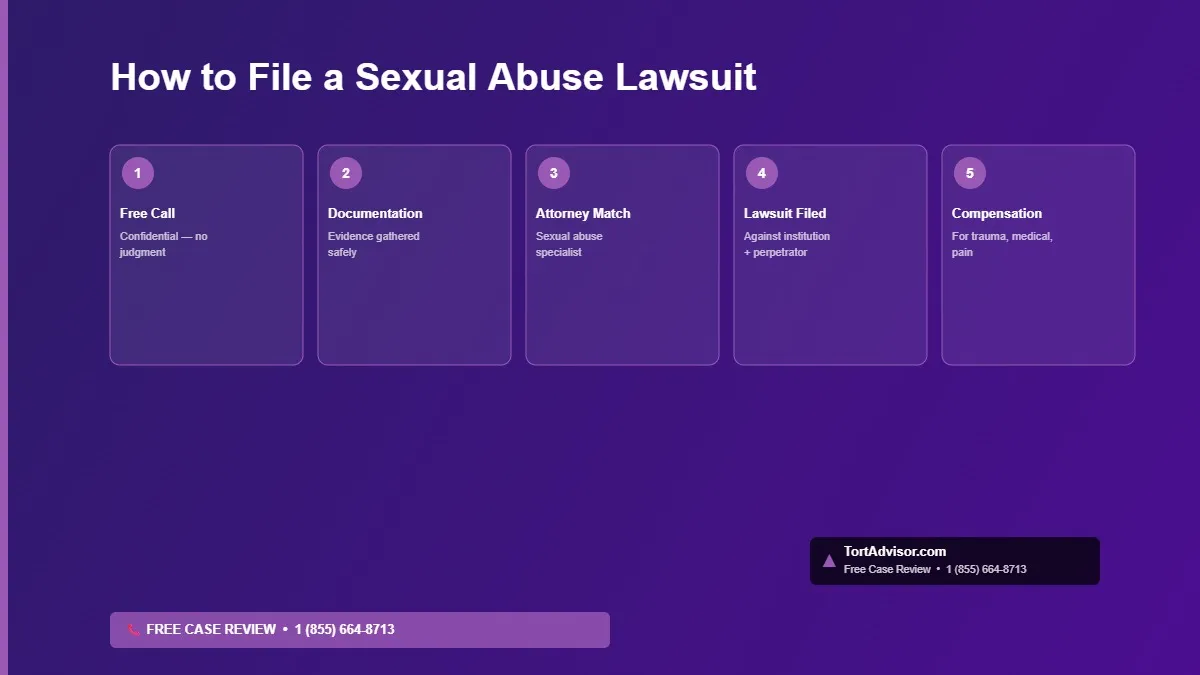
Sexual abuse lawsuit settlement 2026: a compensation guide for survivors — who qualifies, what affects case value, and how to file. Free confidential evaluation available 24/7.
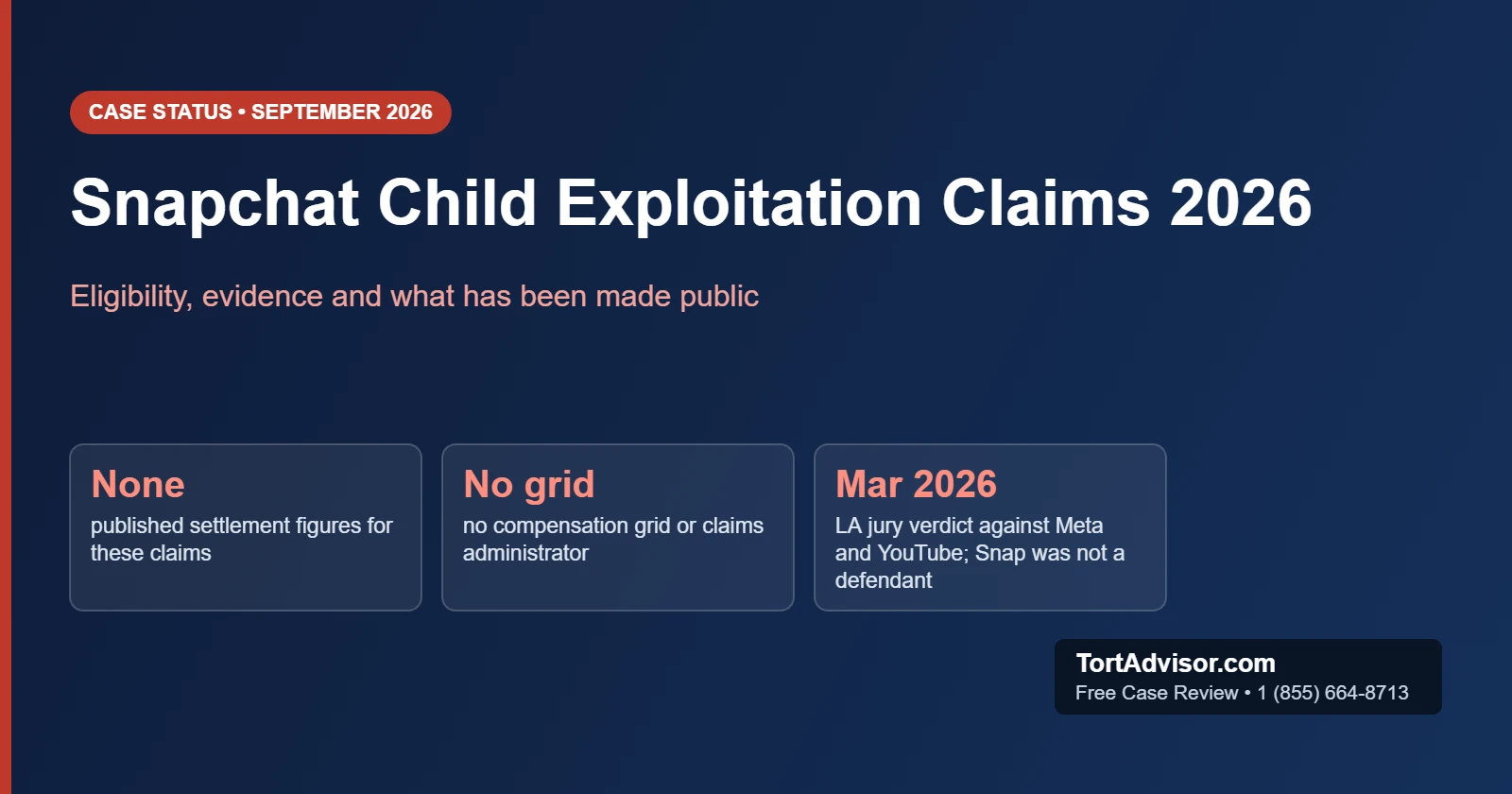
Is your family eligible for the Snapchat child exploitation settlement 2026? Complete guide to who qualifies, what compensation may be available, and how to file. Free confidential case evaluation.
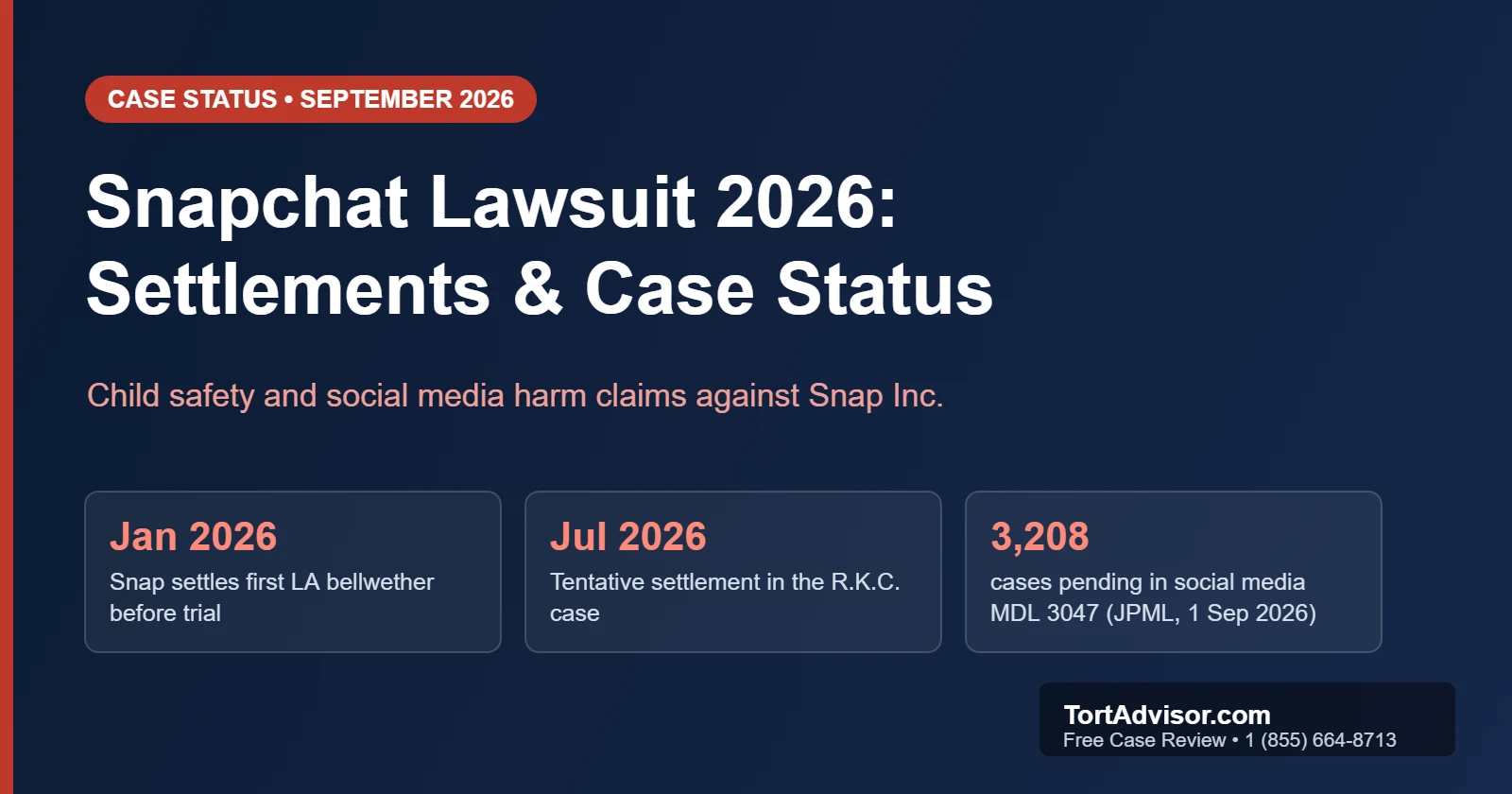
Snapchat lawsuit 2026: Snap settled its first Los Angeles bellwether cases confidentially and remains a defendant in the federal social media MDL. Learn the case status, who qualifies and how to get a free case review.
Key facts (as of November 2026)
- July 2, 2024: the Supreme Court declined to review Doe v. Snap, leaving in place a Fifth Circuit ruling that Section 230 barred a student's claims.
- September 2024: New Mexico's attorney general sued Snap in state court under the Unfair Practices Act and public nuisance law, alleging the app enables sextortion.
- June 2026: parents of a 12-year-old Missouri girl sued Snap, alleging the app recommended her to an adult stranger and exposed her home address.
- August 10, 2026: the Ninth Circuit held Section 230 is a defense to liability, not immunity from suit, dismissing early appeals in the social media litigation.
- November 2, 2026: social media addiction MDL 3047, where Snap is a defendant, had 4,309 pending actions; it concerns mental-health harms, not exploitation.
What the lawsuits allege
Lawsuits allege that Snapchat's design made it easy for adults to find and contact children: friend recommendations to strangers, map features revealing a child's location, weak age checks and messages that seem to disappear, encouraging children to share images that offenders then capture. Claims typically name Snap Inc. and, where known, the offender.
Where the litigation stands
Section 230 is the central legal battleground. It ended Doe v. Snap, brought by a student groomed by a teacher through Snapchat, while trial courts in the social media litigation have refused to dismiss some claims on Section 230 grounds. Our Snapchat sexual abuse lawsuit guide covers the claims in depth.
Who may qualify and what to keep
These cases generally involve minors groomed, sextorted or abused after contact made or continued on Snapchat. Keep usernames, profile links, dates and non-explicit messages, and block the offender without deleting the account. Never save or forward a sexual image of a minor; report it instead. Our guide on how to file a Snapchat lawsuit covers next steps.
Where to get support
Report exploitation to NCMEC's CyberTipline at report.cybertip.org or 1-800-843-5678, and use NCMEC's Take It Down service to help remove explicit images of minors. RAINN's 24/7 hotline is 800-656-4673.
Frequently asked questions
Is there a Snapchat sexual abuse class action or settlement?
Not for exploitation claims as of October 2026. There is no dedicated federal MDL and no announced settlement program for grooming or sextortion victims. Claims proceed individually in state or federal court, alongside state enforcement actions such as New Mexico's. Each case turns on its own facts.
Does Section 230 stop lawsuits against Snapchat?
Sometimes. Section 230 ended the Doe v. Snap case, which the Supreme Court declined to review in 2024. Courts have sometimes treated claims about a platform's own design differently from claims treating it as the publisher of others' messages, and in August 2026 the Ninth Circuit held Section 230 is a defense to liability, not immunity from suit.
What should I do if my child is being sextorted?
NCMEC advises not paying or complying, reporting the account through the platform, and blocking the offender without deleting the profile or messages. Report to the CyberTipline at 1-800-843-5678 and to local police, and use Take It Down to help remove images. The blame lies with the offender, not your child.
Sources
Snapchat Abuse questions answered, with sources
A deadline you were told had passed may not have
Many states have lengthened or removed time limits for sexual abuse claims, and some have reopened expired ones. California has no time limit for childhood sexual assault occurring on or after January 1, 2024, and gives adult survivors 10 years. A confidential review checks your dates. California law (CCP 340.1)
Free · Confidential · No obligation
Free Snapchat Abuse Case Review
Tell us what happened and a trained case advisor will review it. You choose whether you want to be contacted.
- 1Share the basicsWhat happened and when, and the platforms involved.
- 2A case advisor reviews itAgainst the time limits in your state.
- 3You decide what happens nextNo cost and no obligation.
- Confidential by designYour review is private; courts often allow Jane Doe filings
- Built from the law itselfState statutes, court records and agency rules
- No invented payoutsWe cite only settlements on the public record
- Checked Nov 12, 2026Time limits re-read against the statutes
Prefer to talk it through?
TortAdvisor is not a law firm and does not give legal advice. A trained case advisor, not an attorney, may make the first contact. See our partner list and privacy policy.
Filter Posts
Browse by Category