
Teacher sexual misconduct lawsuits are civil claims by students or former students who were groomed or sexually abused by a teacher or other school employee. As of October 2026 they proceed case by case against the educator and often the school. Since the Supreme Court's 1998 Gebser decision, a district owes Title IX damages only if an official with authority knew and was deliberately indifferent.
Updates on Teacher Sexual Misconduct Lawsuits
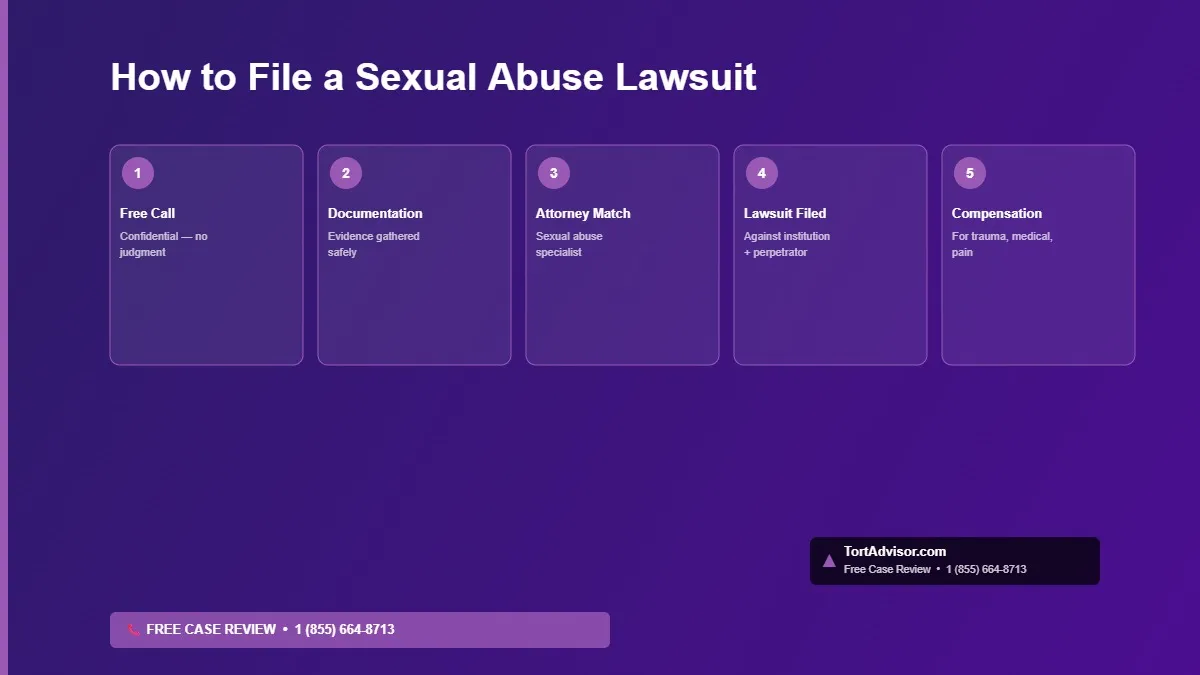
Sexual abuse lawsuit settlement 2026: a compensation guide for survivors — who qualifies, what affects case value, and how to file. Free confidential evaluation available 24/7.
Key facts (as of October 2026)
- June 22, 1998: Gebser v. Lago Vista held that Title IX damages for a teacher's misconduct require actual notice to an official who could take corrective action, and deliberate indifference.
- December 10, 2015: 20 U.S.C. § 7926 began requiring federally funded states and districts to bar staff from helping an employee get a new job when they know or have probable cause to believe the employee engaged in sexual misconduct with a student or minor.
- July 2026: the Education Department's Office for Civil Rights launched a national K-12 initiative against adult sexual misconduct and "pass the trash" practices.
- October 1, 2026: the JPML's pending-docket report lists no multidistrict litigation for teacher abuse; claims are filed individually.
What these claims allege
Claims against an educator usually describe grooming: special attention or gifts, private messages or social media contact, time alone with the student and requests for secrecy, followed by sexual contact. The lawsuit may name the educator and the employing school or district, alleging negligent hiring, supervision or retention, or a failure to act on earlier concerns. Institution-wide issues are covered in our school sexual abuse lawsuits hub.
Why the school's knowledge matters
Because Title IX damages depend on what an official with authority knew, earlier complaints, personnel files and what a previous employer said about the educator often become central. Federal "pass the trash" rules also bar quietly helping such an employee move to another school.
Reporting, evidence and deadlines
A civil lawsuit is separate from any criminal case and does not depend on a conviction. Helpful records include messages, dates, names of staff who were told, report numbers and counseling records. Deadlines vary by state and by the survivor's age; our teacher sexual abuse lawsuit guide and statute of limitations guide explain the basics.
Where to get support
RAINN's National Sexual Assault Hotline is free, confidential and available 24/7 at 800-656-4673. The Childhelp National Child Abuse Hotline is 800-422-4453.
Frequently asked questions
Does a teacher have to be convicted before a civil lawsuit can be filed?
No. A civil lawsuit is a separate case from any criminal prosecution. In a civil case the plaintiff must prove the claim by a preponderance of the evidence, meaning it is more likely than not true. A criminal case can still produce useful records, but a civil claim does not depend on a conviction.
Can the school be held responsible, not just the teacher?
Sometimes. Under Gebser, a district owes Title IX damages for a teacher's misconduct only if an official with authority to take corrective action had actual notice and was deliberately indifferent. State-law claims may instead examine how the school hired, supervised or retained the educator and responded to earlier warnings.
What does "pass the trash" mean?
It describes helping an educator accused of sexual misconduct quietly move to a new school. Since 2015, federal law has required states and districts that receive federal education funds to prohibit staff from helping such an employee get a new job when they know or have probable cause to believe misconduct with a student occurred.
Sources
A deadline you were told had passed may not have
Many states have lengthened or removed time limits for sexual abuse claims, and some have reopened expired ones. California has no time limit for childhood sexual assault occurring on or after January 1, 2024, and gives adult survivors 10 years. A confidential review checks your dates. California law (CCP 340.1)
Free · Confidential · No obligation
Free Teacher Sexual Abuse Case Review
Tell us what happened and a trained case advisor will review it. You choose whether you want to be contacted.
- 1Share the basicsOnly what you are comfortable sharing.
- 2A case advisor reviews itAgainst the time limits in your state.
- 3You decide what happens nextNo cost and no obligation.
- Confidential by designYour review is private; courts often allow Jane Doe filings
- Built from the law itselfState statutes, court records and agency rules
- No invented payoutsWe cite only settlements on the public record
- Checked Nov 12, 2026Time limits re-read against the statutes
Prefer to talk it through?
TortAdvisor is not a law firm and does not give legal advice. A trained case advisor, not an attorney, may make the first contact. See our partner list and privacy policy.
Filter Posts
Browse by Category