Workplace sexual harassment claims are legal complaints by employees subjected to unwelcome sexual conduct or sexual assault at work. Most federal claims start with a charge to the EEOC or a state agency within 180 or 300 days of the last incident. As of October 2026, federal law also lets survivors avoid forced arbitration and limits pre-dispute nondisclosure agreements.
Updates on Workplace Sexual Harassment & Assault Claims
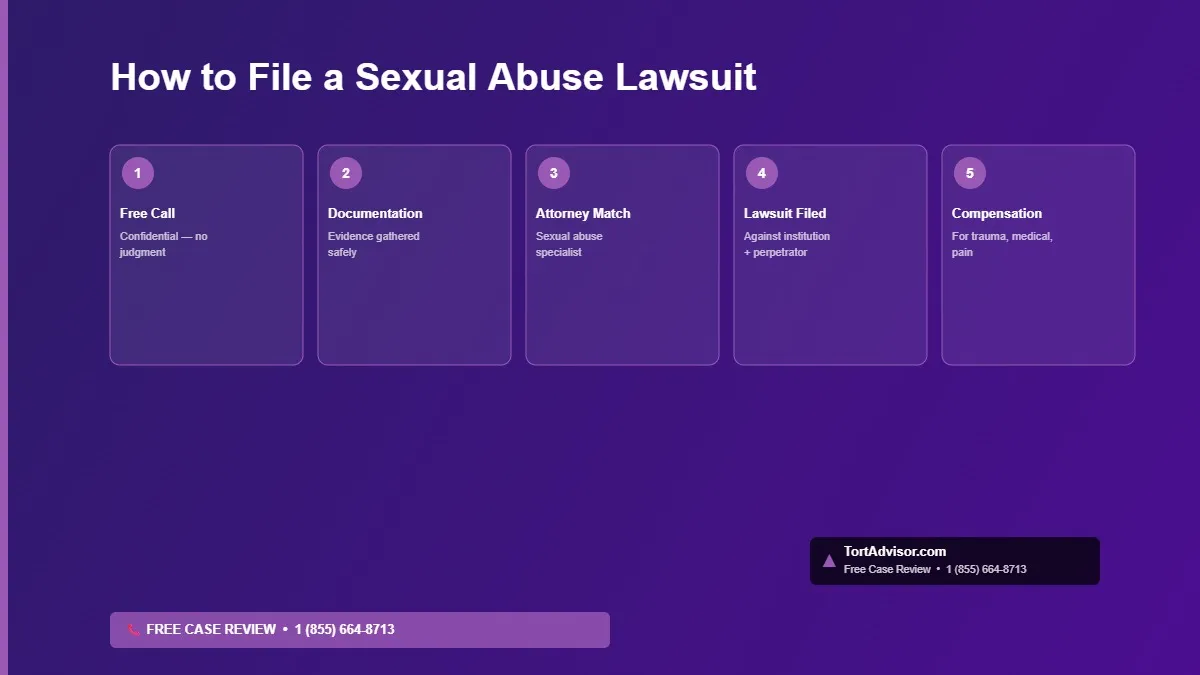
Sexual abuse lawsuit settlement 2026: a compensation guide for survivors — who qualifies, what affects case value, and how to file. Free confidential evaluation available 24/7.
Key facts (as of October 2026)
- March 3, 2022: the Ending Forced Arbitration of Sexual Assault and Sexual Harassment Act made pre-dispute arbitration agreements and joint-action waivers unenforceable at the survivor's election.
- December 7, 2022: the Speak Out Act made pre-dispute nondisclosure and nondisparagement clauses judicially unenforceable in sexual assault and harassment disputes.
- January 2026: the EEOC voted 2–1 to rescind its 2024 harassment guidance, stating that federal laws against harassment and retaliation remain in effect.
- FY 2018–FY 2021: the EEOC received 27,291 sexual harassment charges, 78.2% filed by women, and recovered $299.8 million for individuals.
What the law covers
Title VII treats sexual harassment, including a hostile work environment and same-sex harassment, as sex discrimination, and it bars retaliation for reporting or taking part in an investigation. It applies to employers with 15 or more employees. A sexual assault at work can also support state-law injury claims and a police report. Our workplace sexual harassment guide explains employer duties.
Deadlines and how claims proceed
An EEOC charge is generally due within 180 calendar days of the last incident, extended to 300 days where a state or local agency enforces a similar law; weekends and holidays count. Federal employees generally must contact an agency EEO counselor within 45 days. For Title VII claims, a charge must be filed before suing, and the lawsuit must follow within 90 days of a right-to-sue notice.
Arbitration and nondisclosure agreements
Many employment contracts require arbitration or confidentiality. For sexual harassment and assault disputes, the survivor can choose court over a pre-dispute arbitration clause, and a court rather than an arbitrator decides whether the law applies. Pre-dispute NDAs cannot be enforced to silence these claims; agreements made after a dispute arises are treated differently.
Where to get support
RAINN's National Sexual Assault Hotline is free, confidential and available 24/7 at 800-656-4673, with online chat at RAINN.org/hotline.
Frequently asked questions
How long do I have to file a workplace sexual harassment claim?
For federal claims, an EEOC charge is generally due within 180 days of the last incident, or 300 days where a state or local agency enforces a similar law. Federal employees usually have 45 days to contact an EEO counselor. State-law claims, including assault claims, can have different deadlines, so check promptly with a licensed attorney.
Can my employer force my sexual harassment claim into arbitration?
Generally not if you object. Under the federal law signed March 3, 2022, a pre-dispute arbitration agreement or joint-action waiver cannot be enforced against a sexual harassment or sexual assault claim if the person bringing it chooses court. A judge, not an arbitrator, decides whether the law applies to a particular dispute.
Did the EEOC's 2026 guidance change make harassment legal?
No. In January 2026 the EEOC rescinded its 2024 harassment guidance document, but the agency stated that federal laws against discrimination, harassment and retaliation remain in effect, along with Supreme Court precedent. Title VII still prohibits sexual harassment by covered employers, and the charge-filing deadlines are unchanged.
Sources
Filter Posts
Browse by Category