
Toxic Exposure Lawsuits 2026: PFAS, Asbestos & Chemical Claims
Toxic exposure lawsuits can involve contaminated water, PFAS and AFFF firefighting foam, asbestos, herbicides, occupational chemicals and other hazardous exposures alleged to have contributed to cancer or another serious disease. Start by identifying the exposure source and diagnosis, then continue to the matching claim guide, evidence research, settlement tool or federal program.
Key Facts About Toxic Exposure Lawsuits
Toxic exposure lawsuits are highly fact-specific. The location, product, occupation, duration of exposure, diagnosis and medical history can all affect whether a potential claim can be supported.
Employment records, military service records, address history, product use and environmental records may help document where exposure occurred.
Pathology, imaging, oncology records and other medical documentation may help establish the diagnosis and severity of the alleged injury.
Some conditions involved in toxic exposure lawsuits may not be diagnosed until years after the alleged exposure occurred.
Filing deadlines and discovery rules differ by jurisdiction, injury type and the facts surrounding when the condition was identified.
Current Toxic Exposure Litigation & Compensation Status
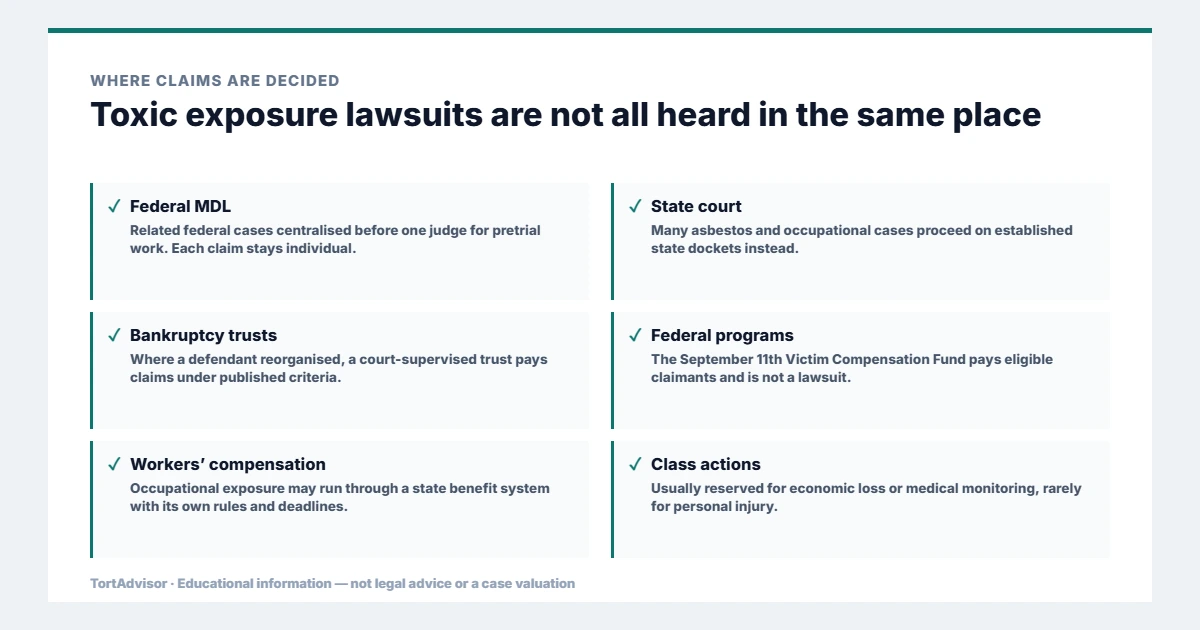
Several toxic-exposure topics on this hub are active federal MDLs, while World Trade Center compensation is administered through a separate federal program. These figures describe docket or program status—not the number of approved claimants or guaranteed payouts.
The dockets below show where toxic exposure lawsuits are currently pending. A pending count describes caseload at a point in time, not the number of claims that will recover anything.
JPML’s October 1, 2026 report lists 15,264 actions pending in AFFF Products Liability MDL 2873.
JPML’s October 1, 2026 report lists 6,602 actions pending in Paraquat Products Liability MDL 3004.
JPML’s October 1, 2026 report lists 1,104 actions pending in Roundup Products Liability MDL 2741.
The VCF’s claim-filing deadline is October 1, 2090. Registration is a separate step with deadlines that depend on individual circumstances.
Official status sources: JPML — October 1, 2026 Pending MDL Report • VCF Eligibility Criteria & Deadlines
Toxic Exposure Lawsuits & Asbestos Claim Guides
Toxic exposure lawsuits can involve different chemicals, products, workplaces and environmental contamination sources. Choose a claim type below to review the alleged exposure, diagnoses involved, evidence commonly requested, litigation developments and potential filing considerations.
PFAS Cancer Lawsuit
Forever-chemical contamination claims involving cancer diagnoses and alleged exposure near industrial, military or contaminated-water sites.
Read PFAS Cancer guide → Use the PFAS Settlement Calculator → Review PFAS settlement amounts → Read the latest PFAS / AFFF litigation update →
AFFF Firefighting Foam Lawsuit
Firefighting foam exposure claims involving PFAS and diagnoses including kidney, testicular and other cancers.
Read AFFF Firefighting Foam guide → Use the AFFF Settlement Calculator →
Roundup Lawsuit
Glyphosate herbicide exposure claims involving allegations of non-Hodgkin lymphoma and related injuries.
Read Roundup guide → Use the Roundup Settlement Calculator →
Paraquat Lawsuit
Herbicide exposure claims involving Parkinson’s disease allegations among agricultural workers and others with documented exposure.
Read Paraquat guide → Use the Paraquat Compensation Calculator →
Mesothelioma Lawsuit
Asbestos exposure claims involving mesothelioma, occupational history, product identification and related medical evidence.
Read Mesothelioma guide → Use the Mesothelioma Settlement Calculator →
World Trade Center Claims
September 11th toxic-exposure research covering VCF eligibility, WTC Health Program certification, exposure proof and compensation documentation for responders and survivors.
Read World Trade Center guide → Use the WTC 9/11 Settlement Calculator →
Asbestos Lawsuit
Occupational and product-based asbestos exposure claims, defendant identification and potential asbestos trust fund eligibility.
Read Asbestos guide → Use the Asbestos Settlement Calculator →
Asbestos Lung Cancer Lawsuit
Lung cancer claims involving documented workplace, industrial or product-based asbestos exposure.
California Wildfire Lawsuit
Related environmental-disaster claims involving allegedly utility-caused wildfires, property loss, bodily injury, displacement and wrongful death. These are not the same as a traditional chemical-exposure tort.
Read California Wildfire guide → Use the California Wildfire Settlement Calculator →
How Toxic Exposure Lawsuits Work
Toxic exposure lawsuits may involve product liability, toxic tort, negligence, premises liability or other legal theories depending on the exposure and applicable law. Attorneys typically evaluate the exposure source, medical diagnosis, timeline and potential responsible parties.
The evidence needed in toxic exposure lawsuits differs according to the alleged contaminant. A PFAS claim may require water or location evidence, while an asbestos case may rely heavily on occupational records, product identification and witness testimony.
Because toxic exposure lawsuits frequently involve products sold or installed decades ago, identifying a defendant that still exists and can pay is sometimes as decisive as proving the diagnosis itself.
Determine the chemical, product, workplace, property, military installation or environmental source allegedly involved.
Collect pathology, oncology, neurological, respiratory and other medical records relevant to the diagnosed condition.
Organize exposure dates, employment or residence history, symptom onset, diagnosis and when a possible exposure connection was discovered.
An attorney can evaluate potential defendants, jurisdiction, statutes of limitation, trust funds and litigation-specific filing requirements.
Occupational-exposure source: OSHA Chemical Hazards and Toxic Substances provides federal workplace hazard, exposure-control and worker-safety resources.

Evidence Used in Toxic Exposure Lawsuits
Evidence in toxic exposure lawsuits may include employment records, military records, environmental testing, product identification, medical records and detailed exposure timelines.
Because toxic exposure lawsuits frequently involve events that occurred years earlier, preserving historical employment, residence, military, product and medical information can be especially important.
Toxic exposure lawsuits depend unusually heavily on documents created long before anyone contemplated a claim. Preservation therefore matters more in toxic exposure lawsuits than in most other litigation.
Exposure & Location Records
- Employment and union records
- Military service records
- Residential address history
- Job-site or facility information
- Product names and manufacturers
- Environmental testing records
- Witness or coworker information
Medical & Damages Records
- Pathology and diagnosis records
- Oncology and treatment records
- Imaging and laboratory results
- Hospital and surgery records
- Medical bills
- Lost wage documentation
- A dated diagnosis and exposure timeline
Why exposure evidence is claim-specific: ATSDR notes that PFAS risk depends on exposure factors such as dose, frequency, route and duration, while asbestos disease risk is evaluated through the type and history of fiber exposure and medical findings. ATSDR PFAS health effects → • ATSDR asbestos overview →

Compensation in Toxic Exposure Lawsuits
Compensation in toxic exposure lawsuits depends on the diagnosis, exposure history, medical evidence, responsible parties, economic losses, jurisdiction and other case-specific facts.
There is no universal payout for toxic exposure lawsuits. Two people exposed to the same substance may have different claims because of differences in diagnosis, duration of exposure, treatment, damages and available evidence.
Potential Civil Damages
- Past medical expenses
- Future treatment costs
- Lost wages
- Reduced earning capacity
- Pain and suffering
- Wrongful-death damages where applicable
Other Potential Recovery Sources
- Asbestos bankruptcy trust funds
- Multiple responsible defendants
- Workers’ compensation where applicable
- Government compensation programs
- Property-loss claims in applicable cases
- Other claim-specific recovery programs
For current payout research, start with the Toxic Exposure Settlement Amounts section. For claim-specific educational estimates, browse Toxic Exposure, Asbestos & 9/11 settlement calculators. PFAS readers can also compare the dedicated PFAS Settlement Amounts 2026 guide.
Official Sources for Toxic Exposure Lawsuits
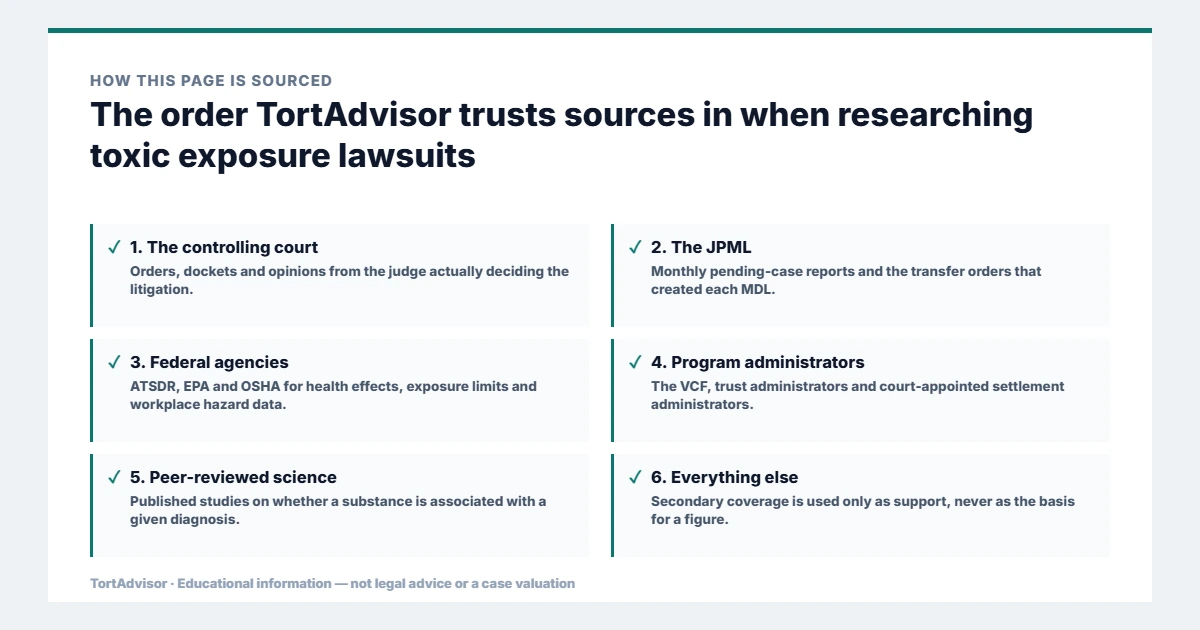
TortAdvisor uses government health agencies, workplace-safety authorities, official federal court pages and compensation-program records to verify exposure, health and litigation context. These sources do not establish the merits of an individual civil claim by themselves.
Every status, deadline and figure published on this page about toxic exposure lawsuits comes from the sources listed below, in the order shown.
Source review date: August 20, 2026. Federal court dockets, agency guidance, pesticide reviews, environmental data and compensation-program rules can change after publication. Use the linked primary sources for the newest status.
Toxic Exposure Lawsuits FAQ
What are toxic exposure lawsuits?
Toxic exposure lawsuits are civil claims alleging that exposure to chemicals, contaminants, hazardous materials or toxic products caused a serious injury or disease and that one or more parties may be legally responsible.
Who may qualify for toxic exposure lawsuits?
Potential claims may involve people with a documented diagnosis and evidence of occupational, military, environmental, residential or product-related exposure. Eligibility depends on the specific claim, evidence, defendants and applicable law.
How long do I have to file toxic exposure lawsuits?
Filing deadlines vary by state, claim type and the facts surrounding when the injury and its potential cause were discovered. Exposure and diagnosis dates should be reviewed promptly.
SourceN.Y. CPLRSec. 214-c
What if my toxic exposure happened decades ago?
A long period between exposure and diagnosis does not automatically determine whether a claim can or cannot be filed. Applicable statutes of limitation, discovery rules and other legal requirements depend on the jurisdiction and facts.
SourceN.Y. CPLRSec. 214-c
What if the company responsible for asbestos exposure is bankrupt?
Some asbestos companies established bankruptcy trust funds to compensate qualifying present and future claimants. Eligibility requirements, documentation and available payment percentages vary by trust.
SourceU.S. GAOGAO-11-819
What records can help prove toxic exposure?
Helpful records may include employment history, military service records, residential addresses, product identification, environmental testing, witness information and medical documentation of the diagnosed condition.
Can family members file after an exposure-related death?
A qualifying representative or family member may be able to pursue a wrongful-death or survival claim depending on state law, the exposure, diagnosis, defendants and applicable filing deadlines.
SourceN.Y. EPTLSec. 5-4.1
How much are toxic exposure lawsuits worth?
There is no standard payout for toxic exposure lawsuits. Potential value may depend on the diagnosis, severity of injury, exposure evidence, medical treatment, economic losses, defendants, jurisdiction and other case-specific factors.
Does a toxic exposure claim review create an attorney-client relationship?
No. Requesting an intake review does not by itself create an attorney-client relationship. Representation begins only if a licensed attorney accepts the matter and the parties enter a separate written engagement agreement. Any fees, costs or contingency terms should be explained in that agreement.
Is a World Trade Center VCF claim the same as a toxic tort lawsuit?
No. The September 11th Victim Compensation Fund is a federal compensation program with its own eligibility, presence, certified-condition and deadline rules. A WTC-related person may also have other legal or benefits issues, but the VCF should not be described as an ordinary settlement in a private toxic-tort lawsuit. See the official VCF eligibility and deadline criteria.
SourceVCFDeadlines
Request a Free Toxic Exposure Claim Review
If you are researching toxic exposure lawsuits because PFAS, AFFF, asbestos, herbicides, workplace chemicals or another hazardous exposure may have contributed to a serious condition, you can submit the exposure, diagnosis, treatment and timing information you know now for review.
- No fee to submit information
- Exposure- and diagnosis-specific intake questions
- Attorney representation is not guaranteed
- Submitting information does not create an attorney-client relationship
See Whether Your Exposure Claim May Qualify
Answer what you know. Avoid submitting unnecessary sensitive information.