Short answer: This article explains the key facts, eligibility issues, settlement factors, deadlines, and source-backed updates related to this legal topic. Results vary by case facts, evidence, jurisdiction, and representation.
Introduction
📋 Table of Contents
- Introduction
- Understanding AFFF and the Health Risks of PFAS Exposure
- Current Status of the Firefighting Foam PFAS Lawsuit and MDL 2873
- Recent Settlements and Compensation Projections in the Firefighting Foam PFAS Lawsuit
- Eligibility and Filing Your AFFF Claim
- Frequently Asked Questions about AFFF Lawsuits
- Conclusion
The Firefighting foam PFAS lawsuit is a major legal action. It centers on the health damage caused by a special firefighting foam called AFFF. Many people, especially firefighters and military personnel, used this foam. Now, they are facing serious illnesses because of it.
Here’s a quick look at the lawsuit:
- What it is: A large group of lawsuits against companies that made firefighting foams (AFFF). These foams contained toxic PFAS chemicals.
- Why it matters: These “forever chemicals” are linked to severe health problems. This includes different types of cancer.
- Current status: Over 15,000 cases are joined together in one big federal lawsuit (MDL 2873).
- Settlements so far: Companies have paid billions of dollars in settlements for contaminated water systems. Personal injury settlements are also expected soon.
- Who can claim: Firefighters, military members, and others exposed to AFFF. They must have developed specific cancers or illnesses after this exposure.
AFFF stands for Aqueous Film-Forming Foam. It was widely used to put out dangerous liquid fires, especially those fueled by petroleum. But AFFF contained chemicals known as PFAS (Per- and Polyfluoroalkyl Substances). These are often called “forever chemicals.” This is because they do not break down in nature or in the human body. Two of the most well-known PFAS are PFOA and PFOS. These chemicals are highly toxic and can stay in the environment and our bodies for a very long time. As one CDC official stated, PFAS chemicals present “one of the most seminal public health challenges for the next decades.”
I’m Mason Arnao, and I have a background in internet marketing and lead generation, including for legal services. My experience helps me understand and explain complex legal topics like the Firefighting foam PFAS lawsuit in clear terms.
Understanding AFFF and the Health Risks of PFAS Exposure
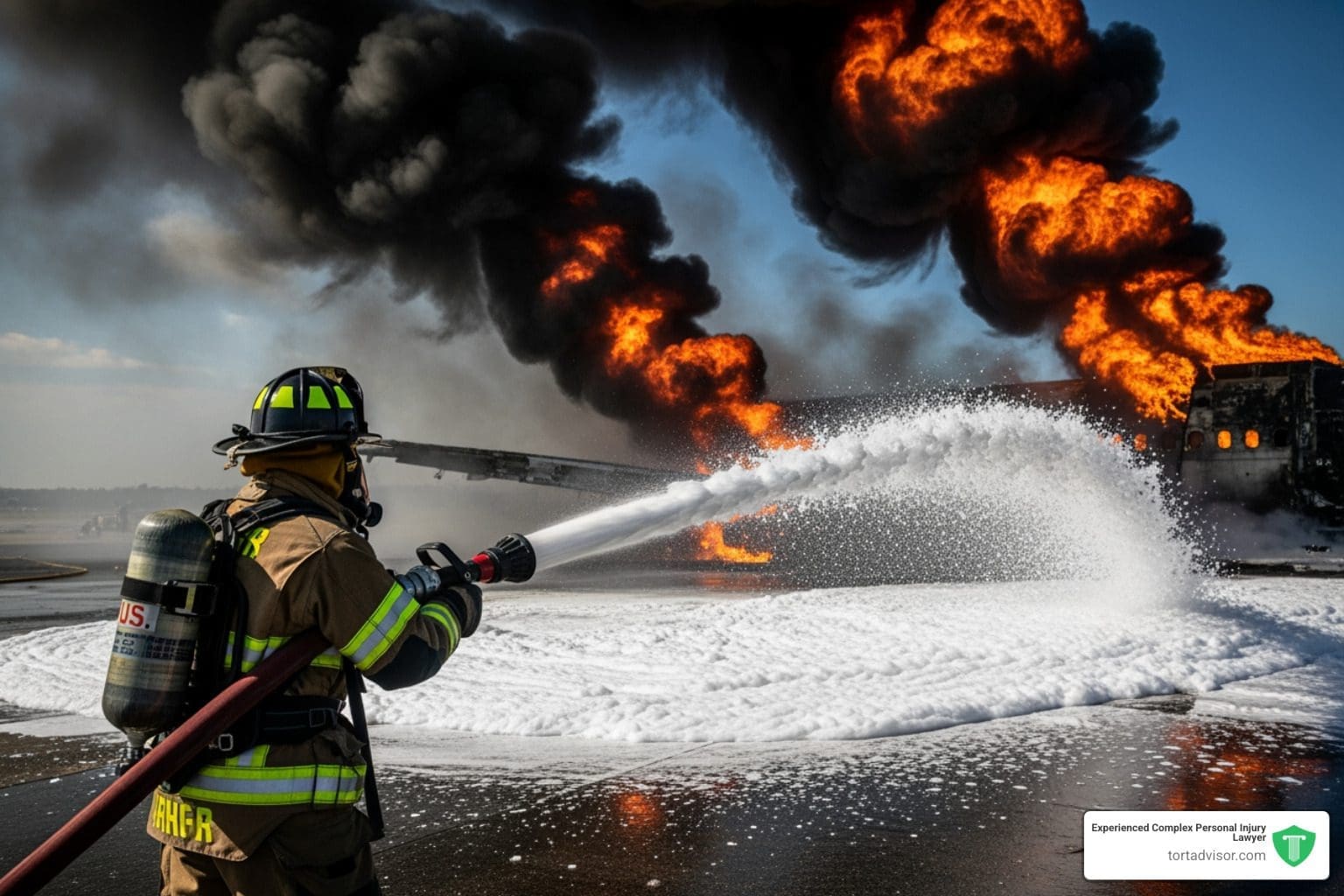
Aqueous Film-Forming Foam (AFFF) was designed for a very specific, high-stakes purpose: suppressing Class B fires. These are fires involving flammable liquids like gasoline, jet fuel, and oil. Because water alone often can’t extinguish these blazes, AFFF uses fluorinated surfactants to create a film that smothers the fire and prevents it from reigniting.
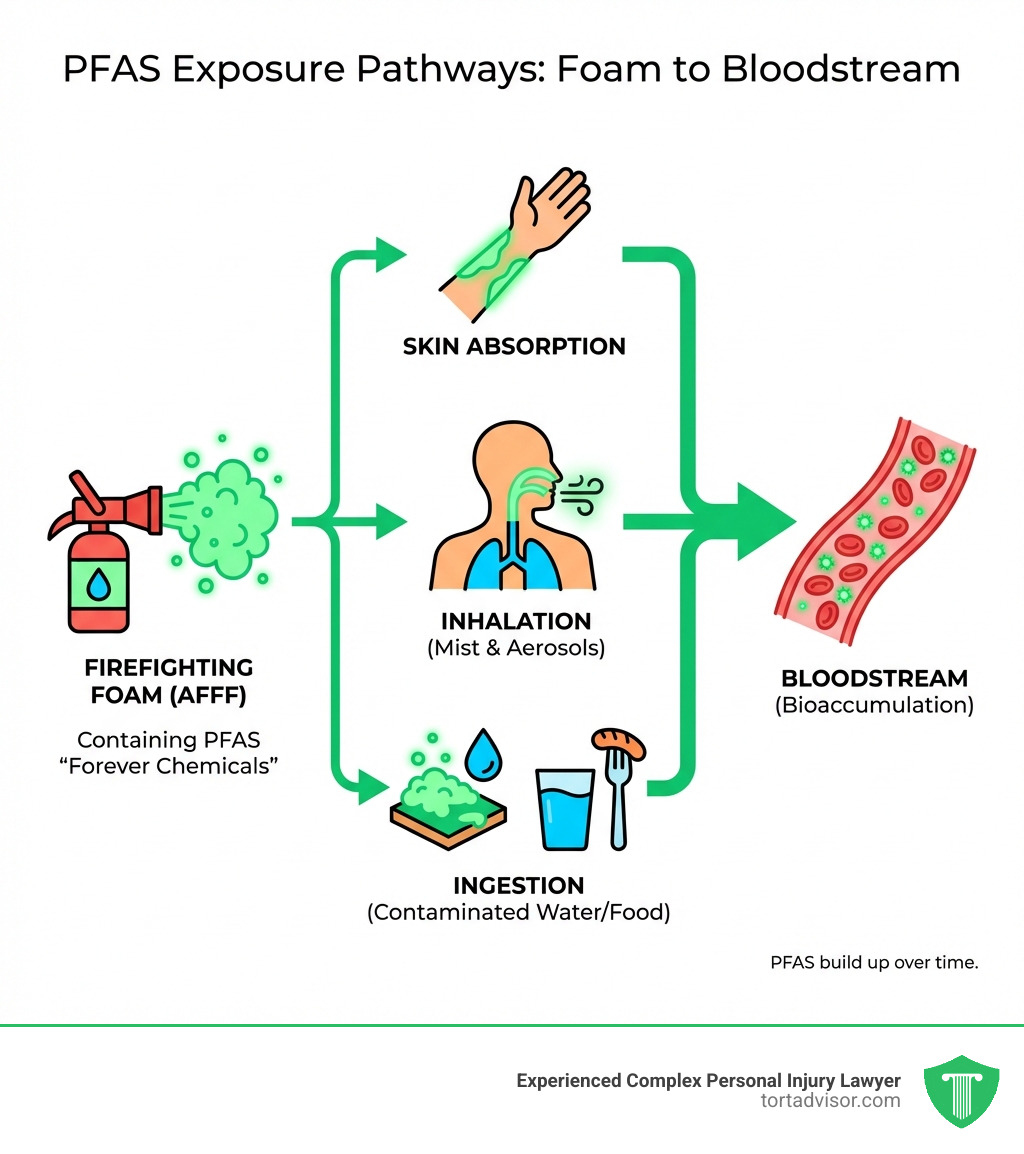
Unfortunately, these surfactants belong to the PFAS family. For decades, we used these “forever chemicals” without realizing the toll they took on our bodies. When firefighters use the foam, they aren’t just spraying a tool; they are being exposed to substances that bioaccumulate, meaning they build up in the body over time and do not leave.
The Scientific Connection to Cancer
The evidence linking PFAS to serious illness is no longer a matter of debate. A This study is considered by many experts to be the strongest proof yet of the link between testicular cancer and AFFF. In fact, some legal observers have noted that we already had so much evidence that this new data is like “shooting a person who has already been shot five times”—it simply reinforces a known truth.
Beyond testicular cancer, researchers have identified several other PFAS exposure symptoms and conditions. These include:
- Kidney Cancer: Studies show that kidney cancer rates are significantly higher in those with high PFAS blood levels.
- Thyroid Disease and Cancer: PFAS interferes with hormonal balance, leading to hypothyroidism and thyroid tumors.
- Ulcerative Colitis: This chronic inflammatory bowel disease has been a major focus of recent litigation.
- Liver Damage: PFAS can lead to fatty liver disease and even liver cancer.
Firefighter Mortality Rates
The risks for those in the fire service are staggering. This study reports that firefighters are 60% more likely to die of cancer than the general population. Even more shocking is that the death rate for prostate cancer among firefighters is four times higher, while leukemia rates are three times higher. From 2002 to 2019, cancer was responsible for 66% of career firefighter line-of-duty deaths.
Core Qualifying Conditions
In the current Firefighting foam PFAS lawsuit, the court has narrowed the focus to a “Tier 1” list of core conditions. If you or a loved one has been diagnosed with one of these after working with AFFF, your case is considered among the strongest:
- Kidney Cancer
- Testicular Cancer
- Liver Cancer
- Thyroid Cancer
- Ulcerative Colitis
- Thyroid Disease

Current Status of the Firefighting Foam PFAS Lawsuit and MDL 2873
If you are following the news, you know that the Firefighting foam PFAS lawsuit is moving at a breakneck pace. Most of these cases are consolidated into a Multidistrict Litigation (MDL) 2873, overseen by Judge Richard Gergel in the District of South Carolina.
As of early 2026, there are 15,216 pending cases in the MDL. This represents a massive 99% growth since January 2025. This surge is largely due to the “Filing Facilitation Window” that closed in late 2025, which prompted tens of thousands of new claims to be submitted as people realized the deadline for potential global settlements was approaching.
Bellwether Trials and Discovery
We are currently in a critical phase of the litigation. “Bellwether” trials—test cases used to predict how juries will react to the evidence—are being prepared. Judge Gergel recently granted an extension for parties to select discovery pool plaintiffs for “Tier 2 Group B” cases. This group includes injuries like liver and thyroid cancer, which have strong causal links to PFAS based on recent research.
For the latest blow-by-blow updates, you can check our PFAS lawsuit update today. The court is currently pressuring both sides to reach a settlement before the first personal injury bellwether trials begin, which are tentatively scheduled for late 2025 or early 2026.
Key Defendants in the Firefighting Foam PFAS Lawsuit
The list of companies being sued is a “who’s who” of chemical manufacturing. These companies are accused of knowing about the toxicity of PFAS as early as the 1950s and 1970s but choosing to hide that information to protect their profits.
Major defendants include:
- 3M Company: The primary manufacturer of AFFF for decades. Internal documents from 1978 show 3M scientists warned that PFAS was “more toxic than anticipated.”
- DuPont / Chemours / Corteva: These related companies are responsible for much of the PFOA used in the U.S.
- Tyco Fire Products: A major distributor of firefighting equipment and foam.
- Kidde-Fenwal: Recently reached a $730 million settlement regarding its AFFF products.
- Johnson Controls and Carrier Global: Both have faced significant pressure to contribute to settlement funds.
For a deeper dive into the specific companies involved, see our guide on AFFF firefighting foam lawsuits.
Recent Settlements and Compensation Projections in the Firefighting Foam PFAS Lawsuit
While we are still waiting for a “global” settlement for personal injury claims, we have already seen historic amounts of money change hands in the water contamination side of this litigation.
- 3M Settlement: 3M agreed to pay at least $10.3 billion to resolve claims from public water systems across the country.
- DuPont/Chemours/Corteva Fund: These companies established a $1.185 billion fund to address PFAS in drinking water.
- Carrier Global Deal: A $730 million settlement was reached to resolve claims against its subsidiary, Kidde-Fenwal.
What Does This Mean for You?
If you are an individual with a personal injury claim, these water settlements are a very good sign. They show that the defendants are willing to pay massive amounts to avoid the risk of a jury trial. Based on current trends, we can provide some AFFF lawsuit settlement amounts projections:
| Claim Category | Projected Settlement Range | Status |
|---|---|---|
| Tier 1 (Cancer) | $200,000 – $500,000+ | Pending Bellwether |
| Tier 2 (Chronic Illness) | $100,000 – $200,000 | Discovery Phase |
| Tier 3 (Minor Injuries) | $75,000 or less | To be determined |
| Water Contamination | $13 Billion+ Total | Settled |
These numbers are estimates, but they reflect the gravity of the injuries involved. Stronger cases—those with clear medical records and long-term occupational exposure—will naturally fall into the higher tiers.
Eligibility and Filing Your AFFF Claim
Who exactly is eligible to file a claim in the Firefighting foam PFAS lawsuit? The net is wider than you might think. While municipal firefighters are the most common plaintiffs, several other groups are at high risk.
High-Risk Occupations
- Military Personnel: The military used roughly 75% of all AFFF in the U.S. Anyone who served on an Air Force base, Navy ship, or at a military airfield was likely exposed.
- Airport Firefighters: FAA regulations required the use of AFFF at airports for decades.
- Industrial Workers: People working at oil refineries or chemical plants where AFFF was stored in massive quantities (often 20,000 to 40,000 gallons) are also at risk.
The Dermal Exposure Factor
For a long time, companies argued that you had to swallow or breathe in PFAS to get sick. However, a new study has shown that PFAS can actually be absorbed through the skin. This is critical for firefighters who handled foam or wore “turnout gear” that was treated with PFAS.
If you fit the PFAS lawsuit criteria, you should gather your service records and medical history immediately. You can find more about the different types of PFAS cancer lawsuits on our site.
Statute of Limitations and the Discovery Rule
One of the biggest concerns for many veterans and retired firefighters is the “statute of limitations.” You might think, “I retired 20 years ago; surely it’s too late to sue.”
In most states, the clock for a lawsuit starts when the injury happens. However, in toxic tort cases like the Firefighting foam PFAS lawsuit, we use the Discovery Rule. This rule states that the time limit doesn’t start until you discover (or reasonably should have discovered) that your illness was caused by AFFF.
Because the link between PFAS and cancer was hidden by manufacturers for decades, many people are only now learning the truth. This means even “old” claims are often still valid. To get a better sense of your timing and potential value, use our AFFF settlement calculator and read our PFAS cancer risk complete guide.
Frequently Asked Questions about AFFF Lawsuits
Who qualifies to file an AFFF lawsuit?
Generally, anyone who had regular occupational exposure to AFFF and was later diagnosed with a related cancer or ulcerative colitis. This includes civilian firefighters, military veterans, airport crash crews, and industrial workers. In some cases, residents who lived near bases and drank contaminated well water also qualify for PFAS lawsuit eligibility.
What cancers are linked to firefighting foam?
The strongest links are to kidney, testicular, liver, and thyroid cancer. However, there is also significant evidence regarding prostate cancer and leukemia. If you are dealing with prostate cancer specifically, we have a PFAS prostate cancer guide that explains the current legal standing for those claims.
How long does an AFFF settlement take?
Litigation of this size is a marathon, not a sprint. We are currently in the “home stretch” for a potential global settlement. Many experts predict that 2025 and 2026 will be the years when the majority of individual personal injury claims are resolved. You can stay informed with our AFFF lawsuit updates.
Conclusion
The Firefighting foam PFAS lawsuit is finally holding massive corporations accountable for the “forever chemicals” they put into our environment and our bodies. For the firefighters and veterans who spent their lives protecting us, this is a long-overdue path to justice.
At Tort Advisor, we are dedicated to connecting you with the right legal expertise. We work exclusively with highly skilled attorneys who have a proven track record in complex personal injury cases. If you or a loved one has been diagnosed with cancer after AFFF exposure, now is the time to act.
We offer a free case review and work on a contingency fee basis—meaning you don’t pay anything unless we win your case. Don’t let the statute of limitations expire while you wait. Contact us today to see if you qualify for a Firefighting foam cancer lawsuit.
Related Posts

If you developed a serious infection following orthopedic surgery — such as a hip or knee replacement — and a [...]

A global Depo-Provera settlement agreement was announced on June 15, 2026 — the most significant development in this litigation since [...]
If you or a loved one has been diagnosed with mesothelioma after years of using talcum powder products, you may [...]