

Wrongful Death Lawsuit (MVA) 2026: Compensation Guide, Eligibility and Case Review
A wrongful death lawsuit allows surviving family members to recover compensation when a loved one is killed in a car, truck, motorcycle, pedestrian, or rideshare crash caused by another driver’s negligence. Every state permits a spouse, child, or parent — and often the estate’s personal representative — to bring this type of claim.
Wrongful death claims are often more complex than injury claims because multiple liable parties, insurance policies, and a separate survival action for the victim’s pre-death pain and suffering may all come into play.
TortAdvisor connects grieving families with experienced wrongful death attorneys — with no upfront costs and no fee unless we win.
What to Have Ready Before You Submit
Providing a few key details can help the intake team review your request more efficiently.
See Whether Your Family May Qualify For A Wrongful Death Claim
Complete the short form for a confidential review of the accident, your relationship to the deceased, and your family’s potential damages.
Wrongful Death Lawsuit (MVA) 2026: Compensation Guide And Eligibility
A wrongful death lawsuit is a legal claim filed by surviving family members after a loved one is killed in a motor vehicle accident caused by another party’s negligence. These claims can arise from car, truck, motorcycle, pedestrian, rideshare, hit-and-run, or drunk or impaired-driving crashes, and are typically brought by a spouse, child, parent, or the estate’s personal representative.
TortAdvisor helps grieving families understand whether they may have a valid wrongful death claim, connects them with experienced attorneys, and provides free educational resources about the legal process, evidence, and potential compensation.
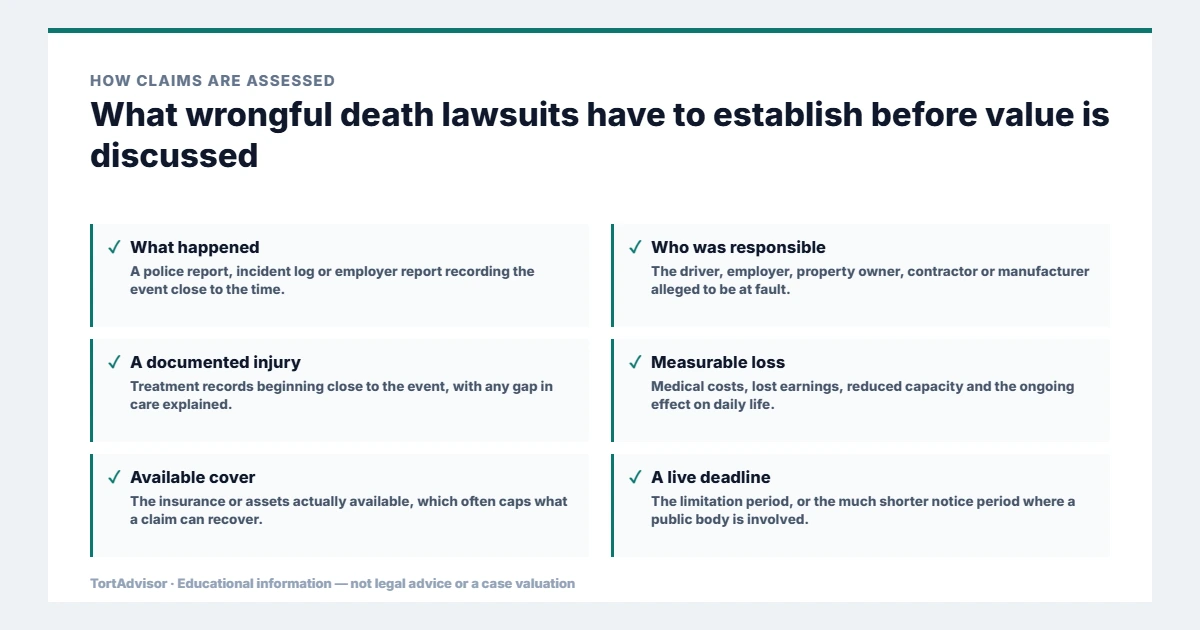
Do You Qualify For A Wrongful Death Lawsuit?
You may have a potential wrongful death claim if a loved one was killed in a motor vehicle accident caused, in whole or in part, by another driver’s negligence.
- Your loved one died as a result of injuries from a car, truck, motorcycle, pedestrian, or rideshare crash.
- You are a surviving spouse, child, parent, or the appointed representative of the deceased’s estate.
- The accident was recent enough to fall within your state’s filing deadline (statute of limitations).
- You have, or can obtain, documentation such as a police report, death certificate, or medical records.
Who May Be Liable In A Wrongful Death Lawsuit?
Liability depends on the type of crash and the parties involved. A negligent driver, their employer, a commercial trucking company, a rideshare company’s insurer, or even a vehicle manufacturer may all bear responsibility.
Because wrongful death claims often involve significant damages, insurers may aggressively dispute fault — making a thorough investigation of the crash critical.
Every status, deadline and figure published on this page about wrongful death lawsuits is traced to a primary source before it appears.
Negligent Driver Conduct
Distracted, drunk, impaired, or reckless driving is a leading cause of fatal crashes.
Commercial Or Rideshare Policies
Trucking companies and rideshare companies often carry higher-limit commercial insurance policies.
Hit-And-Run Or Uninsured Drivers
Uninsured/underinsured motorist coverage may apply when the at-fault driver flees or lacks insurance.
Wrongful Death Lawsuit Settlement Amounts In 2026
No two wrongful death cases are the same, and there is no guaranteed settlement amount. Any dollar ranges discussed online are educational projections, not confirmed averages or guaranteed payouts. Settlement value depends on the deceased’s age, income, number of dependents, degree of fault, and available insurance coverage.
| Educational Claim Tier | Common Characteristics | Important Value Factors |
|---|---|---|
| Single surviving dependent | Limited lost income. | Claims often settle between $250,000 and $750,000. |
| Spouse and minor children | Established lost earnings. | Claims frequently fall between $750,000 and $2.5 million. |
| Sole household provider | Long remaining work-life expectancy, egregious negligence. | Value may exceed $2.5 million, sometimes reaching $10 million or more. |
For an educational look at reported settlement and jury verdict ranges nationwide, see our Motor Vehicle Accident Laws & Settlement Factors by State, compiled using our published data methodology. Because wrongful death and fault rules vary by state, our Car Accident Fault Rules & Statute of Limitations by State guide can help you confirm the filing deadline and negligence rule that applies to your case.
Never accept the insurance company’s first settlement offer without consulting a wrongful death attorney. An attorney can help calculate your family’s full economic and non-economic losses.
Common Causes Of Wrongful Death Motor Vehicle Accidents
Distracted Driving
A driver texting, using a phone, or otherwise not watching the road can cause a fatal crash.
Drunk Or Impaired Driving
Alcohol or drug impairment is a leading cause of fatal motor vehicle accidents.
Speeding Or Reckless Driving
Excessive speed reduces reaction time and increases crash severity.
Commercial Truck Negligence
Fatigued drivers or improperly maintained trucks can cause catastrophic collisions.
Hit-And-Run Crashes
An at-fault driver fleeing the scene can complicate liability and insurance recovery.
Rideshare Or Third-Party Negligence
Uber, Lyft, or other third-party drivers may cause a fatal crash while transporting passengers or driving nearby.
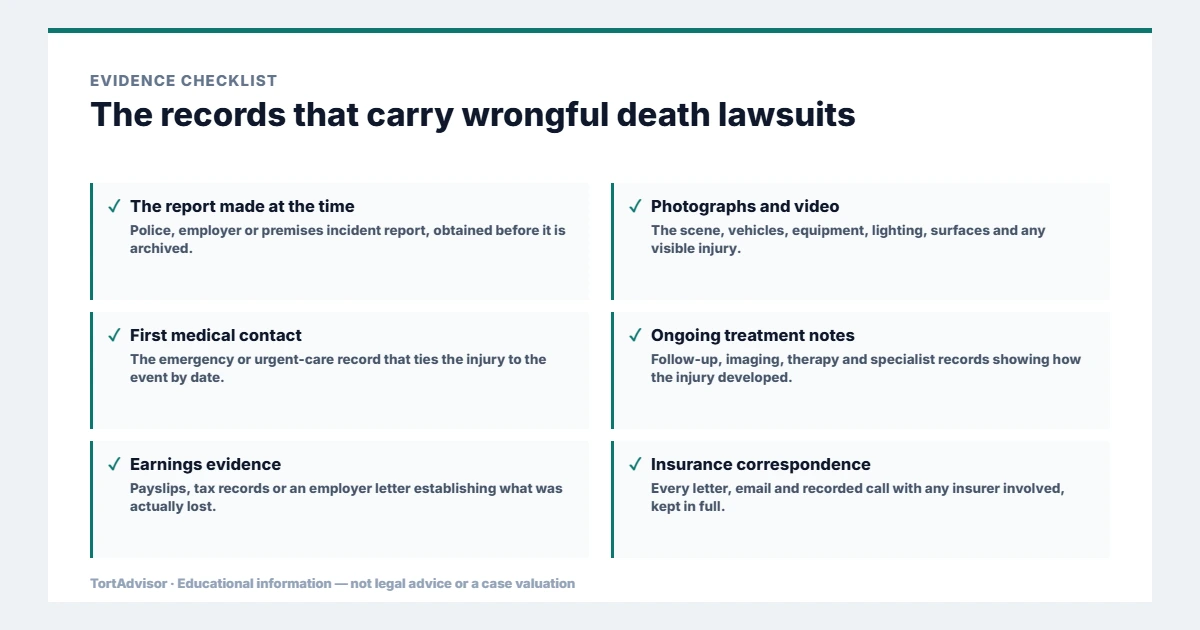
Critical Evidence In A Wrongful Death Lawsuit
Police Crash Report
Official documentation of the crash scene, involved parties, and initial fault assessment.
Death Certificate & Autopsy Report
Establishes cause of death and supports the wrongful death claim.
Financial & Income Records
Documentation of the deceased’s earnings, benefits, and the family’s financial losses.
Steps To Take After Losing A Loved One In A Motor Vehicle Accident
- Obtain the official police report, which establishes the facts of the crash and often assigns fault.
- Identify all liable parties and insurance policies — the at-fault driver, their employer, or a vehicle manufacturer may all bear responsibility.
- Avoid giving a recorded statement to insurers; adjusters may use your words to minimize your family’s claim.
- Track funeral, medical, and lost-income costs, keeping every receipt and pay stub as evidence of economic damages.
- Understand your state’s filing deadline — wrongful death claims are subject to a strict statute of limitations, typically one to three years.
- Consult a wrongful death attorney promptly, since early evidence like surveillance footage and vehicle data can disappear within days or weeks.
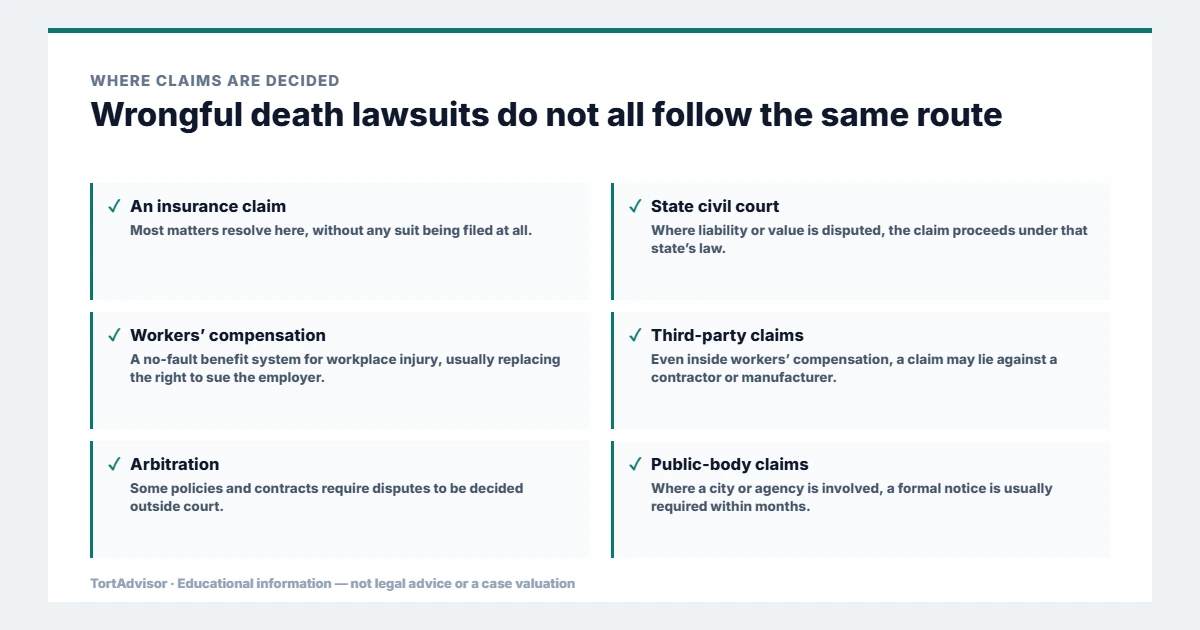
The Wrongful Death Legal Process
- Free, confidential case review to evaluate whether your family may have a valid claim.
- Investigation of the crash, including police reports, witness statements, and vehicle data.
- Identifying all liable parties and the applicable insurance policies.
- Gathering financial records and documentation of the family’s damages.
- Settlement negotiations with the applicable insurance company or companies.
- Filing a lawsuit if a fair settlement cannot be reached.
Wrongful Death Lawsuit Filing Deadlines
Most states set a wrongful death statute of limitations between one and three years from the date of death, but deadlines vary significantly by state. Consult an attorney as soon as possible so critical evidence is not lost.
Consulting an attorney promptly after losing a loved one can help ensure evidence is preserved and deadlines are not missed.
Wrongful Death Lawsuit FAQs
Who can file a wrongful death lawsuit after a fatal car accident?
Most states allow a surviving spouse, children, or parents to file. In some states, the personal representative of the deceased’s estate must file the claim on behalf of the surviving family members.
SourceN.Y. EPTLSec. 5-4.1
What compensation can my family recover in a wrongful death claim?
Families can typically recover funeral and burial expenses, the deceased’s lost future earnings and benefits, loss of companionship and guidance, and the pain and suffering the victim experienced before death through a separate survival action.
How long do we have to file a wrongful death lawsuit?
Most states set a deadline of one to three years from the date of death. Missing this deadline typically bars your family from recovering any compensation, so it’s important to consult an attorney as soon as possible.
SourceN.Y. EPTLSec. 5-4.1
Do we still have a claim if our loved one was partially at fault?
In most states, yes. Comparative negligence rules allow families to recover a percentage of damages even if the deceased shared some fault, though the total award may be reduced accordingly.
SourceN.Y. CPLRSec. 1411
Do I need a lawyer for a wrongful death claim?
While not legally required, an attorney can help identify all liable parties, calculate the full value of your family’s damages, and handle negotiations and deadlines while you focus on your family.
How is a wrongful death settlement distributed among family members?
Distribution typically follows state law and is based on each survivor’s relationship to the deceased and degree of financial dependency; a probate court may oversee distribution when the estate is involved.
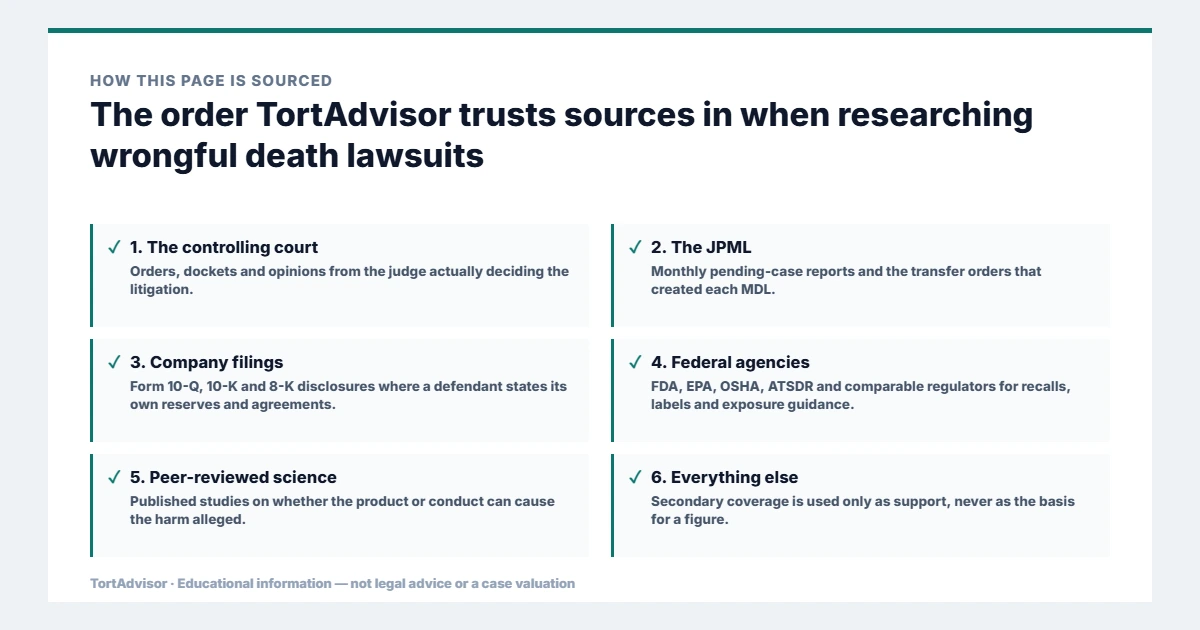
Primary Sources And External References
Sources should support the statement nearest to them. Laws and procedures can change and vary by state, so official agency resources should be checked before relying on specific procedural claims.
- National Highway Traffic Safety Administration (NHTSA). Official federal agency data on motor vehicle crashes and traffic fatalities.
- Governors Highway Safety Association (GHSA). Independent research on state-level traffic safety and fatality statistics.
- U.S. Department of Justice. General information on civil litigation and legal procedure.
Request A Confidential Wrongful Death Case Review
Use the form above or call to discuss the accident details, your relationship to the deceased, evidence, deadlines, and possible legal options.