
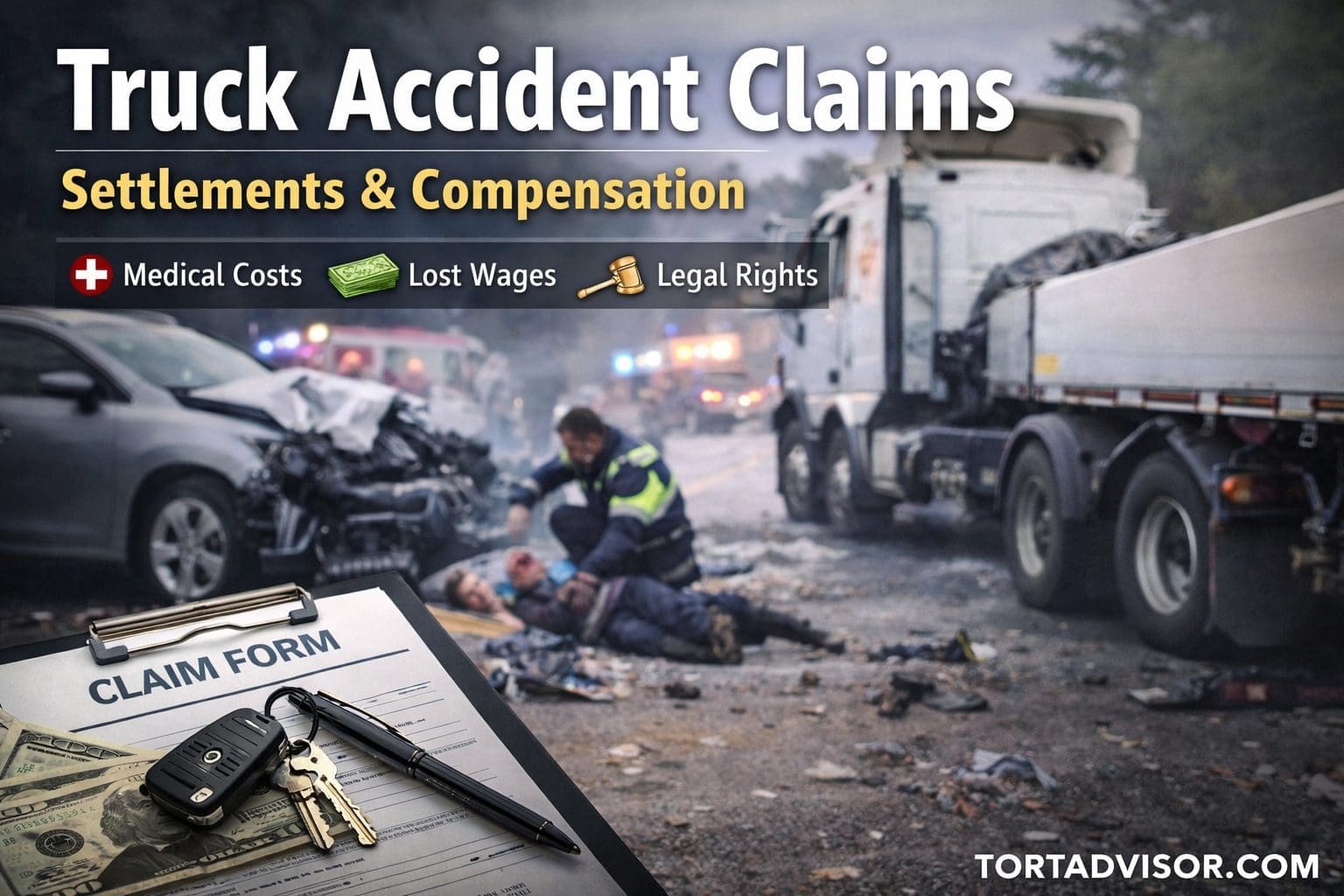
Truck Accident Lawsuit 2026: FMCSA Claims, Settlement Amounts and Case Review
Truck accident lawsuits allege that a negligent commercial truck driver or trucking company caused a crash that resulted in serious injury, and that applicable federal safety regulations may have been violated.
Commercial trucks are regulated by the Federal Motor Carrier Safety Administration (FMCSA). These are generally individual injury claims, and case value depends on the facts, liability evidence, and insurance coverage involved.
See Whether Your Truck Accident Claim May Qualify
Complete the short form for a confidential review of your accident details, injuries, treatment, and potential damages.
What Is the Truck Accident Lawsuit About?
A truck accident lawsuit allows a person injured by a negligent commercial truck driver or trucking company to seek compensation for medical expenses, lost wages, pain and suffering, and other damages. Commercial trucks are regulated by the Federal Motor Carrier Safety Administration (FMCSA), and crashes involving large trucks often cause more severe injuries than passenger-vehicle collisions because of the size and weight difference between the vehicles.
These are generally individual personal injury claims rather than a class action or multidistrict litigation, so each case is evaluated on its own facts, including how the crash occurred, who was at fault, the injuries sustained, and the insurance coverage available.
Who May Qualify for a Truck Accident Lawsuit?
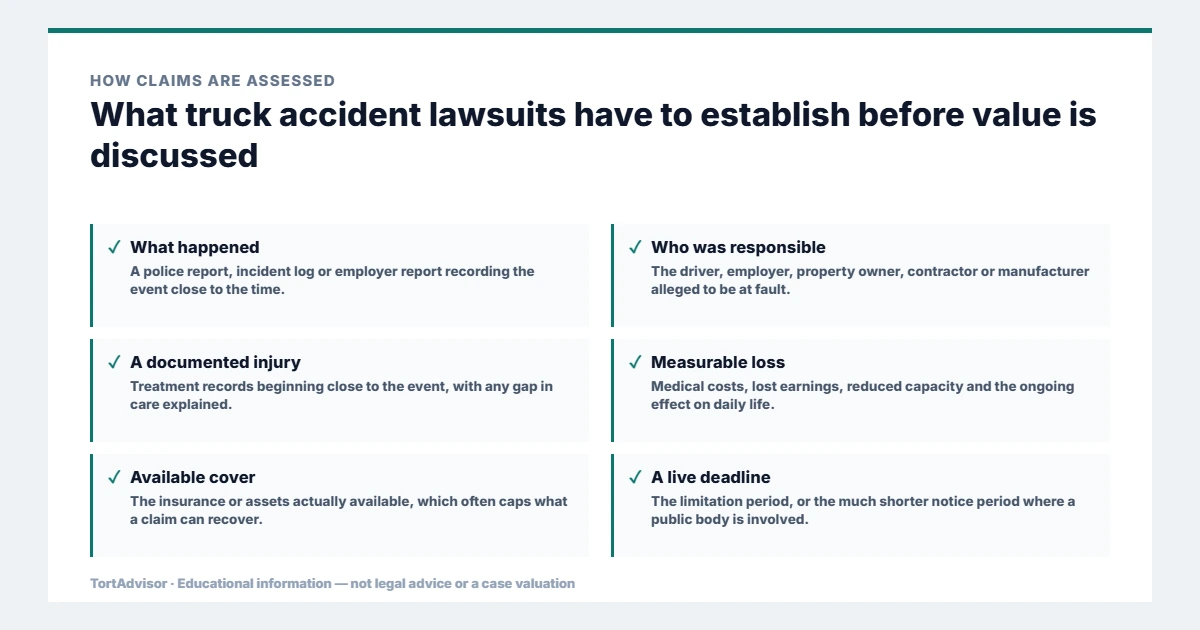
A case may warrant review when several of the following facts are present:
- You were injured in a crash involving a commercial truck, tractor-trailer, delivery vehicle, or other large commercial vehicle.
- The truck driver or trucking company may have violated FMCSA hours-of-service, maintenance, loading, or licensing rules.
- You have documented medical treatment connected to the crash.
- The crash resulted in lost income, disability, or long-term impairment.
- A filing deadline (statute of limitations) that applies to your state has not yet expired.
Liability can extend beyond the driver to the trucking company, a cargo loading company, a vehicle maintenance contractor, and the truck or parts manufacturer if a defect contributed to the crash. A truck accident attorney investigates all potentially liable parties to help maximize a recovery.
FMCSA Regulations and Truck Accident Liability
Commercial trucking is regulated by the Federal Motor Carrier Safety Administration, which sets rules for driver hours-of-service, vehicle maintenance and inspection, cargo securement, driver qualification, and drug and alcohol testing. A violation of these regulations can be important evidence of negligence in a truck accident claim.
Liability may extend to multiple parties, including the truck driver, the trucking or motor carrier company, a cargo loading or logistics company, a vehicle maintenance contractor, and the manufacturer of a defective truck part.
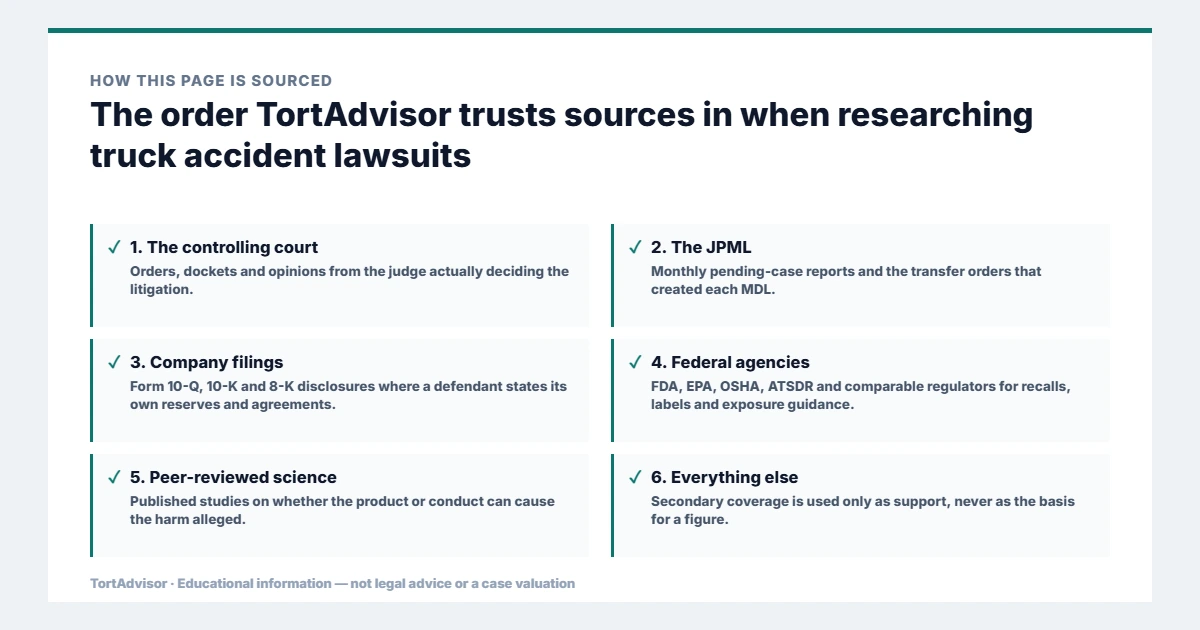
Every status, deadline and figure published on this page about truck accident lawsuits is traced to a primary source before it appears.
Hours-Of-Service Violations
Driver fatigue from exceeding federally mandated driving-time limits is a common factor in truck accident cases.
Maintenance & Inspection Failures
Worn brakes, tires, or other mechanical defects that were not properly inspected or repaired.
Cargo & Loading Violations
Overloaded, unsecured, or improperly loaded cargo that shifts or spills during transport.
Truck Accident Lawsuit Settlement Amounts in 2026
No two truck accident cases are the same, and there is no guaranteed settlement amount. Any dollar ranges discussed online are educational projections, not confirmed averages or guaranteed payouts. Potential value may depend on the severity of the injury, the strength of the liability evidence, available insurance coverage, lost income, medical costs, and jurisdiction.
| Educational Claim Tier | Common Characteristics | Important Value Factors |
|---|---|---|
| Severe injury review | Catastrophic injury, spinal cord damage, traumatic brain injury, or wrongful death. | Commercial insurance policies often range from $750,000 to $5 million; potential value may be significant. |
| Moderate injury review | Fractures, surgery, or extended treatment and recovery. | Value depends on treatment costs, lost income, and recovery timeline. |
| Minor injury review | Soft-tissue injury with a shorter recovery period. | Value depends on documented treatment and any lost income. |
Never accept an initial settlement offer from a trucking company’s insurer without first consulting a truck accident attorney — trucking companies often send rapid-response investigation teams to the scene within hours to begin building a defense.
Common Causes of Truck Accidents
Driver Fatigue
Fatigue from hours-of-service violations or long shifts without adequate rest.
Distracted Or Impaired Driving
Cell phone use, drowsy driving, or driving under the influence.
Improper Cargo Loading
Overloaded, unsecured, or unevenly distributed cargo affecting vehicle control.
Poor Vehicle Maintenance
Brake failure, tire blowouts, or other mechanical defects.
Jackknife & Underride Collisions
Trailer swing, jackknifing, and underride crashes involving passenger vehicles.
Driver Inexperience
Inadequate training or licensing for the size and type of vehicle operated.
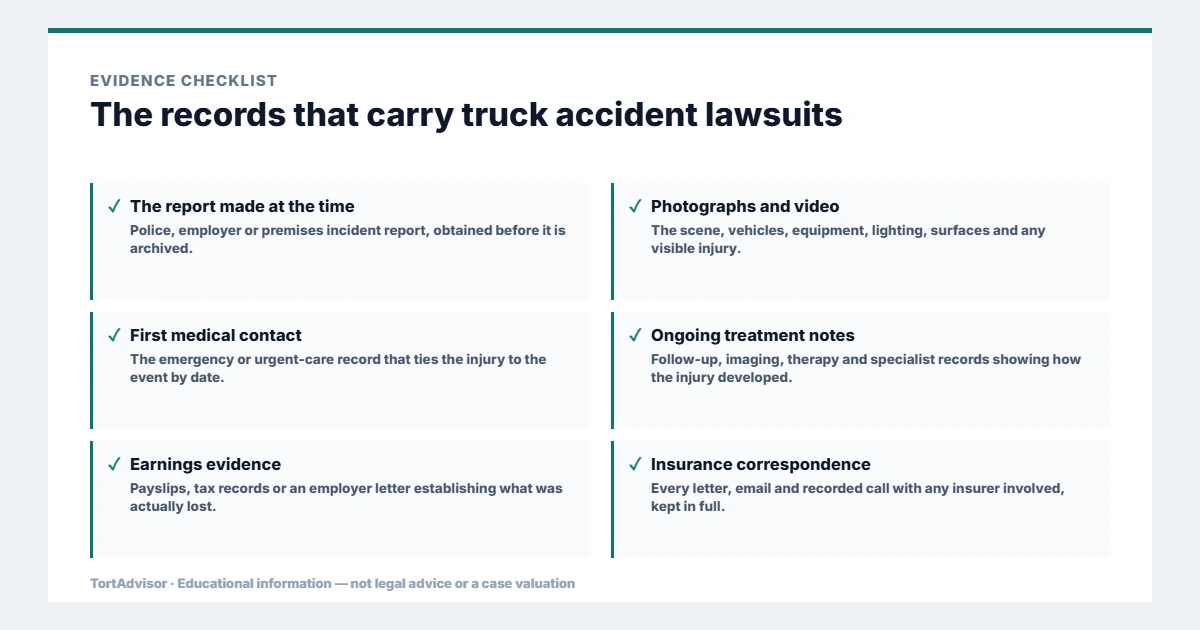
Evidence Commonly Reviewed in a Truck Accident Claim
Police & Crash Reports
Official accident reports, citations, and responding officer information.
Black Box & Driver Logs
Electronic control module (ECM) data, hours-of-service logs, and dashcam footage.
Medical & Damages Evidence
Medical bills, wage records, disability documentation, and photos of injuries and property damage.
Steps to Take After a Truck Accident
- Call 911 and ensure a police report is filed documenting the crash.
- Seek immediate medical attention even if you feel fine — injuries often appear hours or days later.
- Photograph the scene, both vehicles, your injuries, and the truck’s DOT number and license plate.
- Collect contact and insurance information from the driver and note the trucking company’s name.
- Avoid recorded statements to the trucking company’s insurer without an attorney present.
- Contact a truck accident attorney promptly so a spoliation letter can be sent to help preserve black box (ECM) data and driver logs before they are overwritten.
How a Truck Accident Lawsuit May Be Evaluated and Filed
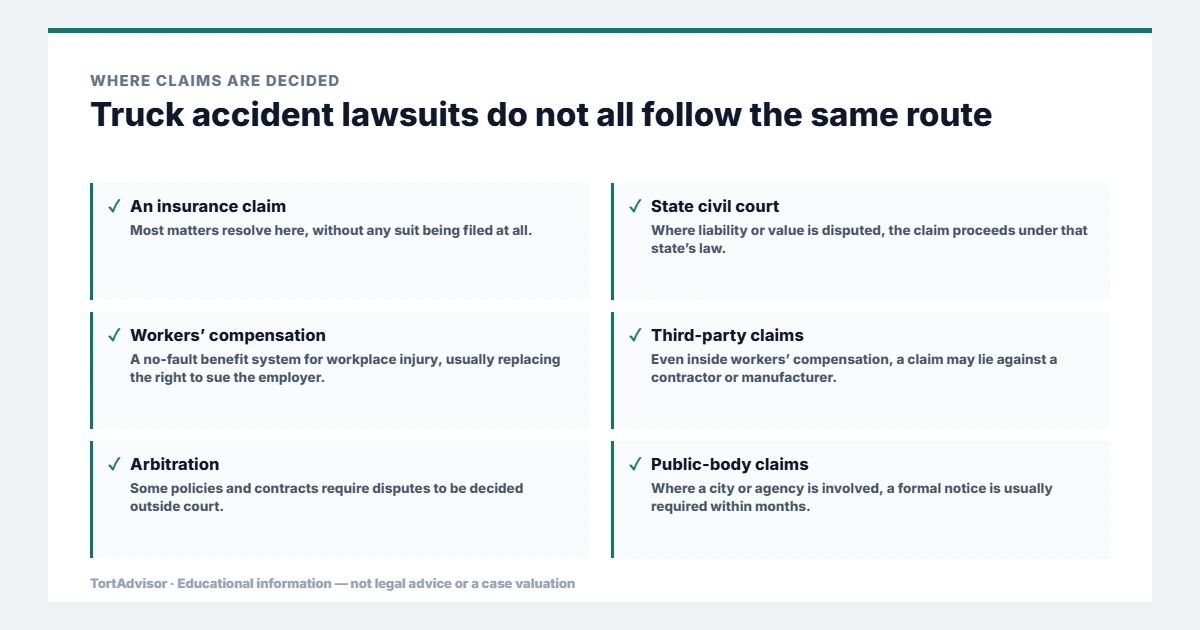
- Initial screening: Review the crash, injuries, potential liability, jurisdiction, and possible deadlines.
- Record collection: Obtain police reports, medical records, black box data, driver logs, and damages evidence.
- Legal review: Evaluate liability theories, comparative fault issues, damages, and applicable law.
- Demand or complaint filing: A retained attorney may negotiate with insurers or file an individual lawsuit.
- Discovery and negotiation: The parties exchange evidence and may negotiate a resolution.
- Resolution: A claim may be settled, resolved at trial, or otherwise concluded based on the facts and evidence.
Truck Accident Lawsuit Filing Deadlines
Statutes of limitations vary by state and are typically between one and three years from the date of the accident, though this can depend on the injury, the parties involved, and other facts. Claims against a government entity often have shorter notice deadlines.
Because a missed deadline may permanently bar a claim, contact a truck accident attorney promptly to obtain a state-specific review of your filing deadline.
Truck Accident Lawsuit FAQ
How long do I have to file a truck accident lawsuit?
Truck accident lawsuit statutes of limitations vary by state, typically one to three years from the accident date. Contact a truck accident attorney promptly — missing the deadline can permanently bar the claim. Claims against government entities often have shorter deadlines.
SourceN.Y. CPLRSec. 214
Who can be held liable in a truck accident?
Liability can extend beyond the driver to the trucking company, a cargo loading company, a vehicle maintenance contractor, and the truck or parts manufacturer if a defect contributed to the crash. An attorney investigates all potentially liable parties.
Source49 CFRSec. 390.11
What evidence is critical after a truck accident?
Preserving the truck’s electronic control module (black box) data, driver logs, maintenance records, and dashcam footage is important. An attorney can send a spoliation letter requiring the trucking company to preserve this evidence before it is deleted or overwritten.
Source49 CFRSec. 396.3
What damages can I recover in a truck accident lawsuit?
Potential damages include past and future medical expenses, lost wages and earning capacity, pain and suffering, emotional distress, property damage, and in some cases punitive damages against a reckless driver or trucking company.
Is there a guaranteed truck accident settlement amount?
No. There is no universal payout schedule. Case value depends on the injury, evidence, liability, insurance coverage, jurisdiction, and litigation outcome.
How is a truck accident case different from a car accident case?
Truck accidents often involve larger commercial insurance policies, additional liable parties such as the trucking company, and federal regulations like FMCSA hours-of-service rules that do not apply to standard passenger-vehicle crashes.
SourceFMCSAHours of service
Primary Sources and External References
Sources should support the statement nearest to them. Regulations and litigation status can change, so official agency resources should be checked before relying on specific procedural claims.
- Federal Motor Carrier Safety Administration (FMCSA). Official federal agency regulating commercial trucking safety.
- National Highway Traffic Safety Administration (NHTSA). Official federal traffic safety data and statistics.
- FMCSA Hours-of-Service Regulations. Official federal hours-of-service rules for commercial drivers.
Request a Confidential Truck Accident Case Review
Use the form above or call to discuss your accident details, injuries, treatment, evidence, deadlines, and possible legal options.