
Pedestrian Accident Lawsuit 2026: Injury Claims, Settlement Amounts and Case Review
Pedestrian accident lawsuits allow injured pedestrians to recover compensation for medical expenses, lost wages, pain and suffering, and other damages caused by a negligent driver.
The National Highway Traffic Safety Administration (NHTSA) reports that pedestrian deaths have risen significantly over the past decade, with drivers striking pedestrians in crosswalks, parking lots, and roadways nationwide. TortAdvisor connects pedestrian accident victims with experienced personal injury attorneys — with no upfront costs and no fee unless we win.
What to Have Ready Before You Submit
Providing a few key details can help the intake team review your request more efficiently.
See Whether Your Pedestrian Accident Claim May Qualify
Complete the short form for a confidential review of your accident details, injuries, treatment, and potential damages.
Pedestrian Accident Lawsuit 2026: Injury Claims And Compensation Guide
A pedestrian accident lawsuit is a legal claim filed by someone who was struck by a vehicle while walking, jogging, crossing a street, or standing near traffic. These claims are typically based on driver negligence — for example, failing to yield, driving distracted, or speeding through a crosswalk.
TortAdvisor helps injured pedestrians understand whether they may have a valid claim, connects them with experienced personal injury attorneys, and provides free educational resources about the legal process, evidence, and potential compensation.
Do You Qualify For A Pedestrian Accident Lawsuit?
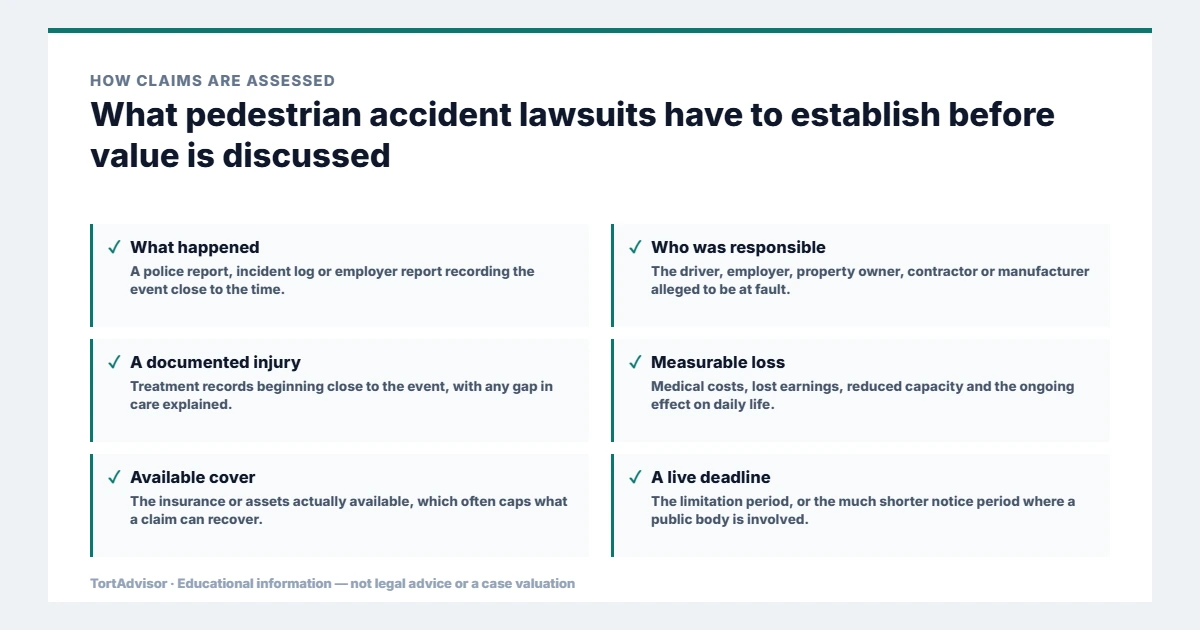
You may have a potential pedestrian accident claim if a driver’s negligence contributed to a crash that injured you while walking, crossing a street, or standing near traffic.
- You were injured as a pedestrian in a collision caused in whole or in part by a driver.
- You received medical treatment for injuries related to the crash, or your injuries required ongoing care.
- The accident was recent enough to fall within your state’s filing deadline (statute of limitations).
- You have, or can obtain, documentation such as a police report, photos, or witness information.
Who May Be Liable In A Pedestrian Accident Lawsuit?
Liability in a pedestrian accident case typically depends on which party violated traffic laws or failed to act with reasonable care. In most cases, the at-fault driver’s insurance is the primary source of compensation.
Insurance companies frequently attempt to shift some fault onto the pedestrian, so documenting the crash scene and obtaining a police report can be important to protecting a claim.
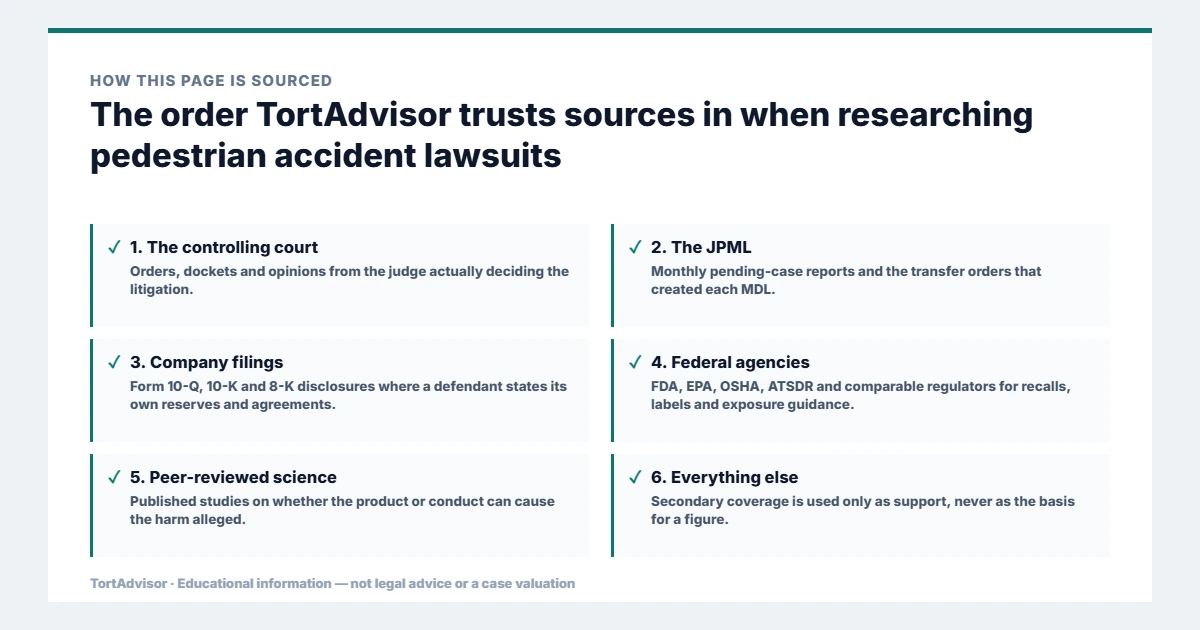
Every status, deadline and figure published on this page about pedestrian accident lawsuits is traced to a primary source before it appears.
Failure To Yield At Crosswalks
A driver fails to yield to a pedestrian who has the right of way in a marked or unmarked crosswalk.
Distracted Driving
A driver looking at a phone or otherwise distracted fails to notice a pedestrian in or near the roadway.
Comparative Negligence Disputes
Insurers may argue the pedestrian was partially at fault, such as jaywalking, which can reduce — but not necessarily eliminate — recoverable compensation depending on state law.
Pedestrian Accident Settlement Amounts In 2026
No two pedestrian accident cases are the same, and there is no guaranteed settlement amount. Any dollar ranges discussed online are educational projections, not confirmed averages or guaranteed payouts. Pedestrian accident settlements can be substantial because pedestrians have no vehicle to absorb crash forces and often suffer severe injuries.
| Educational Claim Tier | Common Characteristics | Important Value Factors |
|---|---|---|
| Catastrophic injury review | Traumatic brain injury, spinal cord damage, or amputation. | Value may exceed $1 million, particularly with distracted, impaired, or hit-and-run drivers. |
| Moderate injury review | Broken bones, surgery, or extended recovery. | Claims frequently fall between $150,000 and $400,000. |
| Minor injury review | Bruises, sprains, or minor fractures. | Claims often settle between $40,000 and $100,000. |
For an educational look at reported settlement and jury verdict ranges nationwide, see our Motor Vehicle Accident Laws & Settlement Factors by State, compiled using our published data methodology. Comparative negligence rules for pedestrian claims vary by state — see our Car Accident Fault Rules & Statute of Limitations by State guide for your state’s specific rule and filing deadline.
Never accept the insurance company’s first settlement offer without consulting a pedestrian accident attorney. Insurers routinely open with a low offer that may not reflect the full value of a pedestrian’s injuries.
Common Causes Of Pedestrian Accidents
Distracted Driving
A driver looking at a phone or dashboard screen fails to notice a pedestrian crossing the road.
Failure To Yield At Crosswalks
A driver turns or proceeds through a crosswalk without yielding to a pedestrian with the right of way.
Left- Or Right-Turn Accidents
A driver turning at an intersection strikes a pedestrian who is lawfully crossing.
Backing-Up Accidents
A driver reversing in a parking lot or driveway fails to check for pedestrians behind the vehicle.
Speeding And Impaired Driving
Excessive speed or alcohol and drug impairment reduce a driver’s ability to stop for a pedestrian in time.
Poor Visibility And Nighttime Crashes
Low light, poor street lighting, or bad weather make it harder for drivers to see pedestrians.
Critical Evidence In A Pedestrian Accident Claim
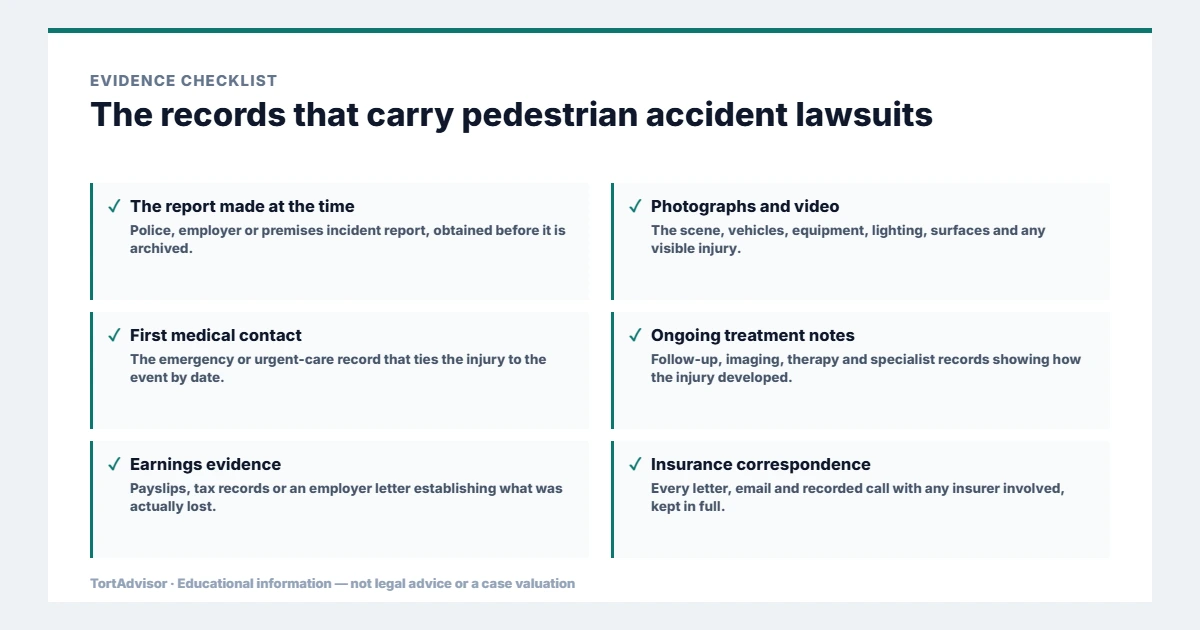
Police Report
Official documentation of the crash scene, involved parties, and initial fault assessment.
Photos And Video
Images of the crash scene, injuries, crosswalk signals, and any nearby surveillance or dash-cam footage.
Medical Records
Documentation connecting the pedestrian’s injuries and treatment to the crash.
Steps To Take After A Pedestrian Accident
- Seek immediate medical attention, even if injuries seem minor — some injuries are not immediately apparent.
- Call police to the scene and request an official crash report.
- Get contact and insurance information from the driver, and information from any witnesses.
- Take photos of the crash scene, crosswalk signals, vehicle damage, and visible injuries.
- Avoid discussing fault or giving recorded statements to the driver’s insurance company before speaking with an attorney.
- Keep records of medical treatment, missed work, and other expenses related to the crash.
The Pedestrian Accident Legal Process
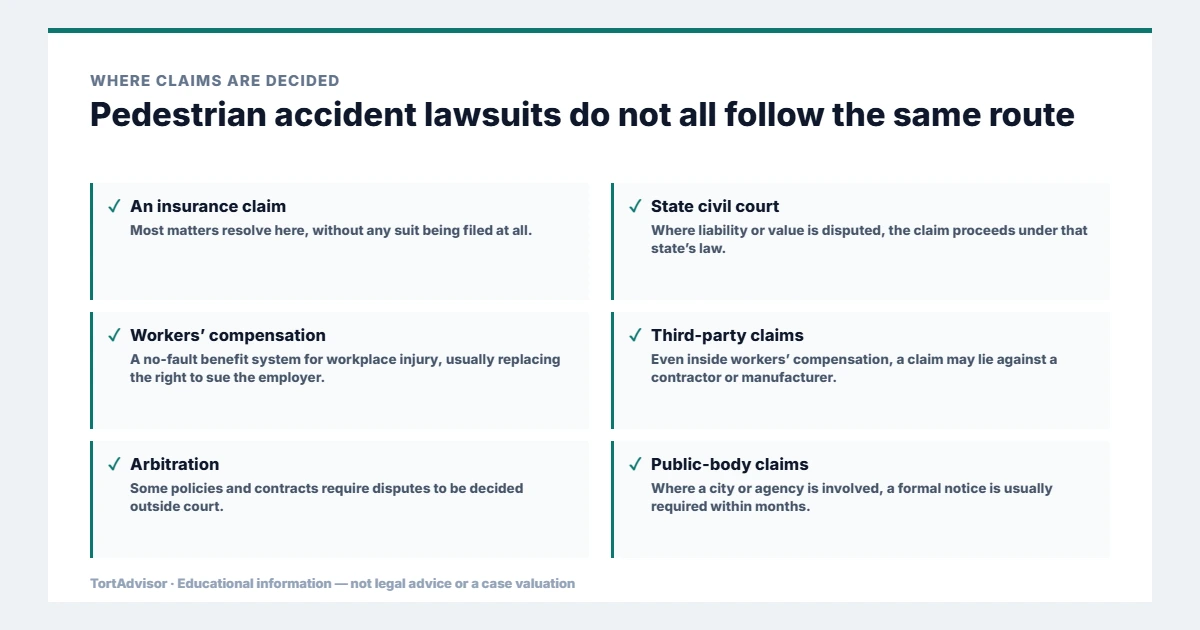
- Free, confidential case review to evaluate whether you may have a valid claim.
- Investigation of the crash, including police reports, witness statements, and available video.
- Gathering medical records and documentation of damages.
- Settlement negotiations with the driver’s insurance company.
- Filing a lawsuit if a fair settlement cannot be reached.
- Trial, if necessary, though most claims resolve before reaching trial.
Pedestrian Accident Lawsuit Filing Deadlines
Most states set a personal injury statute of limitations between one and three years from the date of the accident, but deadlines vary significantly by state. Some circumstances, such as claims against a government entity — for example, a city responsible for a dangerous crosswalk — may carry a much shorter deadline.
Consulting an attorney promptly after a pedestrian accident can help ensure evidence is preserved and deadlines are not missed.
Pedestrian Accident Lawsuit FAQs
How long do I have to file a pedestrian accident lawsuit?
Most states set a personal injury statute of limitations between one and three years from the date of the accident, but deadlines vary by state and case type. Consulting an attorney promptly can help you understand your specific deadline.
SourceN.Y. CPLRSec. 214
What if I was partially at fault, such as jaywalking?
Many states follow comparative negligence rules, which may reduce your compensation based on your percentage of fault rather than barring your claim entirely. A few states bar recovery if you are found more than 50% at fault. An attorney can explain how your state’s rule applies to your situation.
SourceN.Y. CPLRSec. 1411
How much is my pedestrian accident case worth?
Case value depends on factors such as injury severity, medical costs, lost wages, and available insurance coverage. Educational estimates for these cases commonly range from $40,000 for minor injuries to over $1 million for catastrophic injuries, though actual outcomes vary widely and are never guaranteed.
What should I do immediately after being hit by a car?
Seek medical attention, call the police to file a report, gather driver and witness information, and take photos of the scene if it is safe to do so.
Do I need a lawyer for a pedestrian accident claim?
While not legally required, an attorney can help you gather evidence, negotiate with insurance companies, and handle procedural deadlines while you focus on recovery.
What compensation can I recover in a pedestrian accident lawsuit?
Eligible pedestrians may seek compensation for medical expenses, lost wages, pain and suffering, and other damages, depending on the facts of the case and applicable state law.
Primary Sources And External References
Sources should support the statement nearest to them. Laws and procedures can change and vary by state, so official agency resources should be checked before relying on specific procedural claims.
- National Highway Traffic Safety Administration (NHTSA). Official federal agency data on pedestrian crashes and traffic safety.
- Governors Highway Safety Association (GHSA). Independent research and state-level data on pedestrian safety trends.
- U.S. Department of Justice. General information on civil litigation and legal procedure.
Request A Confidential Pedestrian Accident Case Review
Use the form above or call to discuss your accident details, injuries, treatment, evidence, deadlines, and possible legal options.