
Underride Truck Accident Claims: Rear and Side Guards
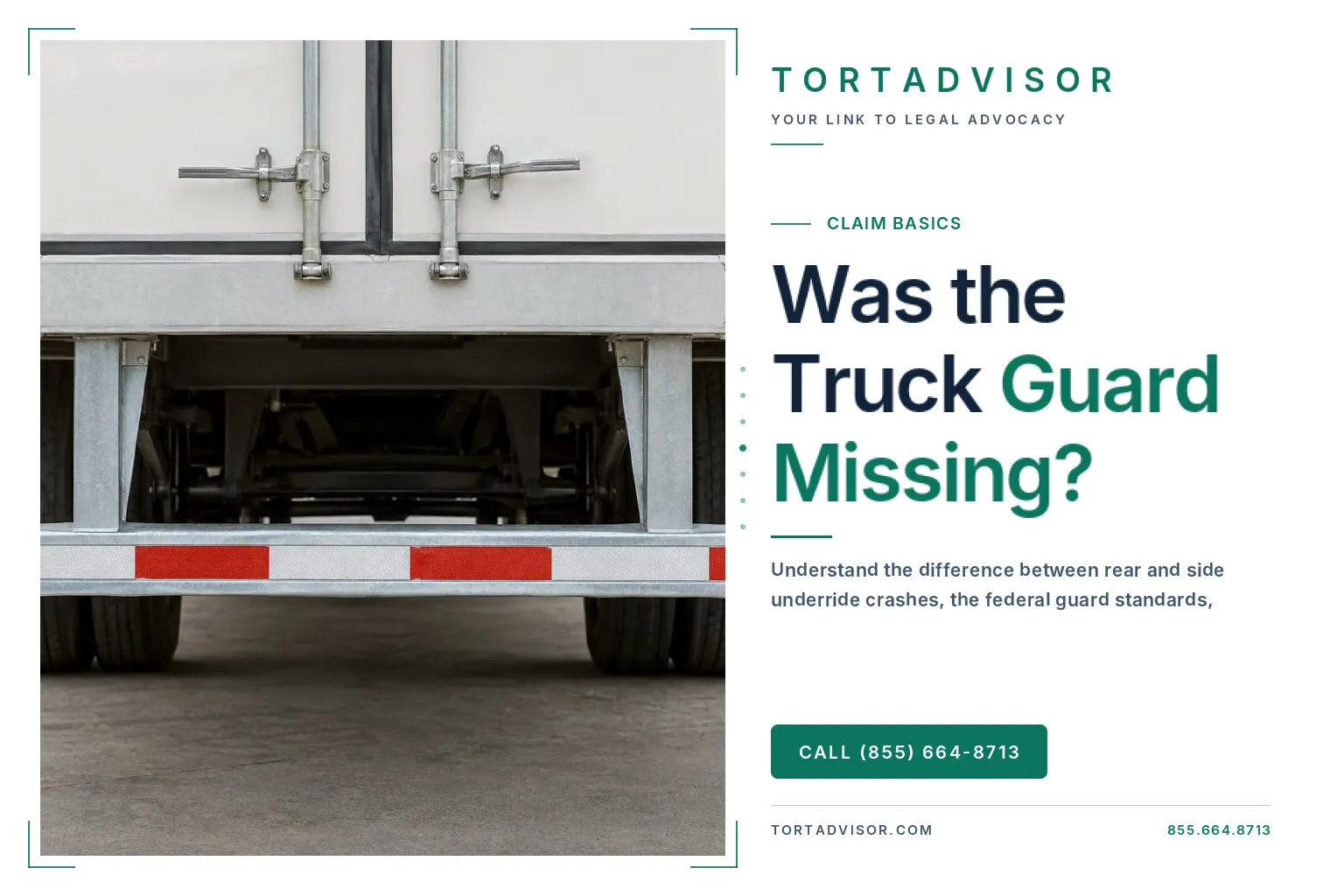
After an underride truck accident, the carrier may be one party to investigate if poor guard maintenance contributed to your injuries, because federal rules impose inspection, repair and maintenance duties. Whether the truck was supposed to have a rear guard depends on its type, manufacture date and applicable exclusions: federal rear-impact standards cover certain trailers and semitrailers, not every truck.
Rear and side guards also have different regulatory histories. The federal side-underride initiative remains at the prerule stage, rather than an adopted side-guard requirement. This article explains the rear-guard standards, whose role may warrant investigation when a guard is missing or fails, what evidence can help explain the failure, and why a missing certification label is different from a missing guard—so you can prepare for a guard-focused injury-claim review.
What happened in an underride truck accident?
An underride crash involves a smaller vehicle going beneath part of a larger vehicle. Rear underride occurs when the front of a passenger vehicle slides beneath the rear of a larger vehicle, as described in NHTSA’s rear-impact protection rule. The key starting point is where the passenger vehicle made contact—not simply that a truck was involved.
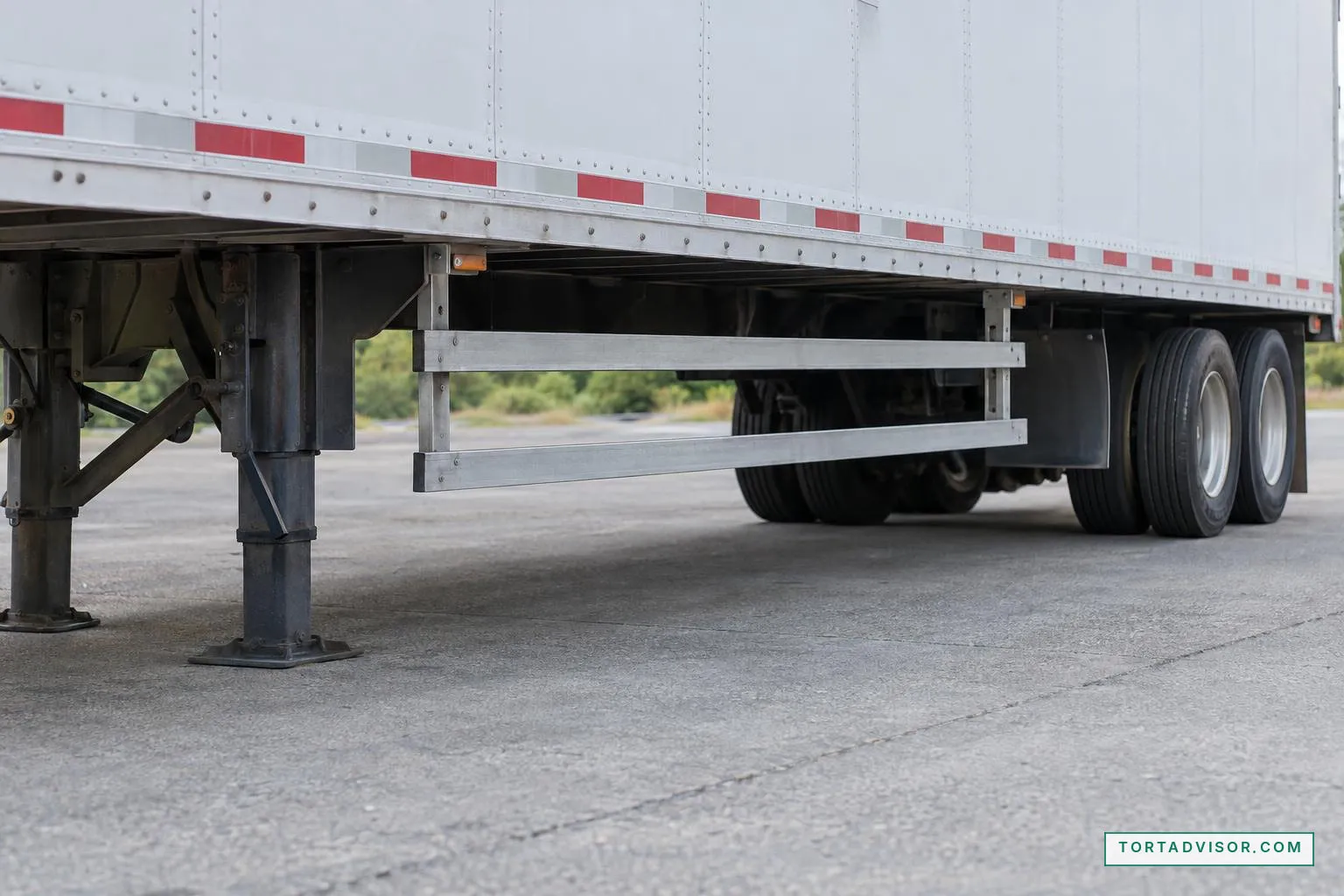
Side underride concerns an impact into a trailer’s side rather than its rear. NHTSA’s side-guard rulemaking entry addresses that protection separately from rear-impact protection. Keeping those two crash configurations distinct helps frame the questions about the guard involved.
To describe your crash for a claim review, start with what you know:
- Rear impact: Did the passenger vehicle strike the back of the trailer and travel beneath it?
- Side impact: Did the passenger vehicle strike or travel beneath the trailer’s side?
- Unclear contact point: Do photographs or the crash report help show where the vehicles first met?
You do not need to decide why a guard failed before describing what happened. Start with the contact location and what the available records show. If your crash involved a truck jackknifing across the roadway, the guide to liability when a truck jackknifes across the road may also help you organize the questions for a review.
Find out if you may have a claim
Answer a few questions and a trained case advisor will review your situation — most people finish in about a minute.
- Free — no cost, no obligation
- About a minute to complete
- Reviewed by a trained case advisor
- Nothing you submit is published
Your details are sent over a secure connection and reviewed confidentially.
What do FMVSS 223 and 224 require?
The key distinction is between how the guard performs and how the trailer is equipped. Under the federal rear-impact standards, FMVSS 223 addresses the guard’s strength and energy absorption, while FMVSS 224 addresses rear-impact protection, including guard installation, on covered trailers and semitrailers. The upgraded requirements address specified rear impacts at 35 mph, including center and 50-percent-overlap impacts. The final rule became effective January 11, 2023, with a July 15, 2024 compliance date.
Those specified impact conditions are not a promise of protection in every collision. For your claim review, keep the two questions separate: What do the available records show about the guard’s performance, and what do they show about its installation on this trailer?
Rather than describing the truck as simply “compliant” or “noncompliant,” ask the reviewer to identify which standard and requirement they mean. That makes the discussion more useful and keeps the focus on the particular guard, trailer and collision—not just the name of a federal standard.
Does every truck need the same rear guard?
No. The vehicle’s type and manufacturing date matter. FMVSS 224 generally covers new trailers and semitrailers with a gross vehicle weight rating of at least 10,000 pounds, subject to listed exceptions. Single-unit trucks are outside FMVSS 223 and 224, and the 2022 upgrade did not impose a fleet-wide retrofit requirement. That means a guard-focused review should begin by identifying the vehicle—not by assuming every truck involved in a crash needed the same equipment.
If you or a family member was injured, gather whatever information you already have about the trailer:
- Identity: The manufacturer, model, vehicle identification number, and trailer number.
- Manufacturing date: Clear photographs of the manufacturer’s plate or label can help document this.
- Vehicle configuration: Photographs showing the whole trailer, its rear wheels, and the guard—not just close-ups of the damage.
Bring these details to an injury-claim review, even if some are incomplete. They help focus the discussion on the particular trailer and the requirements applicable to it, rather than treating the newest manufacturing standard as the starting point for every crash.
Are side underride guards federally required?
NHTSA’s side-underride initiative is not an adopted federal side-guard mandate. As reviewed November 18, 2026, NHTSA’s regulatory agenda lists the initiative at the prerule stage and records an April 21, 2023 advance notice followed by analysis of comments. Those steps describe a rulemaking process—not a final, enforceable manufacturing requirement.
That distinction matters if the trailer involved in your crash had no side guard. An advance notice explores potential regulation and gathers input; it should not be treated as an adopted requirement. A missing side guard therefore should not be described as a violation of this unadopted proposal.
The proposal’s status does not, by itself, resolve every possible liability question. For a guard-focused injury-claim review, keep two questions separate: whether an enforceable requirement applied to the vehicle, and whether the absence of side protection raises other issues worth investigating. Neither a pending rulemaking nor the absence of a side guard, standing alone, answers who may be responsible for your injuries.
Who could be responsible for a missing or failed guard?
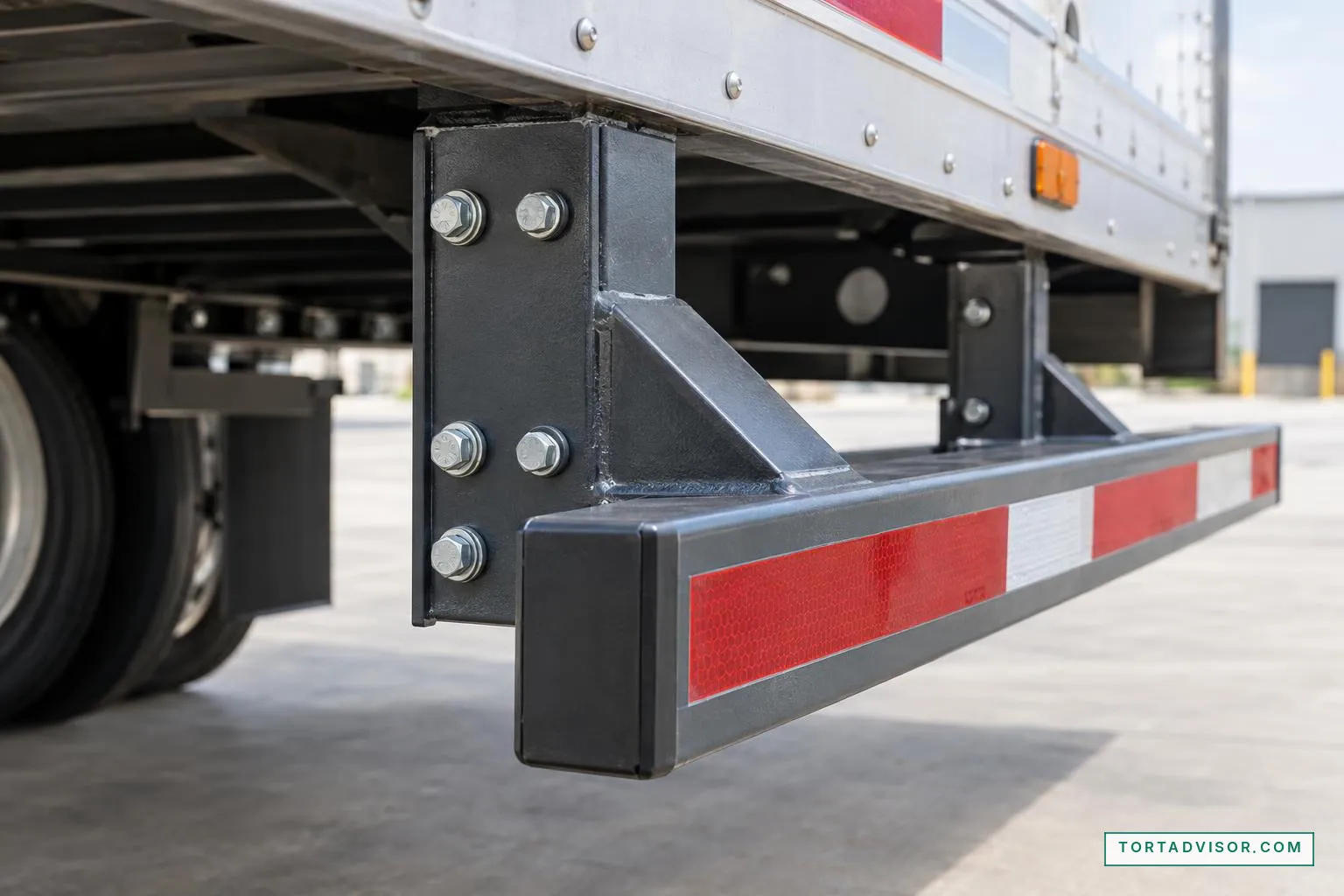
A guard-focused investigation may look at the carrier, equipment provider, guard or trailer manufacturer, and anyone who installed or repaired the guard. A missing or damaged guard is a reason to investigate—not, by itself, a finding that any particular party is liable.
For covered equipment, Part 396 assigns inspection, repair, and maintenance duties to motor carriers and intermodal equipment providers for equipment under their control. That makes the equipment’s condition before the crash, its inspection history, and any repair work important areas to examine.
The federal rear-guard manufacturing and installation standards also make the guard manufacturer, trailer manufacturer, and installer potential investigation targets. Together, those standards and the maintenance requirements provide a starting point for asking:
- Who manufactured the guard and trailer, and what requirements applied to that equipment?
- Who installed, replaced, or repaired the guard and its attachments?
- Who controlled the equipment and handled inspections and maintenance before the collision?
These are investigative questions, not conclusions that each party is responsible. Likewise, meeting a federal standard does not automatically resolve the liability question: 49 U.S.C. 30103(e) says compliance with a federal motor-vehicle safety standard does not exempt a person from common-law liability. That provision alone does not establish a defective-product claim.
For an introduction to the claim process beyond the guard-specific investigation, see TortAdvisor’s guide to truck accident lawsuits and potential defendants.
What evidence helps explain why the guard failed?
For a guard-focused case review, ask about photographs, inspection and repair records, and evidence showing how the vehicles moved. Keep three questions separate: what caused the collision, what happened to the guard, and how the vehicles moved during impact.
- Photographs of the guard and its connections. Ask whether there are clear views of the entire guard, mounting points, fasteners, welds, and trailer frame—not just the damaged passenger vehicle. Include close-ups and wider views that show where each damaged part sits.
- Inspection and repair histories. Ask for records of inspections, reported defects, repairs, and guard replacement. Look for dates and descriptions that can help distinguish a condition documented before the crash from damage observed afterward.
- Vehicle and equipment identification. Ask for records identifying the truck, trailer, guard manufacturer, and equipment supplier, where available. Keep identifying numbers alongside the photographs and maintenance documents.
These requests have a practical regulatory foundation: Section 396.3 specifies vehicle-identification and maintenance records, while Appendix A identifies missing guards, insecure attachments, broken fasteners, and cracked welds or parent metal among rear-guard inspection defects.
For the review, organize your questions under three headings: “Why did the collision happen?” “How did the guard respond?” and “How did the vehicles move?” If you are also exploring electronic crash records, TortAdvisor’s guide to commercial-truck black box evidence offers a focused next step.
A missing certification label is not a missing guard
A faded or missing certification label is different from a missing or damaged rear guard. Effective March 23, 2026, FMCSA removed the in-service certification-label requirement in section 393.86(a)(6), while preserving physical guard requirements and NHTSA’s manufacturing-label requirement. The change concerns the label on a guard already in service; it did not eliminate NHTSA’s FMVSS 223 labeling requirement for guard manufacturers.
The physical condition of the guard remains a separate concern. FMCSA expressly distinguishes labeling issues from whether a guard is present, properly attached, and physically sound. A label that has faded or fallen off does not, by itself, tell you whether the guard was missing, its attachments were compromised, or another physical defect affected its performance.
For a guard-focused injury-claim review, keep those questions separate. Preserve any photographs showing the label area, but also gather available images of the entire guard, its mounting points, and the surrounding trailer structure. Note whether each photograph was taken before or after the collision. That distinction can help a reviewer examine the actual condition of the equipment rather than treating a label issue as proof of a physical failure.
Prepare for a guard-focused injury-claim review
Start with the information you already have. A useful review should consider what happened in the crash and what is known—and still unknown—about the truck’s rear or side guard.
- Crash report: Bring a copy, along with any report number or related paperwork.
- Available photographs: Include images of the vehicles, impact areas, guard, attachment points, and any visible labels. You do not need to fill every gap before asking for a review.
- Vehicle information: Gather truck and trailer identifiers, carrier names, and any year, make, or model details available to you.
- Treatment records: Organize records of your injuries, care, and ongoing symptoms. TortAdvisor’s guide to understanding motor-vehicle accident injuries can help with unfamiliar terminology.
- Unanswered questions: Write down whether a guard was present, where it appeared to fail, and whether it had visible damage before or after the collision.
Ask whether the review will examine both the crash circumstances and the guard’s design, installation, and maintenance history. Maintenance records are worth discussing: federal inspection and maintenance rules require covered motor carriers to keep specified vehicle-identification and inspection, repair, and maintenance records.
TortAdvisor’s truck accident settlement calculator can help you organize claim information, not promise an outcome. For broader research, use the settlement amounts and compensation guide without treating another person’s result as a forecast. This article provides no settlement average, range, or payout promise.
Frequently asked questions
What is the difference between rear and side underride?
Rear underride happens when a smaller vehicle travels beneath the back of a truck or trailer. Side underride involves a vehicle going beneath its side. The distinction matters when reviewing an injury claim: a rear-guard investigation focuses on the back of the trailer, while a side-underride investigation examines the area along its sides.
Do the upgraded rear-guard standards apply to older trailers?
Not automatically. The upgraded federal standards apply to covered newly manufactured trailers and semitrailers under the rule’s compliance schedule; they do not impose a fleet-wide requirement to retrofit older trailers. A trailer’s manufacture date and configuration help identify which requirements apply. See NHTSA’s rear-impact protection rule and its discussion of applicability and retrofitting.
Are side underride guards required under a final federal rule?
The cited federal agenda entry does not establish a final side-guard requirement. It lists the side-underride proceeding as a prerule action involving analysis of comments on the advance notice of proposed rulemaking. That is a rulemaking stage, not an adopted requirement that covered trailers carry side underride guards.
Does a guard’s compliance with federal standards rule out liability?
No. Section 30103(e) preserves common-law liability despite compliance with a federal motor-vehicle safety standard. Compliance therefore does not, by itself, end the liability question. The provision also does not independently establish that anyone is liable; it preserves the possibility of a claim rather than deciding its outcome.
Does a missing rear-guard certification label prove the guard was unsafe?
No. A missing label is not the same as a missing or physically defective guard. FMCSA’s rule effective March 23, 2026, removes the in-service certification-label requirement while retaining physical guard requirements. It does not eliminate NHTSA’s manufacturing requirements. The label issue should therefore be distinguished from the guard’s actual condition and performance.
Sources
- Federal Motor Vehicle Safety Standards; Rear Impact Guards, Rear Impact Protection · NHTSA / Federal Register, U.S. Government Publishing Office · 2022-07-15
- Parts and Accessories Necessary for Safe Operation; Certification and Labeling Requirements for Rear Impact Protection Guards · FMCSA / Federal Register, U.S. Government Publishing Office · 2026-02-19
- 49 CFR Part 396 — Inspection, Repair, and Maintenance · Office of the Federal Register / Government Publishing Office
- 49 U.S.C. 30103 — Relationship to Other Laws · U.S. Government Publishing Office
This article is general information, not legal advice. Laws and deadlines vary by state and change over time; check the linked sources or speak with a licensed attorney about your situation.
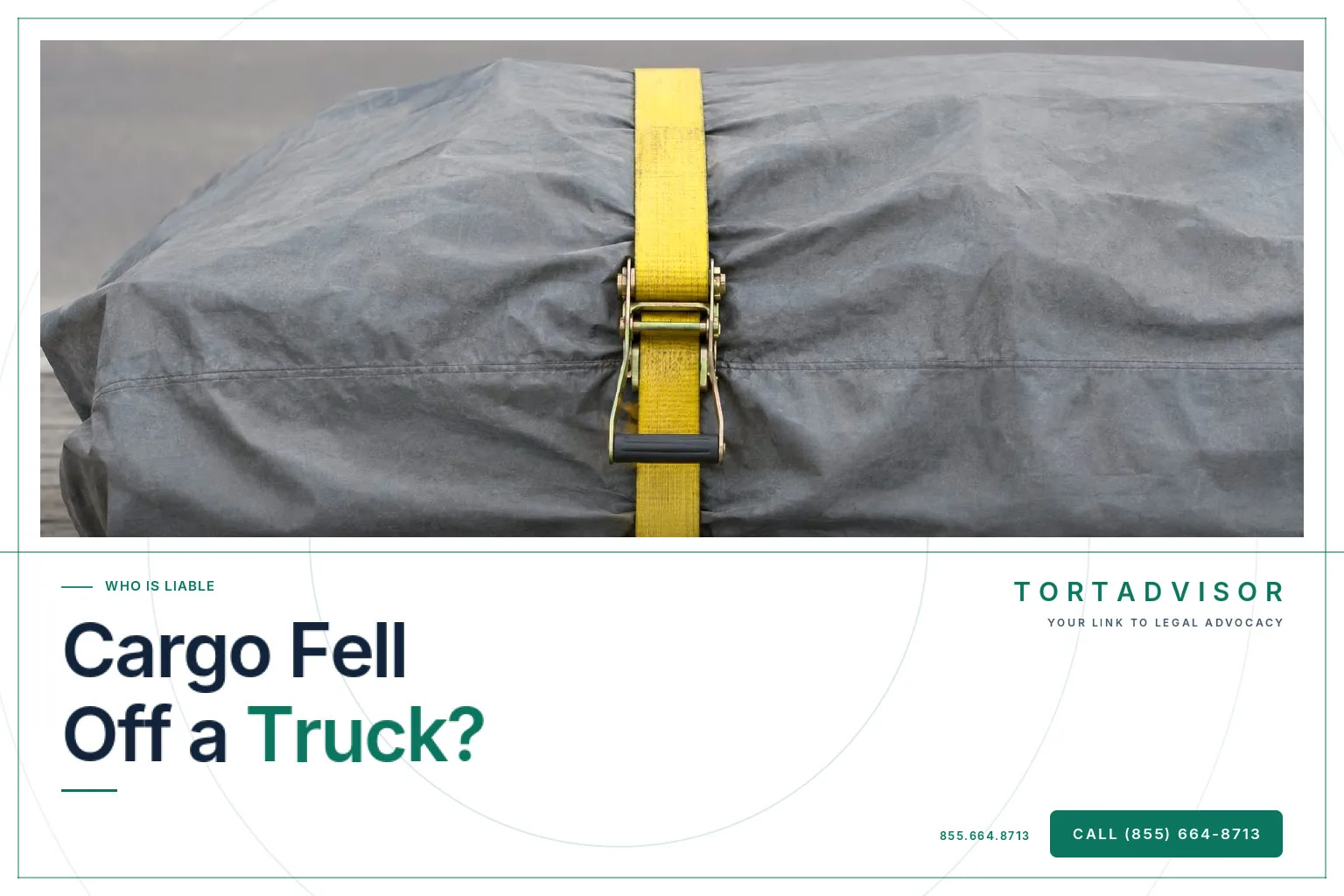
When cargo shifts, spills or falls from a truck, the driver, the motor carrier and the company that loaded the freight may each share responsibility. Here is how federal cargo securement rules and the evidence behind them shape who is liable.
Who should you look to after a delivery driver hits you? This guide separates the driver, delivery business, contractor and vehicle-maintenance questions, then explains which records to gather for a claim review.
Was the truck driver too tired to drive safely? Understand the federal driving limits, which electronic records help reconstruct the driver's schedule, and the questions that connect those records to an injury claim.