
Delivery Truck Accident Liability: Driver or Company?
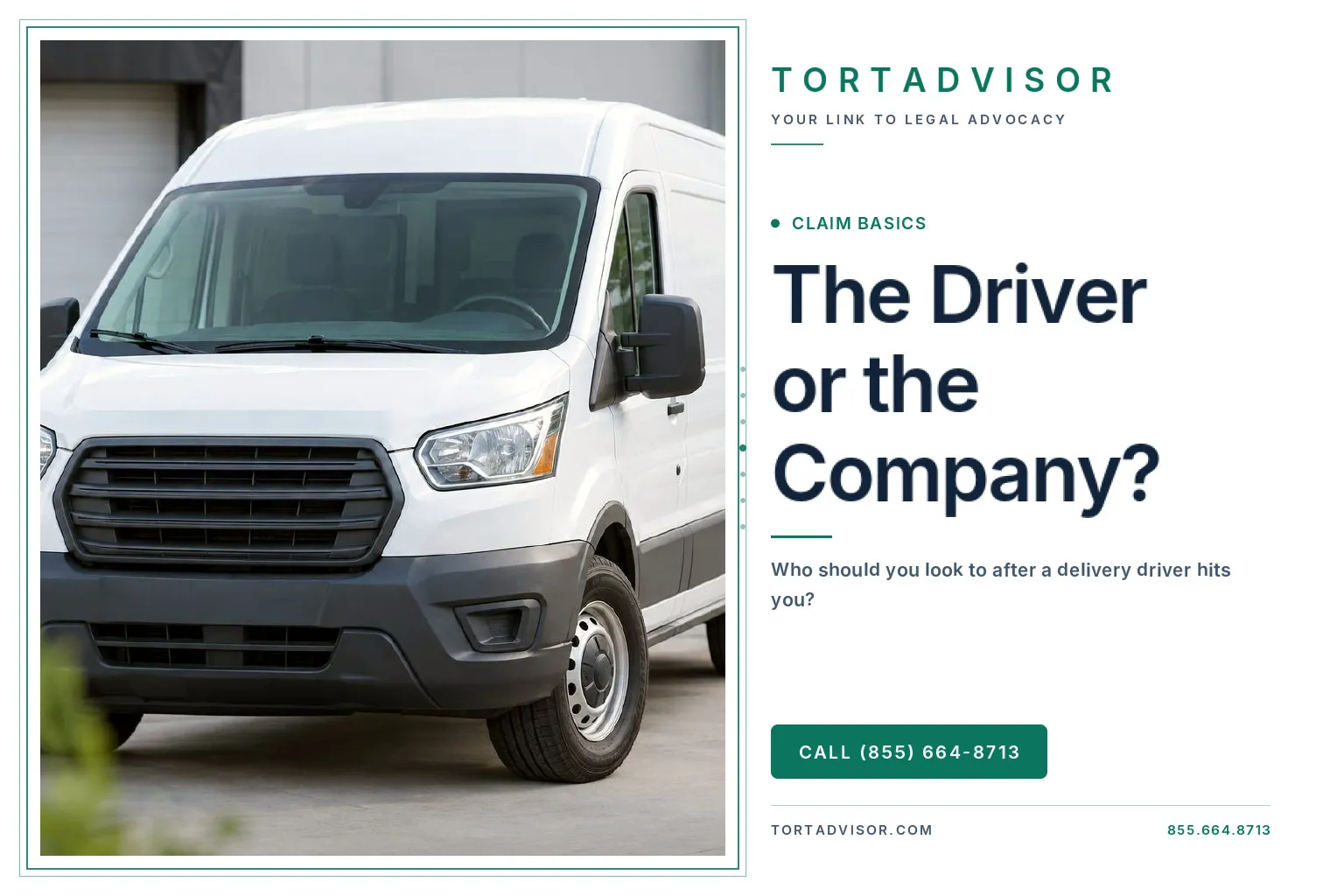
Delivery truck accident liability may involve the driver, the delivery company or a contractor that employs the driver; California’s civil jury instructions, for example, explain driver negligence and employer responsibility for conduct within the scope of employment. Insurance to examine includes the driver’s personal policy, any commercial auto policy and applicable delivery-company coverage, because personal policies may exclude business deliveries, and company coverage varies.
This article explains how employment status differs from insurance coverage, when federal commercial-vehicle rules apply, and how a vehicle owner or maintenance provider might share responsibility. It also covers what company rules, routing apps and telematics may reveal, how to preserve and request crash evidence, and what to bring to a delivery van accident claim review.
Who can be responsible when a delivery driver hits you?
The driver may be responsible, and a delivery business or another involved party may share responsibility. The starting point is identifying negligent conduct and connecting it to your injury—not simply identifying the logo on the van. California provides a state-specific example: drivers must use reasonable care, and an employer may be responsible for an employee’s negligence within the scope of employment. These principles appear in California’s negligence, driving-duty and employer-liability instructions, including CACI 400, 700, 3700 and 3720.
To sort out who was involved, start a separate entry for each person or business:
- Driver: Record their name and contact and insurance information.
- Delivery business: Note the brand shown on the vehicle, package or delivery confirmation.
- Route contractor or delivery service partner: Record any separate business identified as employing the driver or operating the route.
- Vehicle owner: Note the owner listed in available vehicle or crash records.
- Maintenance provider: Identify any repair shop or fleet-maintenance business named in available records.
Treat this as an identity list, not a finding of fault. Keep names separate even when businesses share branding, and mark anything you cannot yet confirm. TortAdvisor’s truck accident lawsuit and claim review guide can help you organize questions for a review of your delivery-truck crash.
Find out if you may have a claim
Answer a few questions and a trained case advisor will review your situation — most people finish in about a minute.
- Free — no cost, no obligation
- About a minute to complete
- Reviewed by a trained case advisor
- Nothing you submit is published
Your details are sent over a secure connection and reviewed confidentially.
Employee or independent contractor: responsibility and insurance are separate questions
A delivery driver’s “independent contractor” label does not, by itself, answer whether a company may be responsible for a crash. For example, California’s tort-liability instructions emphasize the right to control how work is performed, including its details. The label the parties give their relationship is not conclusive under California CACI 3704. This is a California example, not a nationwide test.
If the driver worked through a delivery service partner, start by identifying the businesses involved. Useful investigation questions include:
- Who hired the driver and supplied the van?
- Who assigned deliveries and directed the driver’s daily work?
- Who could remove the driver from a route?
These questions help organize the investigation; they are not an automatic test that makes any one company liable.
Employment status is not an insurance policy. The FTC explains that personal auto policies commonly exclude business use and that coverage provided by delivery companies varies. Its guidance on delivery-driving insurance gaps also identifies possible differences depending on whether a driver was making a delivery, returning from one or waiting for another assignment. Those are possible policy distinctions—not universal coverage periods.
For a claim review, gather the names of the driver, delivery partner, delivery brand and any identified insurers. Ask for the actual policies and document what the driver was doing when the collision happened. Keep the working-relationship investigation separate from the coverage review rather than assuming a contractor label settles either question.
When do federal commercial-vehicle rules apply to a delivery van?
A delivery logo does not, by itself, make a van a federally defined commercial motor vehicle (CMV). For property delivery, a principal category covers vehicles used on highways in interstate commerce with a gross vehicle weight rating, gross combination weight rating, gross vehicle weight or gross combination weight of 10,001 pounds or more, whichever is greater. Transporting hazardous materials in quantities requiring placards provides another route into the definition, also within its interstate-commerce framework. For these federal safety regulations, “employee” includes an independent contractor operating a CMV—not just a driver on a company payroll. These criteria appear in the 49 CFR 390.5T definitions of commercial motor vehicle and employee.
Start with the vehicle specifications and the transportation involved. Useful information to gather includes the manufacturer’s weight-rating label, any trailer information, and records showing what the driver was transporting and where the shipment originated and was headed. The van’s appearance or branding cannot answer those questions.
Keep the federal safety definition separate from the California tort-liability classification question discussed above: calling a contractor an “employee” for these regulations is not the same inquiry. If the crash involved a larger delivery truck, TortAdvisor’s guide to semi-truck accident liability and regulations offers related context.
Could the vehicle owner or maintenance provider share responsibility?
Potentially. Responsibility for the delivery vehicle is a separate question from responsibility for the driver’s work. In California, permissive-use owner liability and negligent entrustment are distinct grounds for a claim, each with its own requirements. An outside maintenance provider’s work calls for a separate analysis: California’s general negligence instruction requires negligence, harm and a causal connection between them. Ownership or involvement in repairs alone does not answer those questions. See California CACI 720, 724 and 400.
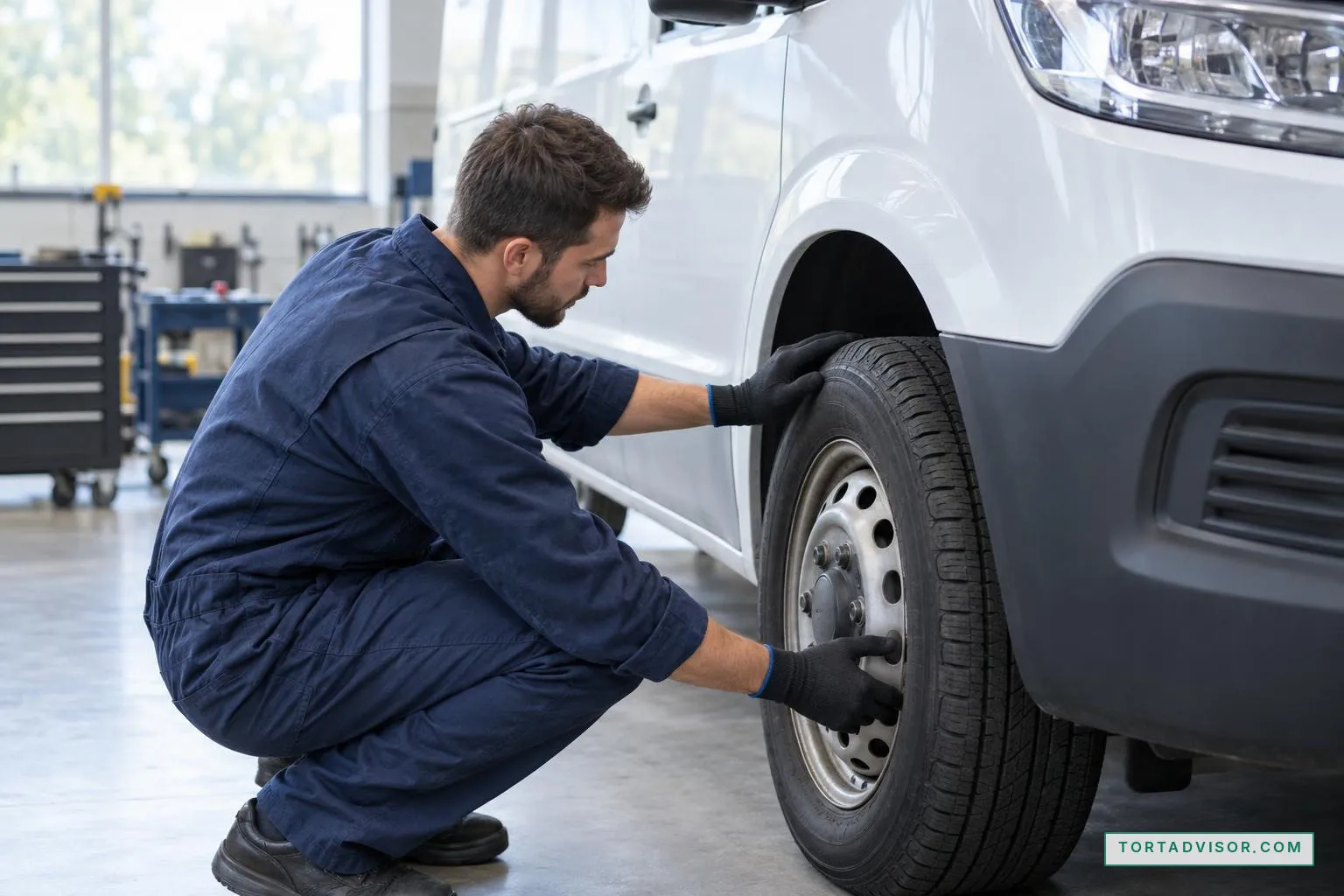
For vehicles covered by the federal rule, motor carriers must systematically inspect, repair and maintain vehicles under their control—or cause that work to be performed. For vehicles controlled for the period specified in the rule, required records include vehicle-identification information, the name of the person furnishing a vehicle the carrier does not own, and records showing the dates and nature of inspections, repairs and maintenance. These records can help separate who supplied the van from who serviced it. See 49 CFR 396.3 maintenance duties and recordkeeping requirements.
If a vehicle problem may have contributed to your crash, useful questions include: Who owned or supplied the van? Who inspected or repaired the relevant part? What work was performed, and how might it connect to what happened? Bring any repair information, vehicle photographs or crash-report details you already have to a claim review.
What company rules, routing apps and telematics can help show
Company records can help explain who directed the delivery work, whether the schedule allowed safe driving, and what happened before the collision. In California, negligent hiring or supervision is a distinct theory focused on the company’s own conduct, separate from respondeat superior, which concerns responsibility for an employee’s conduct. California CACI 426 addresses whether an employer knew or should have known that an employee’s unfitness or incompetence created a particular risk, and whether that risk contributed to the harm.
For covered commercial-motor-vehicle operations, a carrier cannot schedule or permit a run that would require exceeding applicable speed limits under 49 CFR 392.6. Comparing the assigned schedule with dispatch messages, routing instructions, delivery timestamps and available telematics may help investigate whether the route was realistically achievable without speeding. Those records may also help identify questions about driver fatigue and hours-of-service evidence; a tight schedule alone does not establish either issue.
Start by asking which systems actually existed and what each recorded. Treat these as separate evidence requests:
- Company policies: hiring, training, supervision and delivery expectations.
- Dispatch and app records: assigned routes, messages, changes and delivery timestamps.
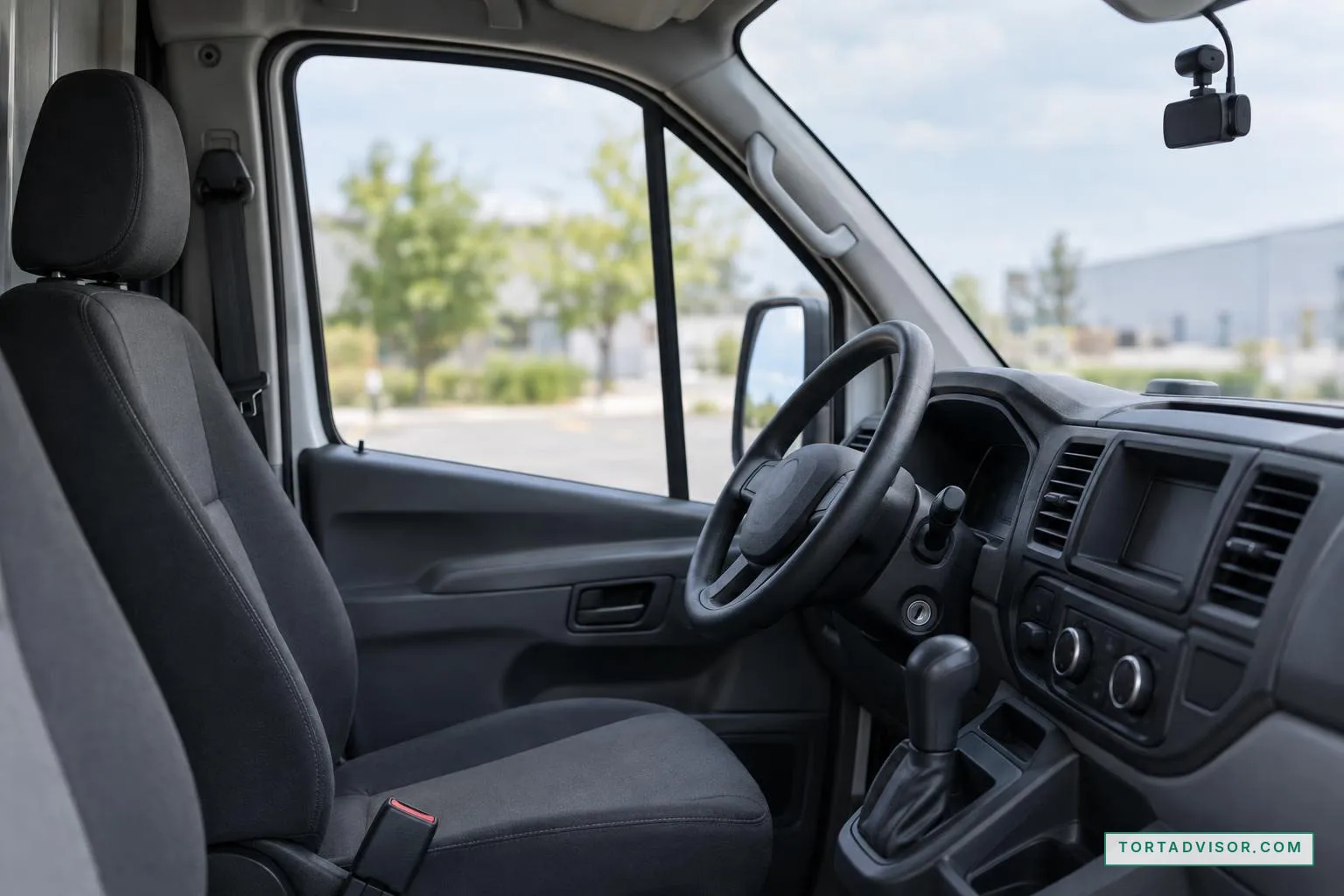
- Dash-camera files: available recordings surrounding the collision.
- Vehicle data: available telematics or event records—without assuming every van has a complete electronic history. Understanding what commercial-truck black box data can show can help frame questions about the specific vehicle.
In federal litigation, relevant, proportional electronic records within a party’s possession, custody or control may be requested under Federal Rules 26(b)(1) and 34.
How to preserve and request delivery-crash evidence
Start with what you already have, then ask a lawyer how to identify and preserve relevant records held by the delivery business or other companies.
- Crash photographs: Keep the original files, including pictures of vehicle damage, road conditions and company markings.
- Driver and vehicle details: Gather names, contact information, license plate numbers and any delivery-company information you recorded.
- Insurance correspondence: Save letters, emails, claim numbers and notes from calls.
- Witness contacts: Keep names and contact details together.
- Your account: Write down what you remember, distinguishing what you saw from what someone later told you.
If you are looking for outside records, this guide to traffic camera footage and police reports explains who to contact, what to include in a request and how to handle missing records or access limits.
For company-held evidence, ask a lawyer which businesses and systems may hold relevant information. A focused checklist can include:
- Delivery contracts identifying the businesses involved.
- Dispatch instructions and communications about the delivery.
- Relevant routing-app, location and telematics data.
- Available vehicle camera recordings.
- Inspection, repair and maintenance records.
In federal litigation, Rule 34 provides procedures for requesting qualifying documents, electronic records and vehicle inspection from another party—not unrestricted access to company systems. Rule 37(e) addresses electronic information that should have been preserved for anticipated or ongoing litigation but was lost because reasonable preservation steps were not taken, and cannot be restored or replaced through additional discovery. These federal production and electronic-evidence preservation rules have conditions and limits.
Ask how preservation will be handled and which records the request covers, rather than assuming that sending a request guarantees retention.
What to bring to a delivery van accident claim review
Bring what you already have, along with a short list of what you still do not know. You do not need a complete file to organize a useful discussion about who may be responsible.
- An identity list: The driver’s name, delivery brand, any separate delivery business, vehicle owner and insurers identified so far. Note where each name came from rather than assuming they are all the same company.
- Insurance and correspondence: Available policies, declarations pages, claim numbers, letters, emails and messages from the driver, businesses or insurers.
- Photographs: Images of the vehicles, damage, delivery markings, license plates and crash scene.
- Medical and income records: Medical bills, available treatment records, pay statements and documentation of missed work.
- Unresolved questions: Briefly explain what remains unclear—for example, who employed the driver, who owned or maintained the van, and whether the driver was making a delivery.
In federal litigation, certain insurance agreements that may be available to satisfy all or part of a possible judgment fall within the initial disclosure requirements under Federal Rule 26(a)(1)(A)(iv) insurance disclosures. Disclosure does not establish that a particular policy covers the crash.
As an optional preparation tool, use TortAdvisor’s truck accident settlement calculator alongside its guide to understanding settlement amounts to organize questions about claim value—not as a finding of liability, confirmation of coverage or promised payment.
Keep the review centered on three questions: Which people or businesses should be investigated? Which policies need examination? Which records are still missing?
Frequently asked questions
Can a delivery company be responsible for a crash caused by its employee?
Yes, depending on the applicable law and what the employee was doing when the crash occurred. As a California example, the state’s civil jury instructions on employer responsibility explain that an employer can be responsible for harm caused by an employee’s negligence within the scope of employment. A claim review should examine the driver’s assignment, delivery activity and relationship with the company.
Does an independent contractor label prevent a delivery-company claim?
Do not assume that a contractor label answers every question about a potential claim. For a review, gather the driver’s contract, company instructions, delivery records and information about who controlled the work. Ask the reviewer to assess the worker’s actual relationship with the company, the company’s own conduct and available insurance separately, rather than relying only on a job title.
Does the driver’s personal insurance cover package deliveries?
Not necessarily. The Federal Trade Commission’s guidance on delivery-driving insurance warns that personal auto policies may exclude business use and that delivery-company coverage varies, including by the activity underway. Ask for the relevant policies and information about whether the driver was waiting for work, traveling to a pickup or making a delivery when the collision happened.
Do federal trucking rules apply to every delivery van?
No. Under the federal commercial motor vehicle definition, a property-carrying vehicle used in interstate commerce can qualify when its weight rating or actual weight meets the 10,001-pound threshold, whichever is greater. Other qualifying categories include certain passenger vehicles and hazardous-material transport. A delivery logo alone does not establish whether a van qualifies under this definition.
Can routing-app records and telematics be requested in a lawsuit?
Yes, potentially. In federal court, Rules 26 and 34 governing discovery and electronic records permit requests for relevant, nonprivileged information proportional to the case, including electronically stored information within a party’s possession, custody or control. A request might target route assignments, timestamps, GPS history or recorded vehicle events. Whether particular records must be produced depends on those limits and any applicable objections.
What if poor vehicle maintenance contributed to the crash?
Ask the claim reviewer to investigate the vehicle’s condition and who handled its upkeep. For covered motor carriers, federal inspection, repair and maintenance requirements call for systematic maintenance and specified records for vehicles under their control. Repair invoices, inspection records and service complaints can help investigate a suspected brake, tire or other mechanical problem; they do not automatically establish who caused the collision.
Sources
- Judicial Council of California Civil Jury Instructions, 2026 Edition · Judicial Council of California
- Driving for extra cash? Check your car insurance first. · Federal Trade Commission
- 49 CFR 390.5T — Definitions · Electronic Code of Federal Regulations, Office of the Federal Register
- 49 CFR 396.3 — Inspection, repair, and maintenance · Electronic Code of Federal Regulations, Office of the Federal Register
- 49 CFR 392.6 — Schedules to conform with speed limits · Electronic Code of Federal Regulations, Office of the Federal Register
- Federal Rules of Civil Procedure, December 1, 2025 · U.S. Courts; U.S. House Committee on the Judiciary · 2025-12-01
This article is general information, not legal advice. Laws and deadlines vary by state and change over time; check the linked sources or speak with a licensed attorney about your situation.
When cargo shifts, spills or falls from a truck, the driver, the motor carrier and the company that loaded the freight may each share responsibility. Here is how federal cargo securement rules and the evidence behind them shape who is liable.
Understand the difference between rear and side underride crashes, the federal guard standards, and the evidence worth discussing during an injury-claim review.
Was the truck driver too tired to drive safely? Understand the federal driving limits, which electronic records help reconstruct the driver's schedule, and the questions that connect those records to an injury claim.