
Truck accident claims arise from crashes with large commercial trucks and can involve the driver, the motor carrier and others who loaded, maintained or built the truck. Value turns on injury severity, evidence from federal safety records and the carrier's insurance. NHTSA reports 5,340 people were killed in crashes involving large trucks in 2024.
Updates on Truck Accident Claims

Was the truck driver too tired to drive safely? Understand the federal driving limits, which electronic records help reconstruct the driver's schedule, and the questions that connect those records to an injury claim.
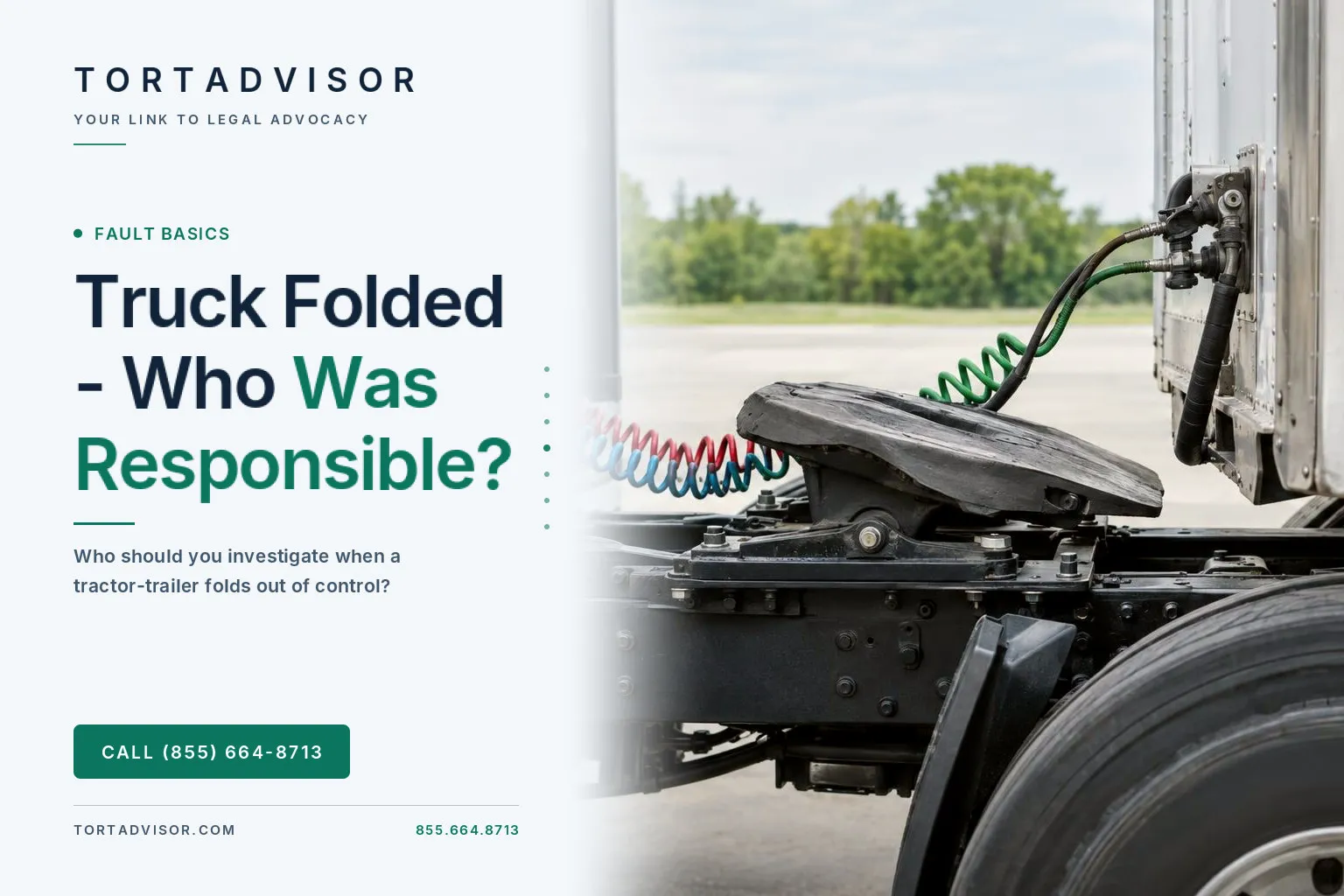
Who should you investigate when a tractor-trailer folds out of control? This guide connects questions about driving, cargo and maintenance with federal requirements and evidence to discuss during a case review.

A plain-language guide to truck electronic evidence, the difference between engine-control data and electronic driving logs, and questions to ask after a crash.

Not sure whether you need to report unsafe trucking, challenge an insurance decision, or explore an injury claim? This guide explains the different routes and what information to prepare.
Key facts (as of October 2026)
- About 161,201 people were injured in large-truck crashes in 2024 (NHTSA).
- Interstate for-hire freight carriers need at least $750,000 in liability coverage; some hazardous loads need $1 million or $5 million (49 CFR 387.9).
- Property-carrying drivers may drive 11 hours after 10 off duty, not past the 14th hour on duty (FMCSA).
- Carriers keep duty-status records at least six months and an accident register three years (49 CFR 395.8, 390.15).
Who can be responsible
Besides the driver, a truck claim can involve the motor carrier, a cargo loader, a maintenance contractor or the maker of a failed part. Federal rules on driving hours, inspections and driver qualification often supply evidence of fault, and the carrier's commercial policy usually carries far higher limits than personal auto insurance.
Evidence to keep
- The carrier's name, USDOT number and trailer number.
- A prompt written request to preserve logs, electronic logging device and engine data, and maintenance files.
- Photos, the crash report, witness details and medical records.
The guide to black boxes in commercial trucks explains what each device records.
Frequently asked questions
Is a truck accident claim different from a car accident claim?
Yes. State fault rules and deadlines still apply, but federal regulations add records that can prove fault, such as hours-of-service logs, inspection reports and driver files. More than one company can share liability, and federal minimum insurance for interstate freight carriers starts at $750,000.
How long does a trucking company keep driving logs?
Federal rules require carriers to keep records of duty status and supporting documents for at least six months, and an accident register for three years after each crash. Other data, such as engine recordings, follow different practices, so injured people commonly send a preservation request early.
How long do I have to file a truck accident claim?
The law of the state where the crash happened sets the deadline, usually the same period as other personal injury claims there, and it varies widely. A crash involving a government-owned truck can require a written notice of claim within months, so check that state's rule.
Sources
Truck Accident questions answered, with sources
Insurance and filing deadlines are short
Most states allow two or three years to file an injury lawsuit, and insurers and no-fault PIP require notice much sooner. Florida allows two years for negligence actions. Fla. Stat. 95.11
Free · Confidential · No obligation
Free Truck Accident Case Review
Tell us what happened and a trained case advisor will review it. You choose whether you want to be contacted.
- 1Share the basicsThe crash, your injuries, treatment and insurance.
- 2A case advisor reviews itAgainst your state’s fault rules and deadline.
- 3You decide what happens nextNo cost and no obligation.
- Sourced to the dataTriple-I figures and state statutes
- Every answer is citedEach answer links its primary source
- Free and confidentialNo cost and no obligation to continue
- Not a law firmA trained case advisor makes the first contact
Prefer to talk it through?
TortAdvisor is not a law firm and does not give legal advice. A trained case advisor, not an attorney, may make the first contact. See our partner list and privacy policy.
Filter Posts
Browse by Category