
Jackknife Truck Accident Liability: Who Is at Fault?
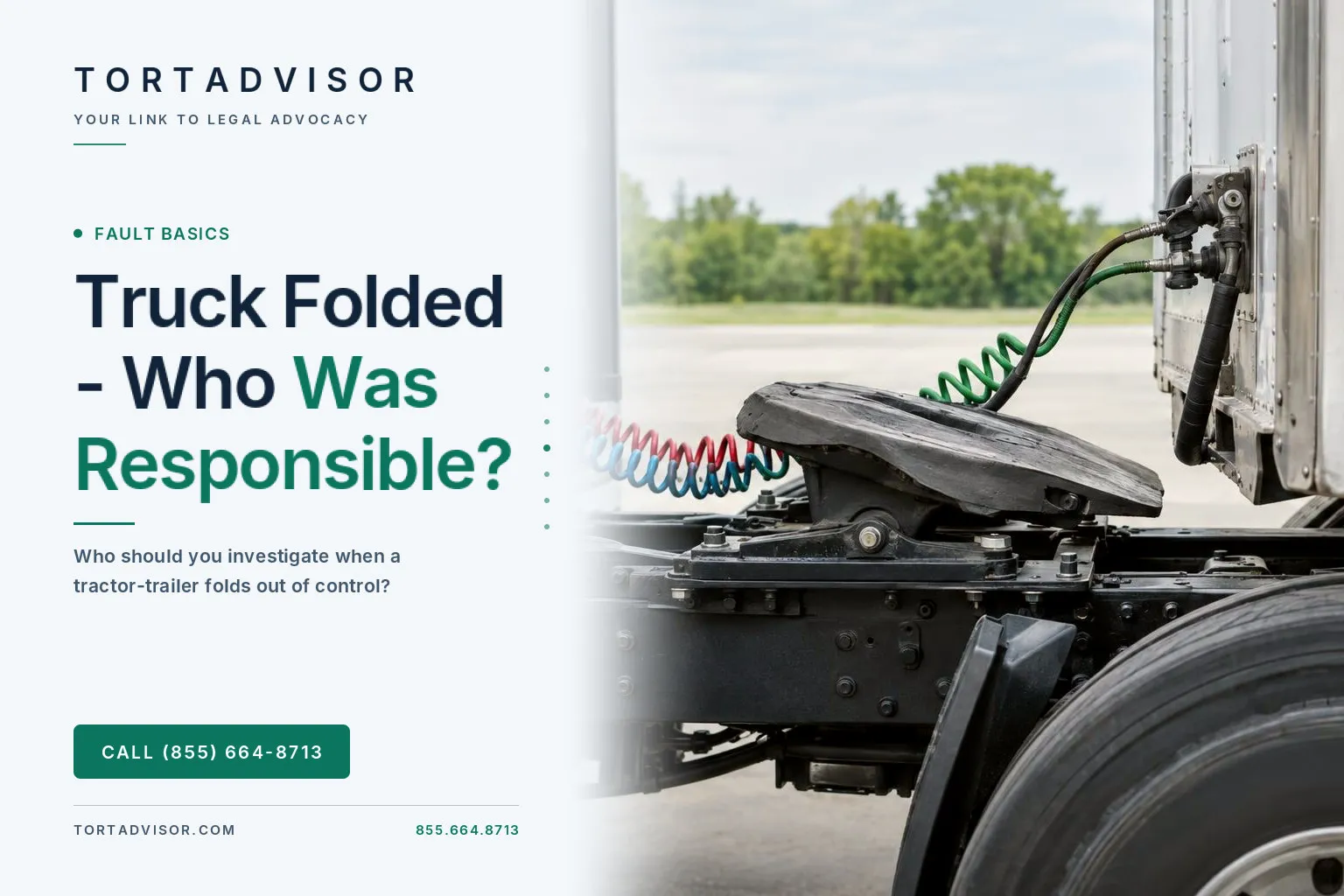
After a jackknife truck accident, the driver, trucking company, cargo loader or maintenance provider may need to be investigated—there is not enough information in the crash description alone to name who is responsible for your injuries. The investigation should examine how control was lost, including braking, speed, traction, load configuration and equipment condition, rather than assuming the driver was the only person involved.
This article explains what a jackknife is and what to examine about driving decisions, carrier operations, cargo loading and maintenance. It also outlines questions and evidence to bring to a case review, with a focus on helping you organize your next steps through TortAdvisor.
Who should be investigated after a jackknife truck accident?
Start by investigating the truck driver, motor carrier, cargo loader and maintenance provider. This is a shortlist for gathering evidence—not a finding that any of them caused the crash or owes compensation.
Find out if you may have a claim
Answer a few questions and a trained case advisor will review your situation — most people finish in about a minute.
- Free — no cost, no obligation
- About a minute to complete
- Reviewed by a trained case advisor
- Nothing you submit is published
Your details are sent over a secure connection and reviewed confidentially.
Organize the review around four questions:
- Who drove the truck? Examine the driver’s actions before the tractor and trailer folded toward each other.
- Who controlled its operation? Identify the motor carrier and ask who made relevant dispatch and operating decisions.
- Who loaded the trailer? Establish who handled cargo placement and securement, and what records document that work.
- Who performed relevant repairs? Identify the carrier’s maintenance staff or outside providers who inspected or worked on the brakes, tires or other potentially relevant equipment.
California illustration—not a nationwide rule: California’s civil jury instructions on negligence and causation, CACI 400 and 430, require proof of negligence, harm and that the negligence was a substantial factor in causing the harm. Identifying someone’s involvement is therefore different from proving responsibility under those instructions.
Treat the federal rules discussed below as operational requirements, not a complete nationwide test for civil liability. Ask a lawyer which liability rules apply to your crash and what evidence connects each party’s conduct to your injuries.
For a broader overview of preparing for that conversation, use TortAdvisor’s truck accident lawsuit and case-review guide. Here, the focus is on investigating jackknife causes and responsibility.
What is a jackknife, and what can cause it?
A jackknife is a loss-of-control event in which a truck’s tractor and trailer fold sharply relative to each other, rather than staying aligned along their intended path. NHTSA’s tractor-semitrailer yaw-stability research explains how braking, wheel lockup and reduced traction can contribute to this movement. In particular, when the tractor’s rear wheels lock, they can lose the sideways grip needed to keep the tractor stable.
The research, including its brake-in-curve findings, points to several conditions worth examining together: speed during turning or braking, available road traction, load configuration, tire condition and brake condition. These factors affect how the truck responds; identifying the folded position alone does not explain which conditions produced the loss of control.
Lightly loaded configurations also appear in the research. A jackknife therefore should not be treated as evidence, by itself, that the truck was overloaded. The investigation needs to establish the actual load and operating conditions rather than assume them from the truck’s final position.
For an injured person reviewing what happened, the key distinction is between identifying the movement and identifying its cause. The study’s experimental speeds and articulation measurements describe particular tests—not universal crash definitions, legal limits or proof that someone was at fault.
Driver and carrier: speed, weather and operating decisions
Look at both the driver’s decisions and the carrier’s operating instructions. 49 CFR Part 392 on commercial-vehicle operation makes these questions relevant:
- Were conditions too hazardous for the speed—or for continued travel? Section 392.14 requires extreme caution when conditions such as snow, ice, sleet, fog, mist, rain or dust adversely affect visibility or traction. Drivers must reduce speed and discontinue operation when conditions become sufficiently dangerous. If stopping would increase the hazard, the rule permits continued operation to the nearest place where that hazard is eliminated.
- Was the equipment checked before driving? Section 392.7 requires the driver to be satisfied that specified equipment—including brakes, steering, lights and tires—is in good working order before driving.
- Was the cargo properly distributed and secured? Section 392.9 addresses cargo distribution, securement and driver inspections. Its inspection exception covers specified sealed vehicles the driver has been ordered not to open, or vehicles loaded so inspection is impracticable. That is not a blanket exemption from cargo requirements.
- Who else controlled operating decisions? Section 392.1 addresses carriers and relevant personnel involved in management, maintenance, operation or dispatch—not just drivers.
Ask who directed dispatch, reviewed changing conditions and responded to reported operating concerns. If someone attributes the jackknife to weather or emergency braking, test that explanation against weather reports, available vehicle data, dispatch messages and the sequence of events. What prompted the braking, and what decisions preceded it?
For broader questions about the people and companies involved, use TortAdvisor’s semi-truck liability and regulations guide to prepare for a case review.
Cargo loader: did the load affect stability?
Cargo loading is worth investigating when the evidence raises questions about weight distribution or load movement. But a jackknife does not, by itself, tell you who loaded the trailer or whether that work contributed to the loss of control.
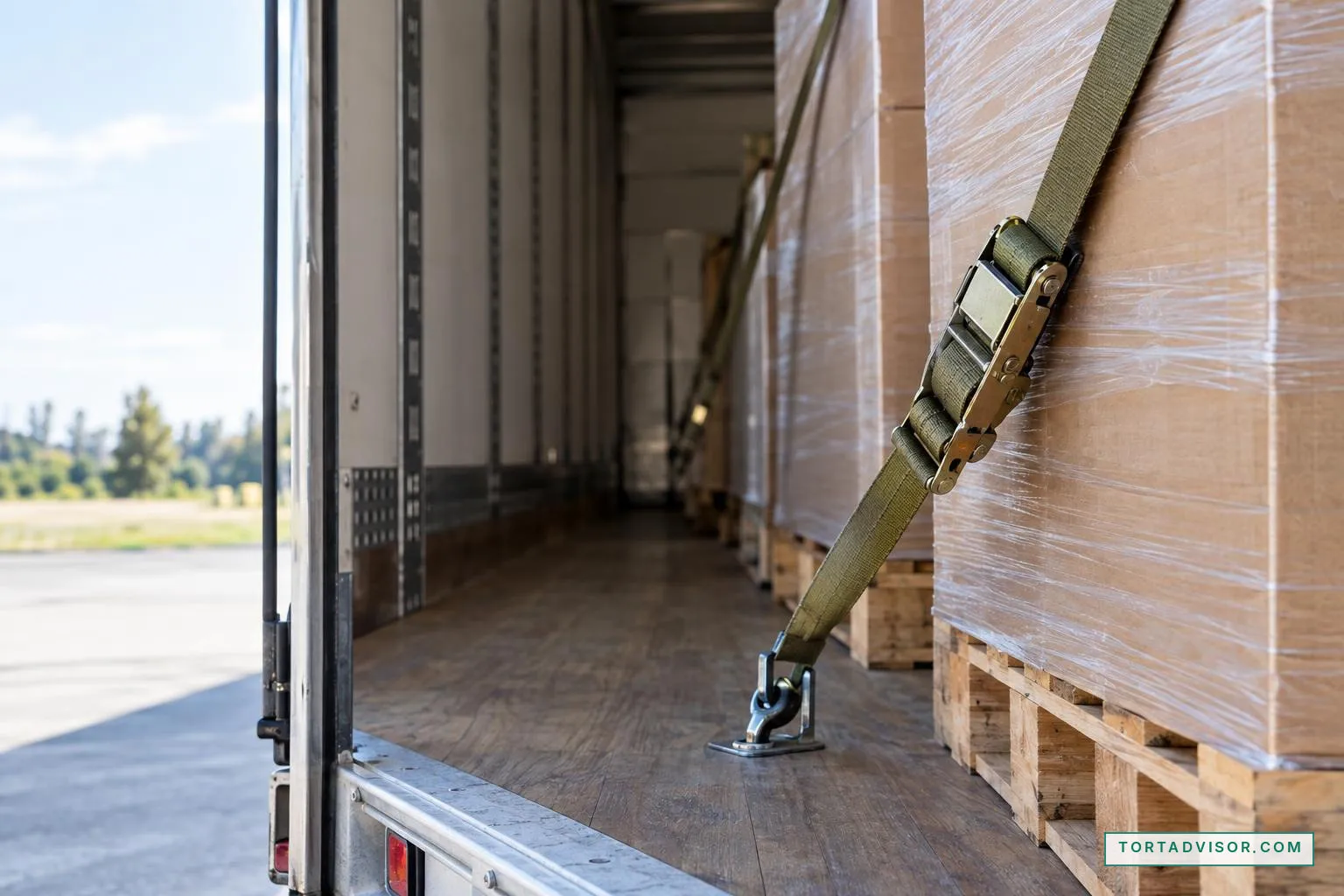
49 CFR Part 393’s cargo-securement requirements, particularly section 393.100(c), address cargo shifting that adversely affects a vehicle’s stability or maneuverability. That makes the load’s placement and securement important areas to examine—not a reason to assume every loading company is legally responsible.
A case review can start with these questions:
- Who did what? Who arranged the cargo inside the trailer, and who secured it? Was more than one business involved?
- How was the load distributed before departure? What do loading photographs, weight records or loading diagrams show?
- What securement information is available? Are there records or photographs identifying the restraints used and how they were attached?
- Were there handling instructions? What instructions accompanied the shipment, and who received them?
Keep the loader’s actual work separate from the carrier’s and driver’s operating decisions. Focus on what each participant handled, what the records show and whether the loading or securement may have contributed to instability. Treat a load-related explanation as a question to investigate, not a conclusion proved merely because cargo moved or the trailer jackknifed. Part 393 alone should not be treated as establishing an independent loader’s civil liability.
Maintenance provider: were brakes or tires a contributing issue?
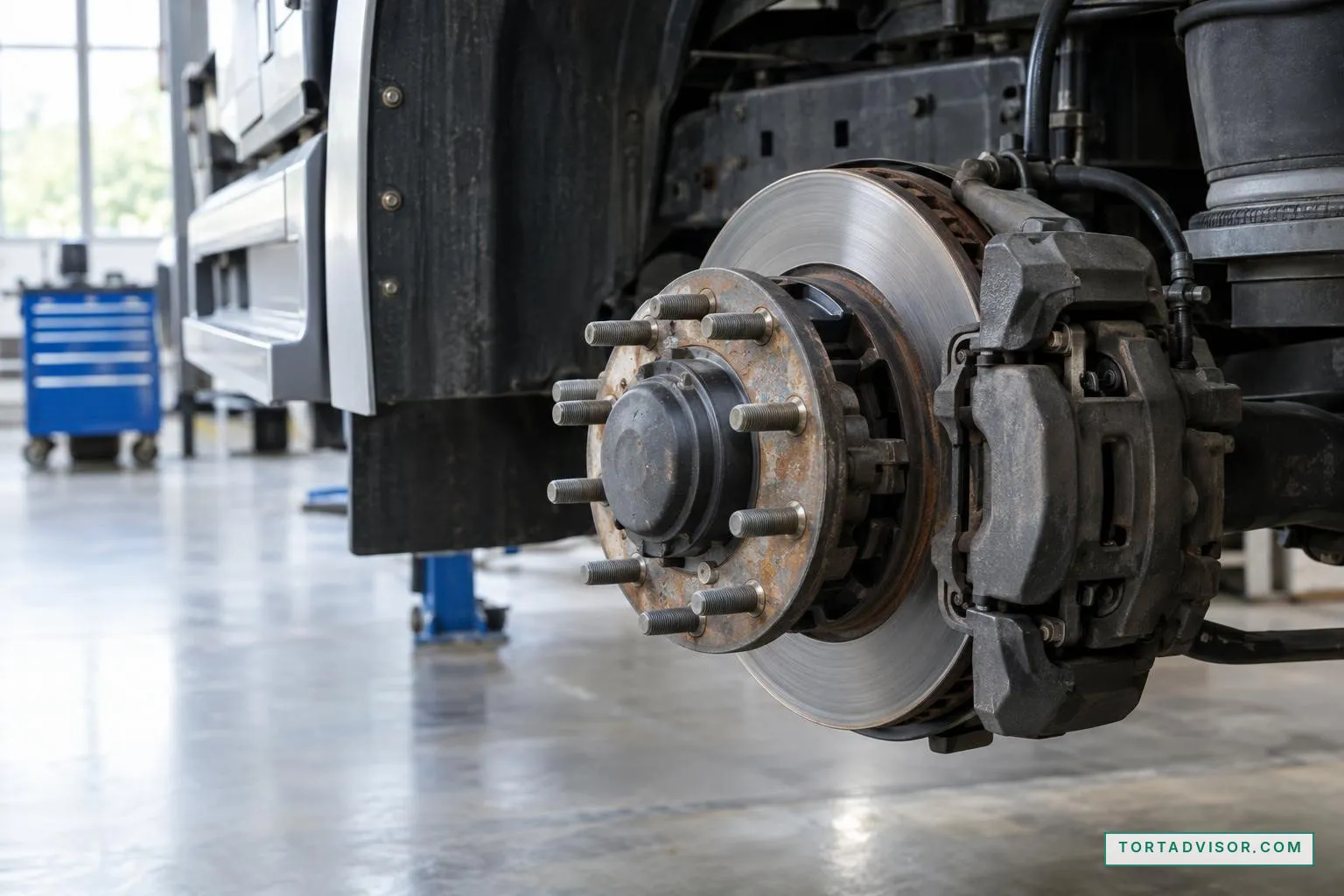
Investigate both the carrier’s maintenance practices and any outside shop’s work. Section 396.3 of 49 CFR Part 396 on inspection, repair and maintenance requires motor carriers to systematically inspect, repair and maintain—or cause those tasks to be performed on—covered vehicles under their control. It also requires parts and accessories to remain in safe operating condition and specifies maintenance-record requirements for vehicles subject to those recordkeeping provisions, including records of inspections, repairs and maintenance.
Building on the mechanics discussed earlier, the next question is whether the maintenance history helps explain the brakes’ or tires’ role in this crash. Useful questions for a case review include:
- Who last inspected the relevant brakes or tires, and what did the inspection cover?
- What work did the carrier request from an outside provider?
- What work do repair orders, invoices and inspection records show was actually completed?
- Were unresolved defects documented, and was any follow-up work recorded?
Keep the provider’s actual work separate from the carrier’s maintenance responsibilities. Compare the requested work with the completed work rather than assuming the shop handled every component. A mechanical problem is a reason to investigate, not proof by itself of negligent repair. Likewise, the involvement of an outside maintenance company is not a reason to stop examining the carrier’s own maintenance practices.
Questions and evidence to bring to a case review
Bring what you already have; you do not need a complete investigation before speaking with counsel. A useful starting checklist is existing crash photographs, truck and trailer identifiers, witness contact details, any cargo or repair information, and a written account of the crash sequence. Treat this as a suggested list—not a promise that every record exists or will be available.
Organize your notes around four questions:
- What happened before the fold? Describe the truck’s movement before the trailer folded: Was it turning, slowing or changing direction? Note road and weather conditions without guessing at speed. NHTSA’s tractor-semitrailer stability research examines how braking, traction, speed and vehicle configuration can affect loss of control. Ask counsel whether relevant vehicle data should be requested; our guide to black-box evidence in commercial trucks can help you prepare that question.
- What did the driver do? Separate what you saw—such as braking or steering—from what you suspect. Ask which operating decisions need investigation. Federal commercial-driving rules address hazardous-condition precautions, equipment checks and cargo inspections, with specified exceptions.
- What was the load doing? Bring any information about the cargo, its placement or visible movement. Ask whether loading and securement records should be requested. Federal cargo-securement provisions address load shifting that adversely affects stability or maneuverability.
- What was the equipment’s condition? Share existing photographs or information about tires, brakes and recent repairs. Ask whether inspection, maintenance and repair records—including relevant outside repair work—should be requested. Federal maintenance rules require systematic inspection, repair and maintenance and specified records.
If you are deciding what kind of help to seek, use our guide to truck safety reports versus injury claims to frame that separate question.
Use TortAdvisor to organize your next questions
Before discussing a potential truck-accident claim with a lawyer, organize what you know—and what still needs investigation—about the driving, cargo and maintenance. You do not need to resolve those questions yourself. A short list can help keep the discussion focused on why the truck jackknifed and whose decisions deserve closer review.
- Driving and operating decisions: What were the road and weather conditions? Was speed reduced as conditions worsened? Federal commercial-driving rules require precautions in hazardous conditions, including reduced speed, under section 392.14.
- Cargo: Who loaded the trailer, and what records describe its weight distribution and securement? Federal cargo-securement rules address load shifting that adversely affects stability or maneuverability.
- Maintenance: Who inspected or repaired the brakes and tires? What do the records show? Federal maintenance requirements address systematic inspection, repair, maintenance and specified records.
If useful, try TortAdvisor’s truck accident settlement calculator as an optional planning tool. It does not determine fault, establish claim eligibility or predict a recovery. Keep your unanswered liability questions separate from any calculator output.
For broader compensation research alongside your truck-accident questions, explore the settlement amounts and compensation guide. TortAdvisor provides independent legal information and is not a law firm; its resources are a starting point for questions, not a substitute for advice about your circumstances.
Frequently asked questions
What does it mean when a semi-truck jackknifes?
A semi-truck jackknifes when the tractor and trailer lose alignment and fold toward each other at a sharp angle. NHTSA’s tractor-semitrailer stability research examines how braking, wheel lockup, traction, speed and load configuration can affect this type of loss of control. The fact that a truck jackknifed does not, by itself, identify which of those factors contributed.
What must a covered commercial-truck driver do in hazardous weather?
Under 49 CFR section 392.14, a covered driver must use extreme caution when conditions such as snow, ice, sleet, fog, mist, rain, dust or smoke impair visibility or traction, and must reduce speed. If conditions become sufficiently dangerous, driving must stop until safe operation is possible. If stopping would increase the hazard, the driver may continue to the nearest place where passenger and vehicle safety is assured.
Can cargo shifting affect a tractor-trailer’s stability?
Yes. Cargo shifting can adversely affect a truck’s stability or maneuverability. 49 CFR section 393.100(c) requires cargo to be contained, immobilized or secured to prevent shifting that has those effects. For a case review, ask whether loading records, securement photographs and the condition of straps or other restraints could help explain what happened.
What maintenance responsibilities does the motor carrier have?
Under 49 CFR section 396.3, a motor carrier must systematically inspect, repair and maintain—or cause those tasks to be performed on—vehicles under its control. Parts and accessories must be in safe and proper operating condition. For vehicles controlled for 30 consecutive days or more, the rule also requires specified records, including maintenance schedules and records of inspections, repairs and maintenance.
Which loading and repair questions should I bring to a jackknife crash case review?
Consider asking: Who loaded the trailer, and who checked its cargo distribution and securement? Are loading photographs, weight records or inspection notes available? Who last inspected or repaired the brakes and tires? Were any defects reported, and what work followed? Ask which records could help connect a loading or maintenance concern to the truck’s loss of control, rather than assuming that concern caused the crash.
Sources
- Tractor Semitrailer Stability Objective Performance Test Research—Yaw Stability · National Highway Traffic Safety Administration
- 49 CFR Part 392—Driving of Commercial Motor Vehicles · Office of the Federal Register and Government Publishing Office; FMCSA regulations
- 49 CFR Part 393—Parts and Accessories Necessary for Safe Operation · Office of the Federal Register and Government Publishing Office; FMCSA regulations
- 49 CFR Part 396—Inspection, Repair, and Maintenance · Office of the Federal Register and Government Publishing Office; FMCSA regulations
- Judicial Council of California Civil Jury Instructions, 2026 Edition · Judicial Council of California
This article is general information, not legal advice. Laws and deadlines vary by state and change over time; check the linked sources or speak with a licensed attorney about your situation.
A plain-language guide to truck electronic evidence, the difference between engine-control data and electronic driving logs, and questions to ask after a crash.

Not sure whether you need to report unsafe trucking, challenge an insurance decision, or explore an injury claim? This guide explains the different routes and what information to prepare.