
Truck Accident Driver Fatigue: Hours-of-Service Proof

Truck accident driver fatigue could have contributed to your crash: federal rules prohibit unsafe fatigued driving and carriers from requiring or permitting it. Electronic logging device (ELD) records and supporting documents can help reconstruct the driver’s schedule and show whether it exceeded federal driving, break and on-duty limits, helping you investigate the driver’s conduct and the trucking company’s role.
This article explains the hours-of-service limits, how to compare electronic logs with supporting records, and how a violation may fit into an injury claim against the driver or carrier. It also walks through organizing fatigue-related evidence alongside your medical records so you can better understand what needs further investigation.
Was the truck driver too tired to drive safely?
The key question is whether fatigue made the driver unable to drive safely—not simply how many hours the driver had been working. Under FMCSA’s explanation of the fatigue rule in 49 CFR 392.3, drivers may not operate, and carriers may not require or permit operation, when a driver is “too tired or sick to drive safely.” FMCSA describes a narrow grave-emergency exception, not a general allowance to keep driving to meet a delivery schedule.
If you suspect fatigue contributed to your crash, keep two investigation questions separate:
- What does the driver’s schedule show? Look for records that help reconstruct driving time, work periods, breaks and opportunities for rest.
- What explains the driver’s alertness at the time of the crash? Look for evidence about actual sleep, illness, statements about tiredness and observations of the driver’s behavior before the collision.
Keeping these questions separate helps focus the investigation on both the work schedule and the driver’s condition. Consider the carrier’s role, too: what did dispatch communications or delivery instructions show about expectations to continue driving?
If you also need an overview of the claim process, TortAdvisor’s truck accident lawsuit and case-review guide can help you put those evidence questions in context.
Find out if you may have a claim
Answer a few questions and a trained case advisor will review your situation — most people finish in about a minute.
- Free — no cost, no obligation
- About a minute to complete
- Reviewed by a trained case advisor
- Nothing you submit is published
Your details are sent over a secure connection and reviewed confidentially.
What federal hours-of-service limits apply to truck drivers?
For covered property-carrying truck drivers, federal rules limit both driving time and the period in which driving is allowed. FMCSA’s hours-of-service summary sets these standard limits:
- Driving maximum: Up to 11 hours of driving after 10 consecutive hours off duty.
- Duty window: No driving beyond the 14th consecutive hour after coming on duty following 10 consecutive hours off duty. That window is not permission to drive for 14 hours.
- Driving break: A 30-minute non-driving interruption is required after 8 cumulative hours of driving without such an interruption. Qualifying time can include on-duty time without driving, off-duty time, sleeper-berth time, or a consecutive combination.
- Weekly limit: No driving after 60 on-duty hours in 7 consecutive days, or 70 on-duty hours in 8 consecutive days, as applicable. At least 34 consecutive hours off duty can restart the applicable period.
Not every schedule is calculated the same way. Under 49 CFR Part 395’s exceptions, sleeper-berth provisions and recordkeeping rules, qualifying sleeper-berth splits and adverse-driving conditions can change the standard calculation. Qualifying short-haul operations have specified logging exceptions, and some drivers are exempt from electronic logging device (ELD) use. Missing ELD records alone therefore do not establish a violation; the operation and any applicable exception matter.
For context beyond fatigue and driving schedules, see TortAdvisor’s guide to semi-truck accident liability and regulations.

How ELD records and supporting documents reveal schedule violations
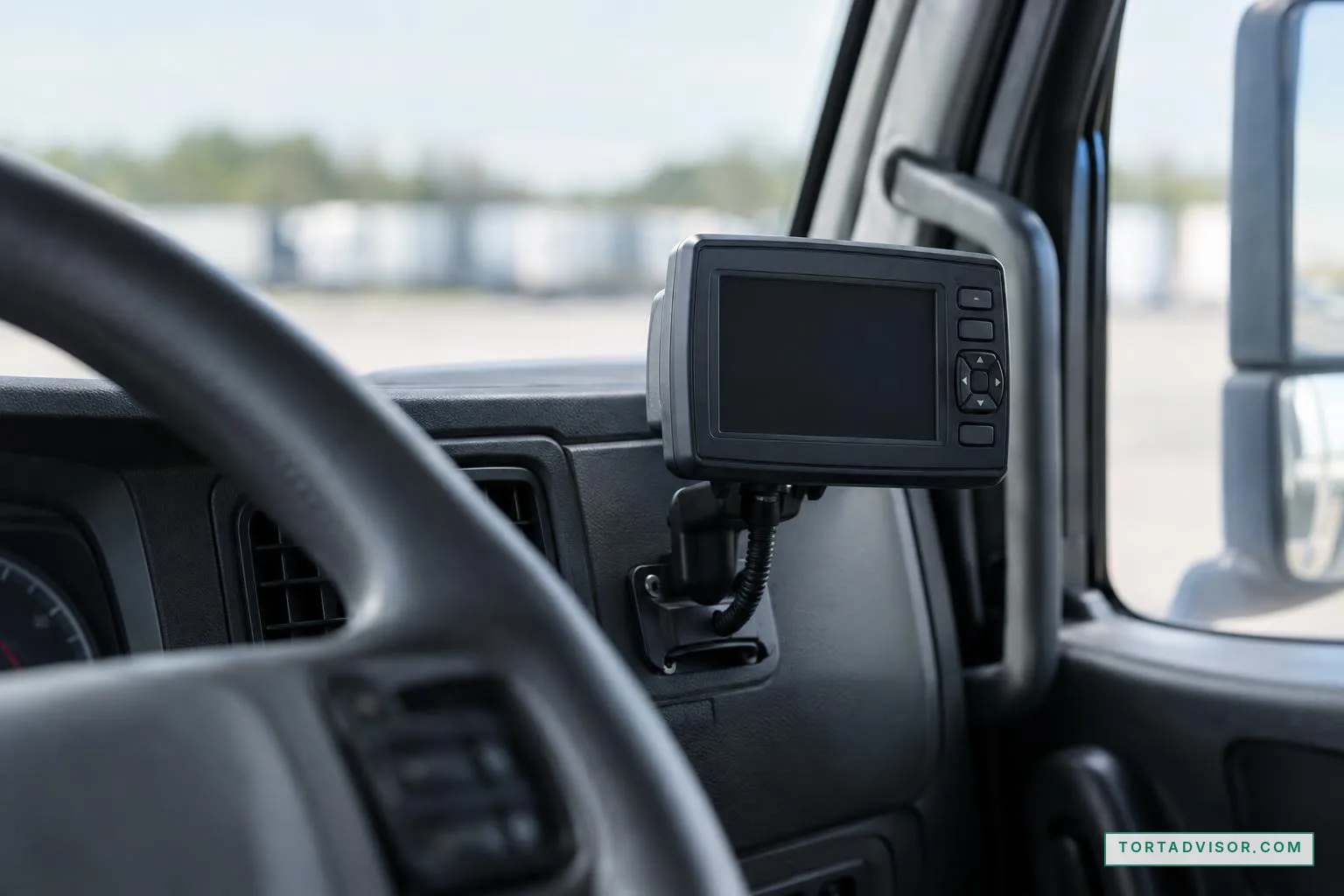
An electronic logging device (ELD) can help reconstruct a truck driver’s schedule, but it does not establish whether the driver actually slept or was alert at the time of the crash.
FMCSA’s electronic logging device guidance explains that ELDs automatically capture date, time, location, engine hours, vehicle miles and identifying information at specified intervals. Original records remain available after permitted edits. Supporting documents include dispatch records, bills of lading, expense receipts, fleet messages and payroll records. Carriers must retain records of duty status and supporting documents for six months from receipt; ELD records also have separate backup requirements.
To investigate a possible schedule violation, compare recorded driving and duty status with dispatch messages, trip records and receipts. Look for entries that do not line up, then ask what explains them: Was a record edited? Was driving left unidentified? Does a trip document suggest work that is missing from the on-duty entries? Treat a discrepancy as something to investigate, not automatic proof of a violation or fatigue.
What to discuss preserving
For a preservation discussion with a lawyer, organize a checklist covering:
- Original electronic exports: Duty-status records and available underlying ELD data, rather than screenshots alone.
- Edits and unidentified driving: Original entries, changes, annotations and records awaiting assignment to a driver.
- Supporting trip documents: Bills of lading, receipts, trip records and relevant payroll records.
- Dispatch communications: Messages about assignments, pickup and delivery schedules, delays and driver availability.
The goal is to preserve the information needed to compare the recorded schedule with the work performed. That evidence-gathering step is distinct from reporting a safety concern; understanding the difference between a truck safety complaint and an injury claim can help you keep those tasks separate.
How a violation can support a claim against the driver or carrier
An hours-of-service violation can be important evidence, but it does not by itself establish who caused your crash. The key questions are what the driver and carrier each did, and how that conduct connects to the collision.
Separate the driver’s recorded conduct—such as driving periods and duty-status entries—from the carrier’s scheduling and dispatch decisions. Who controlled the delivery schedule? Did messages show a driver reporting exhaustion, requesting rest or facing pressure to continue? Compare those communications with the driving records and crash timeline rather than treating a schedule violation alone as proof of crash causation.
As a California-specific example, California’s civil jury instructions on negligence, regulatory violations and employer responsibility address negligence, harm and causation in CACI 400. CACI 418 addresses an applicable regulatory violation that was a substantial factor in causing harm, subject to the instruction’s prerequisites and a possible excuse. CACI 3700 addresses an employer’s responsibility for an employee’s negligence within the scope of employment. These are not nationwide liability rules, and they do not make every hours-of-service violation an automatic winning claim.
Use these questions to prepare for a consultation:
- Which hours-of-service rule applied to this driver and trip?
- What records prove the alleged violation?
- What connects that conduct to the crash?
- What evidence supports a separate claim against the carrier based on its own decisions?
- Which jurisdiction’s civil-liability rules govern?
If you want help evaluating those questions, TortAdvisor’s guide to choosing an accident claim attorney can help you plan your search.
Organize your fatigue evidence and injury records
Start with a simple case folder. You do not need to prove why the crash happened before organizing what you already have. Keep these materials together:
- Crash details: The date, time, location, report number if available, and your account of what happened.
- Truck and carrier identification: Names, contact information, and any company names or identifying numbers visible in photographs you already have.
- Available photographs: Images of the vehicles, crash scene, and your injuries.
- Injury and financial records: Medical records, bills, receipts, missed-work dates, and pay records documenting lost income.
- Schedule questions: What you know—and still need to learn—about the driver’s driving time, breaks, and time off before the crash.
Separate confirmed facts from suspicions. For example, record any words you remember the driver saying about tiredness, rather than treating fatigue as established. List which records you have and which are missing. Electronic logging device records can include original entries and edits, while supporting documents can include dispatch records, bills of lading, and certain receipts, as explained in the FMCSA’s ELD guidance.
If helpful, use TortAdvisor’s truck accident settlement calculator as an optional organizing aid—not proof of fatigue, fault, or a promised recovery. The settlement amounts and compensation guide offers optional background on compensation terminology.
TortAdvisor provides independent legal information. It is not a law firm, does not determine liability, and does not replace advice about your individual claim.
Frequently asked questions
Can a truck driver be too fatigued to drive even without exceeding the hours-of-service limits?
Yes. Staying within the driving-hours limits does not necessarily mean a driver is fit to drive. Federal rules separately prohibit driving when fatigue makes—or is likely to make—operation unsafe, and prohibit a carrier from requiring or permitting that driving. The rule includes a narrow grave-emergency exception. See FMCSA’s fatigue prohibition for drivers and carriers.
Does the federal 14-hour rule allow 14 hours of truck driving?
No. Under the standard property-carrying rules, a driver may drive up to 11 hours after 10 consecutive hours off duty. The separate 14-hour limit is the window in which that driving may occur after coming on duty—not an allowance for 14 hours behind the wheel. FMCSA’s hours-of-service summary explains these limits.
Can electronic logging device records show an hours-of-service violation?
Yes. Comparing an ELD timeline with the applicable driving and duty limits can help identify a possible violation. For your evidence review, organize the records chronologically and flag apparent gaps, edits or inconsistencies for closer examination. Keep the question focused: what does the complete schedule show, rather than what does a single entry suggest?
Does the absence of ELD records automatically mean the trucking company violated the rules?
No. Federal rules include ELD exemptions and qualifying short-haul exceptions to certain recordkeeping requirements. Missing ELD data alone therefore does not establish a violation. The relevant questions include whether an ELD was required for that driver and operation, and what alternative records were required. Those distinctions appear in 49 CFR Part 395.
How long must carriers retain driver logs and supporting documents?
Carriers must retain drivers’ records of duty status and supporting documents for six months. They must also retain a backup copy of ELD records on a device separate from the one storing the original data. FMCSA’s ELD frequently asked questions explain these retention and backup requirements. For your own file, keep any copies you receive organized by driver and date.
Does a federal driving-hours violation automatically establish negligence?
No—not simply because a violation appears in a log. As a California-only illustration, the state’s jury instructions require specific conditions for a regulatory-violation presumption, including that the violation caused harm, the harm was the kind the rule sought to prevent, and the injured person belonged to the protected group. The instructions also address excuses. See California’s civil jury instructions, including CACI 400 and 418; this example is not a nationwide rule.
Sources
- Summary of Hours of Service Regulations · Federal Motor Carrier Safety Administration · 2022-03-28
- 49 CFR Part 395 — Hours of Service of Drivers · Electronic Code of Federal Regulations, Office of the Federal Register
- Electronic Logging Devices: Frequently Asked Questions · Federal Motor Carrier Safety Administration
- Judicial Council of California Civil Jury Instructions, 2026 Edition · Judicial Council of California
This article is general information, not legal advice. Laws and deadlines vary by state and change over time; check the linked sources or speak with a licensed attorney about your situation.

Who should you investigate when a tractor-trailer folds out of control? This guide connects questions about driving, cargo and maintenance with federal requirements and evidence to discuss during a case review.

A plain-language guide to truck electronic evidence, the difference between engine-control data and electronic driving logs, and questions to ask after a crash.

Not sure whether you need to report unsafe trucking, challenge an insurance decision, or explore an injury claim? This guide explains the different routes and what information to prepare.