
Black Boxes in Commercial Trucks: Evidence After a Crash

Yes—black boxes in commercial trucks may help explain a crash by recording information such as speed and braking, although what is recorded and recoverable depends on the device and its condition. You can ask a lawyer about sending a written request to preserve the truck’s electronic data and any existing downloads, and about discovery tools available in federal court to seek access to that evidence.
This article explains the difference between an engine control module (ECM) and an electronic logging device (ELD), which serves an hours-of-service purpose and is not required to collect speed, braking or steering data. It also covers federal equipment requirements, what the ELD retention rule protects, ways to seek and preserve data, and questions to ask about a truck-data download.
What are black boxes in commercial trucks?
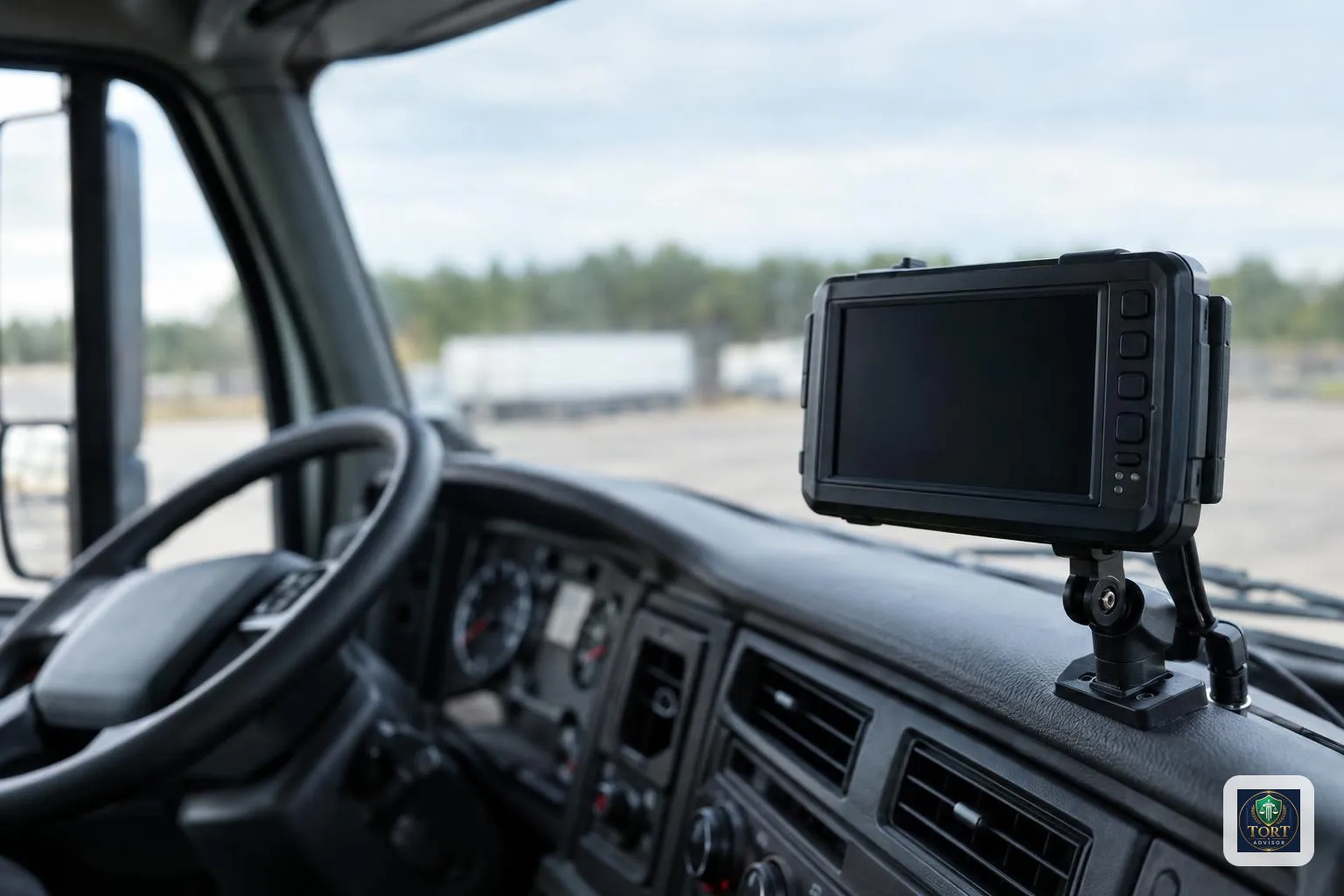
A commercial truck’s “black box” is shorthand for an electronic device that may hold information useful after a crash—not a promise of a complete crash recording. The important questions are which device was installed, what it recorded, and whether those records remain available.
Find out if you may have a claim
Answer a few questions and a trained case advisor will review your situation — most people finish in about a minute.
- Free — no cost, no obligation
- About a minute to complete
- Reviewed by a trained case advisor
- Nothing you submit is published
Your details are sent over a secure connection and reviewed confidentially.
An NTSB investigation of truck electronic modules illustrates why those details matter. Investigators examined electronic control modules, or ECMs, with speed-change, last-stop, and diagnostic records. But the available information was incomplete: some saved events were unrelated to the crash, some records had been overwritten through vehicle operation, and one thermally damaged ECM yielded no data. The report also identified timestamp limitations that affected interpretation.
Those findings describe the particular devices examined, not every truck. Their recording windows should not be treated as universal. A useful evidence review starts with identifying the actual module and understanding what its recovered records can—and cannot—show, rather than assuming a download will explain the entire collision.
This article focuses on electronic evidence. For a broader look at pursuing a claim and preparing questions about your situation, see TortAdvisor’s truck accident lawsuit and case-review guide.
ELD versus ECM: driving logs are not crash recordings
An electronic logging device (ELD) export should not be treated as a crash recording. According to FMCSA’s explanation of ELD functions, ELDs support hours-of-service records and synchronize with the vehicle’s engine. Required information includes date, time, location, engine hours, vehicle miles, and identifying information. ELDs are not required to collect vehicle speed, braking action, or steering data.
For your evidence questions, separate the driving log from any potential engine control module (ECM) evidence. Rather than asking only for “the black box,” ask that both systems be identified and that the available records from each be explained. Do not assume that receiving an ELD export means you have also received an ECM download.
Useful questions to raise with a lawyer or the person reviewing the records include:
- Which device or system produced this file?
- Is this an ELD driving log, an ECM download, or another type of record?
- What information does the file actually contain, and what remains unavailable?
This distinction keeps the evidence review focused: identifying a file is not the same as confirming that it answers how the truck was being operated before the collision.
Does federal law require every truck to have a black box?
The cited federal event data recorder (EDR) regulation is not a universal heavy-truck black box mandate. Its scope is narrower than the phrase “federal black box standards” might suggest.
The application provision for federal EDR standards covers specified EDR-equipped passenger cars, multipurpose passenger vehicles, trucks and buses with a gross vehicle weight rating of 8,500 pounds or less and an unloaded vehicle weight of 5,500 pounds or less, subject to stated exceptions. That limited scope does not establish a requirement for every heavy commercial truck to carry a crash recorder.
For your crash, separate two questions: whether a particular equipment requirement applies to the truck, and whether the truck actually contains useful recorded data. This provision alone does not answer either question for every commercial vehicle. It also should not be read as proof that no other equipment requirement could apply.
For broader context beyond recorder equipment, see our guide to semi-truck accident liability and regulations. When discussing evidence, focus on the specific truck and its installed systems rather than assuming that all “black boxes” follow the same federal requirements.
What does the ELD retention rule actually protect?
The rule protects a specific backup of electronic logging device records—not every type of electronic evidence a truck may contain. Under the federal ELD backup and security rule, a motor carrier must retain a backup copy of ELD records for six months on a device separate from the one storing the original data. The rule also requires the carrier to protect that backup to preserve driver privacy.
That is not a blanket six-month guarantee for engine control module (ECM) event recordings. The cited backup requirement addresses ELD records; it does not establish an ECM retention period. It should not be read as a promise that every potentially useful crash recording will remain available for six months—or as a deadline for filing a lawsuit.
When discussing evidence after a truck crash, ask about the actual records rather than relying on the label “black box.” Useful questions include:
- Which electronic devices were installed in the truck?
- What ELD records and separate backup copies exist?
- Has anyone downloaded data from the ELD, ECM, or another device?
- Who holds those downloads, and where are copies stored?
- What steps have been taken to preserve each identified source?
Keeping those questions separate helps clarify what evidence has actually been located and what still needs attention. The existence of an ELD backup should not be treated as confirmation that ECM event data has also been saved.
How can truck data be obtained and preserved?
In federal district-court litigation, truck data may be sought through formal discovery—not automatic access to a truck or its electronic systems. Under the Federal Rules of Civil Procedure, Rule 34 provides for requesting electronically stored information from a party and inspecting or testing relevant property; Rule 45 governs subpoenas to nonparties. These requests remain subject to applicable discovery limits, including relevance, proportionality, and objections. Rule 37(e) addresses lost electronic information that should have been preserved in anticipation of or during litigation, was lost because reasonable preservation steps were not taken, and cannot be restored or replaced through additional discovery. Lost data does not automatically mean penalties: measures to address prejudice must be no greater than necessary to cure it. More severe measures—such as an adverse-inference instruction or dismissal—require a finding of intent to deprive another party of the information’s use in litigation. This is federal-court procedure, not a universal description of state-court rules.
Discuss a preservation request with counsel, including which truck systems and records may matter and how to identify them clearly. Treat that conversation as planning for evidence preservation—not a promise that a request will secure access or that useful data will be recoverable.
If you are unsure whether you want to report a safety concern or pursue compensation for an injury, TortAdvisor’s guide to truck accident safety reports versus injury claims is a separate reading option.
Questions to ask about a truck black box download
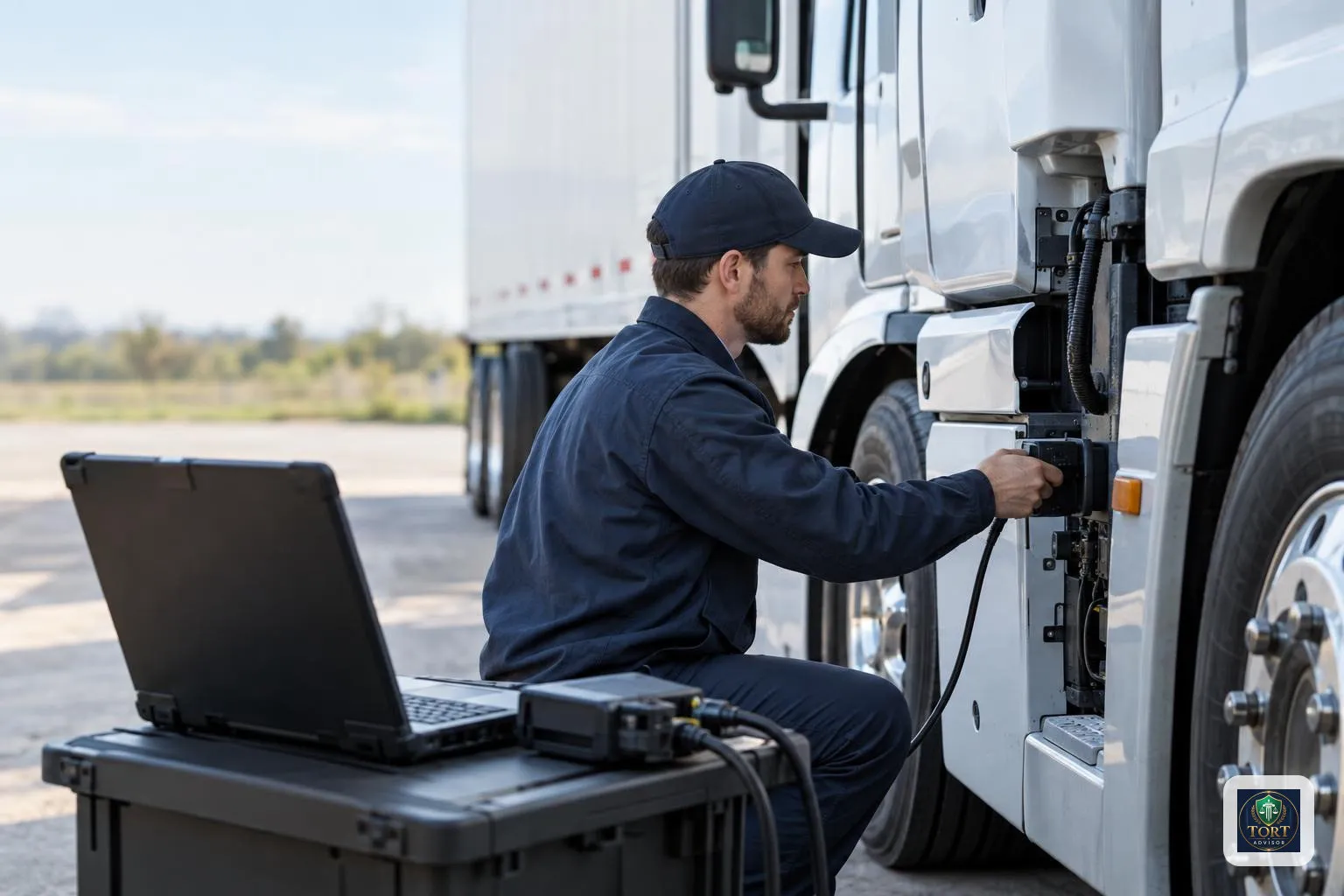
A download needs context before it can help explain a crash. You do not need to inspect the truck or download its equipment yourself. These suggested questions can help you discuss the evidence with a lawyer or the specialist reviewing it; they are not mandatory legal steps.
- Which module and software produced the download? Ask the reviewer to identify the equipment, the software used to retrieve its data, and what that particular module can record.
- Does the saved event correspond to this collision? Ask what connects the recording to your crash rather than an earlier, unrelated event.
- How were timestamps checked? Ask whether the recorded times were compared with other evidence and whether any timing uncertainty remains. These questions reflect issues documented in an NTSB vehicle-recorders investigation, including device-specific recording differences, unrelated saved events, and timestamp limitations.
- What information is missing? Ask which data were recovered, what could not be recovered, and whether the reviewer can explain any gaps.
- Were separate ELD records requested? Do not assume a module download includes the driver’s electronic logs. FMCSA explains that ELDs support hours-of-service recording and are not required to collect speed, braking, or steering data.
- Who will explain the recording’s limitations? Ask who can distinguish what the data show from what remains uncertain, and explain how the recording fits with other crash evidence.
If you would like help discussing these questions, TortAdvisor’s resource for finding a local truck injury lawyer is one place to start.
Where to go next with your evidence questions
Start by organizing what you want to know about the truck’s data, rather than trying to turn a possible recording into a compensation estimate. A short list can help you separate what is available, what still needs to be requested, and what remains uncertain.
- Which devices were installed, and who has access to them?
- Has anyone downloaded the data, and is the original information still available?
- Does a saved event relate to this crash, and how was its timing checked?
- What other evidence could help explain what happened?
Those distinctions matter. In one historical investigation, the NTSB documented device-specific recording limits, saved events unrelated to the crash, and timestamp limitations. Its findings illustrate why a download needs careful interpretation—not simply confirmation that a “black box” exists. See the NTSB’s vehicle recorder findings.
Once your evidence questions are organized, you can explore TortAdvisor’s separate truck accident settlement calculator as an educational resource, not as a way to assign a dollar value to a recording or determine what your claim is worth.
For broader reading, the settlement amounts and compensation guide offers another place to explore compensation topics. Keep that reading separate from the technical question of what the truck’s data actually shows; it is not a prediction based on black box evidence.
This information is educational, not legal advice. TortAdvisor does not provide legal representation; an attorney can address questions specific to your situation.
Keep researching on TortAdvisor
Frequently asked questions
Is an ELD the same thing as a truck’s ECM?
No. The devices should not be treated as interchangeable evidence sources. An ECM may hold engine-related information and saved event data, but its recording capabilities depend on the particular equipment. An NTSB investigation of truck ECMs illustrates device-specific recording categories, overwrite behavior, and saved events unrelated to the crash being investigated. Identifying the actual device matters more than calling it a “black box.”
Are ELDs required to record speed and braking?
No. According to FMCSA’s ELD functions guidance, ELDs are not required to collect speed, braking, or steering information. Their required functions support hours-of-service records through engine synchronization and data such as vehicle movement, miles, and engine hours. An ELD log should therefore not be mistaken for a recording of how the driver braked or steered before impact.
Does the federal EDR regulation cover every commercial truck?
No. The application provision for federal EDR standards covers specified vehicle categories within stated weight limits, includes exceptions, and applies to vehicles equipped with an EDR. It is not a requirement that every commercial truck carry a crash recorder. For a particular truck, the regulation alone does not establish whether recording equipment was installed or what information it captured.
Does the six-month ELD backup rule also cover ECM event data?
No—not under that provision. Section 395.22(i)(1) requires a motor carrier to retain a backup copy of ELD records for six months on a device separate from the original storage. That requirement does not establish an ECM event-data retention period. It should not be read as assurance that crash-related ECM information will remain available for six months.
Does missing truck data automatically lead to sanctions in federal court?
No. Under Federal Rule of Civil Procedure 37(e), the court considers whether electronic information that should have been preserved was lost because reasonable preservation steps were not taken, and whether it can be restored or replaced. Measures addressing prejudice must be no greater than necessary. More severe measures, such as an adverse-inference instruction or dismissal, require a finding of intent to deprive another party of the information’s use in litigation.
Sources
- ELD Functions FAQs · Federal Motor Carrier Safety Administration · 2022-03-10
- 49 CFR 563.3 — Application · Office of the Federal Register / National Highway Traffic Safety Administration
- 49 CFR 395.22 — Motor carrier responsibilities—In general · Office of the Federal Register / Federal Motor Carrier Safety Administration
- Federal Rules of Civil Procedure, December 1, 2025 · United States Courts / U.S. Government Publishing Office · 2025-12-01
This article is general information, not legal advice. Laws and deadlines vary by state and change over time; check the linked sources or speak with a licensed attorney about your situation.
Related Posts

Not sure whether you need to report unsafe trucking, challenge an insurance decision, or explore an injury claim? This guide explains the different routes and what information to prepare.