T-Bone Car Accident Fault: Right of Way and Shared Blame
Determining t-bone car accident fault starts with who failed to follow the applicable right-of-way rules—for example, Virginia’s traffic laws specify when drivers must stop and yield at intersections. Shared blame can reduce or prevent compensation for your injuries: in covered Florida negligence actions, your damages are reduced by your percentage of fault, and being more than 50% at fault bars recovery.
Those are state-specific examples, not nationwide rules. This article explains how red lights, stop signs and turning movements help frame the fault question, what evidence can clarify how the side impact happened, and how injuries and documented losses enter the compensation analysis. You can use those questions to guide your next research step.
Who is at fault in a T-bone accident?
Start with who had the right of way and whether either driver failed to yield—not simply which vehicle struck the other’s side. To assess fault, identify the traffic control, reconstruct each vehicle’s movement, and then examine the law that applies where the collision happened.
Find out if you may have a claim
Answer a few questions and a trained case advisor will review your situation — most people finish in about a minute.
- Free — no cost, no obligation
- About a minute to complete
- Reviewed by a trained case advisor
- Nothing you submit is published
Your details are sent over a secure connection and reviewed confidentially.
Virginia example: A driver turning left must yield to opposing traffic close enough to constitute a hazard. Where a separate left-turn signal is provided, the driver may turn only when that signal permits it. These requirements in Virginia Code § 46.2-825 make the type of signal important to the right-of-way analysis. They are Virginia-specific examples, not nationwide rules.
Consider two hypothetical situations:
- An unprotected left turn: One driver turns left across approaching traffic, and the vehicles collide. How close was the approaching vehicle when the turn began? How fast was it moving? What could each driver see? The side impact alone does not answer those questions.
- A turn directed by a separate signal: A driver begins a left turn at an intersection with a dedicated turn signal. What did that signal display when the driver entered? What signal faced the opposing driver? The presence of a turn signal is a starting point for investigation, not a case outcome.
In either situation, focus on the sequence of events and the applicable traffic rules before drawing conclusions about blame.
Red lights and stop signs: which movement was permitted?
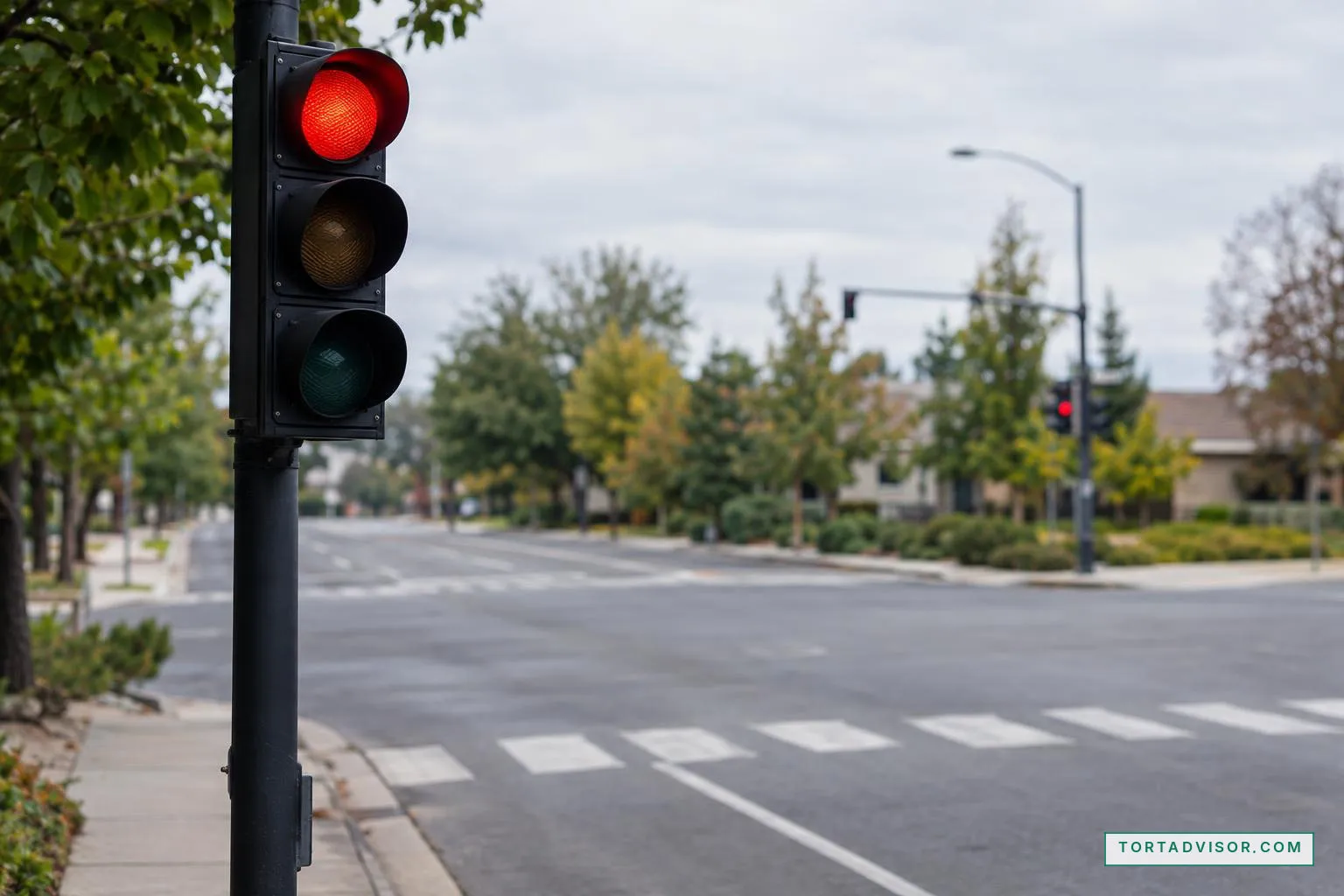
Start by identifying the traffic control that applied to each driver’s movement—not simply which vehicle struck the other. For a disputed side-impact collision, the key questions differ depending on whether the intersection had traffic signals or stop signs.
As a state-specific example, Virginia Code §§ 46.2-833 and 46.2-821 generally require drivers facing a steady red signal to stop and remain stopped, subject to statutory exceptions, including permitted movement under a green arrow. Drivers facing green must yield to vehicles lawfully within the intersection. At a stop-controlled intersection, a driver must stop and yield to approaching traffic that presents a hazard before proceeding.
When drivers dispute the signal
Ask which signal governed each driver’s specific movement: straight through the intersection or turning. Then ask whether either vehicle was already lawfully in the intersection. “I had a green light” does not, by itself, answer that second question.
When a stop sign controlled entry
Keep two questions separate: Did the driver stop? and Did the driver yield before entering? A driver’s account that they stopped addresses only the first. The next question is where the other vehicle was, and whether its approach presented a hazard when the stopped driver proceeded.
What if both drivers contributed to the collision?
If both drivers may have contributed to a T-bone collision, the compensation question is not simply which vehicle struck the other. Research should address each driver’s actions and the fault rules governing the claim.
Florida example: In covered negligence actions, a claimant’s share of fault proportionately reduces damages. A claimant found to be greater than 50 percent at fault for their own harm cannot recover damages under Florida Statutes § 768.81(2) and (6). That makes disputed responsibility important to both the potential reduction in compensation and whether recovery is available.
This Florida example is not an instruction to apply its threshold to a crash elsewhere. Start by identifying the jurisdiction governing your claim, then research its current rules. TortAdvisor’s guide to car accident fault rules by state can help organize that research. For a Florida collision, the discussion of Florida car accident fault and HB 837 offers a more focused next step.
Keep the factual questions separate from the legal research: What did each driver do, and what evidence supports that account? Avoid assigning fault percentages based only on the location of the vehicle damage.
Editorial check before publication: Please correct the state-rules pillar’s Florida entry to reflect the statutory threshold described above before publishing this section.
What evidence helps explain how the side impact happened?
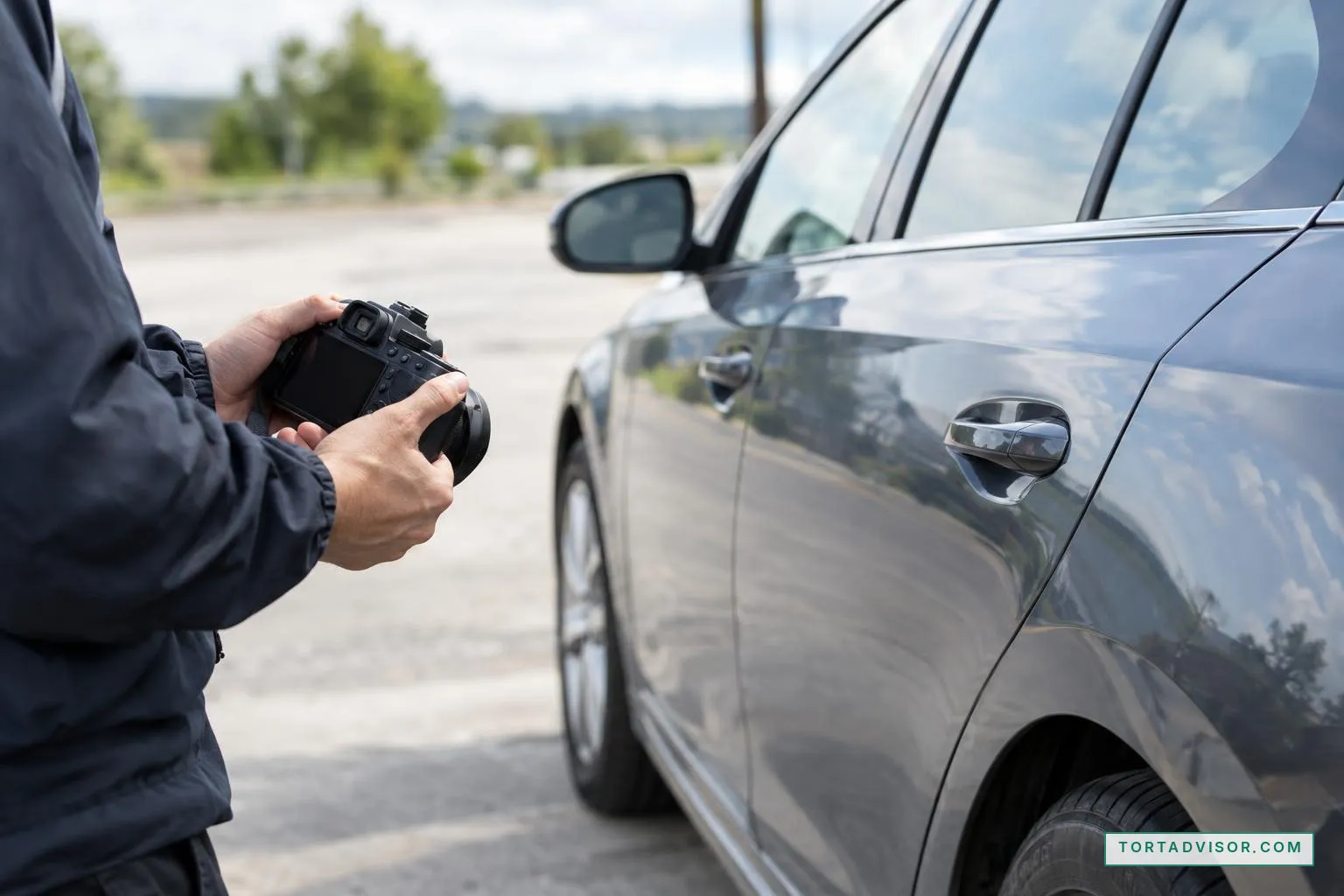
Start with what the evidence can help explain: where the vehicles made contact, how their paths may have crossed, and whether the available accounts fit the physical details. Treat these as questions to investigate—not conclusions drawn from a single photograph.
Through its Crash Investigation Sampling System, NHTSA’s research investigators document physical scene evidence, photograph and measure vehicle damage, interview crash occupants, and review medical records. This is a crash-research program, not a service that decides liability for your individual collision.
For a disputed T-bone crash, organize the evidence around these questions:
- What do damage photographs show about the contact location? Which parts of each vehicle appear damaged? Do the photographs show enough of both vehicles to compare the contact areas, rather than just one close-up?
- What scene details help explain the vehicle paths? How do the intersection layout, lane markings, and documented physical evidence fit with each driver’s description of approaching, turning, or crossing?
- How consistent are the available accounts? Where do occupants’ descriptions agree about direction and movement? Where do they conflict, and what remains unclear when compared with the scene and damage documentation?
Keep two questions separate: How did the vehicles make contact? and Which movement was permitted? A damage photograph may help you examine the first question without answering the second. Do not treat a particular dent pattern—or the fact that one vehicle struck another vehicle’s side—as a complete answer to who was at fault.
How do injuries and documented losses enter the compensation analysis?
Who contributed to a T-bone collision is a different question from what losses the collision caused. Keeping those questions separate can help you organize what happened without treating an injury or expense as proof of fault.
Florida illustration: The standard instructions address medical expenses, lost earnings or earning ability, and certain noneconomic losses, such as pain and suffering. Negligence must legally cause the loss, and motor-vehicle cases can involve additional limitations on damages. These are separate considerations under Florida civil jury instructions 401.12, 501.2 and 501.3; a listed category is not automatically recoverable in every case.
To prepare for understanding your own facts, consider organizing:
- Treatment records: A timeline of visits and the symptoms or limitations recorded.
- Expense records: Bills and receipts, with notes explaining what each expense relates to.
- Work-loss information: Dates missed, pay records and information about changes in work duties or hours.
This is a way to clarify the facts, not an insurance submission checklist. An overview of common motor vehicle accident injuries can provide background vocabulary, while your records describe your individual experience.
Keep vehicle-related expenses separate from injury-related records. If your car may be totaled, the guide to a total loss property damage claim explains vehicle valuation and disputes over a low offer.
For your next research step, TortAdvisor’s guide to car accident settlement amounts and payout factors provides context for understanding compensation questions—not a prediction of your outcome.
Use the fault questions to guide your next research step
Start with what you can document, and keep unanswered questions separate from conclusions. A useful research summary describes each driver’s movement, the traffic controls involved, the disputed details and the losses you have records to support.
For context, NHTSA’s crash research investigators document physical scene evidence, photograph and measure vehicle damage, interview occupants and review medical records. Those categories can help you organize your questions, but they do not establish who was at fault in your collision.
If you want to explore compensation concepts, TortAdvisor’s car accident settlement calculator is an optional educational research tool. Treat it as a starting point for learning, not a liability determination, settlement offer or guaranteed result.
TortAdvisor is an independent information site, not a law firm. For case-specific legal advice, consult a licensed attorney. If you need help finding or understanding the site’s educational materials, you can contact TortAdvisor about its resources.
A short worksheet for unanswered questions
- Which movement did each driver make? Note whether each vehicle was proceeding straight, turning or entering the intersection.
- Which traffic control applied? Identify the signal or sign facing each driver and what remains unknown.
- What facts remain disputed? Separate agreed details from conflicting accounts or missing evidence.
- Which losses have supporting records? List the records you have and the gaps you still need to understand.
Keep researching on TortAdvisor
Frequently asked questions
Does hitting the side of another car automatically mean I was at fault?
No—the location of the damage is not, by itself, an explanation of who caused the collision. For example, Florida’s civil jury instruction 401.12 addresses whether negligence legally caused the injury, rather than assigning blame simply by which vehicle struck the other. Focus your account on each driver’s movement and how those movements led to the impact.
Can a left-turning driver have the right of way in a T-bone accident?
Yes, depending on the signal and circumstances. In Virginia, § 46.2-825 distinguishes ordinary left turns across opposing traffic from turns directed by a separate left-turn signal. Section 46.2-833 also addresses green arrows and yielding to traffic lawfully within the intersection. These Virginia intersection rules illustrate why “the driver was turning left” does not settle the question; they are not nationwide rules.
Does stopping at a stop sign settle who had the right of way?
Stopping is only part of the question. Under § 46.2-821 in the Virginia traffic provisions linked above, a driver must also yield as required before proceeding into a stop-controlled intersection. When describing your crash, distinguish between coming to a stop and entering the intersection: where was the other vehicle, which direction was it traveling, and what happened as you moved forward?
What evidence helps when the drivers disagree about what happened?
Look beyond the two accounts to scene evidence, vehicle-damage photographs and measurements, occupant statements, and medical records. Those are among the materials NHTSA’s crash research investigators collect and review. They offer a useful framework for organizing what you have. NHTSA’s research methods do not determine fault in your individual collision or establish whether a particular item will be admissible in court.
Can shared fault reduce or prevent compensation?
Yes, depending on the applicable state law. Under Florida Statutes § 768.81, subsection (2) reduces damages proportionally for a claimant’s share of fault. Subsection (6) bars recovery for a claimant found more than 50 percent at fault in covered negligence actions. That threshold is Florida-specific; it should not be used to predict the result of a crash governed by another state’s law.
Sources
- Code of Virginia, Title 46.2, Chapter 8: Regulation of Traffic · Virginia General Assembly
- Crash Investigation Sampling System · National Highway Traffic Safety Administration
- Florida Standard Jury Instructions in Civil Cases · Florida Supreme Court Committee on Standard Jury Instructions in Civil Cases, hosted by The Florida Bar · 2026-09-16
This article is general information, not legal advice. Laws and deadlines vary by state and change over time; check the linked sources or speak with a licensed attorney about your situation.
Start with official sources for San Antonio crash updates, then learn how to interpret their limitations. This guide keeps live incident information separate from the records needed to research an injury claim.
A hospital stay raises practical questions about bills, missed work and continuing care. This California-focused guide explains the evidence behind injury compensation and distinguishes medical coverage from a damages claim.
Does another driver's traffic violation answer the question of fault? This guide examines negligence per se through clearly labeled state examples, with attention to causation, exceptions and shared responsibility.