Short answer: This article explains the key facts, eligibility issues, settlement factors, deadlines, and source-backed updates related to this legal topic. Results vary by case facts, evidence, jurisdiction, and representation.
📋 Table of Contents
Understanding the Widespread Legal Battle Against Bayer and Monsanto
Monsanto roundup lawsuits are one of the largest mass torts in U.S. history, with thousands alleging the popular herbicide caused their cancer. Here’s a summary:
Key Facts About Roundup Lawsuits:
- What they allege: Roundup’s active ingredient, glyphosate, causes Non-Hodgkin’s Lymphoma and other cancers
- Who’s being sued: Bayer AG (which acquired Monsanto in 2018)
- Current status: Approximately 165,000 lawsuits filed, with about 61,000 still pending
- Settlements to date: Bayer has paid over $11 billion to resolve nearly 100,000 claims
- Recent verdicts: Juries awarded over $2 billion to plaintiffs in 2023 alone
- Eligibility: You may qualify if you used Roundup regularly and were diagnosed with Non-Hodgkin’s Lymphoma or related cancers
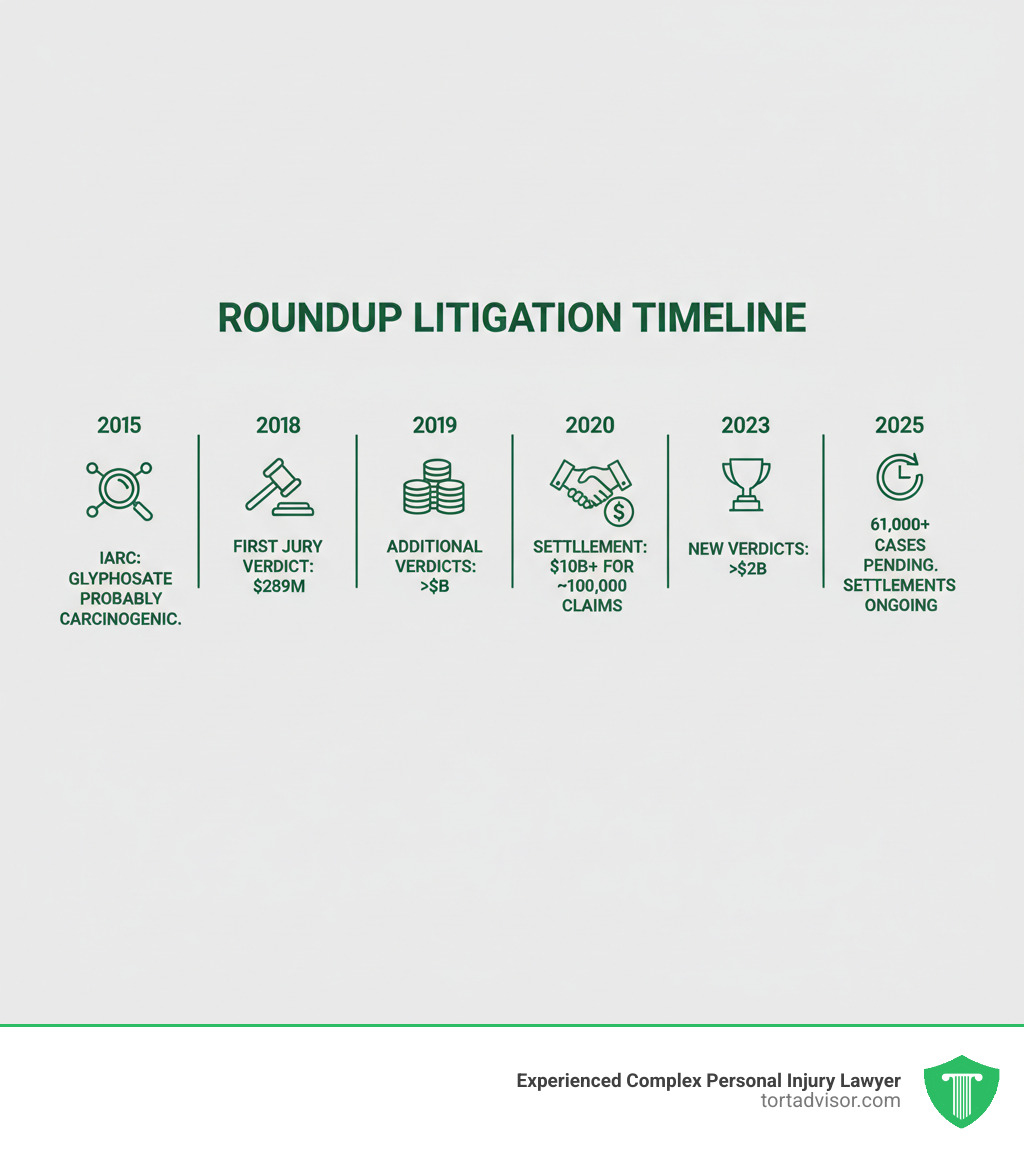
The controversy centers on glyphosate, which the International Agency for Research on Cancer classified as “probably carcinogenic to humans” in 2015. Plaintiffs argue Monsanto knew of the cancer risks for decades but failed to warn consumers, citing internal “Monsanto Papers” that allegedly show the company ghostwrote studies and misled the public.
Bayer maintains glyphosate is safe, citing the EPA’s position that it is “not likely to be carcinogenic to humans.” Despite this, juries have repeatedly sided with victims, awarding billions in verdicts and settlements.
I’m Mason Arnao. My work involves connecting individuals with experienced legal representation for complex personal injury cases. I’ve seen how overwhelming monsanto roundup lawsuits can be. Understanding your legal options is the first step toward securing the compensation you deserve.
The Roundup Controversy: What You Need to Know
The legal battles surrounding Roundup come down to fundamental questions: Is this popular weed killer dangerous? And did the company know about it? Let’s break down what’s at stake in these monsanto roundup lawsuits.
What is Roundup and Its Link to Cancer?
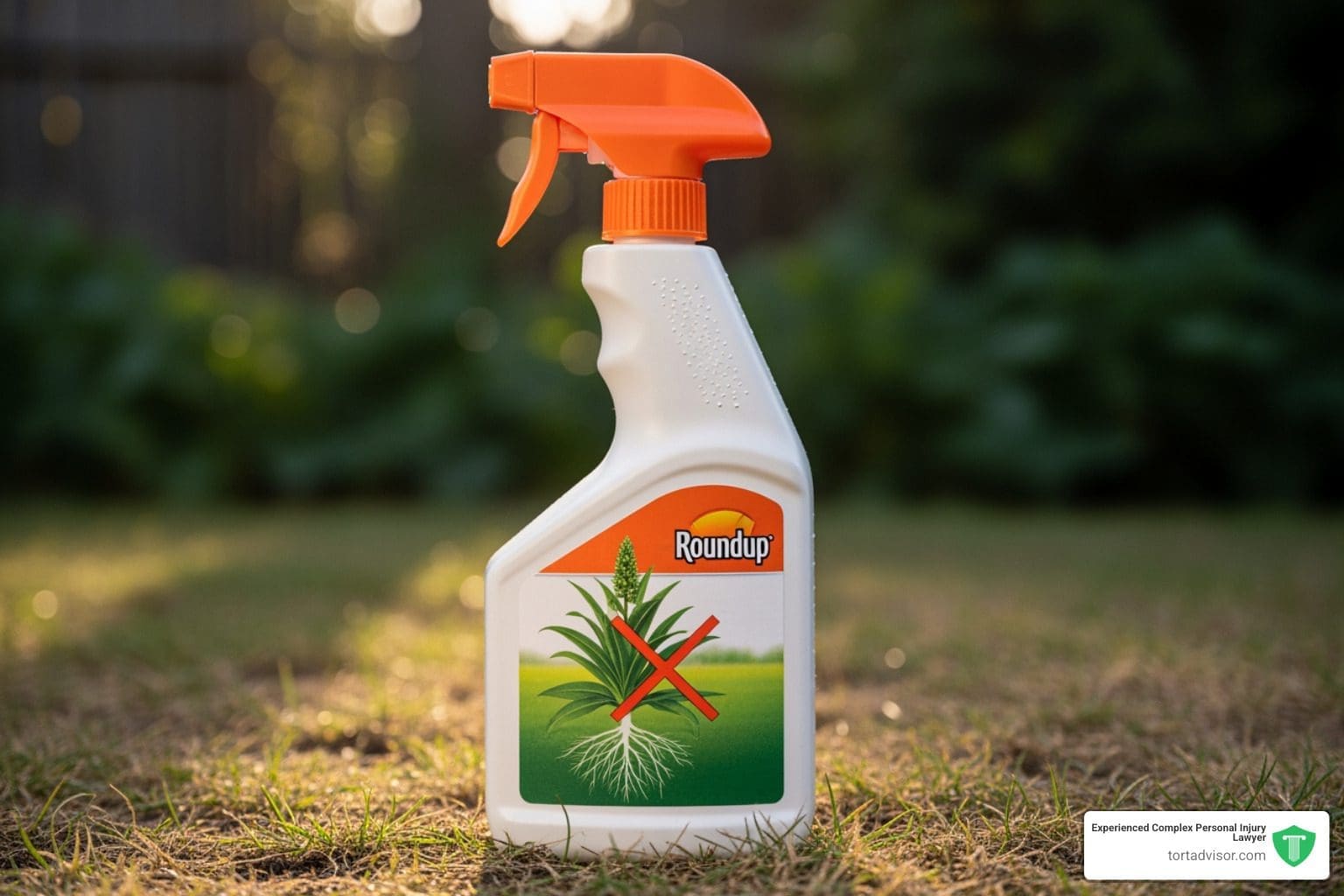
For decades, Roundup was the world’s most popular weed killer, used by homeowners and farmers alike. Its active ingredient, glyphosate, kills plants by blocking a key enzyme. Monsanto long claimed it was safe for humans.
In March 2015, the International Agency for Research on Cancer (IARC), part of the World Health Organization, classified glyphosate as “probably carcinogenic to humans.” This finding triggered tens of thousands of lawsuits. The IARC found a significant link between glyphosate exposure and Non-Hodgkin’s Lymphoma (NHL), a cancer of the immune system. Supporting this, a University of Washington study found a 41% increased risk of NHL for those exposed to glyphosate.
Lawsuits link Roundup exposure to several NHL subtypes, including Diffuse Large B-cell lymphoma (DLBCL) and Follicular lymphoma. Early symptoms can resemble the flu: swollen lymph nodes, fever, night sweats, weight loss, and fatigue. A cancer diagnosis is life-altering, bringing physical, emotional, and financial strain from treatments and missed work.

The Basis of the Monsanto Roundup Lawsuits
The monsanto roundup lawsuits are based on three main legal theories, all alleging Monsanto knew Roundup was dangerous but sold it without proper warnings.
- Failure to warn is the core claim. Plaintiffs argue Monsanto intentionally misled the public about cancer risks, as product labels lacked any cancer warning.
- Design defect claims argue the product was inherently dangerous. Research suggests other ingredients in the Roundup formula could make glyphosate even more toxic.
- Negligence claims allege Monsanto actively suppressed the truth. For example, Dewayne Johnson’s complaint alleged Monsanto misled the public and government agencies about the cancer risk.
The “Monsanto Papers”—internal documents unsealed during litigation—provided key evidence. They allegedly show Monsanto ghostwrote scientific studies, suppressed unfavorable findings, and lobbied regulators to downplay safety concerns. The documents suggest a systematic effort to protect profits over public health.
Bayer/Monsanto’s Defense Strategy
Bayer, which acquired Monsanto in 2018, has mounted an aggressive defense.
Their main defense is the EPA’s position. The EPA has stated that glyphosate is not likely to be carcinogenic to humans. Bayer argues that since the EPA didn’t require a cancer warning, they shouldn’t be held liable for its absence.
This leads to their federal preemption argument: that federal labeling laws (overseen by the EPA) override state laws that might require a cancer warning. While some courts have rejected this, Bayer won a key victory on this point in the 3rd Circuit in August 2024. The issue remains legally contested.
Bayer also highlights scientific studies and other global regulatory bodies that have found no link between glyphosate and cancer, arguing the IARC’s conclusion is an outlier. In its official answer to complaints, Monsanto has consistently denied all allegations, maintaining Roundup is safe when used as directed. This clash of science, regulation, and internal documents has created a complex legal battle with thousands of lives in the balance.
Landmark Verdicts and the Current State of Monsanto Roundup Lawsuits

Bayer’s $63 billion acquisition of Monsanto in 2018 came with a massive legal liability. Since then, juries have awarded billions in damages to cancer victims in a series of stunning courtroom victories.
Major Trial Outcomes and Jury Awards
The first major verdict came in August 2018. A jury awarded Dewayne Johnson, a former school groundskeeper, $289 million after finding Roundup caused his non-Hodgkin’s lymphoma. Though later reduced on appeal to $20.5 million, the verdict sent a clear message: a jury believed Roundup caused cancer and Monsanto failed to warn users.
In March 2019, Edwin Hardeman won the first federal bellwether trial, receiving an $80 million verdict (later reduced to $25 million). In May 2019, a jury awarded couple Alva and Alberta Pilliod a staggering $2.055 billion. Their complaint argued the product’s risks outweighed its benefits. The award was later reduced by a judge to $86.7 million, but the initial verdict showed jury outrage at Monsanto’s conduct.
In Monsanto’s home state of Missouri, a jury awarded four plaintiffs $1.56 billion in October 2023. The award was reduced to $611 million, a judgment that became largely final after the Missouri Supreme Court declined to hear Bayer’s appeal.
The trend of massive verdicts continued. In 2023, plaintiffs won over $2 billion. In January 2024, a Pennsylvania jury awarded John McKivison $2.25 billion (reduced to $400 million). A Georgia jury awarded John Barnes $2.065 billion in March 2025. The large punitive damages in these cases show that juries consistently found Monsanto acted with malice or reckless disregard for public safety.
Bayer’s Response and Litigation Strategy
Facing this onslaught of verdicts, Bayer has pursued a multi-pronged strategy of settlements, product changes, and legal appeals. In 2020, it announced a plan to pay over $10 billion to settle about 100,000 lawsuits. To date, the company has paid over $11 billion in settlements.
As part of its five-point plan, Bayer also pulled glyphosate-based Roundup from the U.S. residential market by 2023. This move aimed to reduce future liability without admitting the product was dangerous.
Simultaneously, Bayer has aggressively appealed verdicts, arguing that federal EPA regulations should preempt state-law claims. While the Supreme Court has declined to hear their appeals, Bayer did win a key preemption argument in the 3rd Circuit Court of Appeals in August 2024. The company is also lobbying for legislative protection to block future lawsuits.
Current Status of the Monsanto Roundup Lawsuits
Despite Bayer’s efforts, the monsanto roundup lawsuits remain a massive legal challenge. To date, about 165,000 Roundup lawsuits have been filed. Bayer has settled nearly 100,000, but roughly 61,000 cases are still pending.
Many federal cases are consolidated in a multidistrict litigation (MDL) in the Northern District of California to streamline proceedings and encourage settlement. Thousands more lawsuits are active in state courts, particularly in California and Missouri.
Outcomes are not guaranteed. While plaintiffs have won eight major trials, Bayer has won ten. However, the trend of large plaintiff verdicts continued through 2023, 2024, and 2025. Bayer continues to settle cases, but new lawsuits are still being filed. For those with extensive Roundup use and an NHL diagnosis, the window to file a claim is still open but won’t be forever.
Are You Eligible to File a Roundup Lawsuit?
If you’ve been diagnosed with cancer after using Roundup, you may have a legal claim. Understanding your eligibility is the first step. At Tort Advisor, we connect clients with experienced attorneys who can evaluate your potential monsanto roundup lawsuit.
Key Eligibility Criteria
Qualifying for a lawsuit depends on several key factors. The strength of your case relies on proving each element:
- Significant exposure to Roundup is required. This means regular, consistent use over months or years. Occupational exposure (e.g., daily or weekly application) is considered significant.
- Proof of exposure is crucial. Evidence can include purchase receipts, photos, employment records for occupational use, and witness statements from family, friends, or coworkers.
- A qualifying cancer diagnosis is necessary. Most successful lawsuits involve Non-Hodgkin’s Lymphoma (NHL) or its subtypes, such as Diffuse Large B-cell Lymphoma (DLBCL), Follicular Lymphoma, and Chronic Lymphocytic Leukemia (CLL). An attorney can review your medical records to see if your diagnosis qualifies.
- Causation must be established. You must show that Roundup exposure was a substantial factor in causing your cancer. This is the most challenging part and requires expert medical testimony linking your exposure, medical history, and diagnosis.
Who Can File a Claim?
Those who used Roundup regularly as part of their work or home life are most affected. You may have a claim if you are in one of these groups and have a qualifying cancer diagnosis:
- Agricultural workers and farmers with prolonged, intense exposure.
- Groundskeepers and landscapers who regularly used Roundup for work.
- Nursery employees and professional gardeners who frequently handled the herbicide.
- Homeowners with substantial, long-term use over many years.
- Family members filing wrongful death claims if a loved one died from a qualifying cancer linked to significant Roundup exposure.

Understanding the Statute of Limitations
You do not have unlimited time to file a lawsuit. Every state has a statute of limitations, a legal deadline for taking action. If you miss this deadline, you lose your right to seek compensation.
The deadline varies by state, usually one to three years. The clock typically starts not at exposure, but when you were diagnosed or reasonably should have found the link between your illness and Roundup use. This is known as the “discovery rule.”
For example, if you were diagnosed in 2023 but only learned of the Roundup link in 2024, the clock might start in 2024. These rules are complex and vary by state.
The bottom line: don’t wait. Consulting an attorney promptly is crucial. A lawyer can determine the deadline in your state and file your case before time runs out. Waiting makes it harder to gather evidence and build a strong case. If you’ve been diagnosed with Non-Hodgkin’s Lymphoma after Roundup exposure, reaching out for a free case evaluation is the best way to protect your rights.
Frequently Asked Questions about Roundup Lawsuits
If you’re considering a monsanto roundup lawsuit, you probably have questions. Here are answers to the most common concerns.
What kind of compensation can I receive from a Roundup lawsuit?
Successful monsanto roundup lawsuits can provide compensation for three main types of damages:
- Economic damages cover calculable financial losses. This includes past and future medical bills (treatment, medication, hospital stays), lost wages, and reduced future earning capacity.
- Non-economic damages compensate for intangible losses, such as pain and suffering, emotional distress, and loss of enjoyment of life. They acknowledge the profound personal impact of a cancer diagnosis.
- Punitive damages may be awarded to punish the defendant for reckless or malicious conduct. The massive punitive awards in many Roundup verdicts reflect juries’ findings that Monsanto knowingly concealed cancer risks.
Compensation amounts vary widely based on the specifics of each case, from hundreds of thousands in settlements to multi-million dollar verdicts.
How much does it cost to hire a lawyer for a Roundup lawsuit?
Hiring an attorney for a monsanto roundup lawsuit typically costs nothing upfront. Most lawyers for these cases work on a contingency fee basis.
This means you pay no out-of-pocket fees. The attorney’s fee is a pre-agreed percentage of the compensation you receive from a settlement or verdict. If you don’t receive compensation, you owe no attorney fees. This system allows you to seek justice without financial risk.
Will I have to go to court if I file a lawsuit?
Probably not. Filing a monsanto roundup lawsuit doesn’t mean you will have to go to court. The multidistrict litigation (MDL) process is designed to encourage mass settlements. The vast majority of cases are resolved through negotiated settlements. Bayer has already settled nearly 100,000 lawsuits, meaning most plaintiffs never went to trial.
However, going to trial is an option if a settlement offer is not fair. The decision to settle or go to trial is ultimately yours, made with your attorney’s guidance.
If you or a loved one has been diagnosed with Non-Hodgkin’s Lymphoma after exposure to Roundup, contact Tort Advisor to connect with an experienced personal injury attorney for a free case evaluation and find out if you qualify for compensation.
Conclusion
The monsanto roundup lawsuits represent a historic battle for corporate accountability. Juries have awarded billions to victims who developed cancer after using Roundup, sending a clear message about corporate responsibility and the duty to protect consumers.
While Bayer has settled nearly 100,000 claims for over $11 billion, about 61,000 cases are still pending. New plaintiffs continue to come forward as they connect their cancer diagnosis to past Roundup exposure. Each case represents a person whose life was upended by a diagnosis that may have been preventable.
If you or a loved one was diagnosed with a qualifying cancer like Non-Hodgkin’s Lymphoma after significant exposure to Roundup, you must act quickly. State-specific statutes of limitations create deadlines for filing a claim. Understanding your legal options is the first step toward holding corporations accountable.
At Tort Advisor, we connect clients with top-rated specialty attorneys who have proven track records in handling complex monsanto roundup lawsuits. These experienced lawyers work on a contingency fee basis, meaning you pay nothing upfront and nothing at all if your case isn’t successful. They’ll evaluate your unique situation, gather the necessary evidence, and fight to secure the compensation you deserve.
Contact Tort Advisor to connect with an experienced personal injury attorney for a free case evaluation. You’ve already faced enough challenges with your health—let us help you steer the legal process with confidence and clarity.
Related Posts

Ready to apply for SSI? Navigate the full ssi application process with our step-by-step guide.

Hire a Denver product liability attorney now. Get expert help for defective product injuries, strict liability claims & max compensation in Colorado.