
VA Disability Claim Denial & Workers’ Comp News 2026

VA Disability Claim Denials and Workers’ Compensation News: What Changed in 2026
Mason Arnao
VA, GAO, DOL and state agencies
VA and workers’ compensation denials
If you are researching a VA disability claim denial or a workers’ compensation dispute, this 2026 update explains the latest confirmed developments, the appeal paths that may be available, and the evidence that can matter after a denial.
Find out if you may have a claim
Answer a few questions and a trained case advisor will review your situation — most people finish in about a minute.
- Free — no cost, no obligation
- About a minute to complete
- Reviewed by a trained case advisor
- Nothing you submit is published
Your details are sent over a secure connection and reviewed confidentially.
Direct answer
A VA disability denial is not automatically final. Veterans generally may choose a Supplemental Claim, Higher-Level Review, or Board Appeal, depending on the decision and evidence. Workers’ compensation appeals are governed mainly by state law, so deadlines and procedures differ by jurisdiction.
- VA reported processing more than 2 million disability benefits claims in fiscal year 2026 by June 1, with an average decision time of 78.6 days at the end of May and claims-processing accuracy above 94%.
- A January 2026 GAO report found that VA had updated medical criteria for 11 of 15 body systems, while earnings-loss calculations still relied on information dating to 1945.
- The “implicit denial” doctrine is not a new 2026 TDIU rule. Whether an unaddressed issue was implicitly denied is fact-specific, so veterans should not assume that silence always has the same legal effect.
- Workers’ compensation rules remain state-specific. In 2026, states continued changing benefit rates, procedures, medical-review rules, and dispute requirements.
- Deadlines can affect both VA and workers’ compensation rights. Read the decision letter and verify the correct appeal path before filing.
Facing a VA Disability or Workers’ Comp Denial?
Answer a few questions so the intake team can review the type of denial, the date of the decision, and the next-step options that may apply. No obligation and no upfront cost.
VA Disability Claim Denial News: Faster Processing, but Review Rights Still Matter
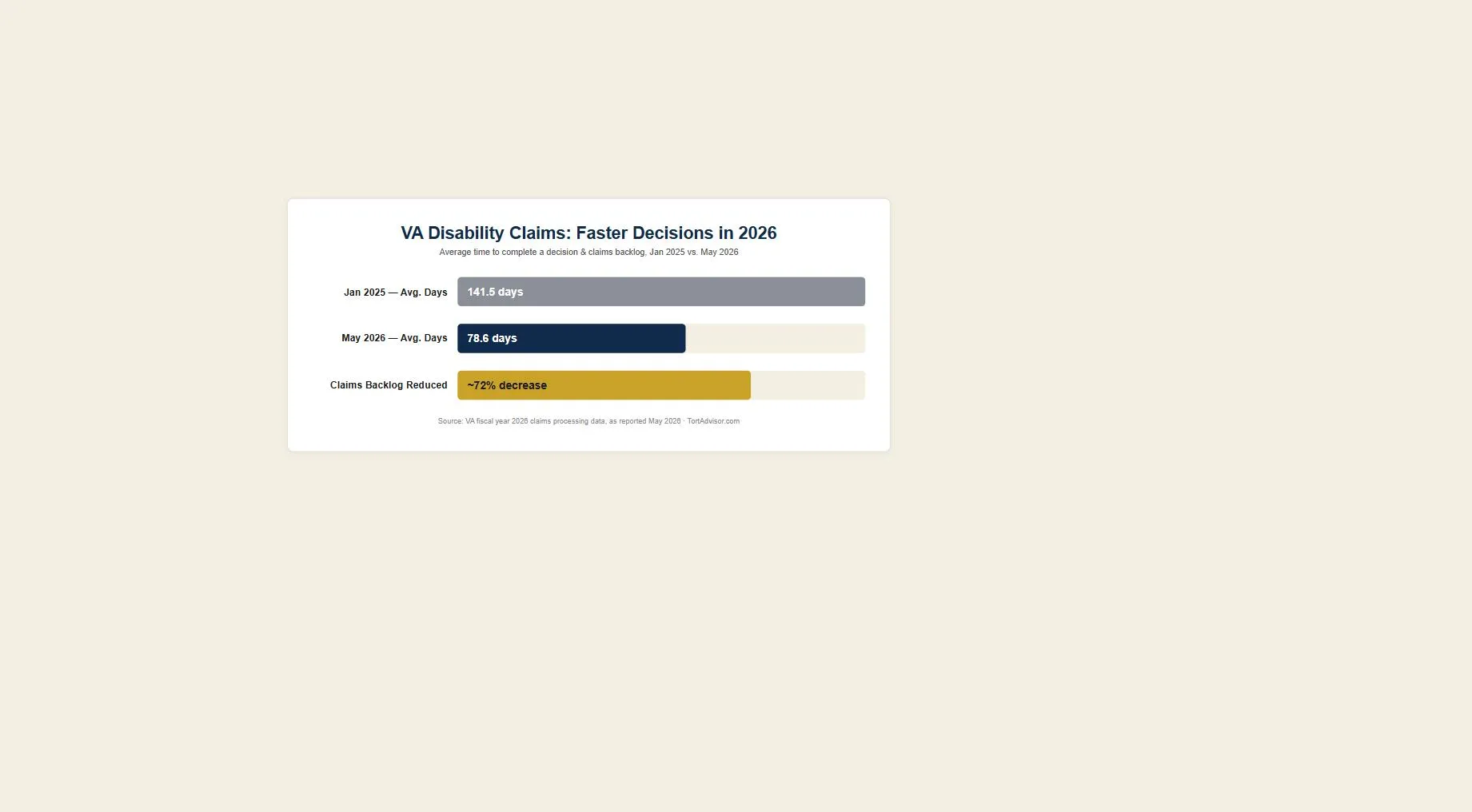
The Department of Veterans Affairs reported that it processed more than 2 million disability benefits claims in fiscal year 2026 by June 1. VA also reported an average time of 78.6 days to complete a decision at the end of May 2026, compared with 141.5 days on January 20, 2025. The agency said the benefits backlog had fallen 72% during that period and that claims-processing accuracy was above 94%.
Those figures describe systemwide processing, not the outcome of any individual claim. A faster decision can still contain a factual, medical, or procedural issue. Veterans who disagree with a decision should review the reason given, the evidence VA considered, and the available VA decision-review options.
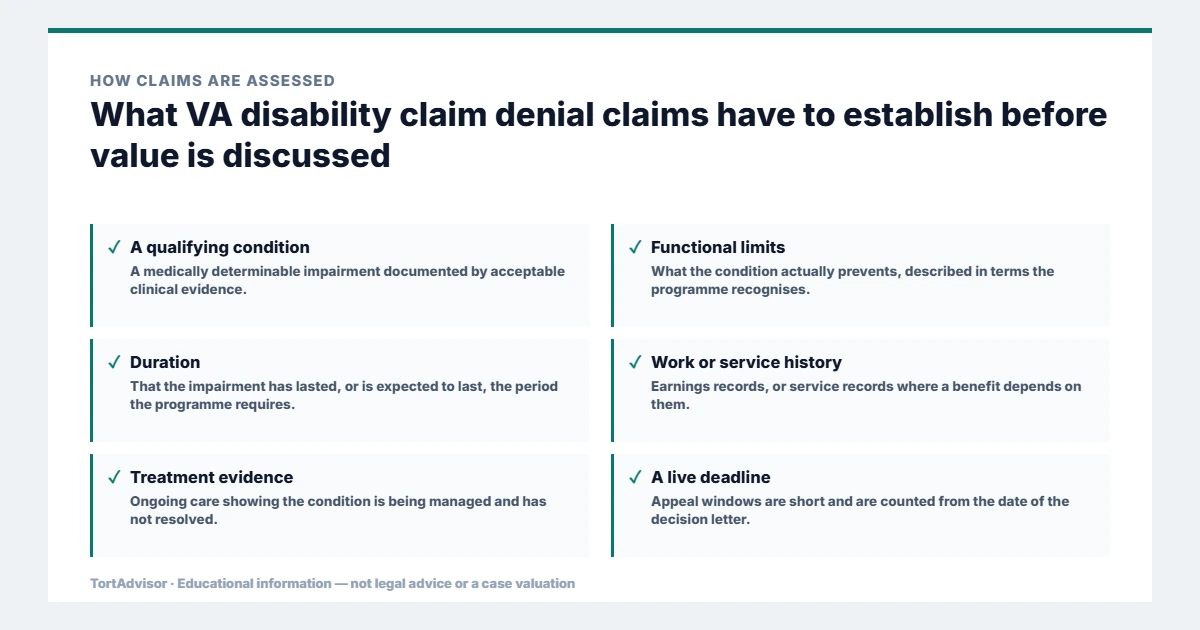
For a broader explanation of documentation, representation, and appeal support, review TortAdvisor’s disability claim assistance guide.
TDIU in 2026: What the Implicit-Denial Doctrine Actually Means
Total Disability based on Individual Unemployability, commonly called TDIU or Individual Unemployability, may pay at the 100% disability rate when service-connected conditions prevent a veteran from maintaining substantially gainful employment, even when the combined schedular rating is below 100%.
VA identifies VA Form 21-8940 as the application used to request Individual Unemployability benefits. Evidence may include medical records, employment history, functional limitations, and information from a former employer.
Important correction
There is no confirmed new 2026 rule making every VA failure to mention TDIU an automatic implicit denial. The implicit-denial doctrine predates 2026 and is applied through a fact-specific legal analysis. Do not rely on silence alone to calculate an appeal deadline.
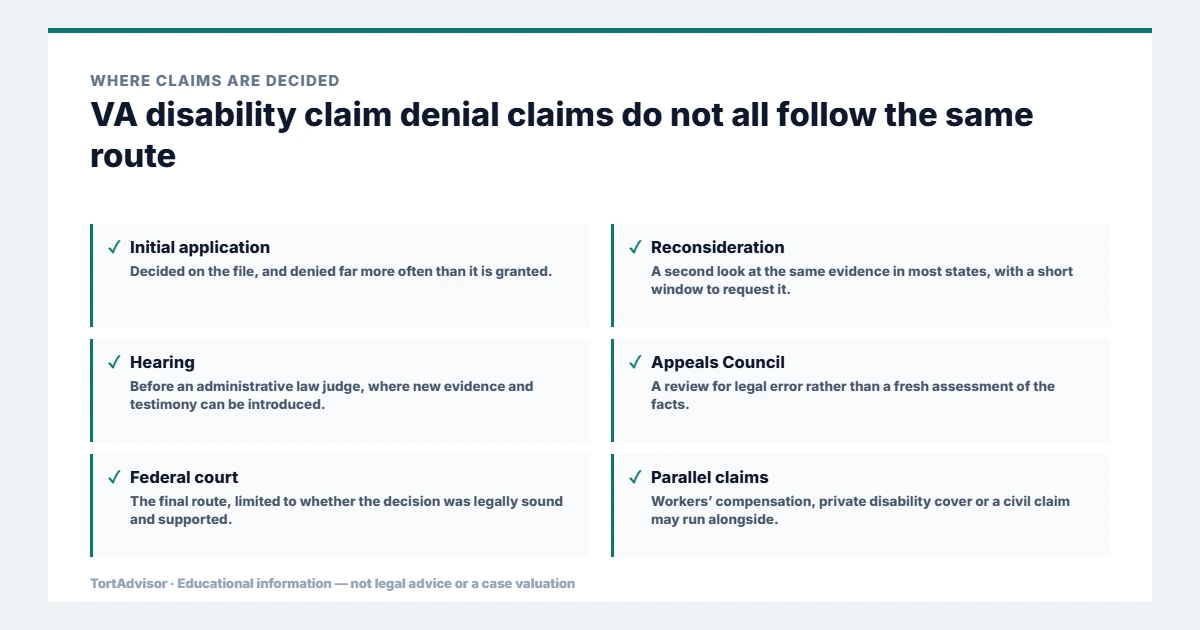
If a decision expressly denies TDIU, or if you believe VA failed to address a reasonably raised TDIU issue, review the complete decision and procedural history with a VA-accredited representative. VA currently offers three primary decision-review paths:
- Supplemental Claim: used when you have new and relevant evidence.
- Higher-Level Review: asks a senior reviewer to reconsider the existing record without new evidence.
- Board Appeal: asks a Veterans Law Judge to review the decision.
VA generally states that a Higher-Level Review or Board Appeal must be requested within one year of the date on the applicable decision letter. The correct option depends on the claim history, the evidence you have, and the issue being challenged.
GAO Report: VA Ratings Still Rely in Part on Outdated Criteria
A January 2026 U.S. Government Accountability Office report found that VA had updated medical information for 11 of the 15 body systems in its disability rating schedule as of December 2025. VA planned to complete the remaining four systems during fiscal year 2026, about a decade after the agency’s original target.
GAO also found that VA had not yet incorporated earnings-loss information from its studies into the rating schedule. As of January 2026, earnings-loss calculations still relied on information from 1945. GAO warned that a schedule that does not fully reflect current medicine and labor-market conditions may overcompensate some veterans and undercompensate others.
For someone facing a VA disability claim denial or a rating believed to be too low, this does not automatically establish an error. It does, however, reinforce the importance of current medical evidence, a clear service connection, and documentation showing how the condition affects work and daily functioning.
Workers’ Compensation News: 2026 Changes Remain State-Specific
There is no single national workers’ compensation denial rule for private-sector and most state or local employees. The U.S. Department of Labor directs those workers to the workers’ compensation agency in the state where the claim is handled. Federal employees and certain other groups use separate federal programs.
Two examples illustrate how 2026 developments differ by jurisdiction:
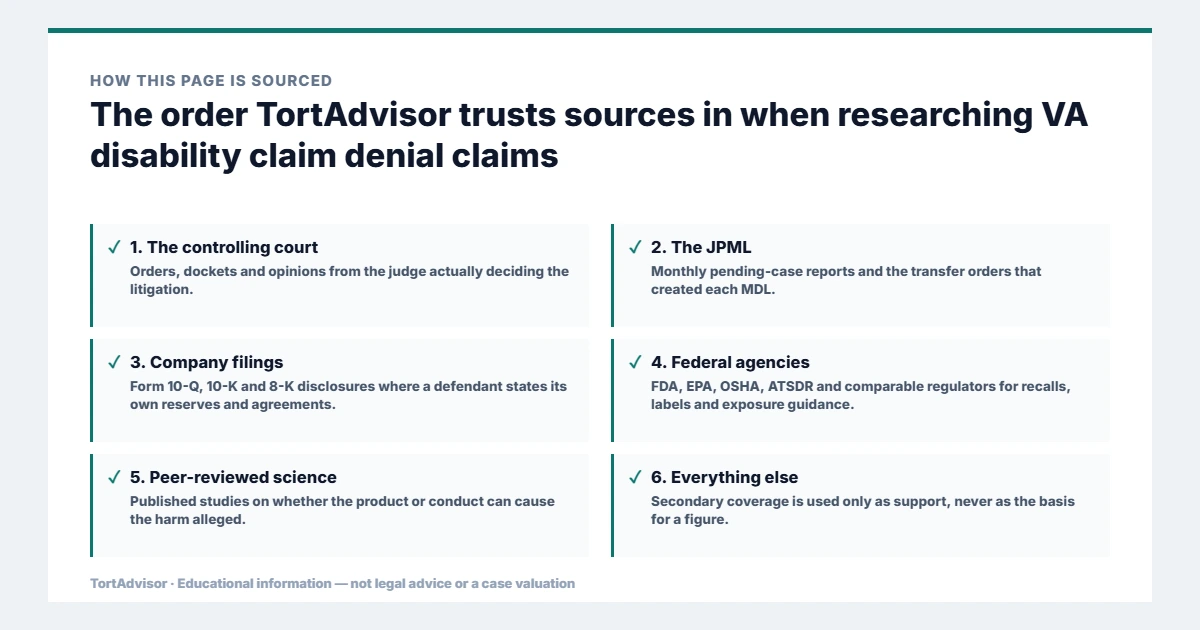
Every status, deadline and figure published on this page about VA disability claim denial claims is traced to a primary source before it appears.
- Wisconsin: 2025 Wisconsin Act 145 took effect on April 1, 2026 and changed several aspects of the state’s workers’ compensation law, including procedures, benefits, and dispute-related provisions.
- Texas: the Division of Workers’ Compensation finalized a 2026 medical quality-review audit focused on the medical necessity and appropriateness of topical analgesic prescriptions.
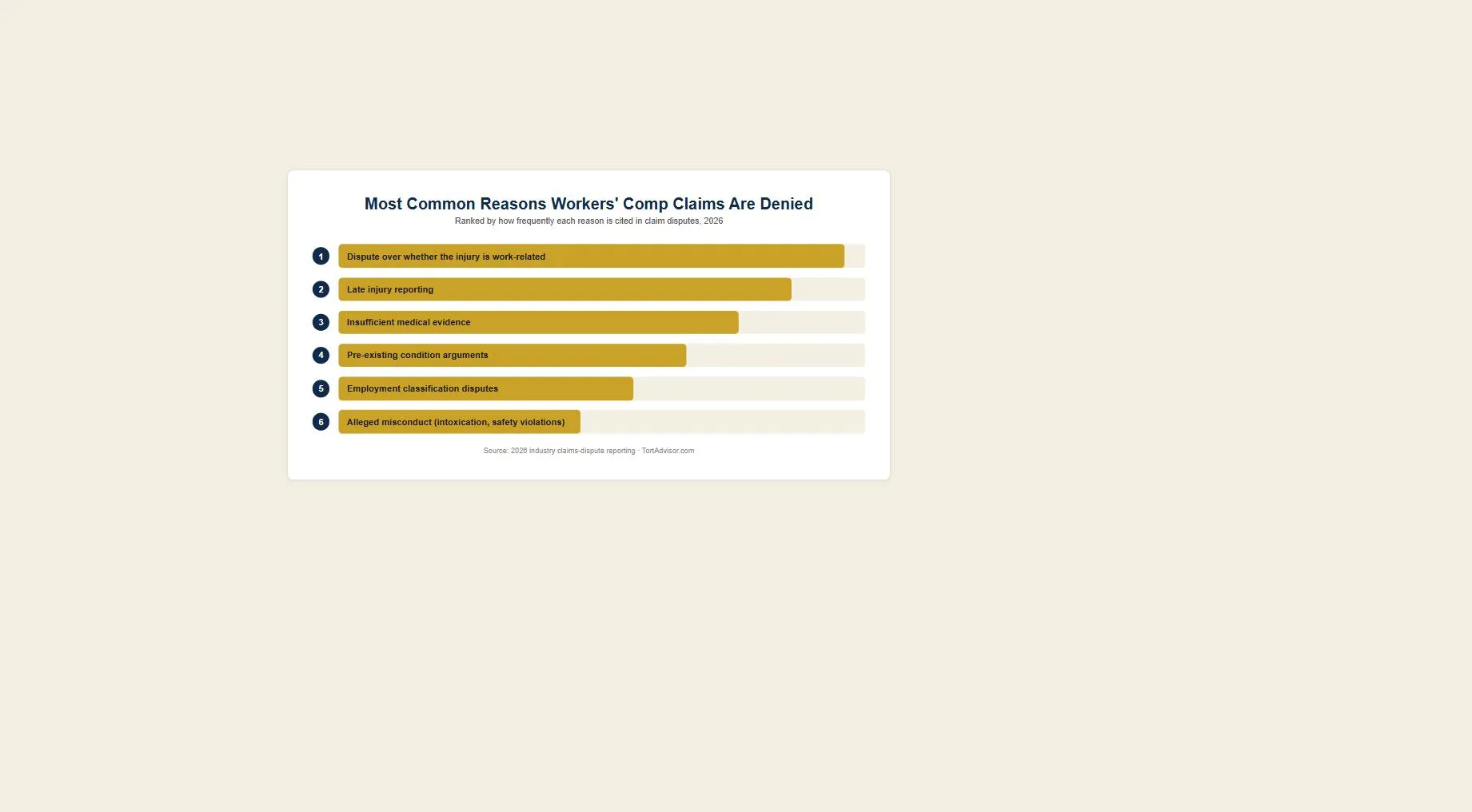
Common issues that may lead to a denial or dispute include:
- Whether the injury is work-related: the insurer disputes that the condition arose from job duties or a workplace event.
- Late notice or filing: the employee did not report the injury or submit the claim within the applicable deadline.
- Insufficient medical evidence: the records do not adequately connect the diagnosis, treatment, and restrictions to the work injury.
- Pre-existing condition arguments: the insurer attributes the symptoms to a condition that existed before the workplace incident.
- Employment-status disputes: the employer or insurer claims the worker was an independent contractor rather than an employee.
- Misconduct or statutory exclusions: the insurer raises intoxication, safety, notice, or another defense recognized by the applicable law.
Claims involving repetitive stress, cumulative trauma, or occupational disease may require a more detailed medical and employment record because the alleged injury develops over time rather than from one identifiable event. Learn more in TortAdvisor’s workers’ compensation lawsuit and workplace injury guide.
What to Do After a VA Disability Claim Denial or Workers’ Comp Denial
A denial letter should be treated as a time-sensitive legal document. The next step depends on the agency, jurisdiction, reason for denial, and evidence already in the record.
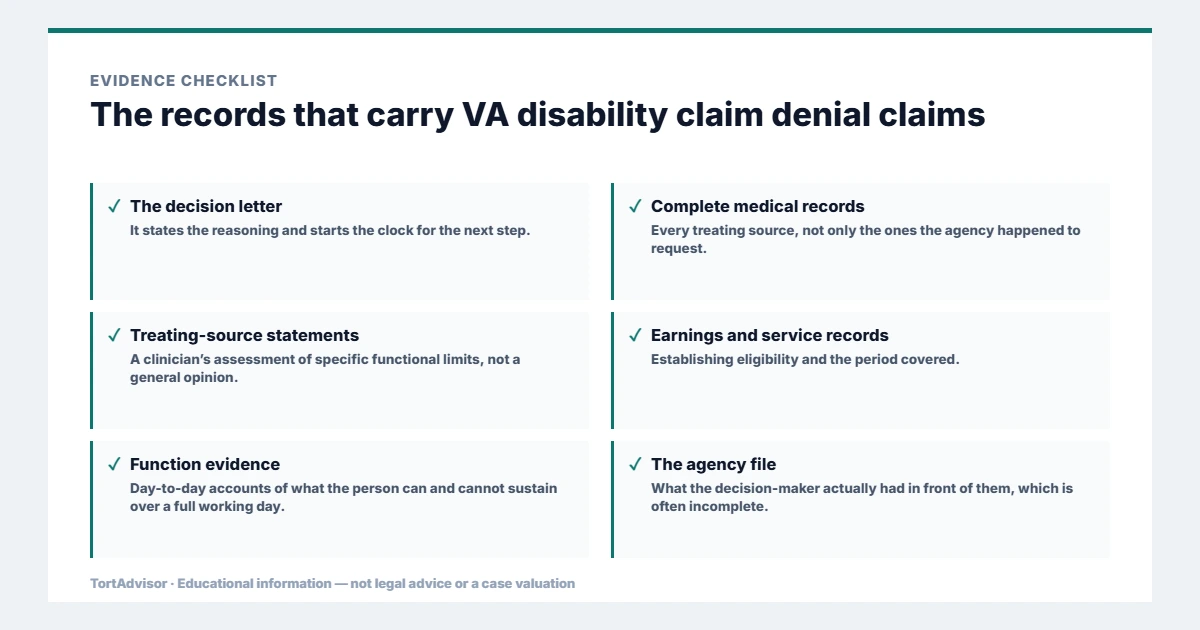
- Read the entire decision. Identify each issue decided, the stated reason, the evidence considered, and the review or appeal instructions.
- Calendar the deadline immediately. VA review deadlines and state workers’ compensation deadlines are not interchangeable. Use the date on the decision letter and confirm the controlling rule.
- Match the evidence to the reason for denial. Do not submit large volumes of unrelated records. Obtain evidence that directly addresses the missing service connection, work connection, diagnosis, functional limitation, employment history, or procedural defect.
- Continue medically appropriate treatment. Follow your clinician’s recommendations and keep organized copies of medical records, work restrictions, bills, and communications.
- Use the correct review path. For VA claims, compare a Supplemental Claim, Higher-Level Review, and Board Appeal. For workers’ compensation, consult the state agency or federal program named in the decision.
- Verify the representative. Veterans should confirm that a person offering representation is VA-accredited. Workers should verify attorney licensing and experience in the applicable state system.
An injured worker who cannot return to substantial employment may also need to understand how a workers’ compensation claim can interact with Social Security Disability Insurance benefits. These programs have different eligibility rules and should not be treated as substitutes for one another.
If a third party, defective product, toxic exposure, or negligent contractor may have contributed to the injury, review TortAdvisor’s personal injury lawsuits guide. Veterans with alleged firefighting-foam exposure may also find the AFFF firefighting foam lawsuit guide relevant because a civil claim and VA benefits can involve different defendants, standards, and remedies.
Denied and not sure what comes next?
A case review can help identify the applicable appeal path, the deadline shown in your decision, and the evidence that may be missing.
Legal and benefits disclaimer
This page provides general educational information and is not legal, medical, or benefits advice. VA and workers’ compensation deadlines vary by decision, claim type, jurisdiction, and procedural history. Results are not guaranteed. Contact the responsible agency or a qualified, accredited professional for advice about a specific claim.
Primary Sources
- U.S. Department of Veterans Affairs: VA Processes 2M Disability Benefits Claims in Record Time
- U.S. Department of Veterans Affairs: Decision Reviews and Appeals
- U.S. Department of Veterans Affairs: Higher-Level Reviews
- U.S. Department of Veterans Affairs: Board Appeals
- U.S. Department of Veterans Affairs: VA Form 21-8940
- U.S. GAO: VA Disability Benefits, GAO-26-108844
- U.S. Department of Labor: Workers’ Compensation
- Wisconsin Legislative Council: 2025 Wisconsin Act 145 Memorandum
- Texas Department of Insurance, Division of Workers’ Compensation
Still unsure where you stand?
Have a trained case advisor review your own facts — free, confidential, and with no obligation.
- Free — no cost, no obligation
- About a minute to complete
- Reviewed by a trained case advisor
- Nothing you submit is published
Your details are sent over a secure connection and reviewed confidentially.
Frequently Asked Questions
What should I do first after a VA disability claim denial?
Read the complete decision letter and identify the issue denied, the reason VA gave, the evidence considered, and the deadline. Then compare the three primary review options: a Supplemental Claim, Higher-Level Review, or Board Appeal.
Is a VA failure to mention TDIU automatically an implicit denial?
No. The implicit-denial doctrine is fact-specific and predates 2026. Whether VA silence legally resolved a TDIU issue depends on the wording of the decision, the issues raised, the notice given, and the procedural history. Do not calculate a deadline from silence alone without qualified review.
How long did VA report disability decisions were taking in 2026?
VA reported an average time of 78.6 days to complete a decision at the end of May 2026. An individual claim may take more or less time depending on its complexity, the number of conditions claimed, examinations, and the evidence VA must obtain.
What are the three main VA decision-review options?
A Supplemental Claim allows new and relevant evidence, a Higher-Level Review asks a senior reviewer to reconsider the existing record, and a Board Appeal asks a Veterans Law Judge to review the case. The available path depends on the type and history of the decision.
Why are workers’ compensation claims denied?
Disputes often involve whether the injury is work-related, notice or filing deadlines, medical causation, pre-existing conditions, employment classification, or a statutory defense. The controlling standards differ by state and by federal program.
Can I receive workers’ compensation and SSDI?
Some people may qualify for both, but workers’ compensation payments can affect the amount of SSDI payable under federal offset rules. Eligibility and payment calculations should be reviewed using the facts of the specific claim.
Do I need a lawyer to challenge a denial?
Representation is not always required, but professional help may be useful when the claim involves disputed medical causation, complex procedural history, TDIU, occupational disease, multiple employers, or an approaching deadline. Veterans should use a VA-accredited representative.
Whether you are facing a VA disability claim denial or a workers’ compensation denial, protect the decision letter, confirm the deadline, and focus your next filing on the specific reason the claim was denied.
Related TortAdvisor Resources
- Disability Claim Assistance: Applications, Evidence and Appeals
- Workers’ Compensation Lawsuit and Workplace Injury Claims Guide
- SSDI Benefits 2026: Social Security Disability Guide
- SSDI Claims in 2026: Complete Guide
- How to Find and Vet a Disability Lawyer
- Personal Injury Lawsuits and Active Claims Guide