
Lawsuit settlements rarely reach the injured person at their headline amount: attorney fees, case costs, medical liens and sometimes taxes come out first. Many product cases are grouped in federal multidistrict litigation (MDL), and the JPML counted 204,977 actions pending across 162 MDL dockets on October 1, 2026. MDL grouping covers pretrial proceedings only, so each case remains its own claim.
Updates on Lawsuit Settlements & Compensation

Una guía en español para consultar fuentes oficiales y revisar qué representa cada cifra. Incluye una lista de comprobación para investigar acuerdos sin convertir resultados ajenos en expectativas personales.
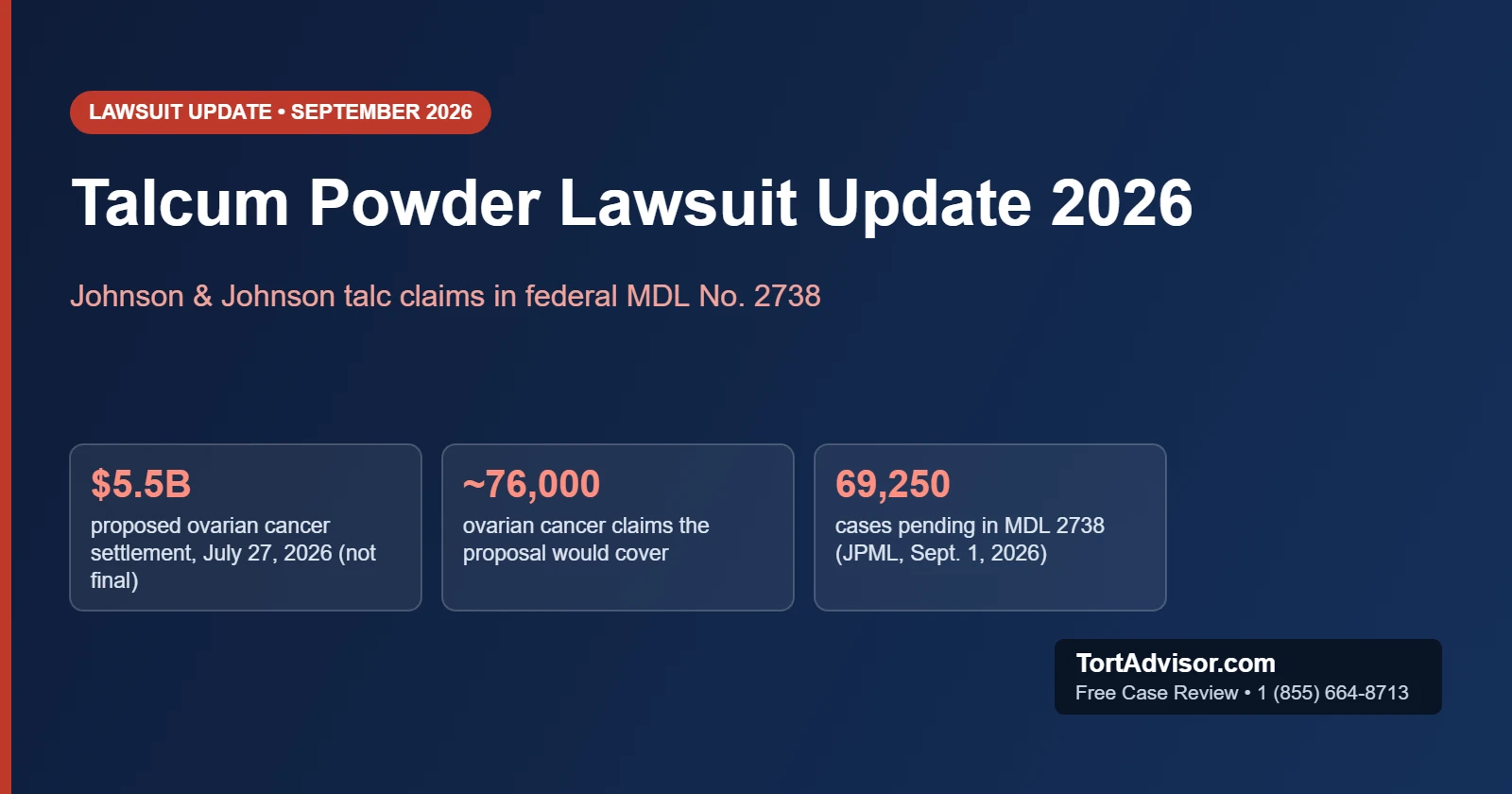
Quick Answer: As of November 6, 2026, Johnson & Johnson's proposed $5.5 billion resolution of roughly 76,000 ovarian talc claims (announced July 27, 2026) is still a proposal. It needs express participation from at least 95% of the remaining claims, and J&J has not announced that this threshold has been met. The federal MDL 2738 [...]

Fight fraud with a consumer protection attorney. Learn common scams, case wins like $4.6M recovery & how to choose top experts.

Explore cancer lawsuit options for negligence, toxic exposure, or malpractice. Learn eligibility, damages, and the legal process to seek justice.
Key facts (as of October 2026)
- Largest MDL: MDL 2738 (Johnson & Johnson talcum powder) had 69,340 pending actions (JPML, October 1, 2026).
- What an MDL does: transfers similar federal cases for coordinated or consolidated pretrial proceedings; cases not already resolved are remanded (28 U.S.C. §1407).
- Taxes: damages for personal physical injuries or physical sickness are excluded from federal gross income (26 U.S.C. §104(a)(2)); punitive damages and interest are generally taxable (IRS Publication 4345).
- Medicare: conditional payments must be repaid when a beneficiary receives a settlement, judgment or award (CMS, 2026).
- Fees: ABA Model Rule 1.5(c) requires a contingent-fee agreement in a writing signed by the client; each state's own rules control.
Individual claims, MDLs and class actions
An individual injury claim is negotiated or tried on its own facts. In an MDL, the Judicial Panel on Multidistrict Litigation sends similar federal cases to one judge for pretrial proceedings; the cases stay separate and, unless resolved first, return to their original courts at or before the end of that stage. A class action is one lawsuit for a certified group, and Federal Rule of Civil Procedure 23(e) allows a class settlement only with the court's approval.
What comes out of a gross settlement
- Attorney fees: the percentage stated in the written fee agreement for settlement, trial or appeal.
- Case expenses: filing fees, records and experts, deducted before or after the fee is calculated, as the agreement states.
- Liens: Medicare must be repaid for conditional payments, and other health payers may claim reimbursement under their plan terms or state law.
- Taxes: some parts of a payment can be taxable, as the table below shows.
How federal income tax applies
| Part of the payment | Treatment under IRS Publication 4345 |
|---|---|
| Personal physical injury or physical sickness | Not taxable, except amounts for medical expenses you deducted earlier with a tax benefit |
| Emotional distress not caused by a physical injury | Taxable, reduced by certain unreimbursed medical costs |
| Punitive damages | Taxable |
| Interest | Generally taxable |
| Lost wages in an employment case | Taxable as wages |
Common mistakes
- Treating a published average or calculator output as a prediction. No public dataset supports an average that predicts an individual claim.
- Signing a release without knowing which liens must be repaid from the recovery.
- Skipping the part of the fee agreement that handles case expenses.
- Assuming one national filing deadline. Limitation periods are set by each state and vary by claim type.
Frequently asked questions
Are personal injury settlements taxable?
Compensation received on account of personal physical injuries or physical sickness is excluded from federal gross income under 26 U.S.C. §104(a)(2). IRS Publication 4345 says punitive damages, interest, and emotional-distress damages not stemming from a physical injury are generally taxable. How the agreement allocates the payment matters, because the IRS looks at what each amount replaces.
What is the difference between an MDL and a class action?
An MDL groups separate federal lawsuits before one judge for pretrial proceedings; each plaintiff keeps an individual case, which returns to its original court at or before the end of that stage unless resolved first. A class action is a single lawsuit for a certified group, and under Federal Rule of Civil Procedure 23(e) a class settlement needs the court's approval.
Why is a net settlement lower than the gross amount?
Attorney fees, case expenses and liens can all be paid from the gross recovery before the client receives the balance. Medicare, for example, must be repaid for conditional payments when a beneficiary settles. ABA Model Rule 1.5(c) also calls for a contingent-fee lawyer to give the client a written statement at the end showing how the remittance was calculated.
Does TortAdvisor publish average settlement amounts?
No. TortAdvisor publishes recorded figures, such as verdicts, court-approved funds and disclosed settlement terms, with the primary source and date attached, and says so where terms are sealed or no settlement exists. The methodology page explains how each figure is sourced and checked.
Sources
Filter Posts
Browse by Category