
Difference Between Hit and Run and Leaving Scene: Claims
The difference between hit and run and leaving scene depends on the state’s terminology and the duties involved: California uses “hit-and-run” for failing to stop or leaving, while New York’s statute calls it “leaving scene of an incident without reporting”. If the other driver left, ask what information is still needed and which insurance coverage might help—Washington’s insurance regulator, for example, says uninsured/underinsured motorist coverage may help with hit-and-run injuries or damage.
This article explains how to focus on what the driver did, organize your records, and prepare questions about coverage and an injury claim. That includes gathering driver and witness information, scene photographs, and records of injuries, medical expenses, and lost wages, then identifying what to ask during a consultation.
Are hit and run and leaving the scene different?
Not necessarily—the phrases can describe the same conduct. The California DMV’s collision guidance calls failing to stop or leaving an accident scene a hit-and-run. That same guidance tells drivers to move their vehicle out of traffic if nobody is hurt and to exchange identifying and insurance information. For a collision involving an unattended vehicle or other property, it also directs drivers to leave a note with contact information and report the collision to law enforcement.
Find out if you may have a claim
Answer a few questions and a trained case advisor will review your situation — most people finish in about a minute.
- Free — no cost, no obligation
- About a minute to complete
- Reviewed by a trained case advisor
- Nothing you submit is published
Your details are sent over a secure connection and reviewed confidentially.
Those instructions describe different factual situations. Failing to stop is not the same action as moving a vehicle out of traffic when nobody is hurt. Exchanging information is another part of the response—not something the phrase “moved the car” tells you was completed. Read together, the California examples show why the driver’s actions matter more than the label someone uses afterward. They should not be read as nationwide permission to leave a collision scene.
This article compares clearly labeled state examples to help you describe what happened and prepare questions about an injury claim. It does not offer a universal definition, a penalty schedule, or a criminal-defense strategy.
What matters more than the label: the duties left unfinished
A report’s label is a starting point, not a complete account of what happened. To understand the incident, look at what the driver actually did—and what information is still missing.
New York provides a specific example. New York Vehicle and Traffic Law Section 600 is headed “Leaving scene of an incident without reporting.” It separately addresses property damage and personal injury, uses “knowing or having cause to know” language about the damage or injury, and requires stopping and specified information exchanges. Its personal-injury provisions also require providing information to a police officer or, if no officer is nearby, reporting the incident as soon as physically able to the nearest police station or judicial officer.
Using that example, these questions help explain more than the label alone:
- Did the driver stop? Describe whether the driver stopped at all and what happened before they left.
- What information was exchanged? Note what identifying, vehicle, and insurance details you received—and what you did not.
- Was someone injured? Separate what was apparent at the scene from what you learned afterward.
- Was law enforcement contacted? Note whether an officer attended or someone later reported the incident.
If you do not know an answer, mark it as unknown rather than guessing. These details give someone reviewing your situation a clearer account than either “hit and run” or “leaving the scene” alone.
Describe what the driver did, then organize your records
Start with a short account of what happened, rather than trying to choose the right legal label. In your own words, describe what you personally saw, whether the other driver stopped, and what information you received. Separate what you remember from what you do not know—for example, “I saw the car leave, but I could not read the plate.” This is an organizing suggestion, not a required legal statement.
The California Department of Insurance’s accident documentation guidance provides a useful starting point for gathering records:
- Driver and vehicle information: Collect names, contact details, driver’s license information, insurance information, license plate numbers, and vehicle descriptions when available.
- Witness contacts: Keep the names and contact information of people who saw the collision.
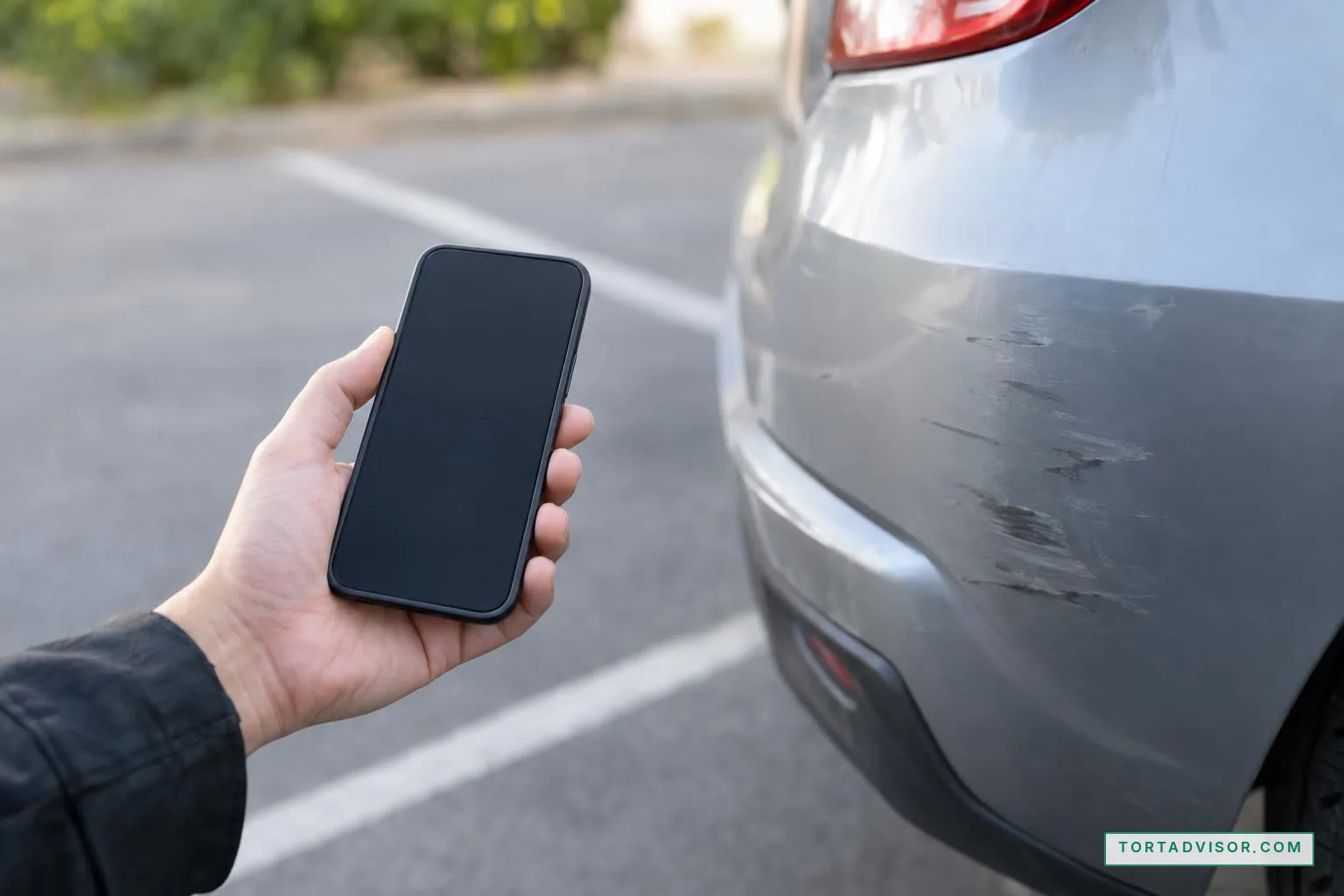
- Photographs: Gather pictures of the scene and vehicle or property damage.
- Injury and financial records: For medical-payments or uninsured-motorist claims, keep documentation of injuries, medical expenses, and lost wages.
To keep this manageable, put your account and available records in one folder, with a separate list of missing information. You can use TortAdvisor’s car accident checklist for photos and claim records to organize what you already have. If you do not know the other driver’s identity or insurance details, mark those items “unknown” rather than filling in a guess.
If the driver is unidentified, ask about coverage—not just terminology
If you cannot identify the driver, a useful next question is what coverage you have—not only whether the incident is called “hit and run” or “leaving the scene.” Neither label, by itself, answers whether your insurer may cover your injuries or vehicle damage.
As a state-specific example, the Washington insurance commissioner’s hit-and-run coverage guidance explains that uninsured/underinsured motorist coverage may help with hit-and-run or phantom-vehicle injuries and damage. Collision coverage and personal injury protection may offer other coverage. In this Washington example, a “phantom vehicle” causes injury or damage without touching the insured vehicle. That guidance does not establish how coverage works in another state or under your policy.
To focus the conversation with your insurer, ask:
- Which coverages did I actually purchase, including uninsured/underinsured motorist, collision, or personal injury protection?
- Which policy conditions apply when the other vehicle or driver is unidentified?
- What documentation do you need to evaluate this incident?
- What reporting requirements and deadlines do you identify for my claim?
For background before that conversation, TortAdvisor explains how uninsured and underinsured motorist claims work. Use that overview to prepare questions about your own coverage, rather than assuming an unidentified-driver incident will result in payment.
Questions to organize before researching compensation
Before researching compensation, organize what you know and what you still need to ask. Use these questions as a worksheet—not a formula for putting a dollar value on an injury.
- What treatment records do I have? List the records you have and note any gaps you want to discuss during a consultation.
- Which expenses have I recorded? Keep medical bills and a running list of expenses, with supporting documents where available.
- What work records should I gather? Identify records that could help document time missed from work or lost wages. The California Department of Insurance recommends documenting injuries, medical expenses, and lost wages when preparing specified insurance claims.
- What coverage questions remain unanswered? Write down the coverage names on your policy and ask your insurer what may apply when the other driver is unidentified. As one state-specific example, Washington’s insurance regulator explains that UM/UIM coverage may help after a hit-and-run, with possible roles for collision and PIP coverage. That guidance does not establish coverage outside Washington.
If you want background on compensation terminology, TortAdvisor’s settlement amounts and compensation guide is an optional starting point—not evidence of a hit-and-run payout.
Separately, you can explore the lawsuit and injury settlement calculators as an optional research tool. Keep that research separate from your worksheet: neither resource should be treated as a prediction for your circumstances, and neither incident label should be used as a shortcut to a payment figure.

What to ask in an injury-claim consultation
Use a consultation to clarify what the driver’s actions, your records, and your insurance policy mean for your situation—not just whether someone called the incident “hit and run” or “leaving the scene.” Consider bringing these questions:
- Which state’s rules apply? Ask which rules need to be checked before drawing conclusions about the incident.
- What does the report’s wording mean here? Ask the lawyer to distinguish the report’s description from the applicable legal terminology. For example, New York’s “leaving scene of an incident without reporting” statute has separate provisions for property damage and personal injury.
- What additional records would help? Ask whether anything is missing from your documentation. The California Department of Insurance’s accident guide recommends gathering driver and vehicle details, witness information, photographs, and records of injuries, medical expenses, and lost wages.
- Which insurance questions need individual review? If the driver is unidentified, ask which policy provisions may matter. Washington’s insurance regulator describes possible roles for UM/UIM, collision, and PIP coverage; that guidance does not establish coverage for an incident in another state.
If you are deciding whether a consultation would help you understand your situation, TortAdvisor’s explainer on how an injury claim lawyer can help offers a starting point.
TortAdvisor is an independent legal-information resource, not a law firm. This article provides general information, not advice about your particular incident.
Keep researching on TortAdvisor
Frequently asked questions
Are hit and run and leaving the scene always two different offenses?
Do not assume that different wording means two separate offenses. Start by checking the state and the exact provision being discussed. For your claim research, focus on the driver’s conduct rather than the label: whether they stopped, what information they provided, and what happened afterward. The state-specific examples below help show why that distinction matters.
Is moving a car out of traffic the same as leaving the scene?
No—not in the situation described by the California Driver’s Handbook. It instructs drivers to move their vehicles out of traffic if no one is injured, while also explaining the duties to stop and exchange information. In that guidance, moving to a safer location is different from departing without completing those duties. This is California guidance, not a nationwide rule.
Can information-exchange duties still matter if the driver briefly stopped?
Yes. Under New York’s leaving-the-scene statute, stopping is not the only duty: the law also addresses providing identifying and insurance information and reporting to police in specified circumstances. Its property-damage and personal-injury provisions are separate. When describing an incident, explain both that the driver stopped and exactly what information they did—or did not—provide before leaving.
What records should I keep if the other driver left?
Keep any driver and vehicle identification you obtained, witness names and contact information, and photographs of the scene and vehicle damage. Also organize records of your injuries, medical expenses, and lost wages. These are among the materials identified in the California Department of Insurance’s accident-documentation guidance. Clearly distinguish what you personally observed from information someone else supplied.
What insurance questions should I ask if the driver cannot be identified?
Ask your insurer whether your policy includes uninsured/underinsured motorist coverage, collision coverage, or personal injury protection, and which might apply. The Washington insurance commissioner’s guidance explains that UM/UIM may help with hit-and-run or phantom-vehicle injuries or damage, and describes possible roles for collision and PIP. Ask specifically about a no-contact crash if another vehicle caused you to crash without striking you. This guidance is Washington-specific.
Sources
- Section 10: Financial Responsibility, Insurance Requirements, and Collisions · California Department of Motor Vehicles
- Vehicle and Traffic Law Section 600: Leaving scene of an incident without reporting · The New York State Senate · 2022-11-04
- So You've Had an Accident, What's Next? · California Department of Insurance
- What to do if you’re hit by an uninsured or underinsured driver · Washington State Office of the Insurance Commissioner
This article is general information, not legal advice. Laws and deadlines vary by state and change over time; check the linked sources or speak with a licensed attorney about your situation.
Related Posts
Si el seguro dice que usted tuvo parte de la culpa en el choque, eso no siempre termina su reclamo. Le explicamos en lenguaje sencillo cómo funciona la falla comparativa, en qué cambian las reglas según el estado y qué pasó en Florida en 2023.
Understand how to estimate driving speed from distance and elapsed time—and why a calculation needs context after a crash. Learn about unit conversions, stopping distance and vehicle-recorded evidence.

A practical checklist for collecting crash details and organizing medical, insurance and expense records. Start with safety, then use the record prompts when you are able.