Car Accident Checklist: Photos, Records and Claim Prep

Use this car accident checklist to gather driver and insurance details, vehicle information, witness contacts, scene photos, and the responding officer’s name and report information—once everyone is safe, as outlined in the NAIC’s accident checklist. Keep those materials together with your symptom notes, appointment details, medical records, and a log of insurance conversations to help organize an injury claim.
Safety and medical needs come before paperwork. Concussion symptoms can appear right away or hours or days later, and the CDC lists danger signs that require immediate emergency care.
This guide walks through what to collect at the scene, how to organize health and insurance records, and what to check before reusing a child car seat. It also helps you sort your claim file into what you have, what is missing, and what you are ready to discuss—including questions about what a claim may be worth.
Find out if you may have a claim
Answer a few questions and a trained case advisor will review your situation — most people finish in about a minute.
- Free — no cost, no obligation
- About a minute to complete
- Reviewed by a trained case advisor
- Nothing you submit is published
Your details are sent over a secure connection and reviewed confidentially.
Start here: safety before paperwork
Follow NAIC’s accident safety guidance first: call 911 if someone is injured, and move a drivable vehicle out of traffic when it is safe to do so. Photographs and paperwork come after immediate safety needs—not before.
- Address injuries first. Getting emergency help takes priority over exchanging information or documenting damage.
- Get out of danger. Do not stay in traffic or delay a safe move just to preserve the scene for photographs.
- Collect details only when safe. Once immediate safety needs are addressed, gather driver, insurance, vehicle and witness information, along with available officer and report details.
If you need the broader sequence of actions, use our step-by-step guide to what to do after a car accident.
The remaining sections serve a different purpose: they are record prompts, not another full accident-response guide. Use the lists to organize what you have, identify what is missing and prepare questions about your claim. You can save or print this page through your browser and work through the checklist when you are somewhere safe.
Scene checklist: people, vehicles, photos and report details
Once you are safe, gather what you can without putting yourself back in danger. Use the NAIC’s scene-information checklist to organize these practical collection prompts—not as a statement of what every state requires drivers to exchange:
- Driver and insurer details: Record each driver’s name, contact information, driver’s license information, insurance company and policy number.
- Vehicles: Note each vehicle’s make, model and license plate number. Keep the details grouped by vehicle so you can match each one to its driver and insurer later.
- Witnesses: Ask for names and contact information for people who saw the crash.
- Officer and report details: Write down the responding officer’s name, badge number and agency, along with the incident or report number if available.
- Crash circumstances: Record the location, date and time, weather, and road conditions while the details are fresh.
- Photos: If you can take them safely, photograph the scene and vehicle damage. Aim for wider views showing the vehicles and surroundings, plus closer views of visible damage. Do not step into traffic to get a better angle.
Leave room for gaps. Beside each category, mark “collected,” “not collected” or “needs follow-up.” A short note such as “witness left before I could ask” helps distinguish missing information from something you checked and did not find.
Keep the report number with your scene notes. For help making sense of the document itself, see our guide to understanding motor vehicle accident reports.

Health checklist: symptoms, appointments and records
Medical safety comes before organizing your claim file. Some concussion symptoms can appear right away; others may emerge hours or days after an injury. The CDC’s symptoms and emergency danger signs explain what to watch for. A headache that worsens and does not go away, repeated vomiting, seizures or an inability to wake require immediate emergency medical care. Do not wait to finish paperwork if these signs appear.
For a healthcare visit, make a short note of what you actually experienced. Describe symptoms in your own words rather than diagnosing yourself. If you cannot remember when something started, say so instead of filling the gap with a guess.
Keep medical notes and paperwork together, using these organizational prompts:
- Symptoms and timing: What did you notice, when did it begin, and how has it changed? Mark approximate dates or times as estimates.
- Provider contacts: Save the names and contact details of the healthcare professionals and facilities you visited.
- Appointments: List completed visits and upcoming appointments, along with questions you want to ask.
- Instructions: Keep discharge instructions and any written follow-up directions where you can find them.
- Bills received: Save medical bills already received, noting the provider and date of service. Keep unanswered billing questions on a separate list.
For background as you prepare questions for a healthcare professional, see our guide to common motor vehicle accident injuries. Use it to organize questions, not to label your symptoms yourself.
Insurance checklist: report the crash and log each conversation
Start the claim process as soon as possible—do not wait until every checklist item is complete. The NAIC’s claim-reporting guidance recommends gathering available insurance information and incident reports, keeping notes about conversations, and recording the names and contact details of people you speak with.
Before calling, put the information you already have in one place. Tell the representative what is still missing and ask how to send it later. For a walkthrough of the reporting process, see how to report a motor vehicle accident.
Keep a simple call log
Use a notebook or saved document with these suggested fields for each conversation:
- Insurer: Company name and which policy you are discussing.
- Claim number: Add it if one has been assigned.
- Contact person: Name, role, phone number and email address.
- Conversation date: Include a short summary of what was discussed.
- Documents requested: Note what to send and where.
- Unanswered questions: Keep a running list for follow-up.
Ask which coverage may pay
The NAIC explains that payment for particular expenses depends on fault, coverage and state circumstances. Ask:
- Which coverage may pay for vehicle damage?
- Is coverage available for rental expenses, and what limits apply?
- Which coverage may address medical costs, and what records are needed?
If police did not attend the scene, ask the local law-enforcement agency how to make an incident report, as the NAIC recommends.
Family checklist: check the child car seat before reuse
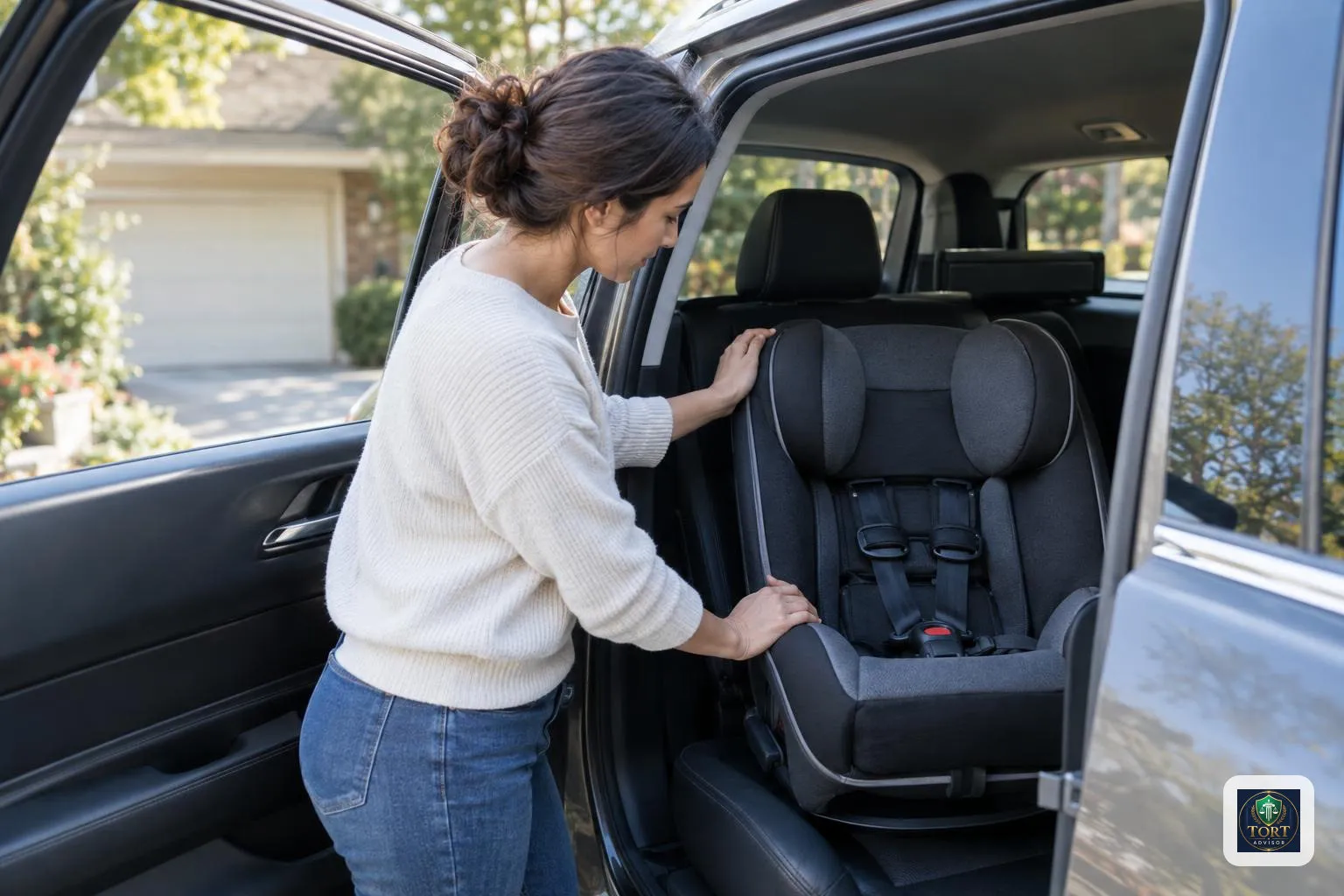
Before using your child’s car seat again, check whether it needs to be replaced. The NHTSA recommendations for car seats after a crash call for replacement after a moderate or severe crash. After a minor crash, car seats do not automatically need to be replaced.
All five of these conditions must apply for NHTSA to consider the crash minor:
- The vehicle could be driven away from the crash site.
- The vehicle door nearest the car seat was not damaged.
- No one in the vehicle was injured.
- None of the vehicle’s air bags deployed.
- There is no visible damage to the car seat.
A seat that looks undamaged meets only one condition—not the entire checklist. Check each item rather than relying on the seat’s appearance alone.
Always follow the car-seat manufacturer’s instructions. Keep those instructions alongside your crash records so you can refer to them when deciding whether to reuse or replace the seat. If you are unsure whether the crash meets every minor-crash condition, do not assume that an undamaged-looking seat settles the question.
Claim-file checklist: saved, missing and ready to discuss
Keep your crash materials in one folder, with a short index that you or a family helper can update. Give each record one of three labels: saved, requested or not available. These are organization suggestions, not legal requirements.
Group what you have
- Scene materials: Group photos, witness contacts, driver and vehicle information, and officer or report details. These match the information prompts in the NAIC’s auto insurance consumer guide.
- Medical materials: Keep appointment details, symptom notes, visit summaries, bills and records you already have together. Mark anything you have asked for but have not received as requested.
- Receipts: Create a separate section for crash-related expenses, noting what each receipt covers.
- Insurance correspondence: Save letters, emails and claim documents alongside a conversation log. The NAIC recommends keeping notes of insurance conversations, including whom you spoke with and what was discussed.
Use the index to show what is available—not to decide what any single item proves.
Keep consultation questions separate
- Which missing records would be useful, and how can I request them?
- What information should I gather about missed work, changed duties or other work disruption?
- Which insurer requests remain unresolved, and what needs clarification?
- What other information would help a professional assess my situation?
TortAdvisor provides independent legal information and is not a law firm. Its accident injury and disability claims guide can help you explore broader questions; its guide to finding a motor vehicle accident attorney can help you prepare for a consultation.
Editorial requirement: This section must receive legal editorial review before publication.
If your next question is what the claim may be worth
If you are ready to move from collecting records to understanding a possible claim, keep that as a separate step. Start with TortAdvisor’s guide to what determines car accident settlement value, rather than trying to put a dollar amount on your checklist.
Keep your claim file nearby as you read. Use it to separate what you have documented from what you still need to confirm:
- Saved: Photos, report details, medical records and insurance correspondence you already have.
- Missing: Documents you have requested but have not received.
- Questions: Anything you want clarified about your policy or the claim process. The NAIC’s consumer guide recommends checking your policy and applicable state claim rules.
If you prefer an interactive next step, the car accident settlement calculator is optional—not a case assessment or a promised result. You can also stop here, keep gathering your records and return to the value question when you feel ready.
Keep researching on TortAdvisor
Frequently asked questions
What driver, vehicle and witness information should I collect?
If it is safe, collect each driver’s name, address, phone number, driver’s license number, insurance company and policy number. Record the vehicles’ makes, models and license plate numbers, and ask witnesses for their names and contact information. The NAIC’s accident checklist also recommends noting scene conditions, taking photographs and recording the responding officer’s name and report information.
What if police do not come to the accident scene?
If police are not dispatched, the NAIC recommends requesting an incident report from local law enforcement. You can also begin the insurance claim process with the information available: gather insurance details and any available reports, contact your insurer as soon as possible, and keep notes of claim-related conversations, including whom you spoke with and what was discussed.
Can concussion symptoms appear after I leave the crash scene?
Yes. The CDC says concussion symptoms may appear immediately or hours or days after an injury. Symptoms can include headaches, dizziness, nausea, trouble concentrating and sleep changes. Seek immediate emergency medical care for danger signs such as a headache that worsens and does not go away, repeated vomiting, slurred speech, weakness, seizures or difficulty waking up.
Does a child car seat always need replacement after a crash?
No. NHTSA recommends replacement after moderate or severe crashes, but not automatically after a minor crash. A crash qualifies as minor only if all five conditions apply: the vehicle could be driven away; the door nearest the seat was undamaged; nobody in the vehicle was injured; no airbags deployed; and the seat has no visible damage. Always follow the car seat manufacturer’s instructions.
Sources
- A Consumer’s Guide to Auto Insurance · National Association of Insurance Commissioners
- Don’t Be a Crash Dummy · National Association of Insurance Commissioners · 2014-02-01
- Symptoms of Mild TBI and Concussion · Centers for Disease Control and Prevention · 2025-09-15
- Car Seat Use After a Crash · National Highway Traffic Safety Administration
This article is general information, not legal advice. Laws and deadlines vary by state and change over time; check the linked sources or speak with a licensed attorney about your situation.
Related Posts

Explore the deadline, shared-fault and medical-expense questions to discuss before pursuing a Florida crash injury claim. This guide focuses on liability and compensation, not PIP benefit applications.

There is no formula for pain and suffering in a car accident. What jury instructions say, which no-fault states limit it, which states cap it, and how it is taxed, with every rule sourced.
If an uninsured or underinsured driver hits you, the claim usually runs through your own policy. What UM and UIM coverage pay, how a claim works, hit-and-run rules and the deadlines to watch.