
PFAS lawsuit claims seek compensation for contamination and illness linked to per- and polyfluoroalkyl substances, the "forever chemicals" that include PFOA and PFOS. Federal cases over PFAS in firefighting foam are centralized in MDL 2873 in South Carolina, which listed 15,264 pending actions on October 1, 2026. Water-system settlements are approved; no personal-injury settlement has been announced there.
Updates on PFAS Lawsuit
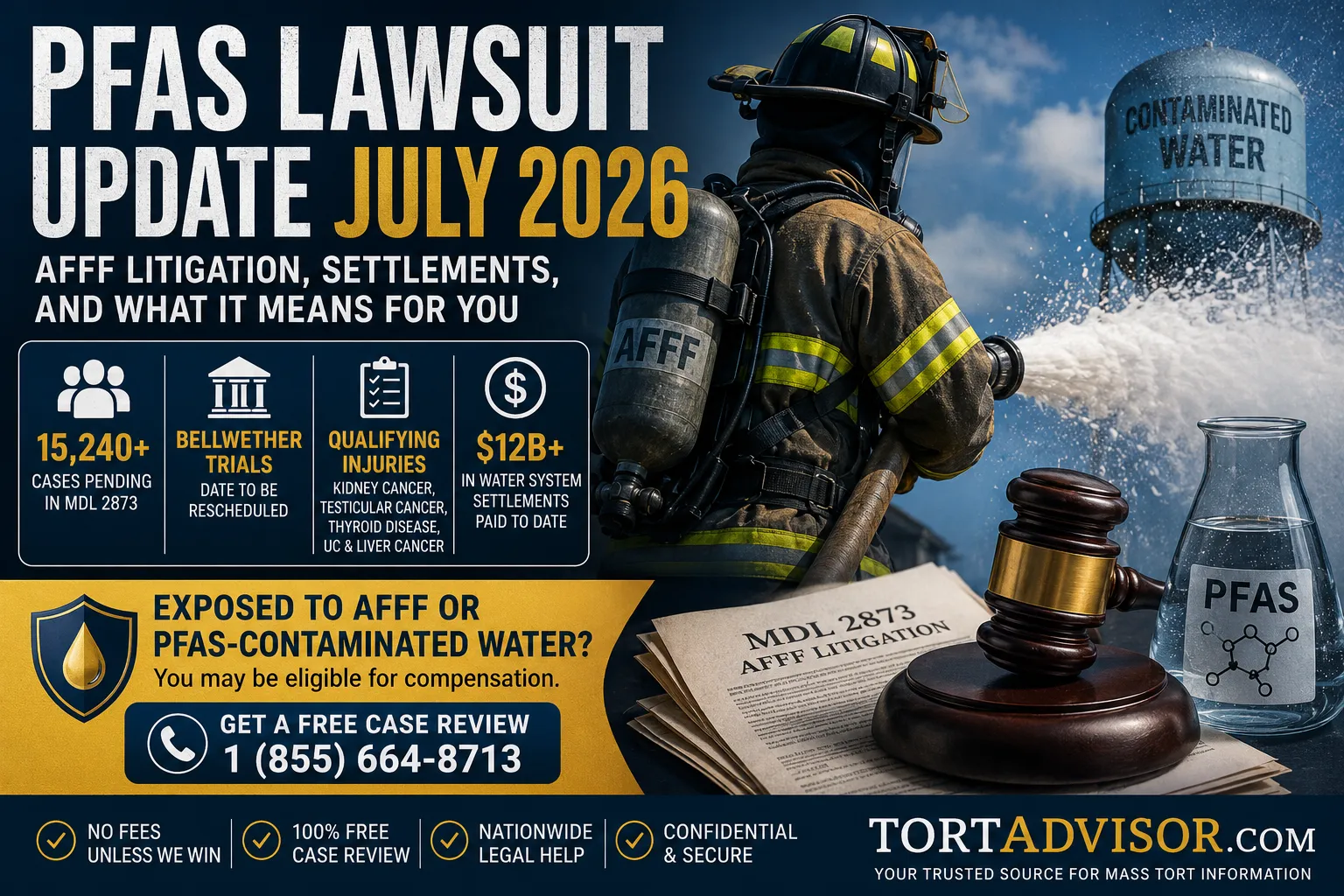
How we sourced this page PFAS lawsuit update, October 2026: the AFFF firefighting-foam litigation (MDL 2873) had 15,264 cases pending in South Carolina federal court on October 1, 2026, out of 19,840 filed since it began, and no personal-injury settlement has been [...]
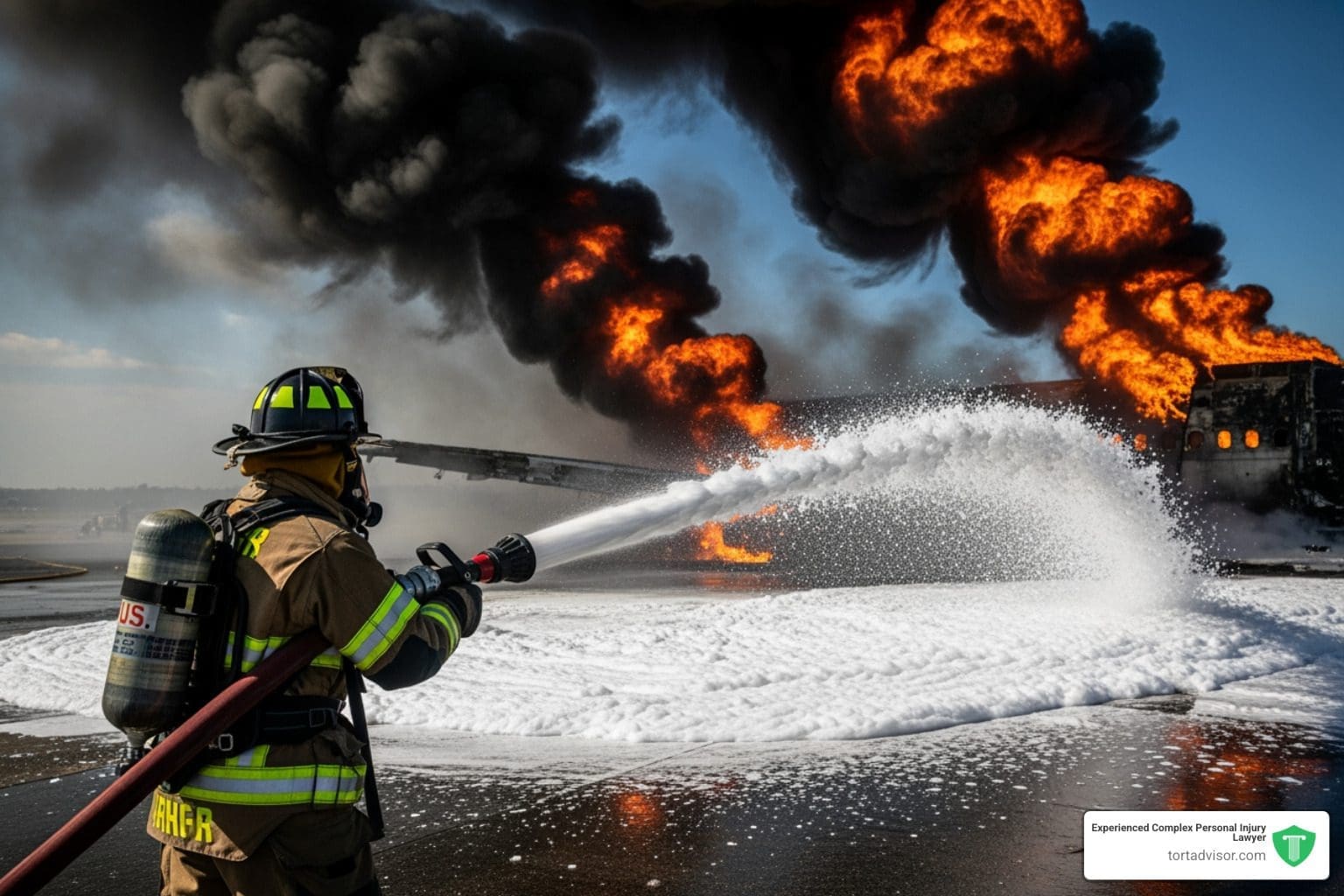
Discover your rights in the Firefighting foam PFAS lawsuit. Latest updates, settlements up to $500K, eligibility for firefighters & cancers. File now!

Diagnosed with prostate cancer after PFAS exposure? Learn your rights for a PFAS prostate cancer lawsuit and seek justice.

Get the latest pfas lawsuit update today: major settlements, health risks, EPA action, and how to protect your rights.
File a california pfas cancer water contamination lawsuit. Learn eligibility, health risks, and how to seek compensation for exposure.
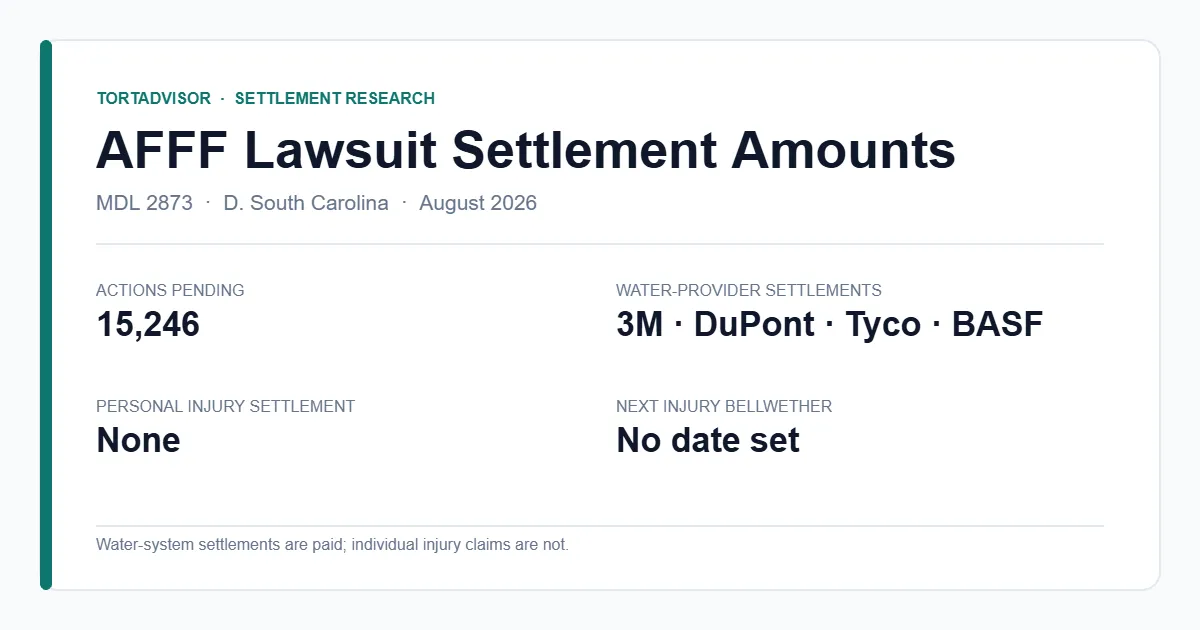
Breaking down afff lawsuit settlement amounts: See estimated payouts, eligibility, and key factors. Get expert legal help today.

Uncover potential PFAS lawsuit settlement amounts per person. Learn about health links, payout factors, and how to claim your rightful compensation.
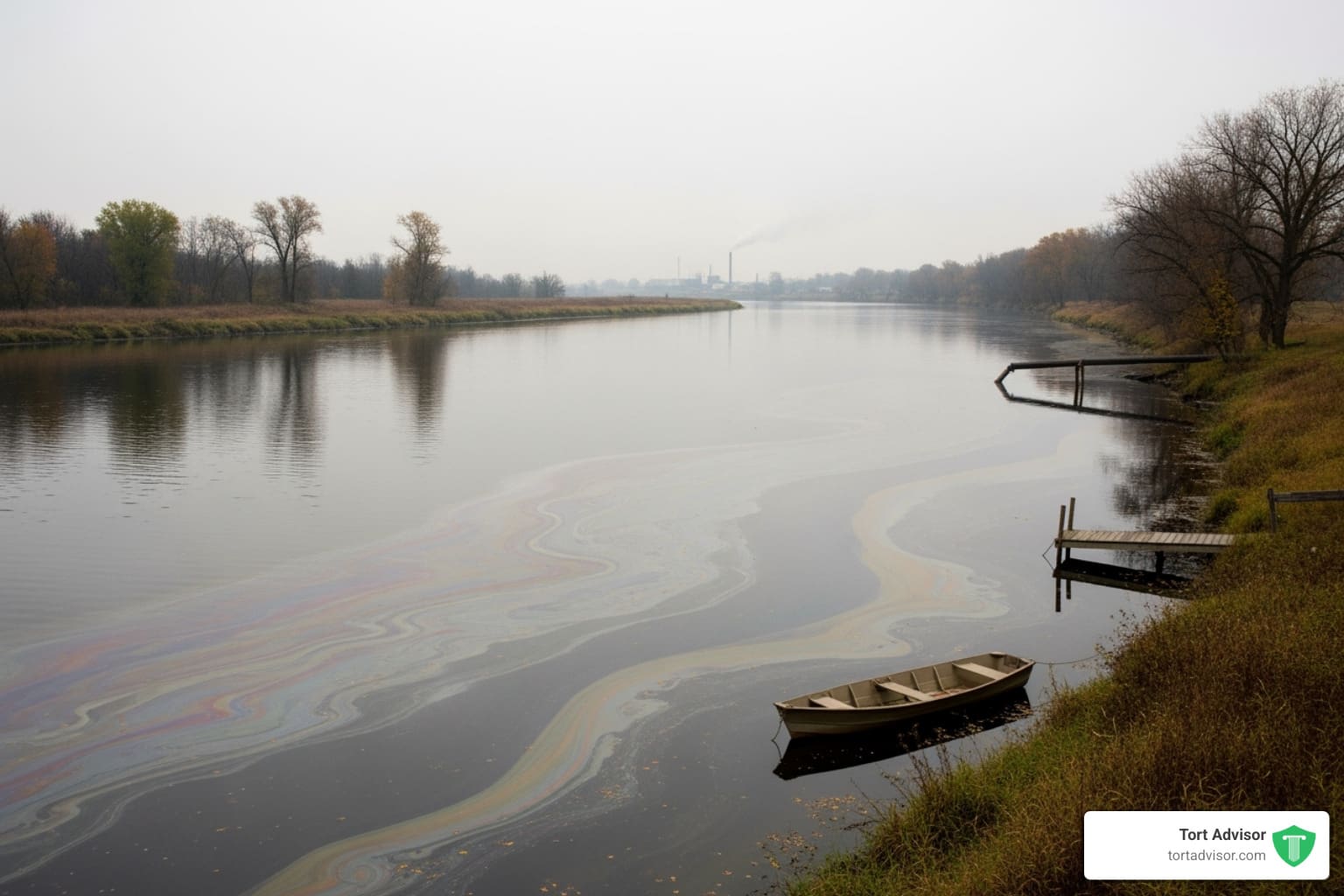
Is your water contaminated? Discover the link between PFAS and cancer. Explore your rights in a pfas cancer water contamination lawsuit. Act now!

Learn key pfas exposure symptoms, health risks, testing, and steps to protect your family from PFAS in water and products.
Key facts (as of October 2026)
- Dec. 1, 2023: IARC classified PFOA as carcinogenic to humans (Group 1) and PFOS as possibly carcinogenic (Group 2B).
- Mar. 29, 2024: A federal court gave final approval to 3M's settlement with U.S. public water suppliers, a pre-tax present value of up to $10.3 billion paid over 13 years.
- Apr. 10, 2024: EPA finalized drinking-water limits of 4.0 parts per trillion each for PFOA and PFOS, with compliance due by 2029.
- May 2026: EPA proposed extending PFOA/PFOS compliance to 2031 and rescinding limits for PFHxS, PFNA, GenX and a mixture Hazard Index; both remain proposals.
- Sept. 10, 2026: DuPont, Chemours and Corteva agreed to pay North Carolina and 11 local entities $455 million over 15 years.
- Oct. 1, 2026: MDL 2873 listed 15,264 pending actions, out of 19,840 filed.
What the PFAS lawsuits claim
PFAS are a family of more than 12,000 synthetic chemicals, according to USGS. PFAS lawsuits generally allege that manufacturers released them, or sold products containing them, without adequate warning of the risks. ATSDR links certain PFAS to higher cholesterol, lower vaccine antibody response, liver enzyme changes, pregnancy-induced hypertension and preeclampsia, small decreases in birth weight, and kidney and testicular cancer (PFOA). USGS estimated in July 2023 that at least 45% of U.S. tap water contains one or more PFAS.
Where the litigation stands
Settlements in the firefighting-foam litigation so far resolve water-system and government claims, not individual injuries. 3M's public water supplier settlement, approved March 29, 2024, pays water systems. On September 10, 2026, DuPont, Chemours and Corteva announced a $455 million settlement with North Carolina and 11 local entities near the Fayetteville Works plant, of which no more than $14.4 million is attributable to firefighting foam. Injury claims in MDL 2873, before Judge Richard M. Gergel, remain in expert and bellwether proceedings with no trial date, per 3M's September 30, 2026 quarterly filing; see the AFFF firefighting foam lawsuit category. PFAS injury settlements are not unprecedented: in February 2017, DuPont and Chemours agreed to pay $670.7 million in cash to resolve the Ohio PFOA multidistrict litigation of about 3,500 lawsuits.
Who may qualify
PFAS injury claims generally depend on documented exposure and a diagnosed condition. Exposure evidence may include living on a water system that detected PFOA or PFOS, occupational records, or blood testing. Conditions named by ATSDR or among the MDL's six Listed Claims, such as kidney or testicular cancer, are the ones courts are currently testing. PFAS in tap water does not by itself establish an injury claim.
Deadlines and next steps
There is no single national PFAS filing deadline. Statutes of limitations vary by state and claim type, and many run from diagnosis or discovery of a possible link rather than first exposure. The PFAS settlement calculator reviews the factors that affect value, and PFAS settlement amounts shows which published figures reach individuals.
Frequently asked questions
What is the difference between a PFAS lawsuit and an AFFF lawsuit?
PFAS is the chemical family; AFFF is one product that contains it. PFAS lawsuits cover drinking-water contamination, industrial releases, property damage and personal injury from many sources. AFFF lawsuits focus on firefighting foam and make up MDL 2873, where the court is organizing personal-injury bellwether work around six Listed Claims.
Has any PFAS lawsuit resolved personal-injury claims?
Yes. According to Chemours' Form 8-K of February 13, 2017, DuPont and Chemours agreed to pay $670.7 million in cash to settle the PFOA multidistrict litigation in the Southern District of Ohio, covering about 3,500 filed lawsuits. In the current AFFF MDL, no personal-injury settlement has been announced; 3M reported continuing court-ordered discussions as of September 30, 2026.
Do PFAS water-system settlements pay residents?
No. 3M's settlement covers U.S. public water suppliers that have detected PFAS or may detect it in the future, paid to those systems over 13 years. The September 2026 North Carolina settlement pays the state and local governments. Residents would need their own claim based on their own exposure and diagnosis.
Is EPA's PFAS drinking-water limit still 4 parts per trillion?
Yes, as of October 2026. EPA's April 2024 rule set enforceable limits of 4.0 parts per trillion each for PFOA and PFOS. In May 2026 EPA proposed letting systems seek two extra years, to April 2031, and separately proposed rescinding limits for PFHxS, PFNA, GenX and the Hazard Index mixture. Comments closed July 20, 2026; EPA describes both as proposals.
Sources
- EPA – Proposed PFOA and PFOS compliance extension rule
- IARC – Monographs evaluate the carcinogenicity of PFOA and PFOS (Dec. 1, 2023)
- ATSDR – PFAS health effects
- USGS – Tap water study detects PFAS across the U.S. (July 5, 2023)
- SEC – Chemours Form 8-K on PFOA MDL settlement (Feb. 13, 2017)
- SEC – DuPont release on North Carolina PFAS settlement (Sept. 10, 2026)
Filter Posts
Browse by Category