
Bicycle Accident Lawsuit: Who Is Liable When a Car Hits?
If a car hit you while you were riding your bicycle, the driver may be liable if their negligence caused your injuries, and you may be able to seek compensation through a bicycle accident lawsuit under California’s personal-injury framework. The key question is what caused the collision—not simply that a car struck you.
This article explains how traffic rules and evidence can help clarify fault, when an employer or city might also be responsible, and how shared fault and helmet use may affect a claim. It also covers what national crash data can—and cannot—tell you, and which injury-related losses to document, with state-specific rules clearly identified.
Can you sue when a car hits you while cycling?
Yes—a driver who carelessly strikes you while you have the right of way may be liable for your injuries. But a collision alone does not establish that the driver owes compensation. In California, a negligence claim requires showing that someone failed to use reasonable care and that their conduct caused harm, as California Courts’ explanation of negligence and injury claims describes.
The starting point is understanding what happened, rather than assuming fault from the fact that a car hit a bicycle. The central questions are:
- What did each person do? Reconstruct the driver’s and cyclist’s movements before the impact.
- Which traffic rules applied? Identify the rules relevant to the location and the maneuver involved.
- What harm did the collision cause? Connect the injuries and resulting losses to the crash.
This guide focuses on bicycles struck by cars or trucks. It uses Florida and California examples, identified by state—not as rules that apply nationwide. For a broader introduction to injury claims and disagreements about responsibility, TortAdvisor’s guide to car accident lawsuits involving injuries and disputed fault is a useful next step.
Find out if you may have a claim
Answer a few questions and a trained case advisor will review your situation — most people finish in about a minute.
- Free — no cost, no obligation
- About a minute to complete
- Reviewed by a trained case advisor
- Nothing you submit is published
Your details are sent over a secure connection and reviewed confidentially.
Which traffic rules help establish bicycle accident fault?
Start with how the car and bicycle were moving—not simply who hit whom. For a Florida collision, Florida’s passing, vehicle-door and bicycle traffic rules provide several points of comparison:
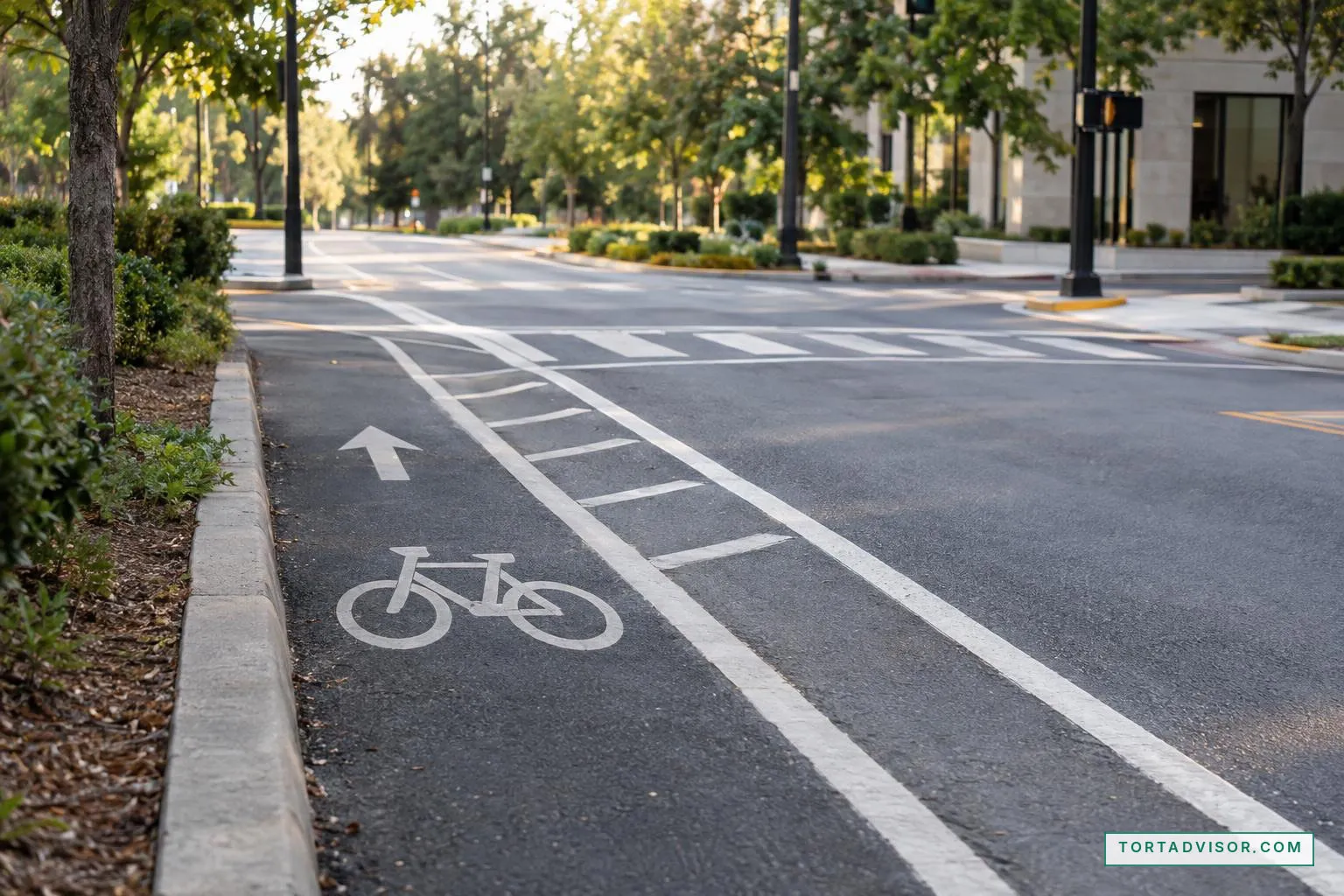
- Passing clearance: Sections 316.083(2)–(4) address safely passing a bicycle, including at least three feet of clearance and an exception for bicycle lanes separated from motor-vehicle traffic by a physical barrier.
- Opening doors: Section 316.2005 prohibits opening a vehicle door unless it is reasonably safe and does not interfere with other traffic. It also restricts leaving a door open longer than necessary to load or unload passengers.
- Bicycle position: Section 316.2065(1) generally gives cyclists vehicle-related rights and duties, subject to bicycle-specific exceptions. Subsection (5) generally requires cyclists traveling slower than normal traffic to use an available bicycle lane, but allows exceptions, including passing, preparing for a left turn and avoiding hazards or potential conflicts.
- Direction and turning: Section 316.081 addresses right-side travel, subject to exceptions. Section 316.122 requires a left-turning driver to yield to an approaching vehicle close enough to present an immediate hazard.
Compare those rules with the actual collision: Was a driver overtaking the bicycle, turning across its path or opening a door into its route? Was the cyclist leaving a bicycle lane to avoid an obstruction, or approaching from the opposite direction? Those details help explain the conflict more clearly than labels such as “the cyclist was outside the bike lane.”
This discussion concerns riding a bicycle when a car hits—not being struck while walking.
Could an employer or city also be responsible?
Possibly. In a car-bike collision, looking beyond the driver means investigating the driver’s work relationship or the road condition—not simply naming everyone connected to the crash.
Was the driver conducting an employer’s business?
In California, a business principal may be responsible for an agent’s negligence committed while conducting the agency’s business under California Civil Code section 2338 on responsibility for an agent’s negligence. The relationship and the purpose of the driving matter. Useful questions include:
- Who employed the driver, and what was the driver’s role?
- Was the driver making a delivery, traveling to a work assignment or taking a personal trip?
- What dispatch records, work instructions or trip records explain why the driver was on that road?
Did a dangerous road condition contribute?
A California claim against a city requires more than identifying a road defect. Subject to statutory exceptions, the claim must connect a dangerous condition of public property to the injury and a reasonably foreseeable risk of that kind of injury. It also requires proof that a public employee’s negligent or wrongful conduct within the scope of employment created the condition, or that the public entity had sufficient actual or constructive notice to take protective measures. These requirements appear in California Government Code section 835 on dangerous public property.
Questions worth investigating include who controlled the roadway, exactly where the alleged defect was, how it contributed to the collision, and whether inspection reports, maintenance records or earlier complaints describe it. Those details help distinguish a possible public-property claim from a collision caused solely by the driver.
How do shared fault and helmet use affect recovery?
Responsibility for causing a collision and whether you wore a helmet are separate questions. A driver’s claim that you contributed to the crash calls for a closer look at the applicable rules and evidence—not an automatic conclusion that you cannot recover compensation.
Florida example—shared fault: Under section 768.81, a claimant’s contributory fault proportionally reduces damages. In negligence actions covered by the statute, a claimant who is more than 50 percent responsible for their own harm cannot recover damages. Those limits come from Florida’s comparative-fault statute. TortAdvisor’s guide to Florida motor vehicle lawsuit fault rules offers additional context for a Florida claim.
Florida example—helmet use: Section 316.2065(18) says failure to wear a bicycle helmet may not be considered evidence of negligence or contributory negligence. Florida’s bicycle-helmet evidence provision and bicycle traffic rules distinguish that issue from questions about a cyclist’s conduct on the road. This is a Florida protection, not a nationwide helmet rule.
If the dispute concerns lane position or travel direction, review the actual traffic rule alongside scene evidence rather than treating either party’s description as decisive. For a collision outside Florida, TortAdvisor’s motor vehicle accident laws and settlement factors by state can help you begin researching the relevant state.
What evidence helps explain who caused the collision?
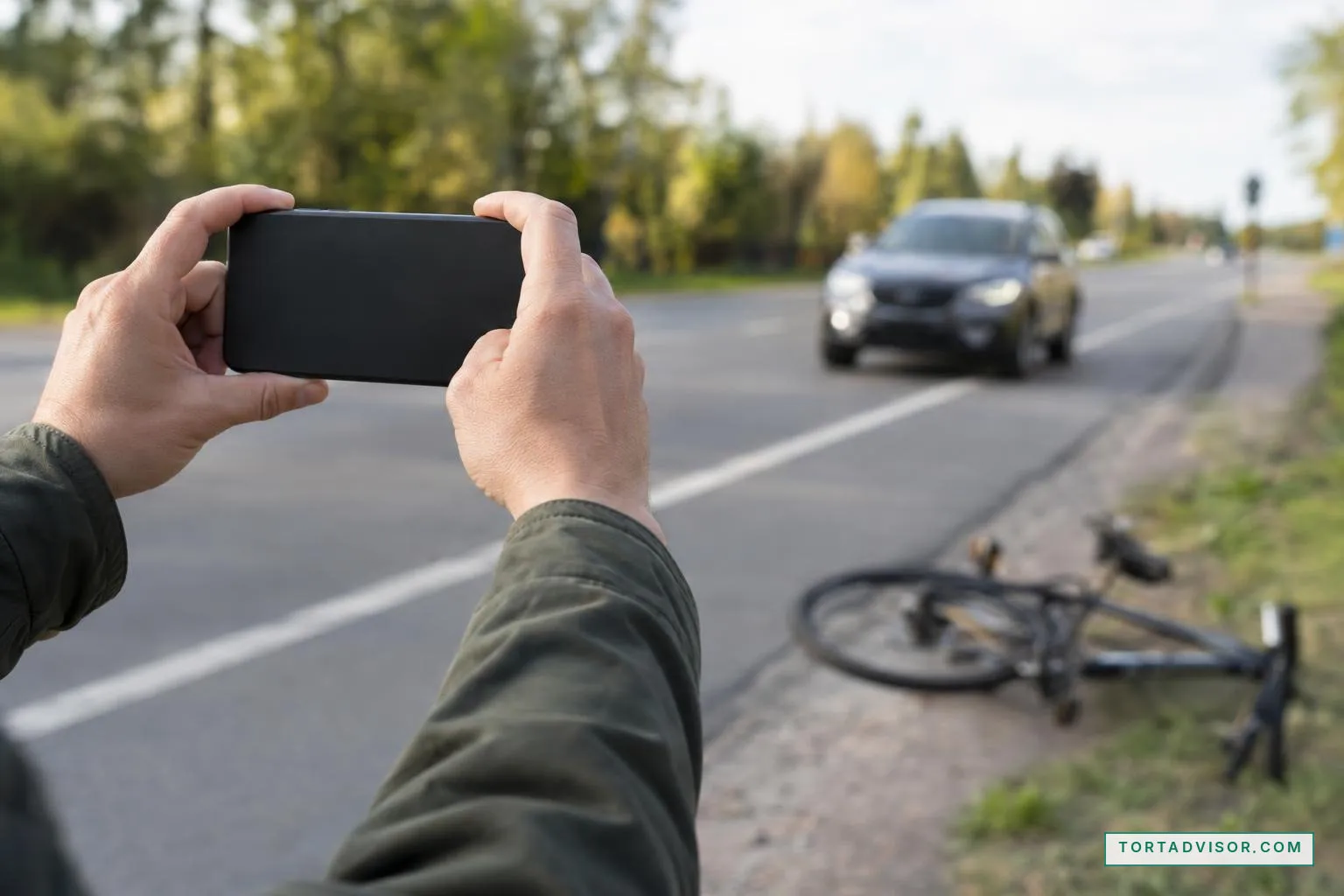
Organize the available evidence around the points in dispute, rather than treating every document as proof of fault. California Courts identifies scene photographs, medical records, witness statements and police reports as useful personal-injury evidence, while cautioning that courts have rules about what evidence they can consider.
For the collision itself, use a short list of questions to guide your review:
- Where were the bicycle and car positioned? Look for photographs or accounts showing their locations relative to lanes, intersections, parked vehicles and driveways. Distinguish positions before contact from where the bicycle and car came to rest.
- Which direction was each traveling? Note what each record says about the cyclist’s and driver’s routes. Flag conflicting accounts rather than choosing one without supporting material.
- Was either person turning? Identify any description of a left turn, right turn or movement across the other person’s path. Separate what a witness actually saw from what someone later inferred.
- Where did contact occur? Group photographs of vehicle or bicycle damage with descriptions of the impact location. Note any uncertainty about the point of contact.
Keep a separate injury file for medical records and your treatment timeline. This lets a reviewer distinguish the account of how the collision happened from the records of what harm followed. Where the materials leave a question unanswered, mark it as unknown rather than filling in the gap.
What NHTSA’s bicyclist crash data does—and does not—show
National crash figures provide context, but they do not establish who caused your collision or what your claim may be worth.
NHTSA’s July 2026 report, Bicyclists and Other Cyclists: 2024 Data, reports 1,103 pedalcyclist deaths and an estimated 52,887 injuries in 2024. Both figures appear in Table 1, “Total Fatalities, Pedalcyclist Fatalities, Total Injured, and Pedalcyclists Injured in Traffic Crashes, 2015–2024.” The report covers crashes involving motor vehicles in transport, and its pedalcyclist classification includes motorized bicycles beginning in 2022. These figures therefore are not a count of every bicycle fall or trail injury. See NHTSA’s Table 1 figures and crash-data definitions.
For someone injured while cycling, the distinction matters: these totals describe national crash experience, not the circumstances of an individual car-bike collision. They cannot tell you whether a driver failed to yield, whether another person contributed to the crash, or how the collision affected your health and daily life.
Do not treat a national injury count as a settlement estimate. The numbers help explain the scale of the issue; they do not replace a close look at what happened to you and the losses you can document.
What compensation can you document after a car-bike collision?
Start with your own treatment records, bills and work-loss information—not another person’s settlement. California Courts’ explanation of injury-related damages and legal help identifies medical bills, lost wages, ongoing treatment, emotional harm and future injury-related problems as losses to consider. It also highlights severe injuries, disputed fault and multiple potential defendants as circumstances in which legal help is particularly important.
To organize your losses, gather what you have and note what still needs clarification:
- Medical care: Treatment records, bills and information from your providers about ongoing care.
- Missed work: Pay records, dates you could not work and employer documentation of lost earnings.
- Day-to-day effects: Notes about emotional distress, symptoms and activities your injuries have disrupted.
- Future concerns: Questions for your treating providers about continuing symptoms, treatment needs and recovery.
TortAdvisor’s guide to understanding lawsuit settlements and compensation offers optional background as you organize those questions. Its car accident settlement calculator for organizing injury-claim factors is another research tool—not a determination of liability or a promised payment.
If your injuries are severe and you are considering legal help, TortAdvisor’s guide to evaluating an attorney for catastrophic crash injuries can help you prepare questions for that conversation. TortAdvisor provides independent research, not legal representation or advice about your individual claim.
Frequently asked questions
Is the driver automatically liable when a car hits a cyclist?
No. A collision alone does not establish that the driver was legally responsible. Under California’s negligence framework, an injured person must show that someone failed to use reasonable care and that this failure caused harm. Focus on what the driver and cyclist did before impact, rather than assuming the vehicle’s involvement settles the question.
Can riding outside a bike lane affect a bicycle accident lawsuit?
It may become part of the fault dispute. Explain why you left the lane and preserve photographs of any obstruction or road condition involved. In covered Florida negligence actions, compensation is reduced according to the injured person’s share of fault, and someone found more than 50% responsible for their own harm cannot recover damages. The important question is how the conduct contributed to the collision.
Can not wearing a bicycle helmet affect compensation?
In Florida, the bicycle helmet provision expressly limits the use of helmet-nonuse evidence: failure to wear a helmet, or to prevent a child from riding without one, may not be considered evidence of negligence or contributory negligence. That answers a specific fault issue; it does not establish who caused the collision or determine the value of an injury claim.
Who may be responsible if someone opens a car door into a cyclist?
Start by identifying the person who opened the door, rather than assuming it was the driver. Was it a driver or passenger, and which door opened? Preserve photographs showing the vehicle’s position, the door’s location and your path of travel. Ask witnesses to describe when the door opened and what they could see, without asking them to assign blame.
Could the driver’s employer or a city be another defendant?
Possibly, but each requires a separate legal basis. California Civil Code section 2338 addresses a principal’s responsibility for an agent’s negligence while transacting the agency’s business. For a road-condition claim, California Government Code section 835 requires proof of a dangerous public-property condition, causation and foreseeable risk, plus qualifying creation of the condition or sufficient notice. Neither employment nor a crash on a city street, by itself, establishes those elements.
Sources
- Personal injury cases · Judicial Branch of California
- 2026 Florida Statutes, Chapter 316: State Uniform Traffic Control · The Florida Senate
- 2026 Florida Statutes, Chapter 768: Negligence · The Florida Senate
- Bicyclists and Other Cyclists: 2024 Data, Traffic Safety Facts · National Highway Traffic Safety Administration, National Center for Statistics and Analysis · 2026-07-01
This article is general information, not legal advice. Laws and deadlines vary by state and change over time; check the linked sources or speak with a licensed attorney about your situation.
Was the rider allowed to pass between vehicles, and whose actions caused the collision? Explore those questions through statutory examples, a clearly labeled California shared-fault explanation and a practical evidence checklist.

Was the truck driver too tired to drive safely? Understand the federal driving limits, which electronic records help reconstruct the driver's schedule, and the questions that connect those records to an injury claim.
Head-on crashes usually happen when one driver crosses the centerline or goes the wrong way. This guide covers how fault gets proven, how shared fault can cut a recovery, and what injured people and families can claim.