
Why 1970s Playground Equipment Was a Beautiful Death Trap
Why 1970s Playground Equipment Was a Beautiful Death Trap
When Playgrounds Were Genuinely Dangerous: A Look Back at 1970s Playground Equipment
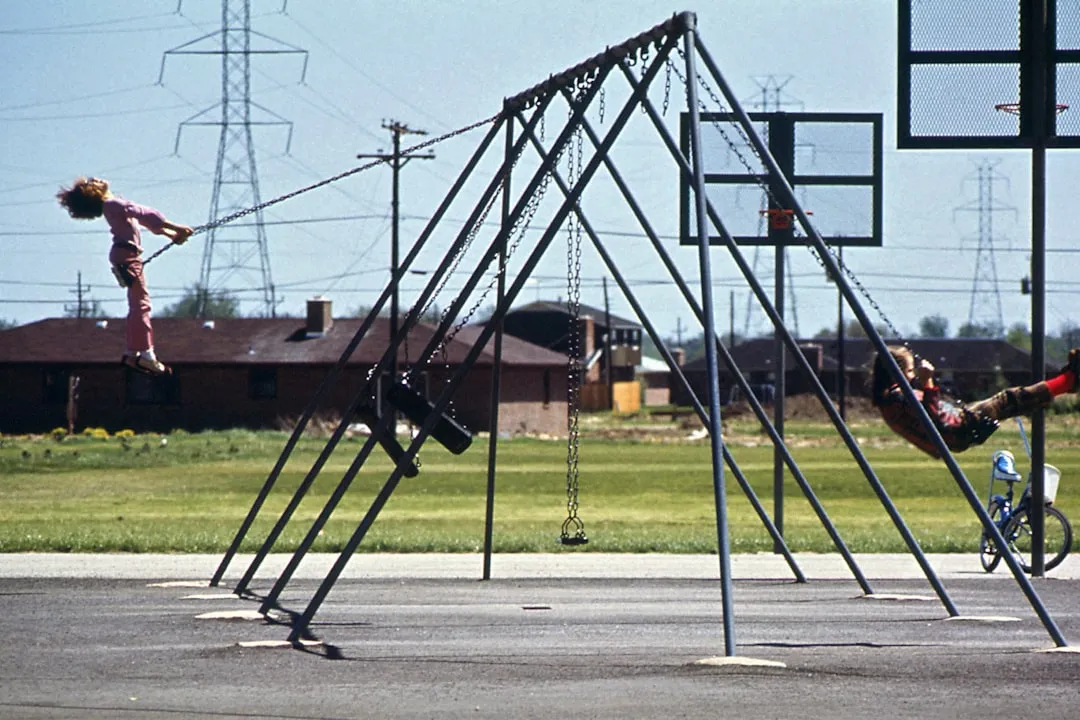
Dangerous playground equipment was once just called the playground — and for kids growing up in the 1970s, that meant towering metal structures, scorching slides, and spinning death wheels, all planted in concrete or packed dirt.
Here is a quick snapshot of the most hazardous equipment from that era:
Find out if you may have a claim
Answer a few questions and a trained case advisor will review your situation — most people finish in about a minute.
- Free — no cost, no obligation
- About a minute to complete
- Reviewed by a trained case advisor
- Nothing you submit is published
Your details are sent over a secure connection and reviewed confidentially.
| Equipment | Primary Hazard |
|---|---|
| Metal merry-go-rounds | Centrifugal ejection, pinch points, head injuries |
| Towering metal slides | Thermal burns, extreme fall height, concrete landings |
| Wooden seesaws and log swings | Spinal impact, splinters, CCA-treated wood toxins |
| Animal-figure and multi-child swings | Impact injuries, strangulation risk |
| Monkey bars and trapeze rings | Falls, bone fractures, no impact-absorbing surface |
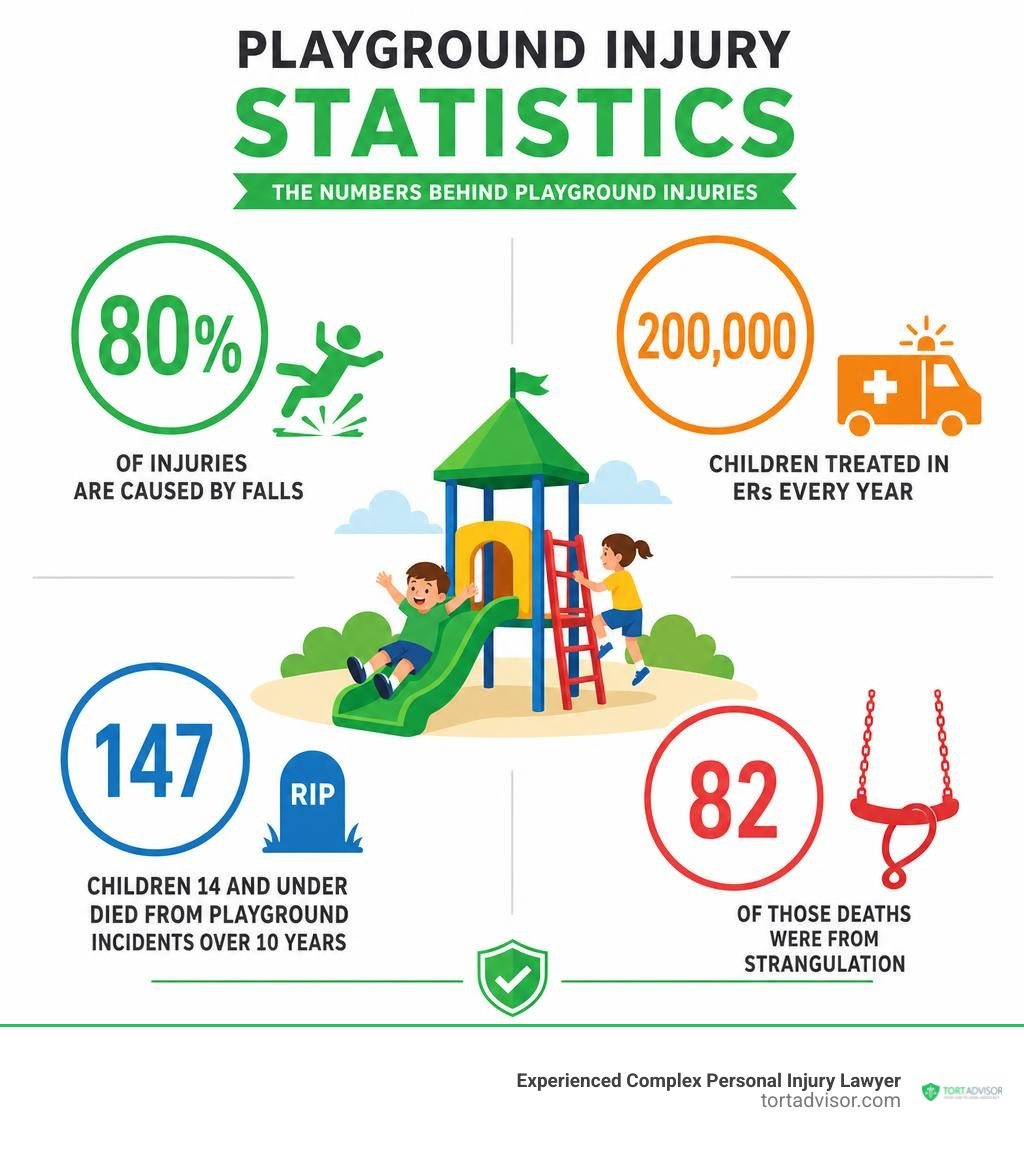
The numbers tell a sobering story. More than 200,000 children are still treated in U.S. emergency rooms every year for playground-related injuries. Nearly 80% of those injuries are caused by falls. And over a single decade, 147 children aged 14 and under died from playground-related incidents — 82 of those deaths from strangulation.
Back in the 1970s, those risks were even greater. There were no federal safety standards. No impact-absorbing surfaces. No age-appropriate equipment zones. Just metal, wood, concrete — and kids.
This article is your guide to understanding exactly what made those old playgrounds so dangerous, how regulations changed the game, and what your legal rights are if a child is injured on dangerous equipment today.
Glossary for dangerous playground equipment:
The Hall of Shame: 5 Most Dangerous Playground Equipment Pieces of the 1970s
If you visited a public park half a century ago, you were essentially entering an unregulated engineering testing ground. Many play areas featured massive, heavy steel contraptions built with zero regard for physics, child anatomy, or basic impact absorption. In his cultural analysis, Who Killed The American Playground? , writers reflect on how these community spaces were once defined by a high tolerance for risk.

While baby boomers and Gen-Xers often look back at these structures with a sense of nostalgic pride, the reality is that many of these designs were incredibly hazardous. Let’s break down the five most egregious offenders of the era.
1. Metal Merry-Go-Rounds (The Spinners of Doom)
The vintage merry-go-round was a heavy, multi-ton steel disc that relied entirely on kid power and centrifugal force. The goal was simple: get the wheel spinning as fast as humanly possible until riders were physically ejected into the surrounding dirt (or asphalt).
These spinners of doom presented several major hazards:
- Centrifugal Ejection: At high speeds, children simply could not hold on, launching them outward.
- Pinch and Crush Points: The space between the spinning platform and the stationary ground was a notorious trap for limbs. If a child fell off, they risked being dragged underneath the heavy rotating steel.
- Blunt Force Trauma: Getting struck in the head by a fast-spinning, 1,500-pound steel wheel caused countless concussions and fractures.
The legal reality of these pinch points was highlighted decades later in cases like Tagliere v. Western Springs Park Dist. (Tagliere v. Western Springs Park Dist., 944 N.E.2d 884, 408 Ill.App.3d 235, 348 Ill.Dec. 643 (Ill. App. 2011)) – vLex United States , which showed how missing parts or poor maintenance on moving equipment can create hidden mechanical traps that easily crush a child’s foot or ankle.
2. Towering Metal Slides (The Third-Degree Burners)
In the 1970s, slides weren’t the modest, plastic, 6-foot structures we see today. They were towering, unshaded sheets of galvanized steel that often reached heights of 12 to 15 feet.
These structures presented two primary dangers:
- Extreme Thermal Burns: Under the summer sun, unshaded metal slides became literal frying pans. Temperatures could easily reach levels high enough to cause second- or third-degree skin burns on contact.
- Severe Fall Heights: With no enclosed safety barriers at the top platform, a single slip meant falling over ten feet directly onto a hard surface.
Even today, poorly designed slides can cause catastrophic injuries if their exit zones are too short or steep. For example, a modern slide in Australia was recently shut down after multiple riders suffered severe fractures. You can read more about that incident in Appin’s Toggerai Park slides shut after alleged broken bones | Illawarra Mercury | Wollongong, NSW and the follow-up report on New slide at popular playground suddenly shut down following an incident just days after it was given a politician’s thumbs-up | Daily Mail Online .
3. Wooden Seesaws and Log Swings (The Splinter and Spine Crushers)
The classic seesaw of the 1970s was a heavy wooden plank mounted on a metal fulcrum. These structures were notorious for causing spinal compression injuries. If the child on the bottom suddenly jumped off, the child at the top would crash violently down onto the hard ground.
Additionally, many of these sets were made of pressure-treated lumber. Until the early 2000s, this wood was treated with Chromated Copper Arsenate (CCA), a preservative containing inorganic arsenic. Over time, this toxic chemical would leach onto the surface of the wood, exposing children to carcinogens through simple skin contact.
In premises liability law, failing to maintain safe playground depths or warn parents of hazards has long been a source of litigation. A landmark example is Walters v. Shire of Wakool (2003) VSC 492 (17 December 2003) , which analyzed a municipality’s failure to maintain protective soft-fall surfacing under elevated play equipment, leading to severe orthopedic injuries.
4. Animal-Figure Swings and Multi-Child Gliders
Swings are responsible for the vast majority of injuries on home playgrounds. In the 1970s, many backyard and public sets featured heavy, cast-iron animal-figure swings or multi-child steel gliders.
These heavy structures acted like battering rams. If a child walked in front of a moving glider, the heavy metal frame could strike them with immense force, leading to traumatic brain injuries or internal bleeding. Furthermore, the suspension chains lacked protective sleeves, creating severe finger-pinch hazards and strangulation risks if loose clothing or drawstrings got caught.
When a manufacturer sells equipment with inherent design flaws, families may have grounds for a product liability personal injury lawsuit to hold the negligent company accountable.
5. High-Flying Monkey Bars and Trapeze Rings
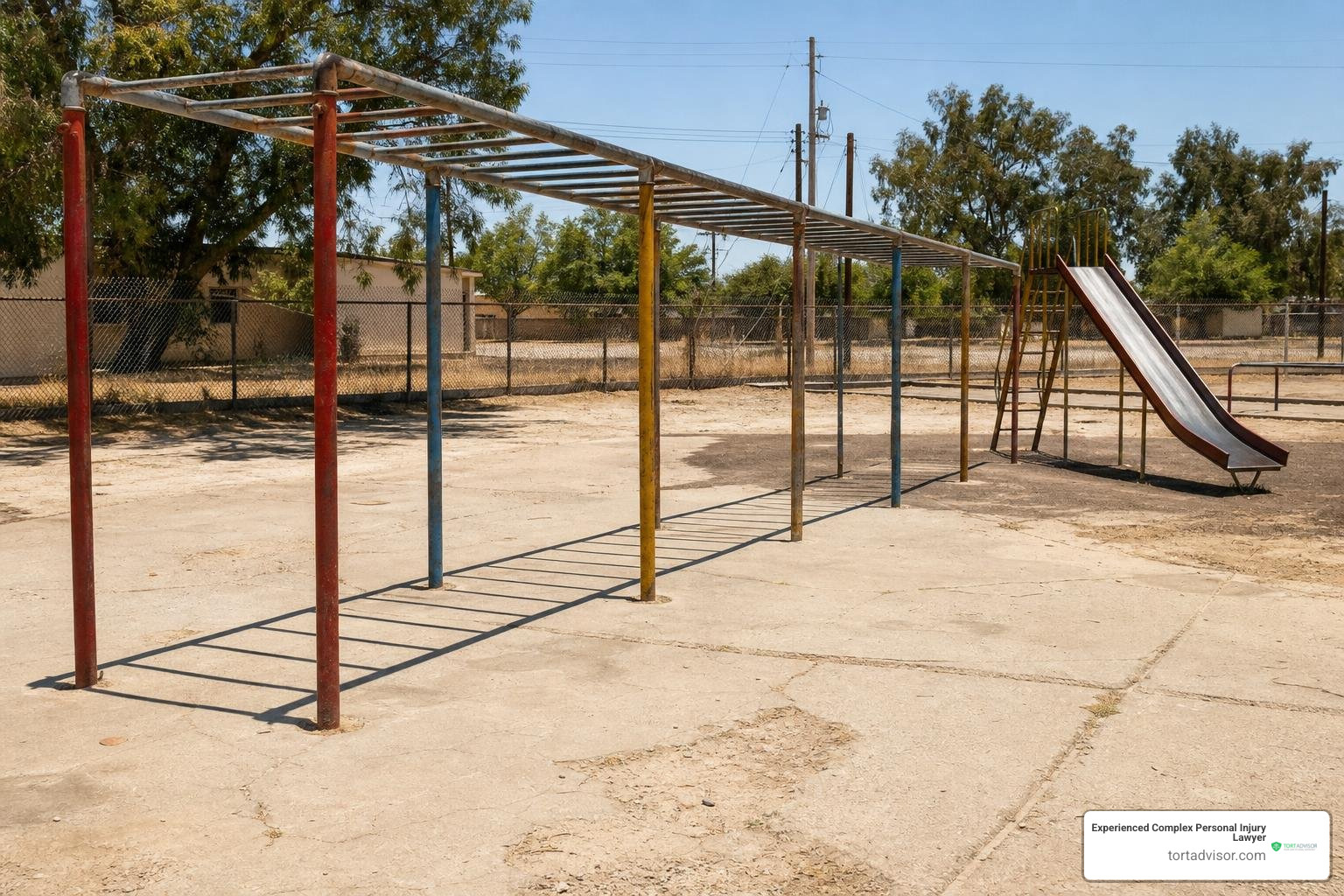
Monkey bars and gymnastics rings in the 1970s were often mounted high above the ground with no intermediate platforms. Children had to rely entirely on upper-body strength to traverse long distances over unyielding surfaces.
Because climbing apparatuses are the most dangerous equipment on public playgrounds, falls from these structures frequently resulted in compound bone fractures, dislocated shoulders, and severe concussions. If your child has suffered a severe injury due to poorly designed or manufactured climbing equipment, consulting with defective product lawyers is a crucial step in seeking compensation for medical bills and long-term recovery.
Why 1970s Playgrounds Were Literal Death Traps
It wasn’t just the dangerous playground equipment itself that made 1970s play areas so perilous; it was the entire design philosophy of the environment.
The Legacy of Dangerous Playground Equipment
Historically, playgrounds were built to be durable and low-maintenance, not forgiving. If a child fell from a 10-foot monkey bar, the ground offered absolutely no cushion. This lack of impact mitigation meant that minor slips frequently escalated into life-altering traumatic brain injuries, permanent spinal damage, or severe fractures. Today, we understand these risks much better, as detailed in our product liability injury guide 2026.
The Absence of Impact-Absorbing Surfacing
The single biggest safety hazard of vintage playgrounds was the ground cover. Asphalt, concrete, packed clay, and natural grass were the standard surfaces under elevated equipment. Grass and packed earth may seem soft, but environmental wear and foot traffic quickly pack them down to the density of concrete.
According to the Consumer Product Safety Commission (CPSC) Public Playground Safety Handbook , any fall onto a hard surface from a height of more than a few feet can cause critical head trauma. Modern standards require at least 12 inches of loose-fill material (like engineered wood fiber or shredded rubber) or poured-in-place rubber safety surfacing to absorb the impact of a fall.

The Modern Evolution: How Regulations Reshaped Play
The transition from the chaotic play areas of the 20th century to modern, highly engineered parks didn’t happen overnight. It was driven by decades of pediatric safety research, parent advocacy, and strict regulatory standards.
The Role of CPSC, EPA, and ADA Standards
Today, playground design is heavily regulated to ensure children’s safety. For instance, pediatricians and safety advocates emphasize the importance of choosing age-appropriate equipment, as highlighted by Playground Safety | Pediatric Health Associates (PHA) | Connecticut .
Key regulatory milestones include:
- The EPA’s CCA Phase-Out: In the early 2000s, the EPA phased out the use of arsenic-treated wood for residential and playground structures, eliminating a major toxic hazard.
- CPSC Guidelines: The CPSC established strict height limits, required “use zones” (clear space around equipment), and banned hazardous items like animal-figure swings and free-swinging ropes.
- ADA Compliance: The Americans with Disabilities Act (ADA) mandated that public playgrounds be accessible to children of all abilities, leading to the widespread adoption of poured rubber surfacing.
Modern playground installers in states like Alaska, Arizona, Arkansas, and Delaware must design play areas that strictly adhere to these safety and accessibility standards. For example, you can see how modern standards are implemented by looking at resources from a Playground Installer in Alaska , Commercial Playground Equipment in Arizona & Southern Nevada , Little Rock, Arkansas Playground Equipment and Installation , or Delaware Playground Equipment and Installation .
The Debate: Are Modern Playgrounds “Too Safe”?
While safety regulations have dramatically reduced severe head injuries and fatalities, they have also sparked a cultural debate. Some critics argue that modern playgrounds have become sterile, low-to-the-ground plastic structures that fail to challenge children.
As explored in California kids need more dangerous playgrounds: Joe … , child development experts suggest that “risky play” is essential for teaching children how to assess danger, build physical resilience, and develop motor skills. The challenge for modern designers is finding the sweet spot between eliminating lethal hazards (like concrete falls and strangulation traps) while still providing engaging, challenging play environments.
Who is Liable for Dangerous Playground Equipment Injuries Today?
When a child is injured on a playground today, the accident is rarely chalked up to “kids being kids.” If the injury was caused by a design defect, poor maintenance, or lack of supervision, several parties can be held legally liable.
If your family is facing the aftermath of a severe playground accident, understanding why you need a defective product injury lawyer after an accident can help you protect your rights and secure the compensation needed for your child’s recovery.
Identifying Dangerous Playground Equipment in Modern Parks
Even modern playgrounds can become dangerous if they are neglected. Property owners and municipal park districts have a duty to perform regular inspections to identify:
- Severe Wear and Tear: Rusted chains, cracked plastic, and splintered wood.
- Missing Hardware: Loose or missing bolts that compromise structural integrity.
- Displaced Surfacing: Areas under swings or slides where wood chips have been kicked away, exposing the hard ground beneath.
Buying or maintaining substandard equipment poses massive risks, as detailed in the Risks of Buying Used Commercial Playground Equipment . When municipalities fail to act on these hazards, communities often face the sudden removal of beloved play spaces to avoid liability, a situation reported in articles like ‘Outrage’ as play equipment is removed from popular park in Cornwall – Cornwall Live .
Legal Recourse for Defective Play Equipment
If an injury occurs, liability generally falls into three categories:
- Product Liability: If the equipment was inherently defective due to a design flaw or manufacturing error, the manufacturer can be held strictly liable. Our defective product lawyer guide explains how these claims are structured.
- Premises Liability: If a school, daycare, or municipality knew about a hazard (like a broken swing or degraded surfacing) but failed to repair it, they can be sued for negligence.
- Negligent Supervision: If a daycare provider or school monitor failed to properly watch the children, leading to an avoidable injury, they may share liability.
Navigating these claims requires specialized legal expertise. Families often rely on attorneys for defective products or attorneys who handle product liability and personal lawsuits to build a strong case.
Frequently Asked Questions about Playground Safety
What is the most dangerous playground equipment still in use today?
While vintage merry-go-rounds are mostly gone, climbing equipment (like high monkey bars and rope climbers) remains the leading cause of injuries on public playgrounds today. On residential playgrounds, swings cause the most injuries. Trampolines also represent a massive source of severe orthopedic and head injuries when used without professional supervision.
How can parents prevent playground injuries?
We recommend using the S.A.F.E. framework developed by the National Program for Playground Safety:
- Supervision: Keep an active eye on children at all times.
- Age-appropriateness: Ensure toddlers stay in designated areas away from tall climbing structures.
- Footing: Check that the ground has adequate, soft safety surfacing.
- Equipment maintenance: Avoid play areas with visible rust, broken parts, or exposed concrete footings.
Additionally, ensure children do not wear hoodies with drawstrings, helmets, or necklaces, which present severe strangulation hazards on play equipment.
What should I do if my child is injured on a public playground?
If your child suffers an injury, prioritize their medical care immediately. Once they are safe, document the scene by taking photos and videos of the specific equipment or hazard that caused the injury. Report the incident to the park owner or school district, and consult a professional to see if you need a legal advocate. For a comprehensive overview of your options, read our personal injury lawyer ultimate guide.
If you are unsure of your next steps, we can help you determine:
- Do I need a personal injury lawyer?
- What can a personal injury lawyer do for you?
- How to find a catastrophic injury lawyer near me or an injury lawyer close to me.
Conclusion
The wild, unregulated playgrounds of the 1970s may evoke fond, nostalgic memories of a riskier childhood, but they also left a legacy of avoidable, severe injuries. Today’s safety regulations, advanced materials, and impact-absorbing surfaces have made play spaces significantly safer, allowing children to explore and build physical skills without facing life-threatening hazards.
When negligent manufacturers, schools, or municipalities fail to maintain these safety standards, children pay the price. At Tort Advisor, we are committed to connecting families with the nation’s top-rated specialty legal experts. If your child has been injured by dangerous playground equipment, let us connect you with experienced defective product lawyers who can fight for the justice, accountability, and compensation your family deserves.
My name is Mason Arnao, and as a father of two children, I have a personal stake in understanding dangerous playground equipment and the legal protections families deserve when negligence causes harm. My background in data systems and internet research has given me a rigorous, evidence-based approach to breaking down complex topics — including the legal and safety landscape around playground injuries — in plain language anyone can understand.