
Show Me the Money! Understanding Mass Tort Lawsuit Payouts

Understanding Mass Tort Lawsuit Compensation Amounts
How much does mass tort lawsuits receive varies dramatically based on injury severity, case type, and individual circumstances, and there is no reliable “typical” range that applies across all mass torts. What can be documented is what defendants agreed to pay in specific litigations:
- 3M Combat Arms earplugs: up to $6.0 billion paid between 2023 and 2029; more than 249,000 claimants registered to participate (3M, March 2024)
- Bayer Roundup (2020): up to $10.9 billion to resolve current and future claims
- Xarelto (2019): $775 million to settle about 25,000 lawsuits
- Kugel hernia mesh (2011): about $184 million for roughly 2,600 plaintiffs, an average of about $70,000 each
- Johnson & Johnson talc (2026): a proposed $5.5 billion resolution of remaining ovarian cancer claims, conditioned on 95% participation and not yet final
Mass tort lawsuits differ from class action suits because each plaintiff receives individual compensation based on their specific damages rather than an equal split. Your payout depends on factors like medical expenses, lost wages, pain and suffering, and the strength of evidence linking your injury to the defendant’s product or conduct.
Find out if you may have a claim
Answer a few questions and a trained case advisor will review your situation — most people finish in about a minute.
- Free — no cost, no obligation
- About a minute to complete
- Reviewed by a trained case advisor
- Nothing you submit is published
Your details are sent over a secure connection and reviewed confidentially.
Most mass tort cases take 2-5 years to resolve, with some complex litigation lasting over a decade. After settlement approval, plaintiffs typically receive their checks within 6-12 months.
I’m Mason Arnao, and through my background in data management and lead generation systems, I’ve helped thousands of clients understand how much does mass tort lawsuits receive by analyzing settlement databases and payout trends across major MDL cases.
What Determines the Size of a Mass Tort Payout?
When people ask how much does mass tort lawsuits receive, the answer isn’t straightforward because every case is unique. While class action lawsuits divide the settlement pie equally among everyone, mass tort cases create individual slices based on how badly each person was hurt.
The difference can be dramatic: within the same settlement pool, one plaintiff can receive a small fraction of what another receives, depending on the severity and documentation of each injury.
Your injury severity matters most. Courts look at your medical records, diagnostic tests, and doctor evaluations to understand exactly how the defendant’s product or actions affected your health. Someone with mild side effects might receive a few thousand dollars, while a person who needed multiple surgeries could receive hundreds of thousands.
Economic damages cover your actual out-of-pocket costs – things like medical bills, lost wages, future treatment expenses, and rehabilitation costs. Non-economic damages compensate for harder-to-measure losses like pain and suffering, emotional distress, or how your injuries affected your relationships and daily life.
The defendant’s financial resources directly affect how much money is available for everyone. When Exactech faced bankruptcy during their implant litigation, it significantly reduced what plaintiffs could expect to receive, despite having solid product liability claims.
Most large settlements use settlement matrix systems that sort plaintiffs into different compensation tiers. These consider factors like your age when injured, how long you used the product, any pre-existing health conditions, and even which state you live in.
Bellwether verdicts from test trials also influence settlement amounts across the entire case. When these sample trials result in big jury awards, it often pushes settlement values higher for everyone.
Don’t forget about attorney fees – typically 25-40% of your settlement goes to legal costs, and there may be additional litigation insurance deductions that affect your final check.
Causation & Evidence: The Bedrock of Value
Your ability to prove the defendant’s product actually caused your injury is absolutely crucial to your compensation amount. Without solid causation evidence, even severe injuries might result in minimal payouts.
Expert testimony carries enormous weight in these cases. Independent medical experts who can clearly explain how the defendant’s product caused your specific injury become your strongest allies.
Medical records tell your story in black and white. Complete documentation showing your health before and after exposure strengthens your position dramatically.
Product recall evidence provides powerful ammunition for your case. When the FDA issues recalls, safety warnings, or when internal company documents surface showing the manufacturer knew about defects, it significantly strengthens everyone’s position.
Bellwether Trials: Settlement Crystal Ball
Bellwether trials act like test cases that give both sides a preview of how much does mass tort lawsuits receive across the broader litigation. These representative cases go to trial first, and their outcomes heavily influence settlement negotiations for everyone else.
When Bayer won ten Roundup trials in a row, they used those victories to negotiate lower settlement amounts for everyone. But when plaintiffs won five of the next six trials, settlement values jumped back up significantly.
The trial schedule for bellwether cases often spans months or even years, but these results ultimately shape the settlement matrix that determines what thousands of other plaintiffs will receive.
How Much Does Mass Tort Lawsuits Receive? Average & Range of Settlements
Let’s explore the numbers that can actually be documented. There is no reliable average or “typical range” that applies across all mass torts: settlement programs are negotiated separately for each litigation, most individual payment matrices are confidential, and published averages are rare. Treat any single “average mass tort payout” figure you see online with caution.
Even inside one settlement, individual payments usually differ widely, because most programs score each claim on injury severity, medical evidence and other factors. It all comes down to your specific circumstances, the strength of your evidence, and the severity of your injuries.
How Much Does Mass Tort Lawsuits Receive in Product-Liability MDLs?
Real-world examples paint the clearest picture of what has actually been paid. In the Kugel hernia mesh litigation, C.R. Bard agreed in 2011 to pay about $184 million to resolve the claims of roughly 2,600 people, an average of about $70,000 per plaintiff. In 2019, Bayer and Johnson & Johnson agreed to pay $775 million to settle about 25,000 Xarelto lawsuits. An average is only part of the story: plaintiffs with more severe, well-documented injuries generally receive more than those with minor complications.
Some large product-liability dockets are still pending. As of October 1, 2026, the Judicial Panel on Multidistrict Litigation listed 23,316 pending actions in the Davol/Bard hernia mesh MDL and 8,433 in the Bair Hugger MDL.
How Much Does Mass Tort Lawsuits Receive in High-Profile Cases?
The biggest mass tort settlements grab headlines because of their size. 3M agreed to pay up to $6.0 billion between 2023 and 2029 to resolve Combat Arms earplug claims, and by March 2024 more than 249,000 claimants had registered to participate. Individual payouts varied with hearing loss severity and other factors.
Johnson & Johnson’s talc litigation is one of the largest federal dockets, with 69,340 actions pending in MDL 2738 as of October 1, 2026. After a bankruptcy court rejected its earlier plan in March 2025, J&J proposed a $5.5 billion resolution of remaining ovarian cancer claims on July 27, 2026; the proposal is conditioned on participation by firms representing at least 95% of those claims and is not final.
In the Roundup litigation, Bayer agreed in 2020 to pay up to $10.9 billion to resolve current and future claims. In 2026 it proposed a separate $7.25 billion class settlement that would pay individual claimants between $6,000 and $165,000 or more; a Missouri state court held an approval hearing in September 2026. On June 25, 2026, the U.S. Supreme Court ruled in Monsanto Co. v. Durnell that federal pesticide law preempts state failure-to-warn claims that would require a warning the EPA reviewed and approved.
Timeline & Distribution: When and How Plaintiffs Get Paid
Understanding the payment timeline helps manage expectations and plan financially during what can be a lengthy legal process.

The journey from filing to payment typically takes 2-5 years, though some complex cases stretch much longer.
Filing to MDL Formation usually takes 6-18 months. Discovery and Bellwether Trials consume the bulk of the timeline – typically 2-4 years. Settlement Negotiations can happen quickly once momentum builds, usually taking 6-12 months. Post-Settlement Distribution takes another 6-12 months after settlement approval.
Several factors can significantly extend these timelines. Bankruptcy proceedings can add years to the process. Appeals of bellwether verdicts delay settlement talks. Multiple defendants complicate settlement allocation since each company wants to minimize their share.
The 3M Combat Arms Earplug litigation demonstrates how even “fast” mass torts take time. Despite relatively clear liability and strong evidence, the case took over four years from initial filing to global settlement approval.
Attorney Fees, Costs & Net Recovery
Understanding fee structures helps you calculate your actual take-home amount from any settlement.
Most mass tort attorneys work for contingency fees ranging from 25-40% of your recovery. Common Benefit Fees add another layer to the fee structure. In MDL proceedings, additional fees (typically 1-6%) compensate attorneys who perform work benefiting all plaintiffs.
Litigation Costs are separate from attorney fees and can include court filing fees, expert witness fees, medical record retrieval, deposition costs, and document production expenses.
Here’s a realistic example: If you receive a $100,000 settlement, you might pay a 33% attorney fee ($33,000), a 3% common benefit fee ($3,000), and $5,000 in litigation costs. Your net recovery would be $59,000.
Taxes & Liens: Keeping More of Your Money
IRS Tax Rules are generally favorable for mass tort settlements. Personal injury settlements are typically not taxable. However, punitive damages are usually taxable income, and lost wage compensation may be taxable.
Medical Liens can significantly reduce your net recovery if not handled properly. Medicare and Medicaid liens are particularly common and must be resolved. Private health insurance subrogation claims can also take a bite out of your settlement.
Lien Negotiation is where experienced attorneys earn their keep. Skilled lawyers often negotiate significant reductions in medical liens, sometimes achieving 50-80% reductions that increase your net recovery.
Maximizing Your Compensation: Steps Plaintiffs Can Control
While you can’t control the defendant’s resources or the judge’s decisions, you can take specific steps to strengthen your case and potentially increase your settlement.

Think of your mass tort case like building a house – you need a strong foundation of evidence to support how much does mass tort lawsuits receive.
Documentation is your best friend. Keep detailed medical records from before and after your exposure to show the clear timeline of your injury. Save every receipt for medical expenses and treatments. Document lost wages with employment records and tax returns.
Keep product packaging, receipts, and usage logs. One client increased their settlement significantly because they kept the original packaging that showed a manufacturing date during a known defective batch period.
Consistent medical care tells your story better than words. Insurance companies and defendants love to find gaps in medical treatment. Follow through with every recommended treatment and keep all appointments, even when you’re feeling better.
Economic losses need professional calculation. For significant cases involving career impact, economic experts can calculate lifetime earning capacity losses.
Choosing the Right Lawyer & Legal Team
Not all attorneys are created equal when it comes to mass tort litigation. Generic personal injury lawyers might handle car accidents beautifully but struggle with the complex federal procedures that govern MDL cases.
Specialized experience matters tremendously. Look for attorneys who have actually handled similar mass tort cases before, not just personal injury in general. They need to understand federal MDL procedures inside and out and can commit substantial resources to litigation that might last several years.
Plaintiffs’ steering committee participation gives your attorney greater influence over settlement negotiations and access to confidential case information that shapes strategy for all plaintiffs.
Resource pooling makes a huge difference in case outcomes. Mass tort litigation requires substantial upfront investment in expert witnesses, document review, and case development.
Evidence Power-Ups: Medical Records & Expert Science
Your medical records are the backbone of your case, but getting them right requires strategy. ChartRequest medical records tips emphasize requesting only relevant records to comply with privacy standards while meeting tight authorization deadlines.
HIPAA-compliant medical record requests must use secure transfer methods and focus on records directly related to your injury. Comprehensive records that show your health before and after exposure provide the clearest picture of causation and damages.
Strong scientific evidence linking the defendant’s product to your specific injury type can significantly strengthen your negotiating position. This includes peer-reviewed medical literature, FDA safety communications, and epidemiological studies showing increased disease rates among exposed populations.
While you can’t control everything about how much does mass tort lawsuits receive, taking these proactive steps can meaningfully impact your individual settlement amount.
Frequently Asked Questions about Mass Tort Settlements
How much does mass tort lawsuits receive on average?
The question “how much does mass tort lawsuits receive” doesn’t have a simple answer because every case is unique, and there is no reliable average that applies across all mass torts. Most settlement programs keep individual payment amounts confidential.
Where figures are public, they vary widely. In the Kugel hernia mesh litigation, C.R. Bard paid about $184 million to roughly 2,600 plaintiffs, an average of about $70,000. Bayer’s proposed 2026 Roundup class settlement would pay individual claimants between $6,000 and $165,000 or more. Even within the same settlement, people with more severe, better-documented injuries typically receive more.
How long will it take to get my settlement check?
Patience is crucial in mass tort litigation. Most cases take 2 to 5 years to resolve, though some complex litigation drags on for over a decade.
Case complexity and the number of defendants significantly impact how long everything takes. Bellwether trial outcomes often determine when serious settlement negotiations begin.
Once a global settlement is reached, court approval processes add several months. After settlement approval, you typically receive your check within 6 to 12 months.
Some factors can extend these timelines significantly. Bankruptcy proceedings can add years if a defendant company files for protection. Appeals of bellwether verdicts delay settlement negotiations.
Are mass tort payouts taxable?
The tax implications of your settlement depend on what type of damages you’re receiving. The good news is that most personal injury compensation isn’t taxable.
Personal injury settlements are generally tax-free under federal law. This includes compensation for physical injuries, medical expenses, and pain and suffering.
However, some portions of mass tort settlements can be taxable. Punitive damages designed to punish the defendant rather than compensate you for injuries are typically considered taxable income. Lost wage compensation may also be taxable.
Always consult with a tax professional about your specific settlement. Tax laws are complex, and individual circumstances can create exceptions to general rules.
Conclusion & Next Steps
If you’ve made it this far, you now understand that how much does mass tort lawsuits receive isn’t a simple number you can Google. It’s a complex calculation based on your unique situation, the severity of your injuries, and how well you can prove the defendant caused your harm.
Mass tort settlements can range from a few thousand dollars to over a million, depending on countless factors we’ve explored throughout this guide. What matters most is building the strongest possible case for your individual circumstances.
At Tort Advisor, we’ve seen how the right legal representation can make the difference between a minimal settlement and life-changing compensation. We connect clients with top-rated specialty attorneys who have proven track records in mass tort litigation – not general practice lawyers who dabble in everything, but specialists who live and breathe MDL proceedings.
Your situation is unique, and so should be your legal strategy. The attorneys in our network have secured millions in settlements across various practice areas and understand the nuances that can make or break your case.
Don’t let time work against you. Every day you wait is another day closer to statute of limitations deadlines. While mass tort cases take years to resolve, you need to get started now to preserve your rights and begin building your case.
When you’re ready for your free case evaluation, have these items ready: your medical records documenting your condition, any product purchase receipts or usage history, employment records for lost wage calculations, your insurance information and prior medical history, and a timeline of when your symptoms developed.
Mass tort settlements reward individual damages rather than providing equal payouts to all participants. The strength of your specific case directly impacts your potential compensation.
Whether you’re dealing with a defective medical device, dangerous pharmaceutical, or toxic exposure, you don’t have to steer this complex process alone. For more information about our services and to connect with experienced mass tort attorneys in your area, contact Tort Advisor today.
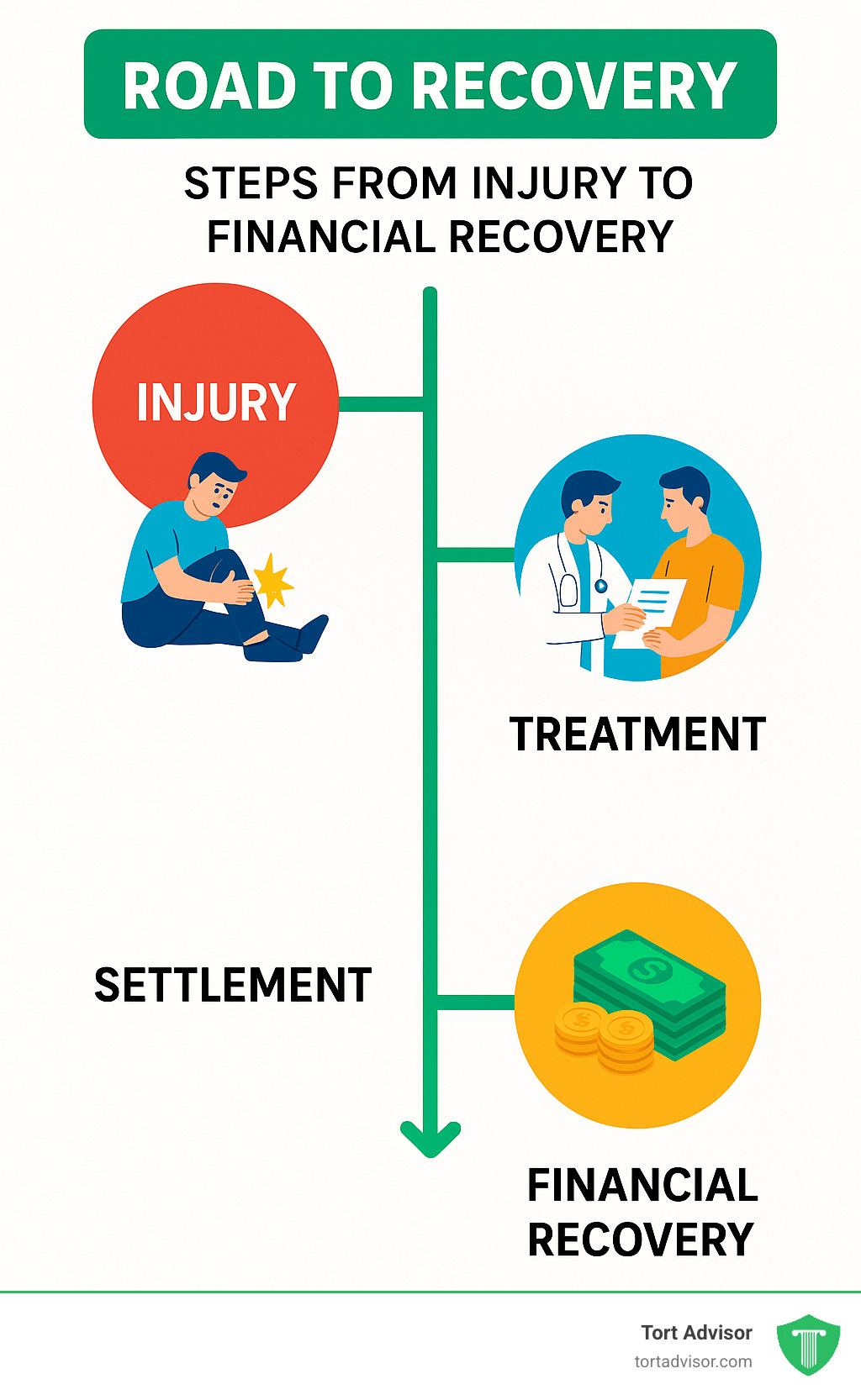
The path from injury to recovery isn’t easy, but with the right legal team, you can focus on healing while they focus on getting you the compensation you deserve.
Related Posts

How VCF registration works: who should register, the two-year deadline and when it starts, how to register online or by phone, and how it fits with the WTC Health Program.
Paraquat exposure explained from EPA, CDC and court records: how it happens, who is most at risk, drift and vapor, the safety rules since 2016, Parkinson’s research, and the records that help show exposure.

The Supreme Court's June 25, 2026 ruling in Monsanto v. Durnell held that FIFRA can preempt state failure-to-warn claims, unsettling a central theory in paraquat cases. With 6,666 actions pending in MDL 3004 and a global settlement agreed in principle but no terms disclosed, here is what is verified and what is not.