Talcum Powder Lawsuit Statute of Limitations: 2026 Deadline Guide by State
Jump to: How the deadline works | The discovery rule | MDL-2738 impact | Why it affects settlement value | What to do next | FAQ
Worried you’re running out of time to file a talc claim?
Filing deadlines vary by state and can be shorter than you think. A free, no-obligation review can help you find out where you stand.
The talcum powder lawsuit statute of limitations is one of the most important parts of any claim against Johnson & Johnson, because a missed filing deadline can end a case regardless of how strong the medical evidence is. Because these deadlines are set by state law, not federal law, there’s no single nationwide answer. Here’s how these deadlines generally work, what can change your specific date, and how to find out where you stand before time runs out.
Find out if you may have a claim
Answer a few questions and a trained case advisor will review your situation — most people finish in about a minute.
- Free — no cost, no obligation
- About a minute to complete
- Reviewed by a trained case advisor
- Nothing you submit is published
Your details are sent over a secure connection and reviewed confidentially.
On this page
How the talcum powder lawsuit statute of limitations works
The talcum powder lawsuit statute of limitations is a state law that sets the maximum time you have to file a claim after a diagnosis of ovarian cancer or mesothelioma linked to talc use. For product liability claims like this one, most states set the window somewhere between one and six years, but the exact number, and what starts the clock, differs from state to state.
Some states count from the date of diagnosis. Others may count from the date of a loved one’s death in a wrongful death claim, or from when a reasonable person would have connected the illness to talc use. Two people diagnosed on the same day, living in different states, can have different deadlines as a result.
The discovery rule and why it matters
Many states apply a “discovery rule,” which delays the start of the filing clock until you knew, or reasonably should have known, that talc use was connected to your diagnosis. Because the science and litigation around talc and asbestos contamination have developed over many years, the discovery rule is often central to disputes over whether a claim was filed on time.
Whether a court applies the discovery rule, and how it calculates the trigger date, is a fact-specific legal question that depends on your state and your individual circumstances. This is why a general estimate cannot replace a case-specific review from an attorney licensed in your state.
How MDL-2738 affects your deadline
Most federal talcum powder claims are consolidated in MDL-2738. Being part of the MDL does not usually change your state’s underlying statute of limitations — the MDL centralizes pretrial proceedings like expert testimony and evidence discovery, but each case generally still has to be timely filed under the law of the state where the claim arose. You can track official case status through the U.S. Judicial Panel on Multidistrict Litigation.
Wondering what your talc claim could be worth?
Our free tool lets you estimate what your case could be worth now based on diagnosis, length of use, and other factors.
Why the deadline affects settlement value
The talcum powder lawsuit statute of limitations isn’t just a procedural technicality — it affects a claim’s leverage. A claim filed well within the deadline, with solid documentation of diagnosis and product use, is generally in a stronger position than one filed close to the line with incomplete records. For a broader look at how talc claims are currently valued, see our talcum powder settlement amounts guide.
What to do if you’re not sure of your deadline
- Don’t wait to find out. Statute of limitations questions are time-sensitive by definition, and delaying a consultation can cost you the claim entirely.
- Gather your diagnosis records. The exact date of diagnosis, and any records of talc product use, are central to calculating your deadline.
- Have an attorney confirm your state’s rule. Because discovery-rule application varies, a general timeline estimate is not a substitute for individual legal advice.
- Ask about tolling. Certain circumstances can pause or extend a filing deadline in some states.
Still unsure where you stand?
Have a trained case advisor review your own facts — free, confidential, and with no obligation.
- Free — no cost, no obligation
- About a minute to complete
- Reviewed by a trained case advisor
- Nothing you submit is published
Your details are sent over a secure connection and reviewed confidentially.
Frequently asked questions
Is the talcum powder lawsuit statute of limitations the same in every state? No. It commonly falls somewhere between one and six years, but the exact period and triggering event depend on your state’s law.
What if I’m not sure when I was diagnosed? Your medical records will typically establish the diagnosis date, which is why gathering them early matters.
Can I still file if it’s been several years? Possibly — depending on your state’s discovery rule and when you reasonably connected your diagnosis to talc use, you may still be within your deadline. This needs individual review rather than a general assumption either way.
For background on talc safety, see the U.S. Food & Drug Administration’s talc safety page, and for official MDL case status see the U.S. Judicial Panel on Multidistrict Litigation.
Find out where your deadline stands
Free, confidential case review. You pay nothing unless a recovery is made.
This article is for general information only and is not legal advice. Statutes of limitations and discovery-rule application vary by state and change over time. Consult a licensed attorney about your specific deadline.
Related Posts

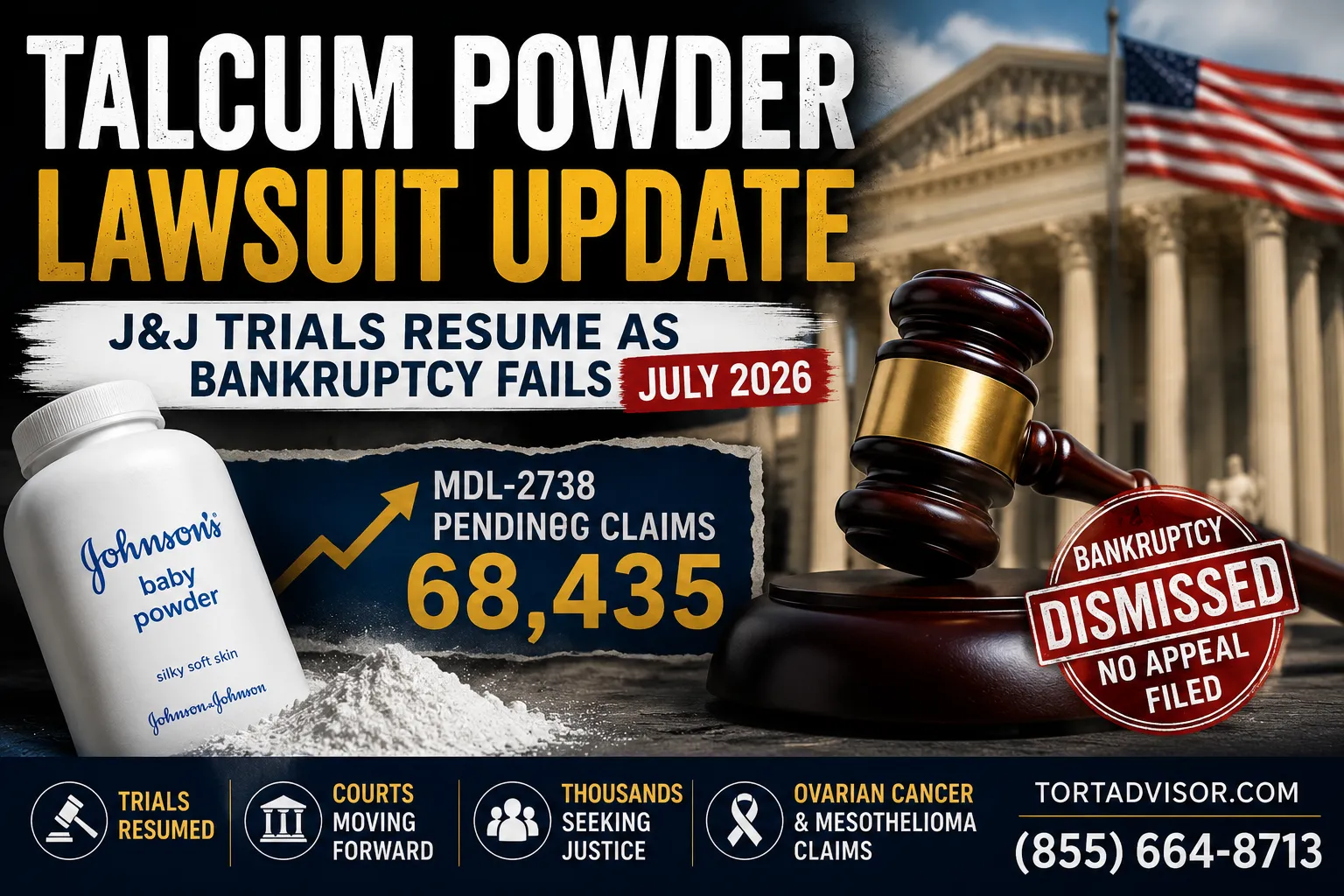
Quick Answer: As of July 2026, Johnson & Johnson's talc bankruptcy strategy has failed for a third time, and talcum [...]

An updated look at the J&J talcum powder MDL: pending claim counts, the March 2026 Lancet retraction, June 2026's split bellwether verdicts, the reduced punitive damages ruling, and where settlement talks stand.

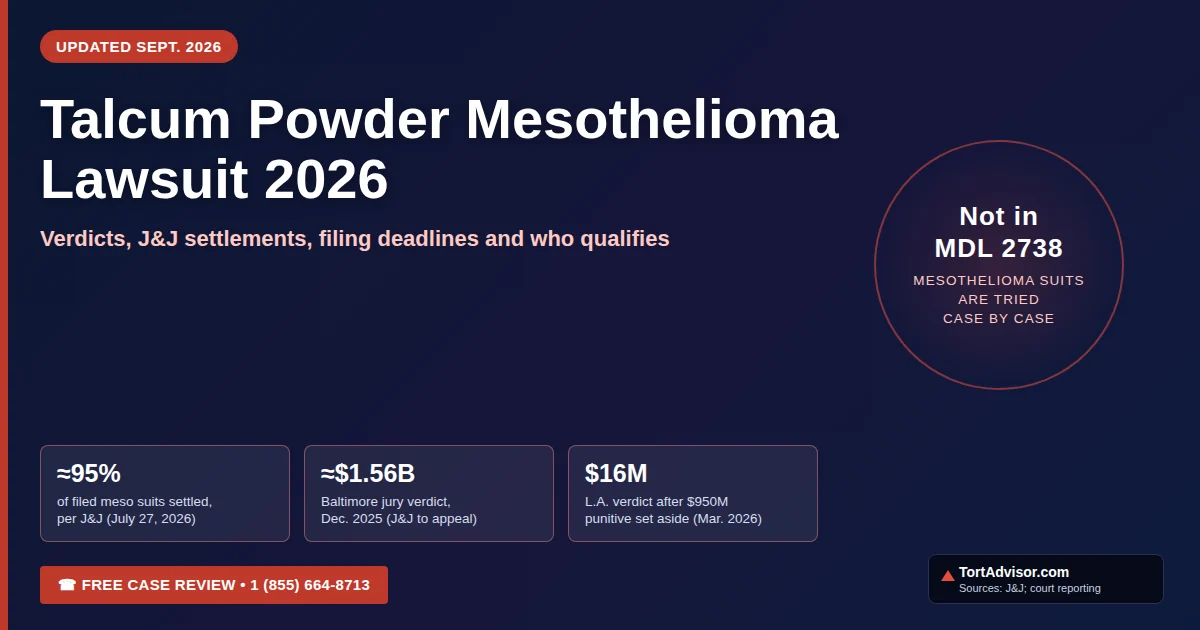
Update — September 24, 2026: On July 27, 2026, Johnson & Johnson proposed a $5.5 billion resolution of ovarian cancer [...]