
Mesothelioma Exposed: Proven Causes, Symptoms, Treatment & Your Legal Rights in 2026
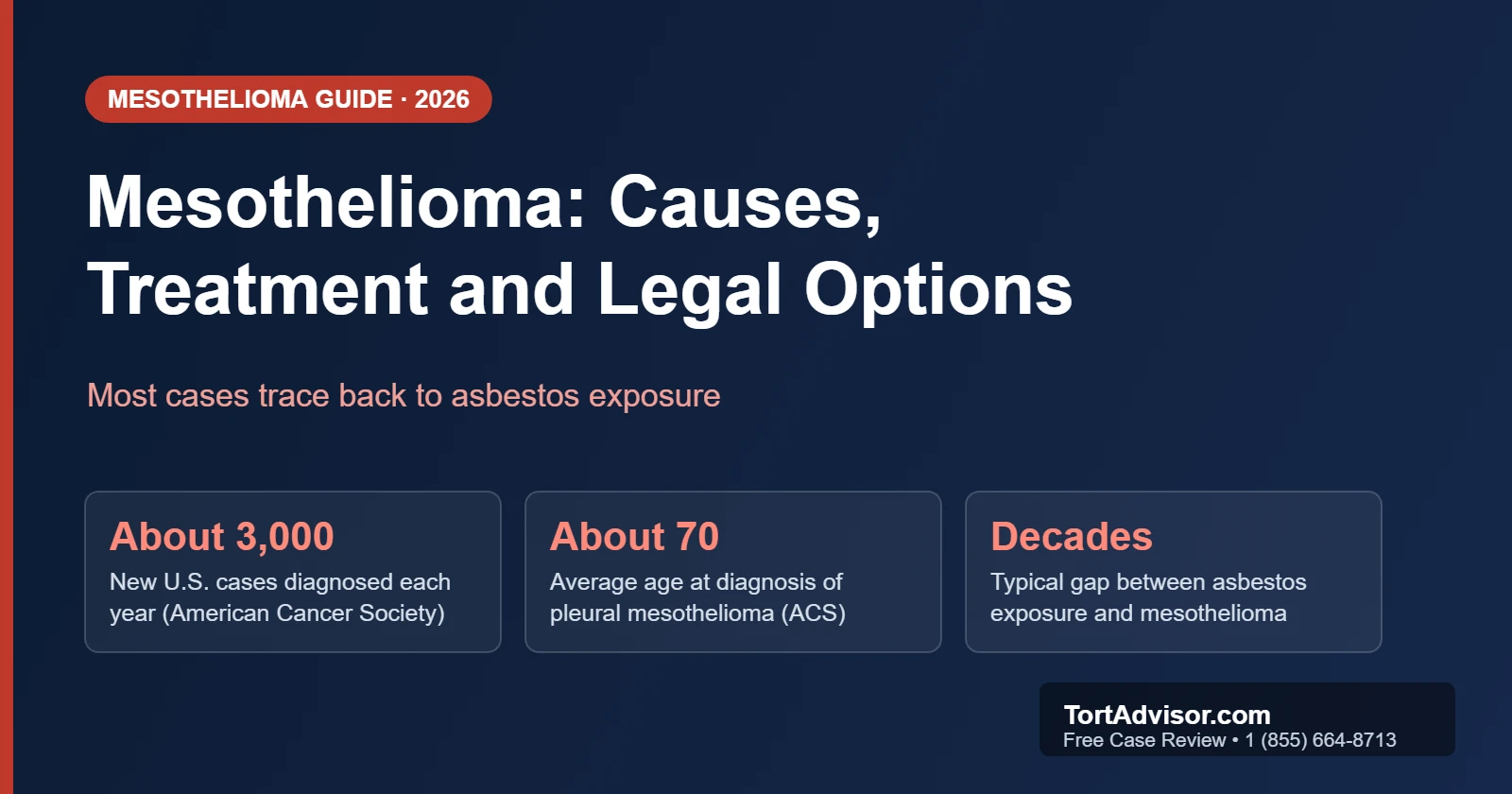
Mesothelioma is a rare but deadly form of cancer that attacks the thin protective lining (mesothelium) surrounding the lungs, abdomen, and heart. Caused almost exclusively by toxic asbestos exposure, this disease is diagnosed in roughly 3,000 Americans every year — and it remains one of the most aggressively litigated mass tort cases in U.S. history. Whether you are seeking clarity on a diagnosis, exploring cutting-edge treatment, or looking for a qualified attorney to fight for fair compensation, this guide covers everything you need to know. Our legal team has helped hundreds of victims navigate the path from diagnosis to justice, and we are here to help you too.
What Is Mesothelioma? A Deadly Cancer With a Long Shadow
Clinically defined as malignant mesothelioma, this cancer originates in the mesothelial cells lining the body’s major organs. Its most dangerous characteristic is its extraordinarily long latency period: symptoms typically emerge 20 to 50 years after initial asbestos exposure, meaning workers exposed to asbestos in the 1970s and 1980s are still receiving diagnoses today. According to the American Cancer Society, approximately 3,000 new cases are diagnosed each year in the United States. The National Cancer Institute notes that roughly 80–90% of all cases are directly linked to occupational asbestos exposure, making it one of the most preventable occupational cancers in existence. The disease is most prevalent among men over 65 who worked in high-risk industries — including construction, shipbuilding, the military, and automotive manufacturing — prior to the widespread asbestos restrictions of the 1980s and 1990s.
Types of Mesothelioma: Understanding Your Diagnosis
Pleural Mesothelioma: The Most Common Form
Pleural disease accounts for approximately 75% of all diagnoses. It develops in the pleura — the two-layer membrane surrounding the lungs — causing progressive chest pain, persistent cough, and pleural effusion (dangerous fluid buildup). According to the Mayo Clinic, breathlessness is often the first warning sign patients report, though it is frequently mistaken for pneumonia or asthma in early stages. Specialized physicians at major cancer centers offer surgical options including pleurectomy/decortication (P/D) and extrapleural pneumonectomy (EPP), often combined with chemotherapy and immunotherapy for optimal outcomes.
Find out if you may have a claim
Answer a few questions and a trained case advisor will review your situation — most people finish in about a minute.
- Free — no cost, no obligation
- About a minute to complete
- Reviewed by a trained case advisor
- Nothing you submit is published
Your details are sent over a secure connection and reviewed confidentially.
Peritoneal Mesothelioma: The Abdominal Form
Peritoneal disease develops in the abdominal lining and comprises roughly 20% of cases. Common symptoms include abdominal swelling, pain, nausea, and unexplained weight loss. Patients with peritoneal disease have seen dramatically improved survival rates thanks to hyperthermic intraperitoneal chemotherapy (HIPEC) — a breakthrough surgical procedure combining tumor removal with heated chemotherapy delivered directly into the abdomen.
Pericardial and Testicular Forms
Pericardial disease affects the lining around the heart, accounting for less than 1% of all diagnoses and presenting unique surgical challenges due to proximity to cardiac structures. Testicular disease is the rarest form, arising in the tunica vaginalis testis, and currently has the most favorable prognosis among all subtypes when caught early.
Warning Signs: Recognizing Mesothelioma Symptoms Early
Because early-stage disease produces few or no symptoms, it is rarely caught before Stage III or IV. Knowing the warning signs — particularly if you have a history of asbestos exposure — can significantly impact prognosis. Key symptoms include:
- Persistent dry cough or unexplained wheezing that does not respond to standard treatment
- Shortness of breath even during light activity or at rest
- Chest pain or tightness that worsens over time
- Pleural or peritoneal fluid accumulation causing visible swelling
- Chronic fatigue and unexplained weight loss of 10 pounds or more
- Abdominal pain and digestive disturbances (peritoneal type)
- Lumps or nodules beneath the skin of the chest or abdomen
If you have a documented history of occupational asbestos exposure and experience any of the above, request immediate imaging and a specialist referral. Early identification dramatically improves treatment options and survival outcomes.
Asbestos Exposure: The Root Cause of Nearly All Cases
Asbestos — a family of naturally occurring silicate minerals — was used prolifically across U.S. industries from the 1930s through the 1980s due to its extraordinary fire resistance and insulating properties. When disturbed, asbestos releases microscopic fibers that, once inhaled or ingested, become permanently embedded in organ linings. Over decades, these fibers cause DNA damage and chronic inflammation that eventually triggers malignant transformation. Historically high-risk occupations include:
- Construction workers, roofers, and insulators working with asbestos-containing materials
- U.S. Navy veterans and shipyard workers (ships were among the most heavily asbestos-laden environments)
- Automotive mechanics exposed to asbestos brake pads and gaskets
- Power plant and industrial facility workers
- Teachers and staff in older pre-1980 school buildings
- Firefighters exposed to asbestos during structural fires — an issue covered in detail in our guide to cancers linked to firefighting chemical exposure
Secondary exposure — where family members of asbestos workers developed the disease from fibers brought home on clothing — has also been widely documented in peer-reviewed literature.
Proven Mesothelioma Treatment Options in 2026
Treatment planning is highly individualized, guided by disease stage, cell type (epithelioid, sarcomatoid, or biphasic), location, and patient performance status. Multimodal therapy — combining two or more treatment types — consistently produces the best outcomes.

Surgical Interventions
Surgery is most beneficial in early-stage (I–II) disease when tumors are localized. Pleurectomy/decortication preserves lung function while removing the diseased pleural lining. Extrapleural pneumonectomy is more aggressive, removing the entire affected lung alongside surrounding tissue, and is reserved for highly specific candidates at experienced surgical centers.
Chemotherapy Protocols
The FDA-approved first-line systemic regimen remains pemetrexed (Alimta) combined with cisplatin or carboplatin. This doublet chemotherapy protocol is used both as standalone treatment and as part of multimodal plans. Emerging maintenance therapies are being evaluated in ongoing Phase III clinical trials at the National Cancer Institute.
Immunotherapy: A Game-Changer Since 2020
The FDA approval of nivolumab (Opdivo) combined with ipilimumab (Yervoy) in October 2020 marked a watershed moment. This dual checkpoint-inhibitor regimen became the first new first-line approval in over 15 years, demonstrating a significant overall survival benefit over chemotherapy alone in the CheckMate-743 trial. Immunotherapy continues to be refined through combination approaches in 2026.
Radiation Therapy
Intensity-modulated radiotherapy (IMRT) and proton beam therapy are used to shrink tumors, relieve pain, prevent local recurrence, and treat surgically inaccessible disease. Radiation is most commonly deployed as part of a trimodal approach alongside surgery and chemotherapy.
Supportive and Palliative Therapy
Comprehensive palliative care — including pain management, thoracentesis (draining pleural fluid), and psychological support — is a critical component of modern treatment. The National Cancer Institute’s treatment guidelines emphasize that palliative intervention should be integrated from the point of diagnosis, not reserved for end-stage disease.
Finding the Best Mesothelioma Doctors in 2026
Given the disease’s rarity, outcomes are significantly better at high-volume specialized centers compared to community hospitals. The National Comprehensive Cancer Network (NCCN) designates specific centers as mesothelioma-specialized; patients should actively seek referrals to these institutions. Leading programs include:
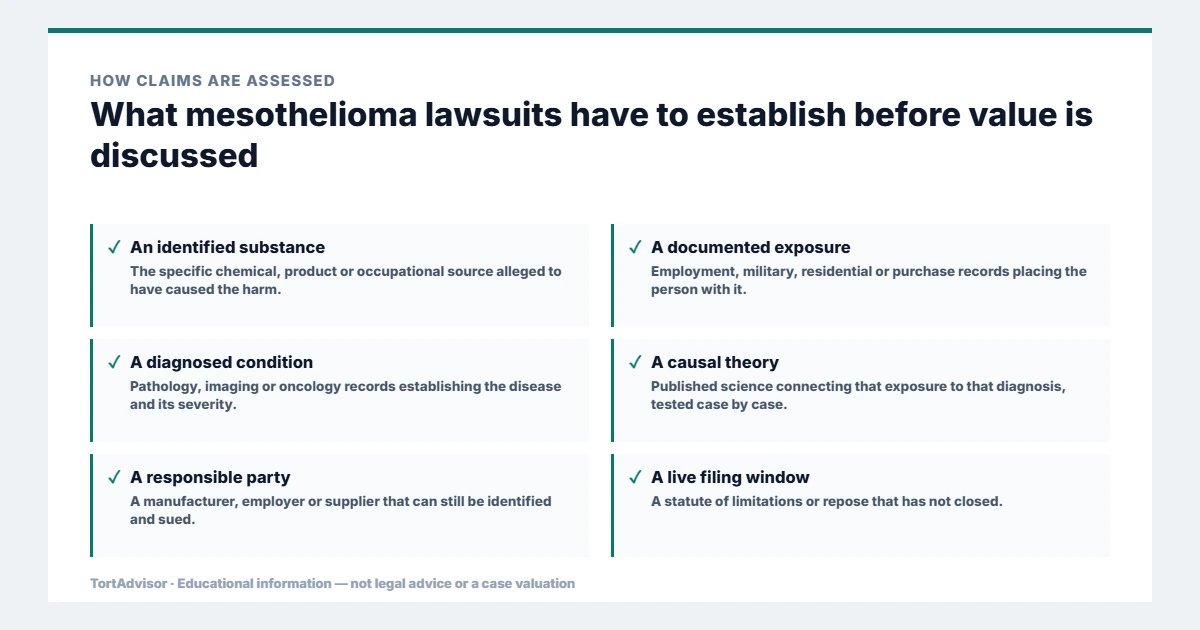
Every status, deadline and figure published on this page about mesothelioma lawsuits is traced to a primary source before it appears.
Every status, deadline and figure published on this page about mesothelioma lawsuits is traced to a primary source before it appears.
- MD Anderson Cancer Center — Houston, TX (consistently ranked #1 in U.S. cancer care)
- Memorial Sloan Kettering Cancer Center — New York, NY
- Brigham and Women’s Hospital / Dana-Farber — Boston, MA
- Penn Medicine Abramson Cancer Center — Philadelphia, PA
- University of California San Diego Moores Cancer Center — San Diego, CA
Many top specialists offer remote consultations for initial assessment. Travel assistance and clinical trial enrollment support are frequently available through hospital social work departments.
Your Legal Rights: Mesothelioma Lawyers, Lawsuits & Compensation
A mesothelioma diagnosis is devastating — but victims and their families have powerful legal rights. The companies that manufactured, sold, and installed asbestos-containing products were aware of the health risks for decades before taking meaningful protective action. Courts across the United States have consistently held these companies accountable, resulting in billions of dollars in compensation for victims. Learn more about how victims have pursued justice in our overview of taking action with a cancer lawsuit.

Pathways to Compensation
There are several distinct legal pathways available to victims and their families:
- Personal Injury Lawsuits — Filed by living patients to recover medical expenses, lost wages, and pain and suffering damages
- Wrongful Death Claims — Filed by surviving family members when a victim has passed from the disease
- Asbestos Trust Fund Claims — Over 60 asbestos bankruptcy trusts collectively hold more than $30 billion designated specifically for compensation, allowing claims without going to trial
- VA Benefits — Veterans who were exposed during military service may be eligible for substantial VA disability compensation; see our Victim Compensation Fund guide
What Compensation Can You Expect?
Settlement values vary widely based on exposure history, disease severity, and the number of liable defendants. There is no official average: most asbestos settlements are confidential, and the averages quoted by law firms are not drawn from published data. Trial verdicts can be much larger than settlements, but large verdicts are often reduced after trial or on appeal. Trust fund awards are generally lower but can be secured faster and without the uncertainty of litigation. Our mass tort lawsuit settlements guide provides a detailed breakdown of how settlement amounts are calculated. You can also estimate a potential asbestos-related claim using the Mesothelioma Settlement Calculator or compare other tools in the Settlement Calculators Hub.
Choosing the Right Mesothelioma Attorney
Not all personal injury attorneys have the resources or experience to handle complex asbestos litigation. When evaluating a mesothelioma lawyer or law firm, look for:
- A dedicated asbestos litigation practice with 20+ years of track record
- Proven verdicts and settlements specifically in asbestos and occupational exposure cases
- Nationwide reach with investigators who can document your exposure history across multiple job sites and time periods
- Contingency fee representation — meaning no upfront costs and no fees unless you win
- An in-house medical team to coordinate between legal strategy and treatment planning
Veterans with military asbestos exposure have additional specialized options. If you need help navigating SSDI benefits related to cancer disability, our SSDI for cancer patients complete guide explains how Social Security Disability benefits interact with legal compensation.
2026 Mesothelioma Research: What’s New
The treatment landscape continues to evolve rapidly in 2026. Key research developments include:
- CAR-T cell therapy targeting mesothelin-expressing tumor cells is entering Phase II trials at multiple NCI-designated cancer centers
- Tumor treating fields (TTFields) technology, previously approved for glioblastoma, showed early promise in the STELLAR trial for pleural disease and is under ongoing investigation
- Liquid biopsy diagnostics using circulating tumor DNA (ctDNA) are moving toward clinical use, potentially enabling earlier detection in high-risk populations
- Combination immunotherapy regimens are being refined through Phase III trials, with several showing improved progression-free survival compared to standard-of-care chemotherapy
For the most current clinical trial listings, visit the NIH ClinicalTrials.gov database.
Frequently Asked Questions About Mesothelioma
Is all mesothelioma caused by asbestos?
In the overwhelming majority of cases, yes. Asbestos exposure is the confirmed cause in 80–90% of diagnoses. Rare cases have been linked to erionite (a naturally occurring mineral fiber found in the U.S. Southwest) and prior therapeutic radiation, but occupational and secondary asbestos exposure remains by far the dominant etiological factor.

How long after asbestos exposure does disease develop?
The latency period is exceptionally long — typically 20 to 50 years between initial exposure and first symptoms. This is why people exposed in the 1960s through the 1980s continue to receive diagnoses today. The long latency also explains why the disease was historically difficult to connect to its occupational origins.
What is the prognosis for mesothelioma patients?
Prognosis depends heavily on stage at diagnosis, histological subtype, and where care is received. Epithelioid cell type generally responds better to treatment than sarcomatoid or biphasic subtypes. With modern multimodal therapy at specialized centers, many patients are living well beyond the historical median survival of 12–21 months. Some peritoneal patients treated with HIPEC have achieved 5-year survival rates exceeding 50%.
What is the statute of limitations for filing a lawsuit?
Each state has its own statute of limitations for asbestos-related lawsuits, typically ranging from 1 to 5 years from the date of diagnosis (personal injury) or date of death (wrongful death). Because of this narrow window and the complexity of exposure documentation, it is critical to consult with an experienced attorney as soon as possible after a diagnosis is confirmed.
Can family members file a claim if a loved one has died from mesothelioma?
Yes. Surviving spouses, children, and other qualifying dependents can file wrongful death claims on behalf of a deceased victim. Trust fund claims and VA benefit claims may also remain available to estates and surviving family members. An experienced asbestos attorney can evaluate all available compensation pathways and advise on the best strategy for your specific situation.
Take Action Today: You Deserve Justice
A mesothelioma diagnosis changes everything — but you do not have to face this fight alone. From connecting you with top specialists and clinical trials to building a powerful legal case for the compensation the evidence supports, our team is here to support you at every step. Start at the TortAdvisor Home Page, review active claims on the Lawsuits Page, or use the Settlement Calculators Hub to compare claim-value tools. You can also open the dedicated Mesothelioma Settlement Calculator for a free estimate. Explore our full library of resources including our mass tort litigation support guide and our comprehensive overview of taking legal action after a cancer diagnosis. Experienced mesothelioma attorneys in our network work on a contingency basis — meaning you pay nothing unless they win for you. This article was reviewed by our legal and medical content team and is intended for informational purposes only. It does not constitute legal or medical advice. Always consult a licensed physician and qualified attorney for guidance specific to your situation.
See Mesothelioma & Asbestos Settlement Amounts 2026 for reported payout ranges, the factors that move claim value, and what the court record actually shows as of August 2026.
Related Posts

How VCF registration works: who should register, the two-year deadline and when it starts, how to register online or by phone, and how it fits with the WTC Health Program.
Paraquat exposure explained from EPA, CDC and court records: how it happens, who is most at risk, drift and vapor, the safety rules since 2016, Parkinson’s research, and the records that help show exposure.

The Supreme Court's June 25, 2026 ruling in Monsanto v. Durnell held that FIFRA can preempt state failure-to-warn claims, unsettling a central theory in paraquat cases. With 6,602 actions pending in MDL 3004 as of 1 October 2026 and a global settlement agreed in principle but no terms disclosed, here is what is verified and what is not.