Short answer: This article explains the key facts, eligibility issues, settlement factors, deadlines, and source-backed updates related to this legal topic. Results vary by case facts, evidence, jurisdiction, and representation.
Understanding Product Liability Injuries and Your Rights
When a Defective Product Changes Your Life
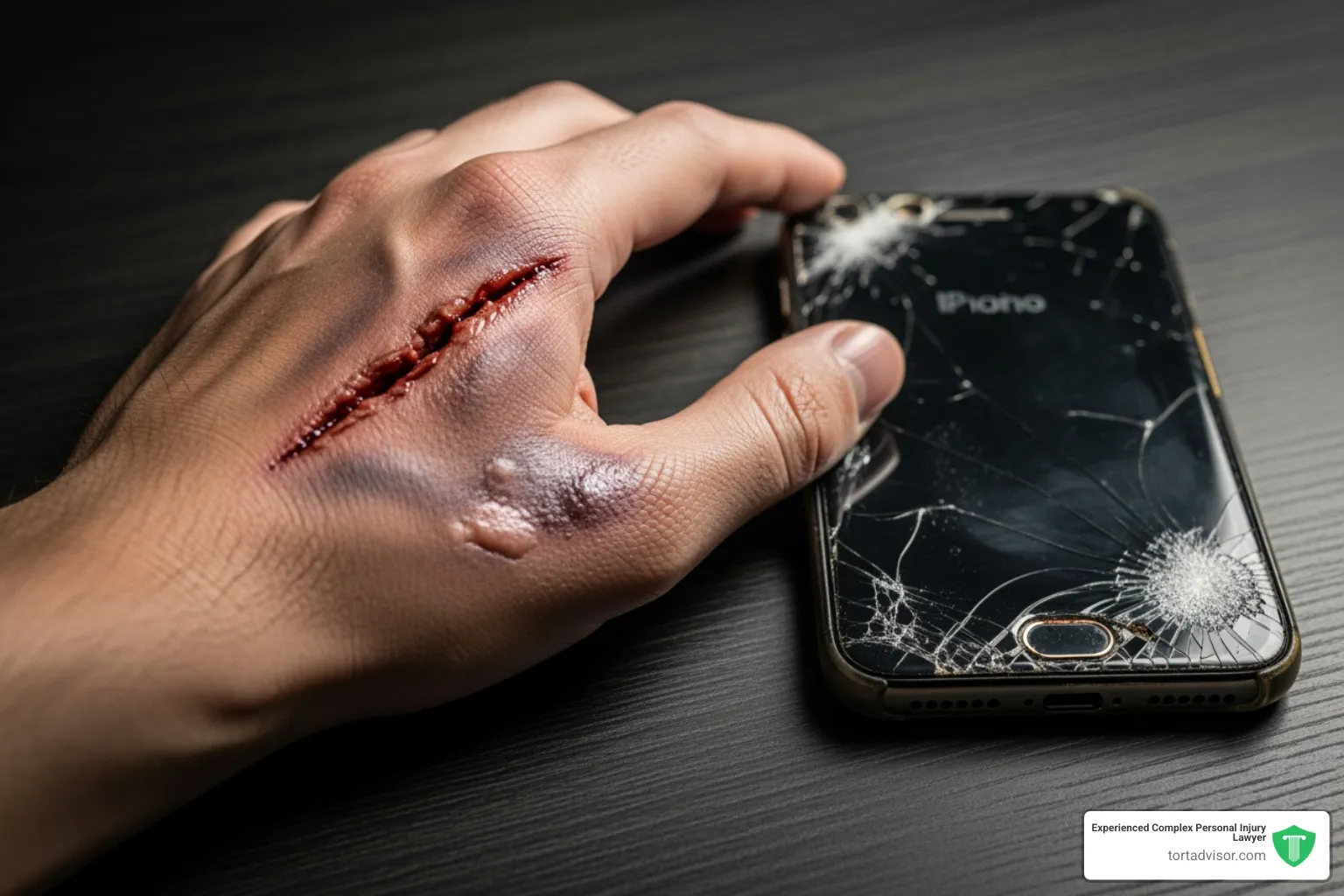
Product liability injury occurs when a defective or dangerous product harms a consumer. These injuries can range from minor cuts to catastrophic harm or even wrongful death. When companies place unsafe products into the marketplace, they can be held legally responsible for the damages caused.
Key Facts About Product Liability Injuries:
- What it covers: Injuries caused by defective products due to design flaws, manufacturing errors, or inadequate warnings
- Who can be held liable: Manufacturers, distributors, wholesalers, retailers, and component part makers
- Three main defect types: Design defects, manufacturing defects, and marketing defects (failure to warn)
- Legal theories: Claims can be based on strict liability, negligence, or breach of warranty
- Your rights: You may be entitled to compensation for medical bills, lost wages, pain and suffering, and other damages
- No upfront costs: Most product liability attorneys work on a contingency fee basis
Every year, thousands of Americans are injured by products they trusted to be safe. Product liability law exists to protect consumers and hold companies accountable when their products cause harm.
Navigating a claim can feel overwhelming, especially while dealing with medical treatments and mounting bills. You’re facing powerful corporations with teams of lawyers, and the legal process is complex.
I’m Mason Arnao, and while my primary background is in technology, I’ve spent years building systems that connect people with the specialized legal help they need for complex issues like product liability injury cases. Through this work, I’ve gained deep insight into how these claims unfold and what injured consumers need to know to protect their rights.
What is Product Liability Law?
When you buy a product, you expect it to be safe. If it’s not, and you get hurt, product liability law holds the companies in the manufacturing and sales chain accountable. This can include the manufacturer, part suppliers, assemblers, wholesalers, and the retail store where you bought it.
Historically, the law followed a principle called caveat emptor—”let the buyer beware.” This made it nearly impossible for injured people to get justice. Thankfully, landmark 20th-century court cases reshaped the legal landscape, recognizing that manufacturers are responsible when their products hurt anyone who might reasonably use them. These decisions laid the groundwork for the strong consumer protections we have today. For a deeper understanding of how these protections work, check out this Introduction to product liability law.
Legal Bases for a Claim
A product liability injury claim typically rests on one of three legal foundations: tort law, contract law, or state statutes.
Most cases fall under tort law, which addresses civil wrongs that cause harm. The two main tort theories are strict liability and negligence. The basic idea is that when a defective product hurts you, the law recognizes that as a wrong that deserves compensation.
Contract law comes into play through “breach of warranty.” An express warranty is a direct promise from the seller about the product. Implied warranties are guarantees the law assumes exist, such as the product being fit for its basic purpose. If a product fails to meet these warranties and causes an injury, you may have a claim.
State statutes provide a third avenue. While there is no single federal product liability law, many states have their own specific statutes that build on common law principles and add state-specific rules.
Understanding these pathways helps your attorney choose the strongest approach for your case. For more context on how personal injury lawsuits work, see More info about personal injury lawsuits.
Strict Liability vs. Negligence
The difference between strict liability and negligence is crucial to your case.
Strict liability is a powerful tool for consumers. Under this theory, you don’t need to prove the manufacturer was careless. You only need to show that the product was defective and that defect caused your injury. The focus is on the product’s condition, not the company’s behavior. This exists because manufacturers are in the best position to ensure product safety and should be held responsible when they fail.
Negligence focuses on the company’s fault. To prove negligence in a product liability injury case, you must show the company had a duty of care to make a safe product, they breached that duty through carelessness, that breach caused your injury, and you suffered damages as a result.
The key difference: Negligence asks “did they act carelessly?” while strict liability asks “was the product defective?” An attorney will evaluate which theory provides the strongest path to compensation.
The Three Main Types of Product Defects
When a product liability injury occurs, it’s almost always due to one of three types of defects. Understanding these helps identify what went wrong and who is responsible.
Design Defects
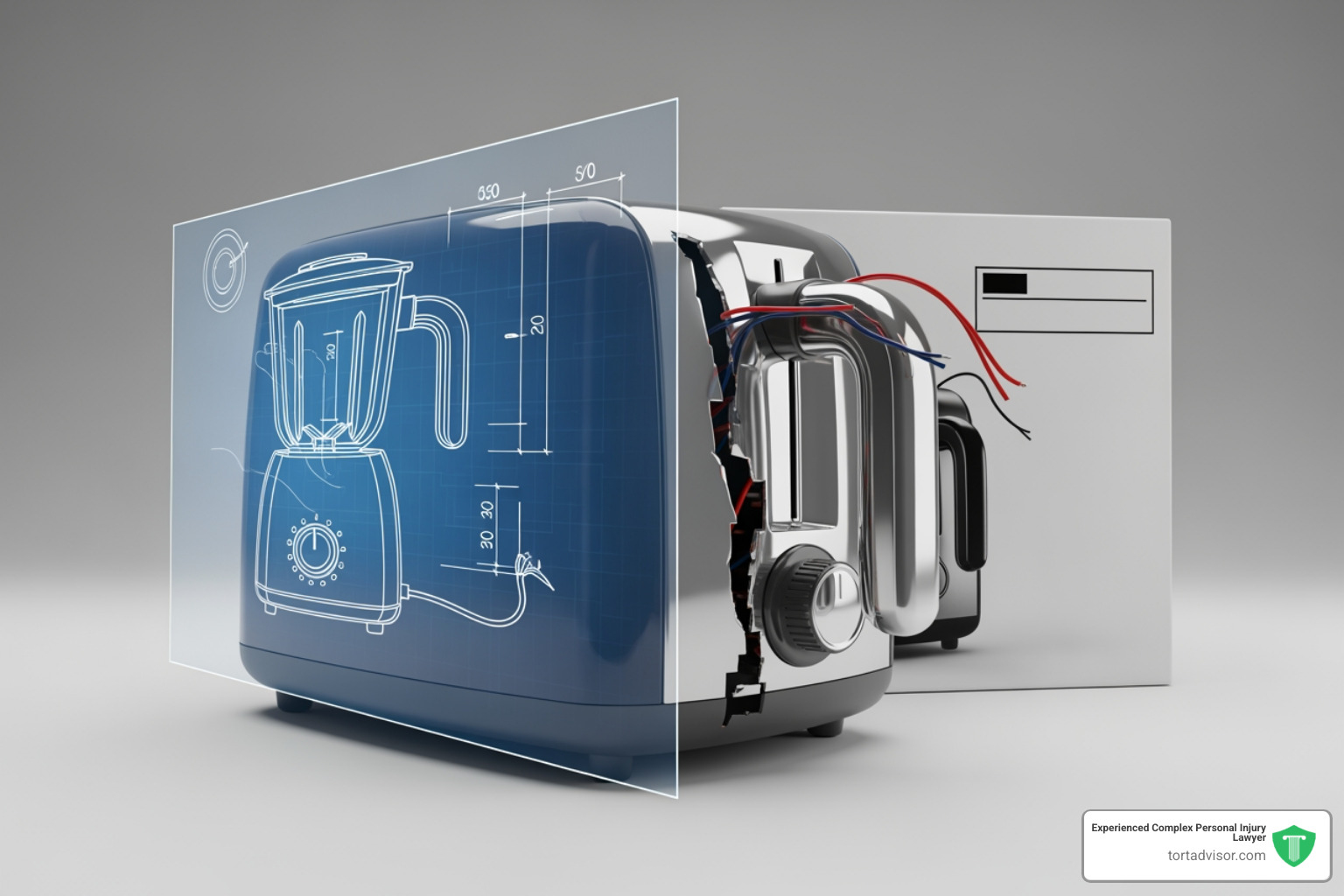
A design defect is a flaw inherent in the product’s blueprint, making the entire product line unreasonably dangerous before the first unit is even made. The Ford Pinto case is a classic example, where the gas tank’s design made it vulnerable to rupturing in collisions.
Courts use two main tests to evaluate a design. The risk-utility test weighs the product’s dangers against its benefits, considering if a safer, practical alternative existed. The consumer expectation test asks if the product is more dangerous than an ordinary person would reasonably expect. The trend toward using the risk-utility test shows how courts are evolving. Design defects are common in complex products like vehicles and medical devices. A Dangerous Drug Attorney can help determine if a drug’s formulation was defectively designed.
Manufacturing Defects
Unlike a design defect that affects every unit, a manufacturing defect is a mistake that happens during production. The product’s design is safe, but a specific unit or batch was made incorrectly. This can happen from using substandard materials, leaving out a component, assembling parts incorrectly, or contamination during the process.
The key is that the finished product deviates from its intended design. This makes these defects somewhat easier to prove, as the flawed product can be compared to a properly made one. Medical equipment is particularly susceptible to these errors, as seen in cases discussed on our Bair Hugger Lawsuit page, which can lead to serious product liability injury claims.
Marketing Defects (Failure to Warn)
A marketing defect occurs when a product is dangerous because the company failed to provide adequate warnings or instructions about non-obvious risks. Manufacturers have a legal duty to warn consumers about foreseeable risks associated with their products.
This can include inadequate instructions or insufficient warnings that don’t properly convey the potential for harm. The famous McDonald’s coffee case, where a customer suffered severe burns from coffee served at a near-boiling temperature, is a prime example of a failure to warn about a hidden danger. Even seemingly simple products require proper labeling if they pose non-obvious risks, such as the cancer risks associated with certain chemicals. Our guide on Monsanto Roundup Lawsuits explores how inadequate warnings led to thousands of claims.
Building Your Product Liability Injury Claim
Building a strong product liability injury claim requires clear evidence and a solid legal strategy. The legal standard is “preponderance of the evidence,” which means we must show it’s “more likely than not” that your claim is true. This is a lower bar than in criminal cases but still requires compelling proof.
Who Can Be Held Liable?
When a defective product injures you, liability can extend to any party in the “chain of distribution.” This means we can often hold multiple parties accountable, including:
- Manufacturers who designed and built the product.
- Component part makers who supplied a faulty part.
- Wholesalers and distributors who moved the product to stores.
- Retailers who sold the product to the consumer.
Pursuing multiple parties increases the chances of securing full compensation for your injuries.
Key Elements of a Product Liability Injury Case
Every successful claim must prove four fundamental elements:
- The product was defective. We must show it had a design, manufacturing, or marketing defect when it left the defendant’s control.
- You suffered an injury. The law requires actual physical harm or property damage.
- The defect caused the injury. We must draw a direct link between the product’s flaw and the harm you suffered.
- You suffered damages. This includes quantifiable losses like medical bills, lost income, and pain and suffering.
Building this evidence is critical. You can learn more about What evidence do I need to prove my case?.
Common Defenses Used by Companies
Companies have legal teams dedicated to defeating product liability injury claims. They often use common defenses, including:
- Statute of Limitations: Arguing you missed the legal deadline for filing a lawsuit. An even stricter statute of repose sets an absolute deadline from when the product was first sold.
- Product Alteration: Claiming you modified the product after purchase, and the modification caused the injury.
- Misuse of the Product: Arguing you used the product in an unforeseeable or unintended way.
- Comparative Fault: Acknowledging a defect but arguing your own negligence contributed to the injury. In many states, this can reduce your compensation based on your percentage of fault.
- Assumption of Risk: Claiming you knew about the specific danger but used the product anyway.
What to Do After Being Injured by a Product
When a defective product injures you, the shock and pain can make it hard to think clearly. But the actions you take in the hours and days that follow can make or break your ability to recover fair compensation. I know it’s the last thing you want to worry about when you’re hurting, but protecting your legal rights starts right now.

Immediate Steps to Protect Your Rights
Think of these first steps as building the foundation for your case. Each one matters, even when you’re scared or in pain.
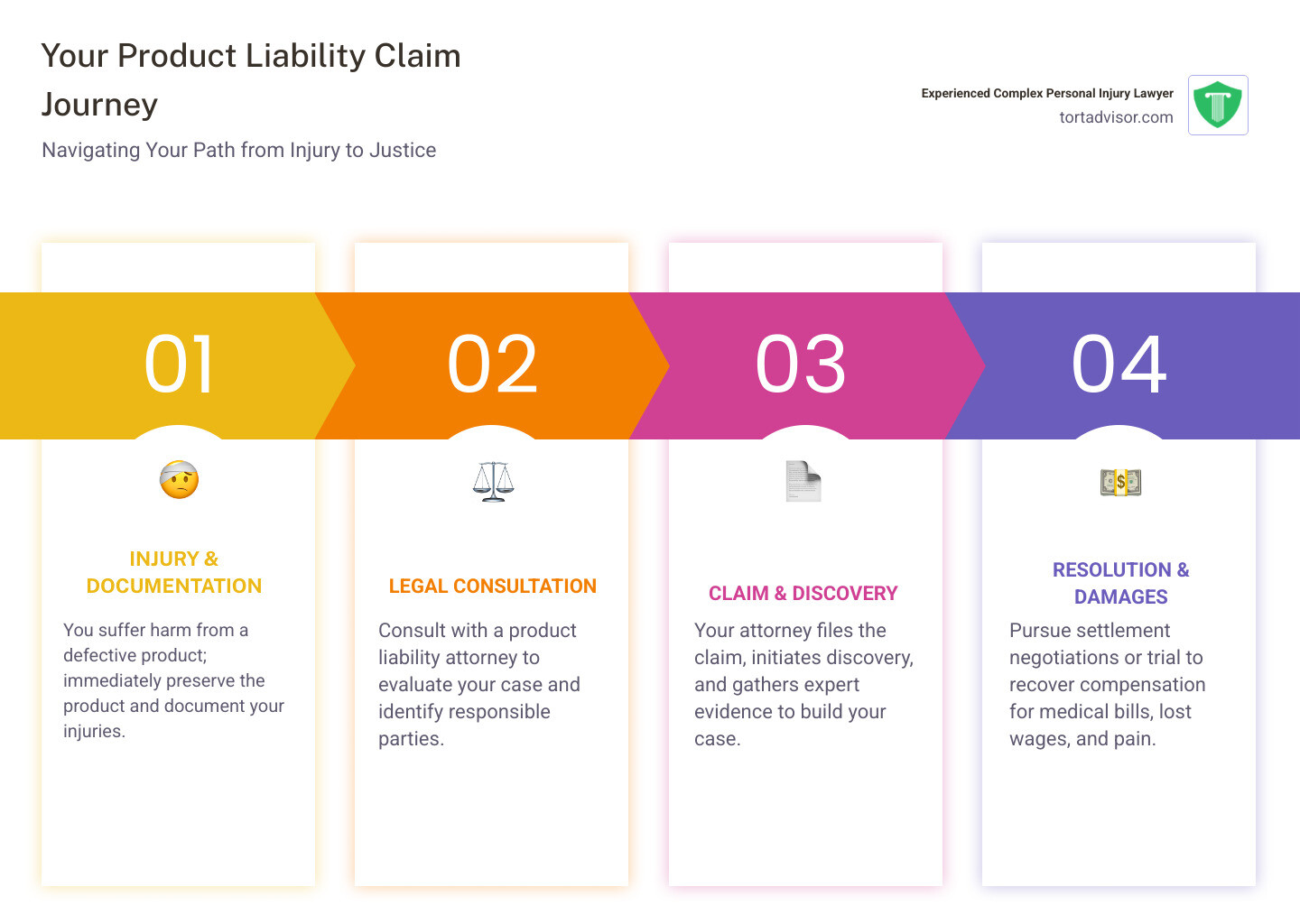
Get medical help immediately. I can’t stress this enough. Even if you think your injuries are minor, see a doctor right away. Some serious injuries don’t show symptoms immediately, and that delay between the incident and your doctor visit can give insurance companies ammunition to argue your injuries weren’t that bad or weren’t caused by their product. Your medical records become the official story of what happened to your body, and we need that documentation to be thorough and immediate.
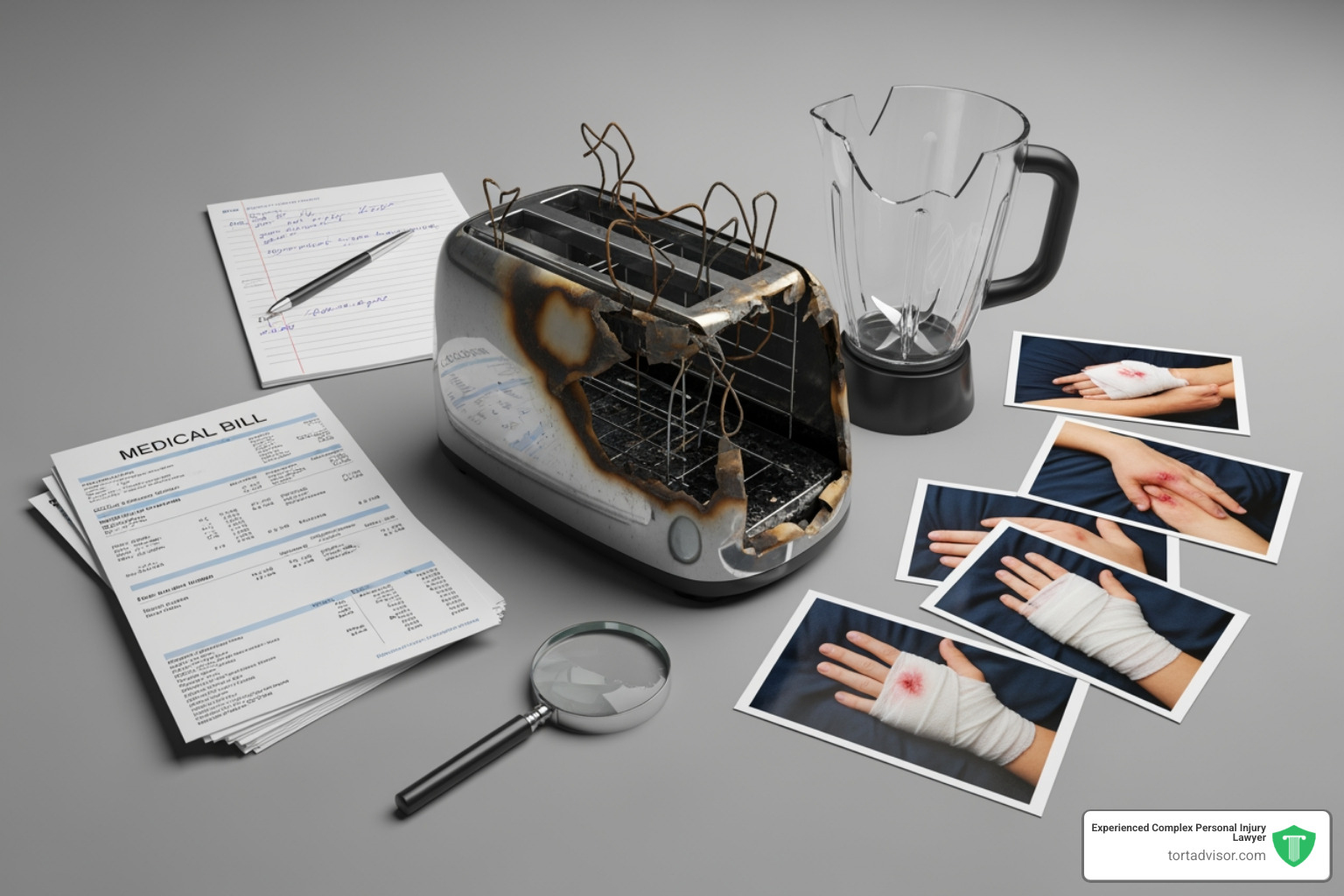
Whatever you do, don’t throw away that defective product. This is probably the biggest mistake we see. People naturally want to get rid of the thing that hurt them, but that product is your smoking gun. Don’t try to fix it, don’t clean it up, and definitely don’t toss it in the trash. Even if it looks like a charred mess or a pile of broken parts, expert witnesses can examine it and find evidence that proves exactly what went wrong. Store it somewhere safe where it won’t be disturbed or accidentally damaged further.
Become a detective for your own case. Write down everything you remember about the incident while it’s still fresh in your mind. Where were you? What time was it? What were you doing with the product? What happened next? These details fade quickly, but they can be crucial later. Keep every single piece of paper related to your injury: medical bills, prescription receipts, physical therapy invoices, even parking receipts from doctor visits. Track the days you missed work and how much money you lost. This paper trail adds up to real dollars in your claim.
Pull out your phone and start documenting. Take photos and videos of everything. Photograph your injuries from multiple angles, and keep taking photos as bruises develop or wounds heal (or don’t heal). Capture the defective product from every side. Take pictures of where the incident happened. If there’s damage to your home or car, photograph that too. Video can be even more powerful because it shows context and scale in ways photos can’t.
Here’s what not to do: talk to insurance adjusters without a lawyer. When the manufacturer’s insurance company calls, they’ll sound friendly and concerned. They might say they just need a quick statement to “help you.” Don’t fall for it. These adjusters are trained professionals working to save their company money, not to help you. Anything you say can be twisted to minimize your claim. Politely tell them you’ll have your attorney contact them, then actually call an attorney. And never, ever sign anything they send you without legal review first.
For a deeper look at navigating these crucial first steps, our Defective Product Injury Attorney Guide walks you through the entire process.
Types of Damages You Can Recover
When we talk about what you can recover in a product liability injury case, we’re talking about money that puts your life back together as much as possible. The law recognizes two main categories of losses, and understanding both helps you see the full picture of what you’re entitled to.
Compensatory damages are designed to compensate you for real losses. Think of them as reimbursement for what the defective product took from you. Some of these are easy to calculate because they come with receipts and bills. Your medical expenses include everything from the ambulance ride to surgeries, medications, physical therapy, and even future medical care if your injuries require ongoing treatment. Your lost wages cover the paychecks you missed while recovering, plus future earning capacity if you can’t return to your old job or work the same hours.
But money isn’t just about bills and paychecks. Some losses don’t come with a price tag, yet they’re just as real. Pain and suffering compensation acknowledges the physical agony you’ve endured. Emotional distress recognizes the anxiety, depression, or trauma that often follows a serious injury. If you can’t play with your kids the way you used to, or if you had to give up hobbies that brought you joy, that’s called loss of enjoyment of life, and it counts. When your injury strains or damages your marriage or family relationships, that’s loss of consortium, and your spouse may be able to recover for that too.
In rare cases where a company’s behavior was particularly outrageous, punitive damages might come into play. These aren’t about compensating you; they’re about punishing the wrongdoer and sending a message that this kind of reckless disregard for safety won’t be tolerated. Maybe a manufacturer knew their product was dangerous but sold it anyway to make a quick profit. That’s when courts might award punitive damages on top of compensatory damages. Florida does cap these at three times your compensatory damages or $500,000, whichever is greater, though exceptions exist for truly egregious conduct.
Calculating all of this, especially future losses and non-economic damages, requires expertise and often expert witnesses. We use every tool available to make sure your claim reflects the full impact of your injury. For certain types of cases, tools like our Calculator: Hernia Mesh Settlement Calculator can give you a rough idea of potential compensation ranges.
The Role of a Product Liability Injury Attorney
Let me be honest with you: taking on a product liability case without an attorney is like bringing a pocketknife to a gunfight. You’re facing corporations with deep pockets and legal teams whose full-time job is to deny or minimize claims just like yours. You need someone in your corner who knows this battlefield inside and out.
When you work with us, we start with a free case evaluation. No pressure, no obligation. We sit down with you, listen to your story, review what happened, and give you an honest assessment of whether you have a strong claim and what it might be worth. If we take your case, you won’t pay us anything upfront—we work on contingency, meaning we only get paid if you do.
Our investigation goes far beyond what you could do on your own. We know exactly what evidence to look for and how to preserve it legally. We track down purchase records, manufacturing documents, and any history of similar complaints about the same product. We interview witnesses and consult with experts who can recreate what happened.
Speaking of experts, hiring the right specialists often makes or breaks these cases. We work with engineers who can tear apart a product and explain exactly what went wrong. We bring in product design experts who can show that safer alternatives existed. We consult medical professionals who can testify about the full extent of your injuries and future prognosis. These experts don’t come cheap, but they’re essential, and we cover these costs upfront.
Identifying every liable party is like detective work. Was it the manufacturer? The company that made a faulty component? The distributor who stored the product improperly? The retailer who sold it despite knowing about problems? We trace the entire chain of commerce to make sure everyone who shares responsibility is held accountable.
When it comes to negotiating, we handle all the back-and-forth with corporate lawyers and insurance adjusters so you don’t have to. We know their tactics because we’ve seen them a thousand times. We know when an offer is fair and when they’re trying to lowball you. We fight for every dollar you deserve, and we won’t recommend settling unless the offer truly reflects the full value of your claim.
If negotiations fail, we’re ready for trial. We’ll prepare your case carefully, present compelling evidence, bring in expert witnesses, and tell your story to a jury in a way that makes them understand what you’ve been through. Not every attorney is comfortable in a courtroom, but trial experience matters in these cases.
As one of our colleagues puts it, “It will be a long process, and you need to be a team.” We’re here to be that team for you, walking beside you through every step of this journey. To learn more about how we support our clients through complex injury claims, visit What Can a Personal Injury Lawyer Do For You?.
Frequently Asked Questions about Product Liability Claims
If you’re considering a product liability injury claim, you likely have questions. Here are answers to some of the most common ones.
How long do I have to file a product liability lawsuit?
Time is not on your side. Every state has a “statute of limitations”—a strict deadline for filing a lawsuit. For product liability, this is typically two to three years from the date of your injury or the date you reasonably should have finded it.
An even more restrictive deadline, the “statute of repose,” sets an absolute cutoff, often 10 to 12 years from when the product was first sold. Missing these deadlines, even by a day, can permanently bar your right to compensation. It is crucial to contact an attorney quickly to protect your rights. For more on deadlines, see How long do I have to file a lawsuit?.
What if I was partially at fault for my injury?
This is a common concern, but in most states, you can still recover damages even if you share some of the blame. Most states use a “comparative fault” system, which reduces your compensation by your percentage of fault. For example, if you were found 20% at fault, your $100,000 award would be reduced to $80,000.
Some states, like Florida, use a modified comparative fault rule, where you can’t recover anything if your fault is 51% or more. A few states still use the harsh contributory negligence rule, where being even 1% at fault bars all recovery. Don’t assume you have no case; let an experienced attorney evaluate the specifics.
How much does it cost to hire a product liability lawyer?
You do not need money upfront to hire a top-tier product liability lawyer. Nearly every attorney in this field works on a contingency fee basis.
This means:
- You pay nothing upfront.
- Your initial consultation is free and without obligation.
- The attorney only gets paid if they win your case, either through a settlement or a trial verdict.
Their fee is a pre-agreed percentage of the compensation they recover for you. If you don’t win, you owe no attorney fees. This system allows anyone, regardless of their financial situation, to stand up to powerful corporations. Learn more at How Much Does a Personal Injury Lawyer Cost?.
How to Get Help for Your Product Liability Case
Being injured by a defective product can feel overwhelming, but you have legal rights. The law holds companies accountable when their unsafe products cause a product liability injury.
However, these cases are complex. They involve technical evidence and battles against corporations with vast legal resources. Trying to handle a claim alone while recovering from an injury can seriously jeopardize your chances of receiving fair compensation.
Time is also a critical factor. Strict legal deadlines and the risk of evidence disappearing mean you must act quickly.
This is where Tort Advisor comes in. Our mission is to connect you with elite attorneys who specialize in product liability law and have a proven record of success against major manufacturers. We’ve already vetted the lawyers in our network for their skill, experience, and results.
Getting started is simple. The consultation is free, and there’s no obligation. The attorneys we work with operate on a contingency fee basis, so you pay nothing unless they win your case. This aligns their interests with yours—they are invested in your success.
Your life was disrupted by a product that should have been safe. You don’t have to face this fight alone. The right attorney can level the playing field and fight for the full compensation you need to move forward.
Visit Find experienced attorneys for defective products today to connect with a lawyer who understands product liability injury cases and will stand up for your rights. Your journey to recovery can start now.
Related Posts

Quick Answer: The talcum powder lawsuit update for 2026 centers on Johnson & Johnson's proposed $6.48 billion bankruptcy settlement fund [...]

Short answer: Depo-Provera (medroxyprogesterone acetate) has been linked to an elevated risk of intracranial meningioma — a type of brain [...]
Injured by a defective product? Understand your product liability injury rights, claim types, and how to get compensation.