

Short answer: This article explains the key facts, eligibility issues, settlement factors, deadlines, and source-backed updates related to this legal topic. Results vary by case facts, evidence, jurisdiction, and representation.
Anyone researching a st paul car accident lawsuit after a recent crash needs to understand local fault rules, filing deadlines, and how crash data can strengthen an injury claim before evidence disappears.
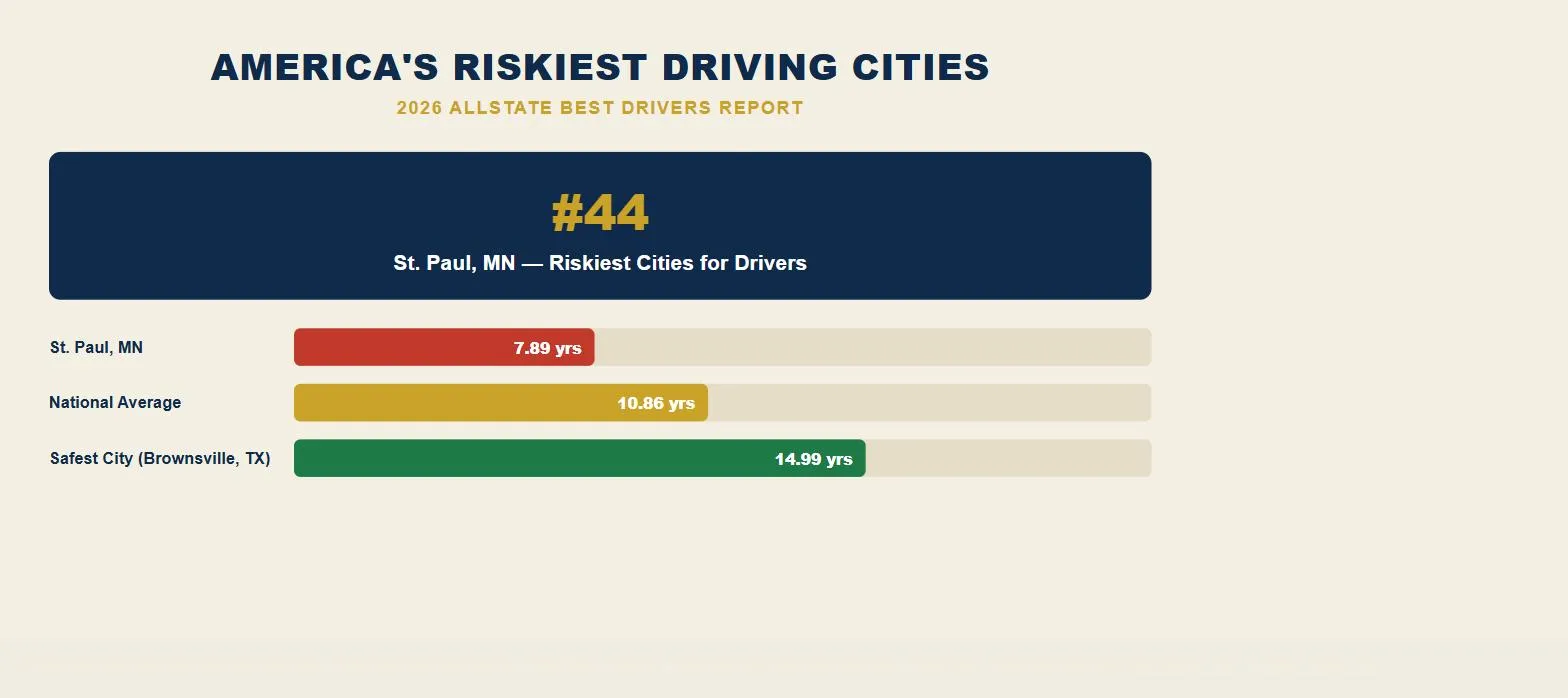
St. Paul drivers report a collision on average every 7.89 years, ranking the city among the riskiest in the nation for drivers, according to Allstate’s 2026 Best Drivers Report. Single-vehicle crashes on the city’s residential streets have proven especially dangerous in 2026. If you’ve been hurt in a St. Paul car accident lawsuit situation, understanding local crash patterns can help you build a stronger claim.
St. Paul’s Crash Data: A Fatal Single-Vehicle Crash
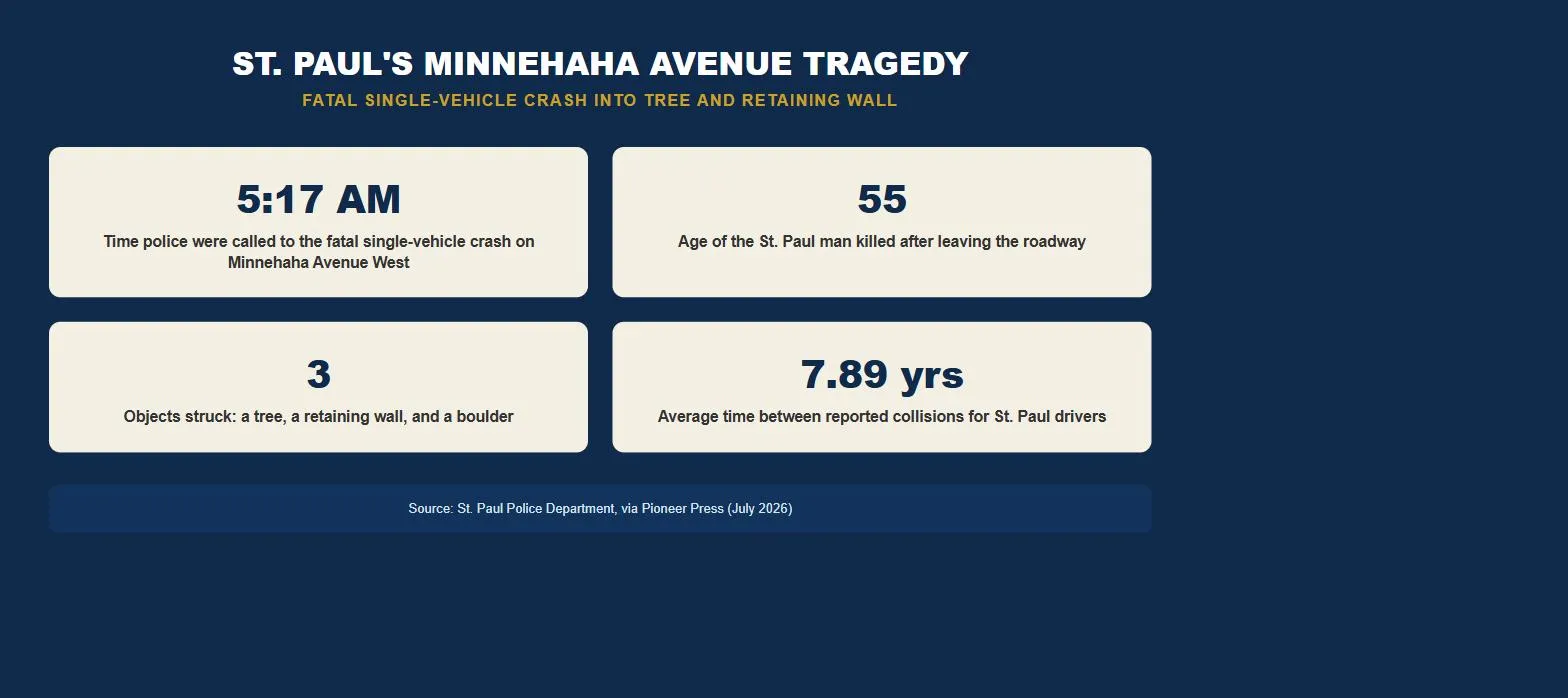
At 5:17 a.m. on July 6, 2026, St. Paul police responded to the 1200 block of Minnehaha Avenue West after a driver left the road and crashed into a tree, a retaining wall, and a boulder. The driver, later identified as 55-year-old Mohamed Diagle Isak, was trapped in the vehicle and pronounced dead at the scene despite efforts by St. Paul medics to extract him.
This tragedy adds to a string of serious crashes across the Twin Cities in 2026, including a fatal pedestrian crash near Hamline Avenue and Midway Parkway and a deadly crash involving a Ramsey County squad car. These incidents highlight the elevated risk drivers and pedestrians face on St. Paul’s residential streets and arterial roads.
Common Types of St. Paul Car Accident Claims
St. Paul’s mix of residential streets, river bluffs, and heavy commuter traffic creates a wide range of scenarios that can support a car accident claim, including:
- Single-vehicle crashes caused by speeding or loss of control
- Pedestrian knockdowns near intersections and crosswalks
- Multi-vehicle collisions during Minnesota’s icy winter months
- Crashes involving emergency vehicles responding to calls
- Hit-and-run collisions on residential streets
- DUI-related crashes, particularly late at night and on weekends
Minnesota Car Accident Law: What You Need to Know
Minnesota follows a modified comparative negligence rule, meaning you can recover damages as long as you are not found more than 50% at fault for the crash; your compensation is reduced by your percentage of fault. Minnesota is also a no-fault insurance state, meaning your own auto insurance typically covers initial medical expenses regardless of fault. Minnesota generally allows six years from the date of the accident to file a personal injury lawsuit, though prompt legal consultation is still recommended.
Injured in a St. Paul Car Accident?
Get a free, no-obligation case review to understand your legal options and potential compensation.
Compensation Available in a St. Paul Car Accident Claim
Depending on the severity of the crash, injured victims may be entitled to compensation for medical expenses (past and future), lost wages and diminished earning capacity, pain and suffering, property damage, and wrongful death damages in fatal cases. Use our car accident settlement calculator to get a preliminary estimate of what your claim could be worth.
Frequently Asked Questions
How long do I have to file a car accident lawsuit in St. Paul?
Under Minnesota law, you generally have six years from the date of the accident to file a personal injury lawsuit.
Does Minnesota’s no-fault insurance affect my ability to sue?
Your own insurance typically covers initial medical costs regardless of fault, but you may still be able to sue the at-fault driver if you suffered a serious injury as defined under Minnesota law.
What if I was partially at fault for the crash?
Minnesota’s modified comparative negligence rule allows you to recover damages as long as you were not more than 50% at fault, with your compensation reduced by your share of responsibility.
Related Reading
- Buffalo Car Accident Lawsuit 2026: Rollover Crash Data
- Syracuse Car Accident Lawsuit 2026: I-81 Pileup Crash Data
- Chicago Car Accident Lawsuit 2026: Semi-Truck Crash Data
- Explore All Active Personal Injury Lawsuits
Additional Resources
Choosing the right legal help after a st paul car accident lawsuit can make the difference between a lowball insurance offer and full compensation for medical bills, lost wages, and pain and suffering.
An experienced attorney handling a st paul car accident lawsuit will gather police reports, medical records, and eyewitness statements while negotiating directly with insurance adjusters on your behalf.
If you or a loved one need guidance on a st paul car accident lawsuit, a free consultation can clarify your legal options and help you meet strict filing deadlines.
What to Know About Your St Paul Car Accident Lawsuit
Understanding your st paul car accident lawsuit options early can make the difference between a lowball settlement offer and full compensation for medical bills, lost wages, and pain and suffering.
An experienced attorney handling a st paul car accident lawsuit case will gather police reports, medical records, and witness statements while negotiating directly with insurance adjusters on your behalf.
If you or a loved one need guidance on a st paul car accident lawsuit, a free, no-obligation consultation can help clarify your legal options and next steps.
An experienced attorney handling a st paul car accident lawsuit case will gather police reports, medical records, and witness statements while negotiating directly with insurance adjusters on your behalf.
If you or a loved one need guidance on a st paul car accident lawsuit, a free, no-obligation consultation can help clarify your legal options and next steps.
Related Posts

This social media addiction lawsuit negligence verdict 2026 update explains exactly what changed, who qualifies, and how to file a [...]
Anyone comparing settlement outcomes for a rear-end collision lawsuit needs to understand how fault is decided, what similar claims have [...]

Learn how accident claim lawyers evaluate cases, handle insurance tactics, and maximize your compensation under California law.


