

Short answer: This article explains the key facts, eligibility issues, settlement factors, deadlines, and source-backed updates related to this legal topic. Results vary by case facts, evidence, jurisdiction, and representation.
Anyone researching a san francisco car accident lawsuit after a recent crash needs to understand local fault rules, filing deadlines, and how crash data can strengthen an injury claim before evidence disappears.
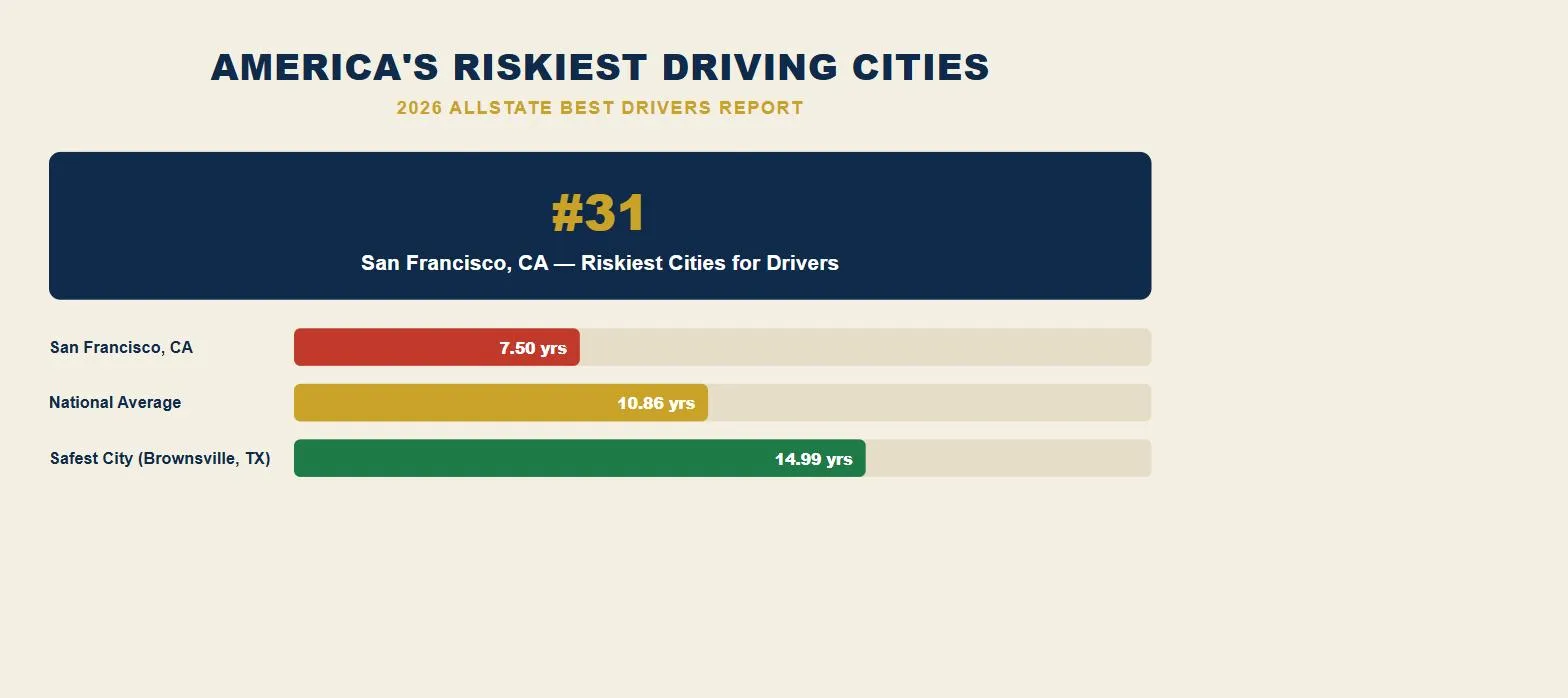
San Francisco drivers report a collision on average every 7.5 years, ranking the city among the riskiest in the nation for drivers and pedestrians alike, according to Allstate’s 2026 Best Drivers Report. If you or a loved one has been hurt in a San Francisco car accident lawsuit situation, understanding local crash patterns and your legal options is the first step toward recovering fair compensation.
San Francisco’s Crash Data: A City in Crisis
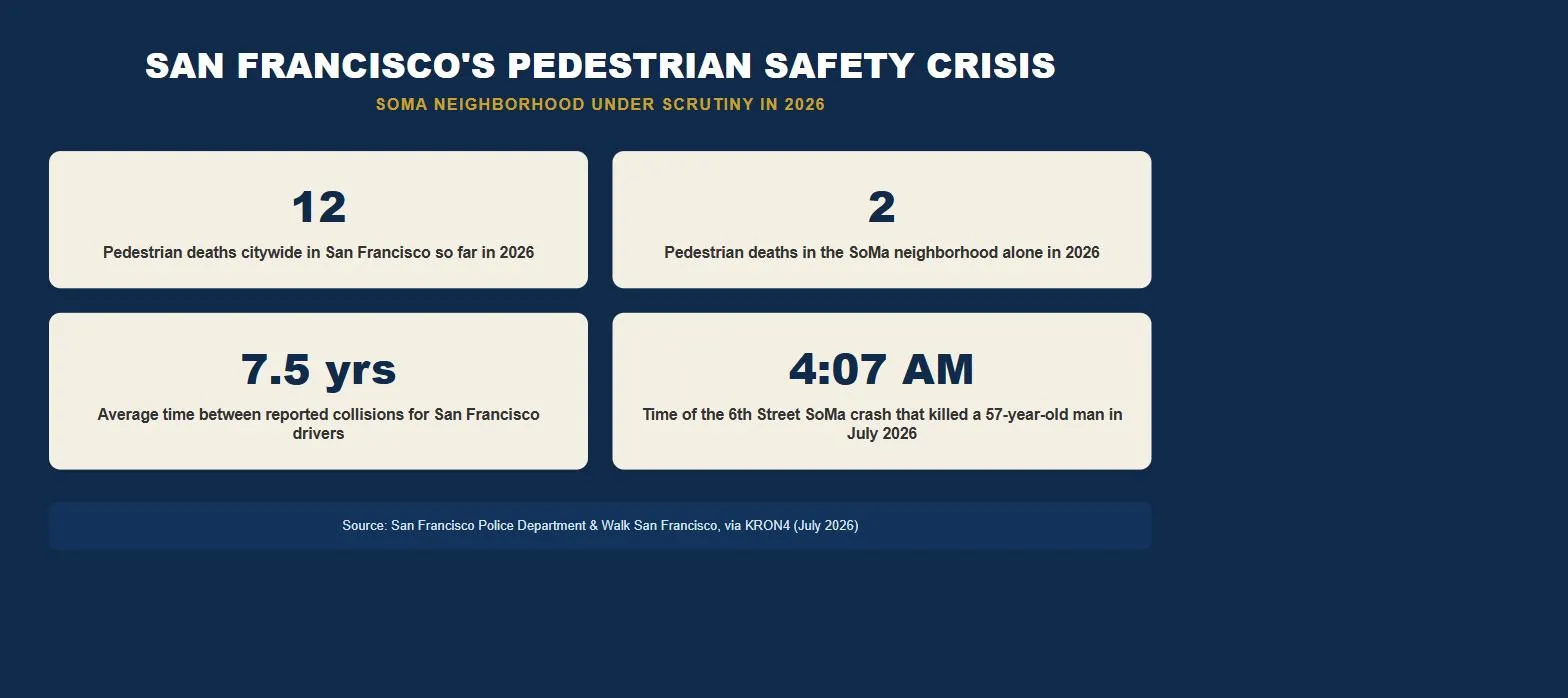
San Francisco’s South of Market (SoMa) neighborhood has become a focal point for the city’s traffic safety concerns. In July 2026, a 57-year-old man was struck and killed by a vehicle near 6th Street in the early morning hours, marking the 12th pedestrian death in San Francisco in 2026 and the second in SoMa alone that year. The San Francisco Police Department’s Traffic Collision Investigation Unit continues to investigate the pattern of fatal crashes citywide.
Walk San Francisco, a pedestrian safety advocacy group, has repeatedly called attention to the city’s rising fatality count, noting that “walking should not be life or death” in a city with such dense foot traffic. The data suggests that speeding, distracted driving, and poor visibility at night are recurring factors across the SoMa crashes and beyond.
Common Types of San Francisco Car Accident Claims
San Francisco’s unique blend of dense urban streets, steep hills, heavy pedestrian and cyclist traffic, and constant tourist activity creates a wide variety of crash scenarios that can support a car accident claim, including:
- Pedestrian knockdowns in high-foot-traffic areas like SoMa, Union Square, and the Financial District
- Rideshare and taxi collisions involving Uber and Lyft drivers
- Muni bus and cable car related incidents
- Bicycle and e-scooter collisions on protected and unprotected bike lanes
- Multi-vehicle crashes on the city’s steep, low-visibility intersections
- Hit-and-run collisions, particularly during early morning hours
California Car Accident Law: What You Need to Know
California follows a pure comparative negligence rule, meaning an injured person can still recover damages even if they are partially at fault for a crash, though their recovery is reduced by their percentage of fault. California also generally allows two years from the date of the accident to file a personal injury lawsuit, though claims against government entities (such as the City and County of San Francisco for road defects) require a formal claim to be filed within six months. Because SFMTA and Muni-related crashes involve government liability rules, prompt legal consultation is critical.
Injured in a San Francisco Car Accident?
Get a free, no-obligation case review to understand your legal options and potential compensation.
Compensation Available in a San Francisco Car Accident Claim
Depending on the severity of the crash and the injuries sustained, victims may be entitled to compensation for medical expenses (past and future), lost wages and diminished earning capacity, pain and suffering, property damage, and in the case of a fatal crash, wrongful death damages for surviving family members. Use our car accident settlement calculator to get a preliminary estimate of what your claim could be worth.
Frequently Asked Questions
How long do I have to file a car accident lawsuit in San Francisco?
In most cases, California’s statute of limitations gives you two years from the date of the accident to file a personal injury lawsuit. Claims involving government entities like SFMTA have a much shorter six-month claim-filing window.
What if I was partially at fault for the accident?
California’s pure comparative negligence rule allows you to recover damages even if you were partly at fault, though your compensation will be reduced by your percentage of responsibility.
Can I file a claim if I was hit as a pedestrian in SoMa?
Yes. Pedestrian knockdown victims can pursue compensation from the at-fault driver’s insurance, and in some cases, from the city if a dangerous road condition contributed to the crash.
Related Reading
- Oakland Car Accident Lawsuit 2026: Intersection & Speeding Crash Data
- Sacramento Car Accident Lawsuit 2026: Motorcycle Crash Data
- Long Beach Car Accident Lawsuit 2026: Hit-and-Run Crash Data
- Explore All Active Personal Injury Lawsuits
Additional Resources
Choosing the right legal help after a san francisco car accident lawsuit can make the difference between a lowball insurance offer and full compensation for medical bills, lost wages, and pain and suffering.
An experienced attorney handling a san francisco car accident lawsuit will gather police reports, medical records, and eyewitness statements while negotiating directly with insurance adjusters on your behalf.
If you or a loved one need guidance on a san francisco car accident lawsuit, a free consultation can clarify your legal options and help you meet strict filing deadlines.
What to Know About Your San Francisco Car Accident Lawsuit
Understanding your san francisco car accident lawsuit options early can make the difference between a lowball settlement offer and full compensation for medical bills, lost wages, and pain and suffering.
An experienced attorney handling a san francisco car accident lawsuit case will gather police reports, medical records, and witness statements while negotiating directly with insurance adjusters on your behalf.
If you or a loved one need guidance on a san francisco car accident lawsuit, a free, no-obligation consultation can help clarify your legal options and next steps.
An experienced attorney handling a san francisco car accident lawsuit case will gather police reports, medical records, and witness statements while negotiating directly with insurance adjusters on your behalf.
If you or a loved one need guidance on a san francisco car accident lawsuit, a free, no-obligation consultation can help clarify your legal options and next steps.
Related Posts

This social media addiction lawsuit negligence verdict 2026 update explains exactly what changed, who qualifies, and how to file a [...]
Anyone comparing settlement outcomes for a rear-end collision lawsuit needs to understand how fault is decided, what similar claims have [...]

Learn how accident claim lawyers evaluate cases, handle insurance tactics, and maximize your compensation under California law.


