
Short answer: This article explains the key facts, eligibility issues, settlement factors, deadlines, and source-backed updates related to this legal topic. Results vary by case facts, evidence, jurisdiction, and representation.
Anyone researching a grand rapids car accident lawsuit after a recent crash needs to understand local fault rules, filing deadlines, and how crash data can strengthen an injury claim before evidence disappears.
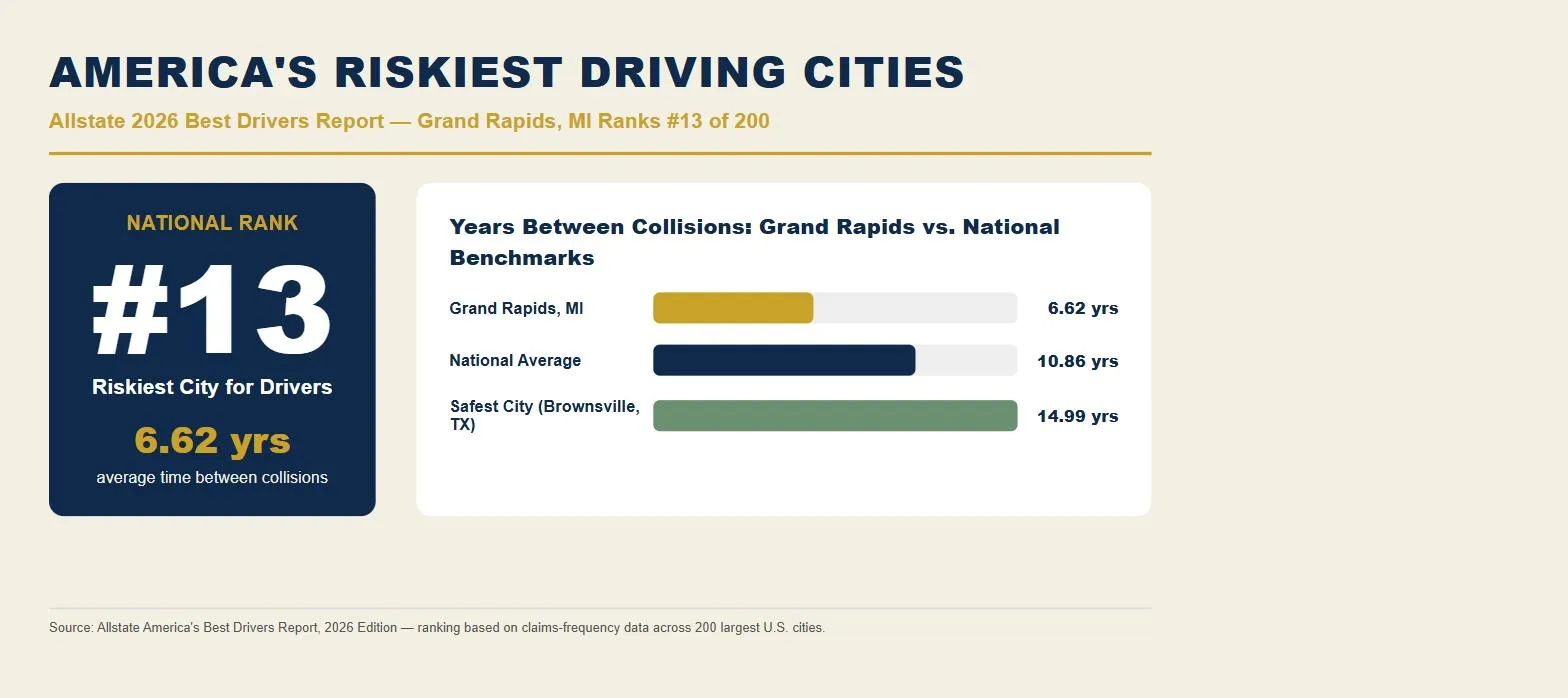
Grand Rapids car accident lawsuit claims are drawing new attention after a violent stretch of 2026 highway crashes. The city ranks #13 on Allstate’s 2026 list of America’s riskiest driving cities, with drivers experiencing a collision on average every 6.62 years — well below the national average of 10.86 years. If you were hurt in a crash on I-96, I-196, US-131, or anywhere in the Grand Rapids area, understanding your legal options is critical.
A Deadly Stretch of Wrong-Way Crashes
In June 2026, West Michigan experienced one of its deadliest weekends on record. According to WWMT NewsChannel3, five people were killed in two separate wrong-way crashes within hours of each other: one on I-96 near Marne in Ottawa County, and another on I-196 near downtown Grand Rapids at the Lane Avenue exit. Investigators with the Ottawa County Sheriff’s Office and Michigan State Police said seven people total died across three separate West Michigan crashes that same weekend.
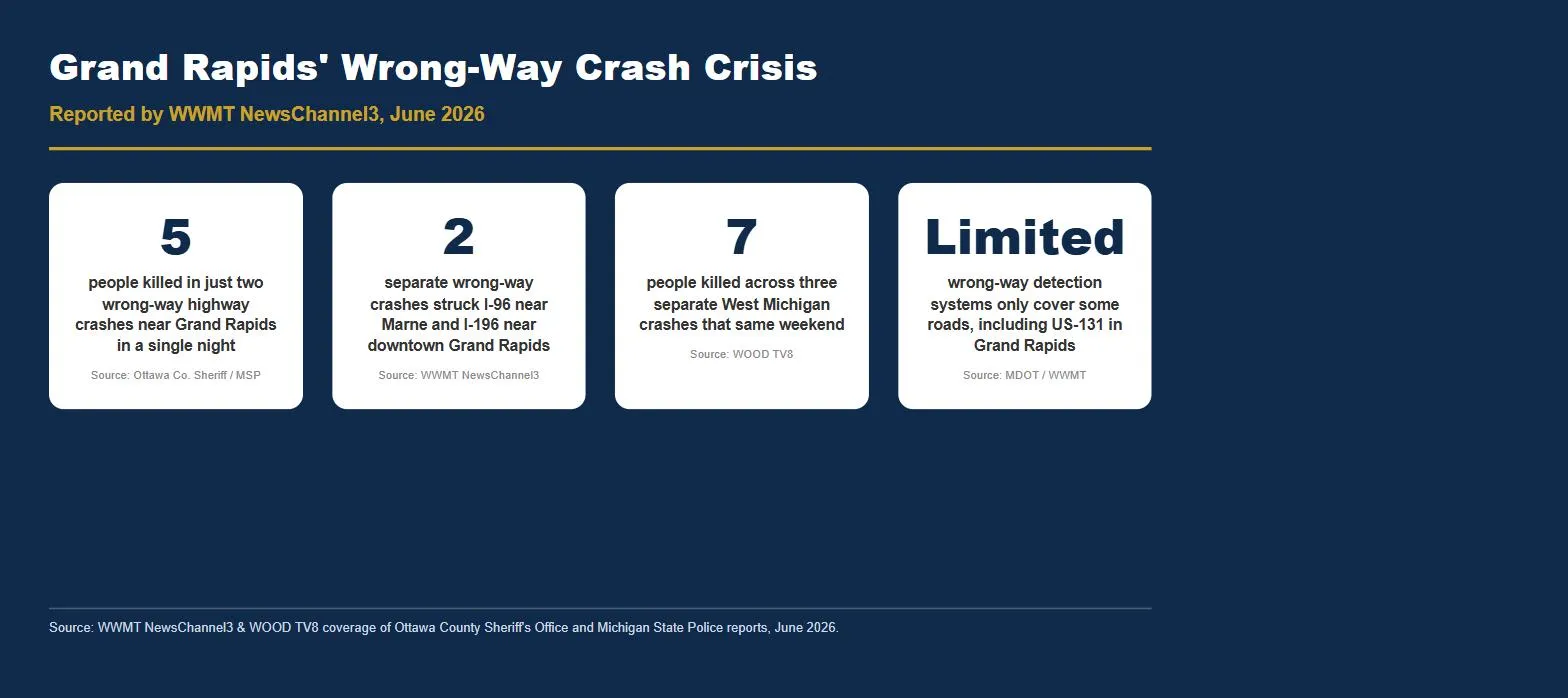
Michigan has deployed wrong-way driver detection systems in some high-risk locations, including on US-131 in Grand Rapids, but officials acknowledge coverage remains limited statewide. Investigators urged drivers — especially those unfamiliar with the area or driving during overnight hours — to watch highway signage closely, noting that impaired and disoriented driving are common contributing factors in wrong-way crashes.
Filing a Grand Rapids Car Accident Lawsuit: Common Claim Types
Given Grand Rapids’ crash patterns, most car accident lawsuits filed by local victims and families fall into a few common categories:
- Wrong-way and head-on highway collisions — a recurring and often fatal hazard on I-96, I-196, and US-131
- Impaired driving crashes — frequently cited as a factor in overnight highway wrecks
- Multi-vehicle pileups — common during high-traffic commuter periods and severe weather
- Wrongful death claims — filed by families after fatal wrong-way or high-speed collisions
- Rural and county road crashes — involving surrounding Kent and Ottawa County roadways
Michigan Car Accident Law: What Grand Rapids Victims Should Know
Michigan is a no-fault insurance state, meaning your own auto insurance typically covers initial medical expenses and lost wages regardless of who caused the crash. However, victims with serious injuries may still be able to file a lawsuit against an at-fault driver if they meet Michigan’s “serious impairment of body function” threshold. Michigan generally allows three years from the date of the crash to file a lawsuit for injuries, though shorter deadlines may apply for no-fault benefit claims, so prompt action is important.
Not Sure What Your Grand Rapids Car Accident Claim Is Worth?
Use our free settlement calculator to get an instant estimate based on your injuries and damages, or call now to speak with a legal team that understands Michigan’s no-fault insurance system.
Compensation Available After a Grand Rapids Car Accident
Beyond no-fault medical and wage benefits, a car accident lawsuit in Grand Rapids may allow seriously injured victims to recover pain and suffering damages, excess economic losses beyond no-fault limits, and compensation for permanent injury or disfigurement. Families who lost a loved one in a wrong-way or high-speed crash may pursue wrongful death damages against the at-fault driver, and in some cases, additional claims tied to impaired driving or roadway design.
Frequently Asked Questions
How long do I have to file a car accident lawsuit in Grand Rapids, MI?
Michigan law generally allows three years from the date of the accident to file a personal injury lawsuit. Because Michigan’s no-fault system has its own separate deadlines for benefit claims, it’s important to consult an attorney quickly after a crash.
Can I sue another driver in Michigan, or does no-fault insurance cover everything?
Michigan’s no-fault system covers most medical expenses and lost wages regardless of fault, but victims with serious, permanent injuries may still be able to sue an at-fault driver for pain and suffering and damages beyond no-fault limits.
Why are wrong-way crashes such a serious problem near Grand Rapids?
Wrong-way driver detection systems are only installed in limited locations, including US-131 in Grand Rapids, according to Michigan officials. Overnight hours, impaired driving, and unfamiliarity with highway interchanges have all been cited as contributing factors in recent fatal wrong-way crashes.
Related Reading
- Worcester, MA Car Accident Lawsuit 2026
- Philadelphia Car Accident Lawsuit 2026
- View All Active Personal Injury Lawsuits
Choosing the right legal help after a grand rapids car accident lawsuit can make the difference between a lowball insurance offer and full compensation for medical bills, lost wages, and pain and suffering.
An experienced attorney handling a grand rapids car accident lawsuit will gather police reports, medical records, and eyewitness statements while negotiating directly with insurance adjusters on your behalf.
If you or a loved one need guidance on a grand rapids car accident lawsuit, a free consultation can clarify your legal options and help you meet strict filing deadlines.
An experienced attorney handling a grand rapids car accident lawsuit case will gather police reports, medical records, and witness statements while negotiating directly with insurance adjusters on your behalf.
If you or a loved one need guidance on a grand rapids car accident lawsuit, a free, no-obligation consultation can help clarify your legal options and next steps.


