Short answer: This article explains the key facts, eligibility issues, settlement factors, deadlines, and source-backed updates related to this legal topic. Results vary by case facts, evidence, jurisdiction, and representation.
Why a Product Safety Attorney Could Be the Most Important Hire Your Business Makes
A product safety attorney is a lawyer who helps manufacturers, importers, distributors, and retailers comply with consumer product safety laws — and defends them when things go wrong.
Here is a quick breakdown of what they do:
| What They Handle | Examples |
|---|---|
| Regulatory compliance | CPSC reporting, labeling, testing, certification |
| Product recalls | Coordinating voluntary and mandatory recalls |
| Government investigations | Responding to CPSC civil penalty inquiries |
| Labeling and warnings | Drafting safe, legally compliant product instructions |
| Emerging hazards | PFAS chemicals, lithium-ion batteries, Reese’s Law |
| International imports | Customs detentions, Health Canada, cross-border recalls |
The consumer product industry is under more pressure than ever. In the past decade alone, a wave of high-profile recalls pushed the federal government to pass sweeping new laws expanding product safety standards. Getting it wrong can mean civil penalties, costly recalls, and serious damage to your brand.
Whether you are a small business owner or a large manufacturer, navigating the Consumer Product Safety Commission (CPSC) and its web of regulations is not something you want to do alone.
I’m Mason Arnao — a technology entrepreneur and internet marketing specialist with over 15 years of experience helping businesses understand complex regulatory and legal topics online, including the role of a product safety attorney in protecting companies from costly compliance failures. My background in data systems and lead generation gives me a unique lens for translating dense legal subjects into clear, actionable guidance for business owners and consumers alike.
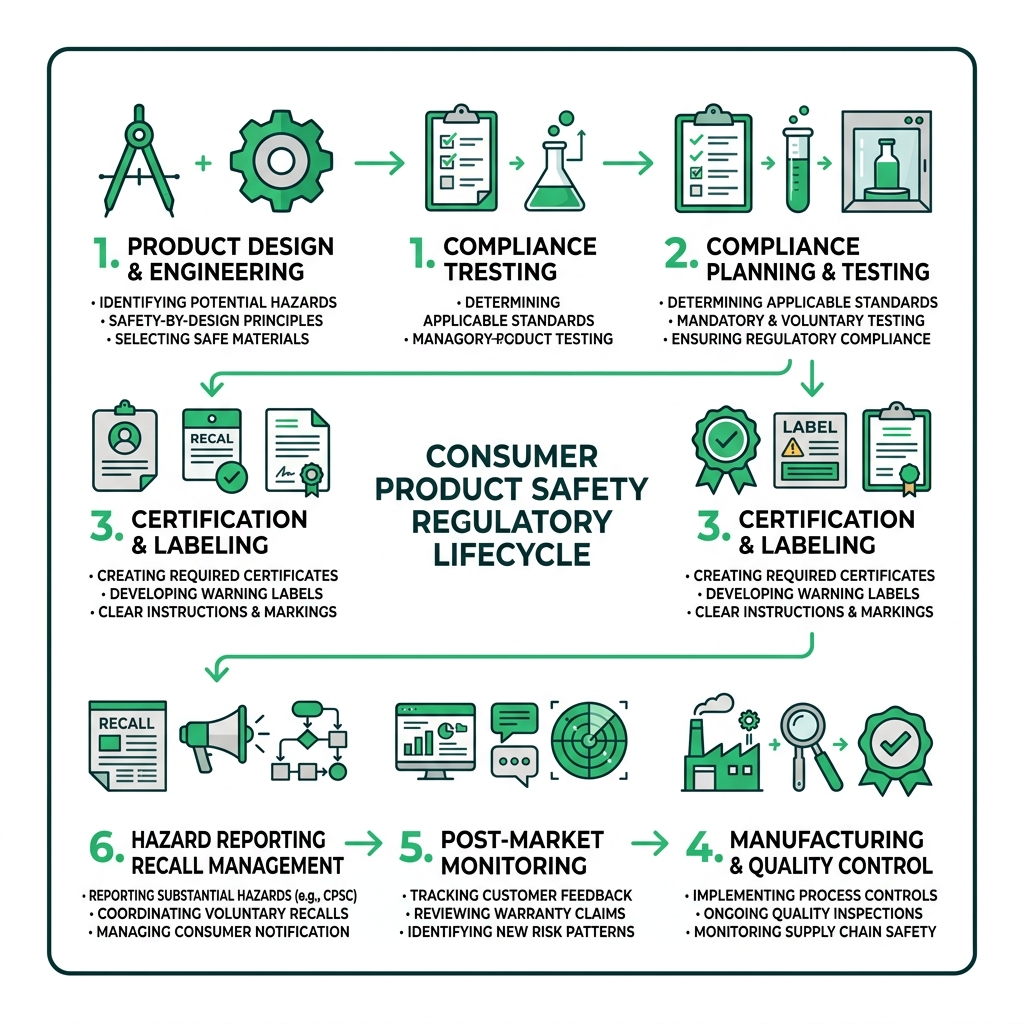
Product safety attorney glossary:
The Role of a Product Safety Attorney in Risk Mitigation
In consumer goods, an ounce of prevention is worth a pound of “please don’t sue us.” We often see businesses wait until a federal agent is at their door before seeking counsel. A product safety attorney acts as a proactive shield, helping you identify hazards before they reach a child’s playroom or a customer’s kitchen.
The legal landscape is anchored by several heavy-hitting statutes. The Consumer Product Safety Act (CPSA) is the big one, but we also have to navigate the Federal Hazardous Substances Act (FHSA) and the Poison Prevention Packaging Act (PPPA). If you’re thinking, “That sounds like a lot of alphabet soup,” you’re right.
One of the most critical roles of this attorney is managing Section 15(b) of the CPSA. This section mandates that companies report potential safety hazards immediately. Failing to “snitch” on your own product within the tight deadlines set by the CPSC can lead to multi-million dollar civil penalties. Our goal is to help you build a “culture of compliance” where safety is baked into the product lifecycle. For a deeper look at the consequences of these failures, check out our Product Injury Lawyer Complete Guide.

Compliance Audits and Training
Think of a compliance audit as a physical for your business. We recommend that companies conduct regular audits of their manufacturing facilities and internal procedures. This isn’t just about checking boxes; it’s about ensuring that your engineers, marketers, and CEOs are all speaking the same language of safety.
A product safety attorney will often:
- Develop integrated internal compliance programs.
- Conduct global audits across manufacturing facilities (sometimes on multiple continents).
- Create employee training plans so your team knows exactly what to do when an incident report lands on their desk.
- Manage E-Discovery protocols to ensure that all safety data and communications are properly preserved and organized.
Labeling, Warnings, and Instructions
You’ve seen the “Do Not Use in Bathtub” warnings on hair dryers. While they might seem like common sense, those labels are often the result of intense legal scrutiny. A product safety attorney evaluates your product warnings, labels, and instructions to ensure they meet FHSA and PPPA standards.
Marketing defects—such as failing to warn about a non-obvious danger—are a leading cause of litigation. We help you draft warranty language and instructions that protect the consumer and mitigate your risk. This is a crucial step in avoiding Product Liability Personal Injury claims that can arise from even the smallest oversight in a user manual.
Navigating CPSC Investigations and Product Recalls
When the CPSC comes knocking, the clock starts ticking. Whether it’s a “timeliness inquiry” (investigating why you didn’t report a defect sooner) or a full-blown civil penalty investigation, the stakes are high.
Managing Government Investigations
If your company receives a letter from the CPSC regarding a potential hazard, your response must be surgical. We assist clients in:
- Responding to Section 15(b) inquiries and incident reports.
- Handling Freedom of Information Act (FOIA) requests to protect your confidential business information from being released to the public or competitors.
- Negotiating with agency staff to reach favorable outcomes.
It’s also important to keep an eye on the leadership at the top. For instance, knowing who is steering the ship at the U.S. Consumer Product Safety Commission can change the regulatory “weather” for businesses.
Product Recalls and Corrective Actions
Recalls are a nightmare for any brand, but they don’t have to be a death sentence. Many companies utilize the CPSC’s Fast Track Program, which allows for a quicker, voluntary recall process in exchange for certain procedural benefits. A product safety attorney coordinates these corrective action plans, ensuring that the recall is effective and that you are checking national recall lists to see how competitors are handling similar issues. For more on the logistics, see our Defective Product Lawyer Guide.
International Product Safety and Imports
We live in a global economy, which means your supply chain likely crosses borders. This introduces a whole new level of complexity.
- Customs Detentions: If the CPSC suspects a shipment doesn’t meet safety standards, they can flag it at the port. We help get those shipments released.
- Global Harmonization: We advise on compliance with Health Canada, EU regulations, and Asian standards to ensure a seamless international presence.
- New Cosmetic Rules: Under the Modernization of Cosmetics Regulation Act (MoCRA), there are new requirements for facility listings. Staying ahead of these transitions is vital, as detailed in recent regulatory updates regarding facility listing and cosmetic registration.
Essential Qualifications for Legal Counsel
Not all lawyers are created equal. When you are looking for a product safety attorney, you aren’t just looking for someone with a JD; you need someone who understands how things are built.
Defense-Side Compliance vs. Plaintiff-Side Liability
It is vital to understand which side of the “v” an attorney sits on. While we work with both, their roles are very different:
| Feature | Defense/Compliance Attorney | Plaintiff-Side Liability Attorney |
|---|---|---|
| Primary Goal | Prevent lawsuits and ensure regulatory compliance. | Secure compensation for injured consumers. |
| Client Base | Manufacturers, importers, retailers. | Individuals and families. |
| Key Skill | Navigating CPSC/FDA/NHTSA regulations. | Litigating in court and proving defects. |
| Typical Fee | Hourly or Retainer. | Contingency (percentage of winnings). |
If you are looking for help after being hurt by a product, you want someone like those listed in our guide for Attorneys for Defective Products.
Why Experience Matters in a Product Safety Attorney
We highly recommend looking for attorneys with “insider” experience. Someone who has served as a CPSC Commissioner, a senior attorney in the Office of Compliance, or even a Small Business Ombudsman has a unique perspective. They know how the agency staff thinks and what they are looking for in an investigation. Experts with deep government-side knowledge bring years of experience to private practice, which can be invaluable during negotiations.
Industry-Specific Expertise
Safety isn’t one-size-fits-all. A lawyer who knows the ins and outs of household appliances might not be the best fit for children’s products, which have the most stringent requirements in the world. We look for counsel with experience in:
- Micromobility: E-bikes and scooters.
- Infant Products: As seen when federal agencies implement first-ever product safety standards for infant nursing pillows.
- Power Tools and Electronics: Handling UL standards and fire risks.
Addressing Emerging Hazards and New Regulations
The world is changing fast, and the law is trying to keep up. A great product safety attorney stays ahead of the curve on “the next big thing” in litigation.
How a Product Safety Attorney Handles Lithium-Ion and PFAS Risks
Two words are currently keeping compliance officers awake at night: Lithium-Ion and PFAS.
- Lithium-Ion Batteries: These are in everything from your phone to your lawnmower. Because they can pose significant fire risks, the CPSC is cracking down. Recent legislative movements regarding lithium-ion batteries are essential to follow for anyone in the tech space.
- PFAS (“Forever Chemicals”): These chemicals are found in thousands of products. With new bans passing monthly and links to reproductive harm, companies need a strategy for chemical disclosures. This often crosses over into toxic tort territory, similar to the work done by a Paraquat Lawsuit Attorney.
- Reese’s Law: This new mandate protects children from the dangers of swallowing button cell batteries. If your product uses these batteries, you must comply with UL 4200A standards immediately.
Digital Safety and Modern Standards
We’ve moved beyond physical widgets. Today, “product safety” includes the digital world.
- Kids Online Safety Act (KOSA): This impacts online platforms and how they interact with minors.
- Internet of Things (IoT): Smart devices that connect to the web introduce new safety risks if they can be hacked or malfunction.
- Social Media Crises: When a product “goes viral” for the wrong reasons (like a dangerous TikTok challenge), a product safety attorney helps manage the fallout and the CPSC’s reaction. Recent litigation involving social media platforms shows just how quickly these issues can escalate.
Frequently Asked Questions about Product Safety Law
What is the difference between product safety and product liability?
Product safety is about prevention and regulation (making sure the product is safe before it sells). Product liability is about compensation and litigation (what happens after someone gets hurt). A product safety attorney usually focuses on the former to prevent the latter.
How much does it cost to hire a product safety attorney?
For businesses (defense/compliance), most attorneys charge an hourly rate or a monthly retainer. For consumers (plaintiffs), most work on a contingency fee basis—meaning they only get paid if you win your case.
When should a company report a product defect to the CPSC?
The CPSC expects you to report within 24 hours of obtaining information that reasonably supports the conclusion that a product contains a defect which could create a substantial hazard or creates an unreasonable risk of serious injury or death. This is a very high bar and a very short window, which is why having an attorney on speed dial is essential.
Conclusion
At the end of the day, hiring a product safety attorney is about protecting two things: your customers and your reputation. By focusing on litigation avoidance and a robust regulatory strategy, you can ensure your business thrives in an increasingly complex marketplace.
Whether you are dealing with a port detention, a CPSC inquiry, or you simply want to ensure your new product’s labels are bulletproof, the right legal partner makes all the difference. At Tort Advisor, we pride ourselves on connecting businesses and individuals with the elite legal talent they need to navigate these waters.
If you are a consumer who has been injured by a defective product, don’t wait. Connect with Experienced Defective Product Lawyers today to explore your options and protect your rights. Our network includes top-rated attorneys in locations like New York, Chicago, Florida, California, and across the United States, ready to help you achieve the best possible outcome.
Related Posts

Discover what is SSI: eligibility, benefits, application process, SSI vs SSDI, and FAQs for low-income aged, blind, disabled.

Decades of scientific research, the IARC's 2024 Group 1 carcinogen reclassification, and J&J's failed bankruptcy attempts have reshaped the talcum powder lawsuit landscape in 2026. Learn what the science says, who qualifies, what settlements look like, and how to file a claim.

How to File a Snapchat Lawsuit 2026 If your child was sexually exploited, groomed, sextorted, or harmed on Snapchat, [...]