
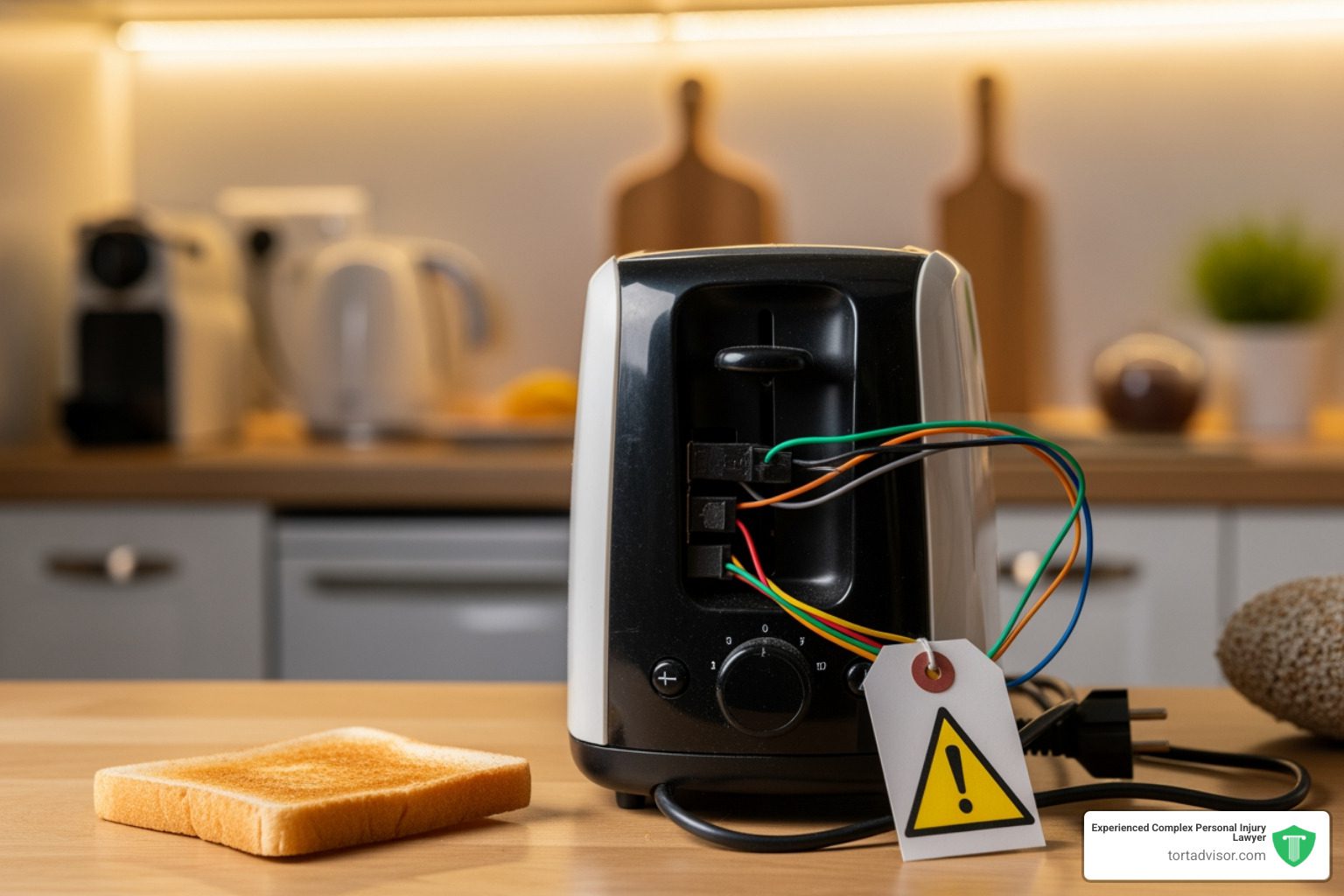

When Everyday Products Turn Dangerous: Understanding Your Legal Options
A product injury lawyer is a specialized attorney who represents consumers harmed by defective or dangerous products. They help victims recover compensation from manufacturers, distributors, and sellers for injuries caused by design flaws, manufacturing errors, or inadequate safety warnings.
Key takeaways:
- Contingency Fees: You pay nothing unless your lawyer wins the case.
- Multiple Liable Parties: Manufacturers, designers, distributors, and retailers can all be held responsible.
- Strict Liability: Often, you only need to prove the product was defective and caused harm, not that the company was negligent.
- Time Limits: States have strict deadlines for filing claims (e.g., two years in California).
Common defective products include automotive parts, medical devices, children’s toys, and household appliances.
When you buy a product, you expect it to be safe. However, over 700,000 people each year are injured or killed by unsafe products in the United States. Product liability law exists to protect consumers by holding manufacturers and sellers responsible when their products cause harm. Navigating these complex claims requires specialized legal knowledge.
This guide explains what product injury lawyers do, how they build cases, who can be held liable, and what compensation you might recover.
What is Product Liability Law?
Product liability law is the legal framework holding companies accountable when their products cause harm. It ensures that manufacturers, distributors, and retailers are responsible for injuries caused by defective items. For example, if a new blender’s blade flies off and injures you, product liability law provides a path to hold the responsible companies accountable for your medical bills and other damages. This area of law protects consumers by ensuring everyday products are safe for their intended use.
For a deeper dive into the legal intricacies, you can explore more about state laws for manufacturing and design defects.
The Difference Between Strict Liability and Negligence
Product liability claims typically fall under two legal theories: strict liability and negligence.
Strict liability is often more favorable for consumers. Under this theory, you don’t need to prove the manufacturer was careless. You only need to show that the product was defective and the defect caused your injury. The focus is on the product’s condition, not the company’s behavior. Many states, including California, apply strict liability to product defect cases, leveling the playing field between consumers and large corporations.
Negligence requires proving the manufacturer or seller failed to exercise reasonable care, and this failure caused your injury. For example, if a company knew its product had a choking hazard but didn’t issue a recall, that could be negligence. You must demonstrate the company had a duty to keep consumers safe, breached that duty, and this breach led to your injury and damages. A product injury lawyer can determine which legal theory is best for your case.
| Feature | Strict Liability | Negligence |
|---|---|---|
| Proof of Fault | Not required – focus is on the product’s defect | Required – must prove the defendant acted carelessly |
| Focus | The product itself and its defective nature | The defendant’s conduct and their failure in duty of care |
| Causation | Defect directly caused the injury | Breach of duty directly caused the injury |
| Ease of Proof | Generally easier for plaintiffs | Can be more challenging, requiring proof of careless actions |
Breach of Warranty
A third basis for a claim is breach of warranty, which is a broken promise about a product’s quality or performance.
- Express Warranties: These are direct promises made in advertising or on packaging. If a ladder advertised to hold 300 pounds collapses under 200, it’s a breach of an express warranty.
- Implied Warranties: These are unstated guarantees implied by law. The “implied warranty of merchantability” ensures a product is fit for its ordinary purpose (e.g., a coffee maker shouldn’t catch fire). The “implied warranty of fitness for a particular purpose” applies when a seller recommends a product for a specific use you’ve described.
If a product’s failure to meet these warranties causes harm, you may have a case. Attorneys for defective products can help you understand your rights. At Tort Advisor, we connect clients with lawyers who specialize in these situations.
Identifying Liable Parties and Common Defects
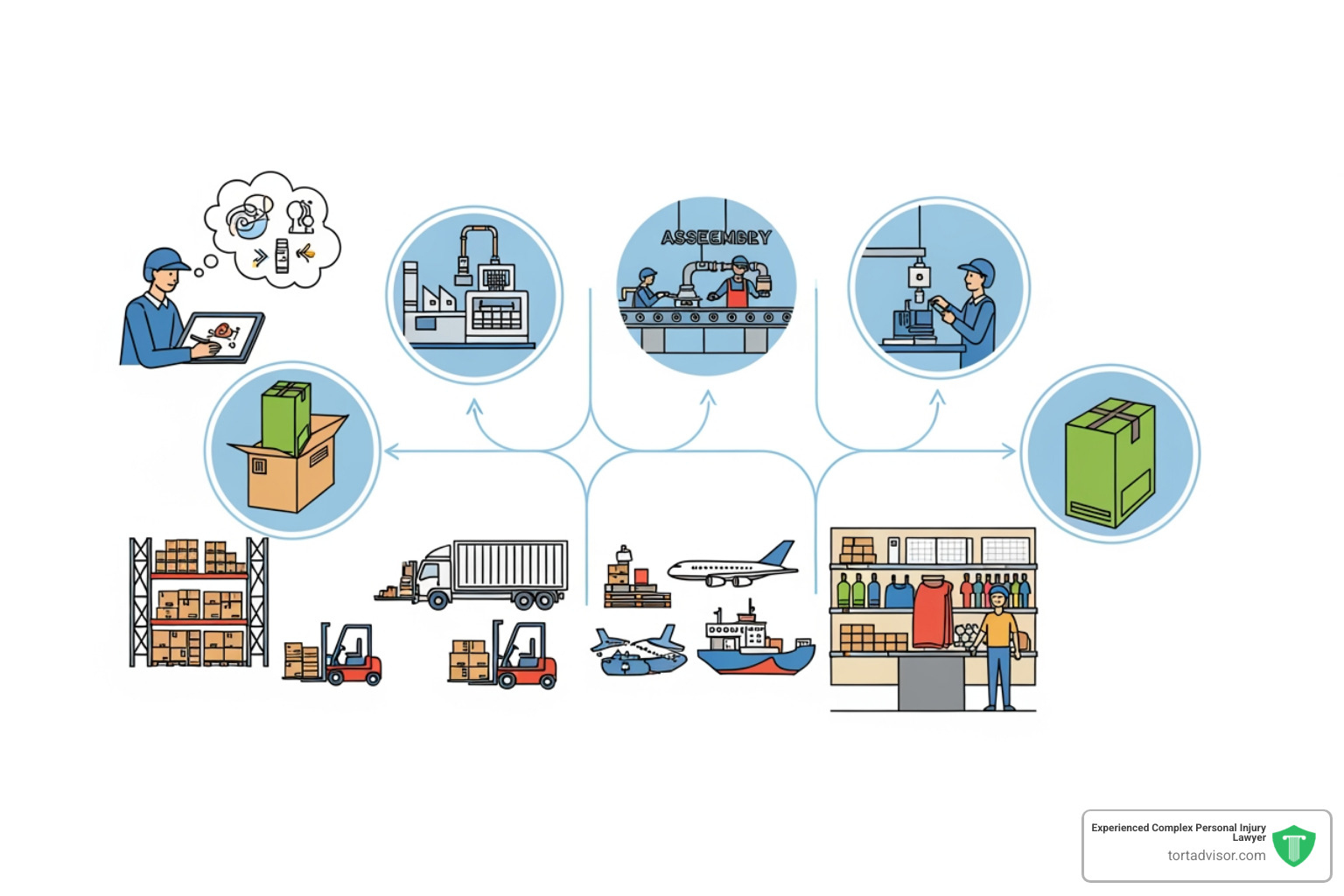
When a defective product causes an injury, liability can extend beyond the manufacturer to anyone in the “chain of distribution.” This legal concept ensures that multiple parties who handle a product before it reaches the consumer can be held accountable for its safety.
Who Can Be Held Liable for a Defective Product?
A product injury lawyer will investigate every entity involved in getting the product to you. Potentially liable parties include:
- Designers: If the product’s design was inherently flawed.
- Manufacturers: This includes the final assembler and makers of individual components.
- Distributors and Wholesalers: Companies that transport the product from the factory to retailers.
- Retailers: The store where the product was sold.
- Hospitals or Doctors: In cases involving defective medical devices they supplied or recommended.
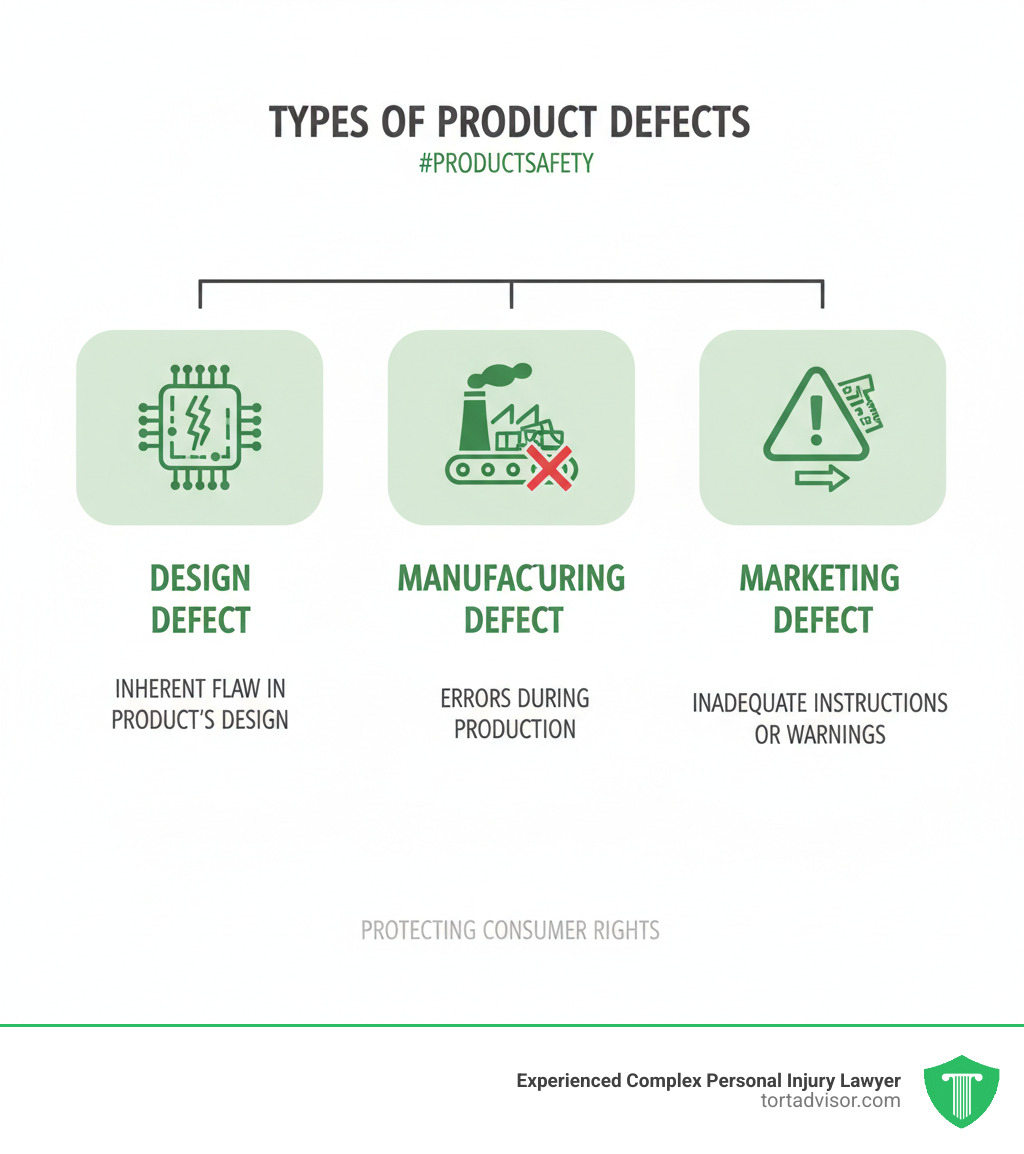
The Three Types of Product Defects
Product defects fall into three main categories:
- Design Defects: The product is inherently dangerous due to a flawed design. Every unit in the product line shares the same defect. An example is a car model that is top-heavy and prone to rolling over.
- Manufacturing Defects: An error during production makes a specific unit or batch unsafe, even if the design was safe. For instance, a batch of toys is accidentally coated with lead paint.
- Marketing Defects (Failure to Warn): The product lacks adequate instructions or warnings about potential dangers. A powerful cleaning chemical sold without warnings about skin irritation is a marketing defect.
Most Common Types of Defective Product Claims
While any product can be defective, some categories appear frequently in liability claims:
- Automotive Parts: Defective airbags, brakes, tires, and ignition switches.
- Medical Devices: Faulty implants, surgical tools, and diagnostic equipment. These account for about 25% of all product liability cases.
- Children’s Toys and Products: Items with choking hazards, toxic materials, or unstable designs. Attorneys for defective products often handle these sensitive cases.
- Household Appliances: Exploding blenders, faulty wiring causing fires, or collapsing furniture.
- Pharmaceuticals: Drugs with undisclosed side effects or manufacturing contamination.
- Other Common Claims: Contaminated food, agricultural products like Roundup weed killer, and electronics with exploding batteries.
Product liability cases make up about 10% of all civil litigation in the U.S. If you’ve been injured, an experienced product liability attorney in your area can help.
How a Product Injury Lawyer Builds Your Case

Building a strong product liability case is a complex process that a skilled product injury lawyer handles on your behalf. It involves gathering evidence, consulting with experts, and negotiating with large corporations. While about 75% of product liability cases settle out of court, your lawyer must be prepared to go to trial to secure the best possible outcome.
Steps to Take After a Product Defect Injury
The actions you take immediately after an injury are critical.
- Seek Medical Attention: Your health is the priority. Medical records are vital evidence linking the injury to the product.
- Preserve the Product: Do not throw away, alter, or repair the product. It is the most important piece of evidence.
- Document Everything: Take photos and videos of the product, the scene, and your injuries. Write down what happened and get contact information from any witnesses.
- Keep All Records: Save proof of purchase, medical bills, and records of lost wages.
- Avoid Discussing the Incident: Do not speak to the manufacturer or their insurer. Stay off social media, as posts can be used against you.
- Contact a Lawyer Immediately: An attorney can protect your rights and ensure you meet all legal deadlines. They can guide you on how to file a claim correctly.
How to Prove a Defective Product Caused Your Injury
To win your case, your lawyer must prove causation by establishing four key elements:
- The product was defective.
- The defect existed when it left the defendant’s control.
- The defect directly caused your injury.
- You suffered actual damages (e.g., medical bills, lost income).
One legal standard used is the Consumer Expectation Test, which asks if the product performed as safely as a reasonable consumer would expect. Understanding the consumer expectations test is key. While manufacturers may claim product misuse, this defense is limited if the use was foreseeable.
What Compensation Can You Recover?
Compensation in product liability cases can be substantial, covering various losses. The average product liability lawsuit costs approximately $1.2 million, reflecting the severity of these injuries.
- Economic Damages: These cover measurable financial losses, including past and future medical bills, lost wages, and reduced earning capacity.
- Non-Economic Damages: This compensation is for non-financial impacts like pain and suffering, emotional distress, and loss of enjoyment of life.
- Punitive Damages: In cases of extreme negligence or malicious conduct, courts may award punitive damages to punish the defendant and deter future wrongdoing.
Top law firms have secured recoveries in the hundreds of millions for clients. For more details, explore resources on product liability personal injury. At Tort Advisor, we connect you with attorneys who have proven track records in these complex cases.
Navigating Legal Deadlines and Safety Regulations

Understanding legal deadlines and safety regulations is crucial for a successful product liability claim. Missing a deadline can mean losing your right to compensation, regardless of how strong your case is.
The Role of the Consumer Product Safety Commission (CPSC)
The Consumer Product Safety Commission (CPSC) is a federal agency that protects consumers from unreasonable product risks. The CPSC:
- Develops voluntary and mandatory safety standards.
- Bans products that cannot be made safe.
- Coordinates recalls of unsafe products.
- Researches product hazards and educates the public.
While the CPSC focuses on prevention and recalls, its findings and reports can be powerful evidence in a lawsuit. The CPSC often works alongside agencies like OSHA to ensure safety in both consumer and workplace environments.
The Statute of Limitations for Product Liability Claims
The statute of limitations is a strict legal deadline for filing a lawsuit. If you miss this deadline, you lose your right to sue. These time limits vary by state. For example, California’s statute of limitations generally gives you two years from the date of injury to file a claim.
An important exception is the “discovery rule.” This rule starts the clock not on the date of injury, but on the date you discovered (or reasonably should have discovered) that a defective product caused your injury. This is critical for cases where health problems appear months or years later, such as with toxic chemical exposure or faulty medical devices.
Because these rules are complex and state-specific, contacting a product injury lawyer immediately is vital to protect your claim. For more guidance, read our Defective Product Lawyer Guide.
Frequently Asked Questions
Here are answers to common questions about hiring a lawyer after a product injury.
How much does a product injury lawyer cost?
Most product injury lawyers work on a contingency fee basis. This means you pay no upfront fees. Your lawyer only gets paid if they win your case, typically taking a pre-agreed percentage of the settlement or verdict. This “no win, no fee” arrangement allows you to access top legal representation without financial risk. Most firms, including those we partner with at Tort Advisor, also offer a free case evaluation to discuss your options.
What should I look for in a product injury lawyer?
Choosing the right lawyer is crucial. Look for:
- Specific Experience: Your lawyer should specialize in product liability, not just general personal injury.
- Proven Track Record: Ask for past results in similar cases. Reputable firms often share their successful settlements and verdicts.
- Trial Experience: While most cases settle (around 75%), you need a lawyer who is prepared and willing to go to trial. This often leads to better settlement offers.
- Sufficient Resources: Product liability cases are expensive. Ensure the firm can fund expert witnesses and investigations.
- Good Communication: Look for a lawyer who is responsive, compassionate, and explains things clearly.
How long will my product liability case take?
The timeline for a product liability case varies, from a few months to several years. Factors that influence the duration include the case’s complexity, the defendant’s willingness to negotiate, and whether the case goes to trial. A lawyer can provide a more realistic timeline after reviewing your specific situation, but don’t let the potential length of the process deter you from seeking justice.
Find the Right Legal Representation for Your Product Injury Claim
If a defective product has injured you, the path to recovery can feel overwhelming. You are likely facing medical bills, lost income, and significant pain. You don’t have to face this challenge alone.
As this guide has shown, product liability cases are complex. They involve identifying liable parties, understanding different types of defects, and proving your case against well-funded corporate legal teams. Most importantly, you must act before the statute of limitations expires—a strict deadline that could bar your claim entirely. In California, you typically have just two years.
Having the right legal representation is critical. At Tort Advisor, we connect injured consumers with top-rated attorneys who specialize in product liability. Our partners have the experience, resources, and proven track record to fight for the maximum compensation you deserve. Whether you need help with a specific product or are looking for experienced defective product lawyers in your area, we can find the right match for you.
Most product injury lawyers work on a contingency fee basis, so you pay nothing unless they win. There is no financial risk in getting a free case evaluation.
The corporations responsible for your injury have lawyers protecting their interests; you deserve the same. Reach out today to take the first step toward holding negligent companies accountable and securing the compensation you need to rebuild your life. Your recovery starts with the decision to seek justice.
Free Confidential Case Evaluation
Complete the short form below to get an immediate FREE case review with an expert in your specific claim. Don't wait, your case could be time sensitive to file a claim.
Related Posts

Hire a breast cancer lawyer for misdiagnosis claims. Learn causes, proof, compensation & FAQs in this ultimate guide.
Check your gummy bear implant recall status in 2026. Learn BIA-ALCL risks, FDA updates, recalled models & legal options now.
Find the best pfas attorney near me for PFAS lawsuits. Learn rights, eligibility, settlements & how to choose top local experts now.

Find a consumer product attorney near me in Canada. Expert guide to defective products, claims, top lawyers in Toronto, Montreal & more.
Hire a Tucson auto accident lawyer to prove liability, recover compensation & navigate Arizona laws after your crash. Get expert help now!