The Latest on Monsanto Settlements, Verdicts, and Class Actions
Understanding the Ongoing Battle: What You Need to Know About Monsanto Lawsuit News
Monsanto lawsuit news continues to make headlines as Bayer faces extensive litigation over its Roundup weedkiller. Here are the latest updates:
Key Updates at a Glance:
Find out if you may have a claim
Answer a few questions and a trained case advisor will review your situation — most people finish in about a minute.
- Free — no cost, no obligation
- About a minute to complete
- Reviewed by a trained case advisor
- Nothing you submit is published
Your details are sent over a secure connection and reviewed confidentially.
- Proposed class settlement: up to $7.25 billion over 17 to 21 years, announced February 17, 2026 and preliminarily approved March 4, 2026; the final approval hearing was held September 14, 2026
- Published class range: $6,000 to $165,000 or more for class members with non-Hodgkin lymphoma (court-authorized class notice)
- Supreme Court: Monsanto v. Durnell (June 25, 2026) held that federal pesticide law preempts state failure-to-warn claims that conflict with EPA-approved labeling
- Over 170,000 claims filed against Bayer/Monsanto as of October 2025
- $11 billion paid to settle approximately 100,000 cases
- Tens of thousands of claims remain unresolved in federal and state courts
- Large verdicts: $2.25 billion (Pennsylvania, reduced to about $400 million), $2.1 billion (Georgia), $611 million (Missouri, after a $1.56 billion verdict was reduced)
- 1,104 cases pending in federal multidistrict litigation (MDL 2741) as of October 1, 2026
The lawsuits allege that glyphosate, Roundup’s active ingredient, causes non-Hodgkin’s lymphoma and other cancers. While Bayer maintains the product is safe and continues to appeal verdicts, juries have sided with plaintiffs in several high-profile trials, while Bayer has won others.
Why This Matters
If you or a loved one used Roundup regularly and developed non-Hodgkin’s lymphoma or another qualifying cancer, you may have legal options. The litigation is ongoing, with new trials and settlement talks continuing.
In February 2026, Monsanto proposed a nationwide class settlement of up to $7.25 billion to resolve current and future claims, and in June 2026 the U.S. Supreme Court ruled for Monsanto on federal preemption in Monsanto v. Durnell. Earlier, in October 2025, the Missouri Supreme Court refused to review a $611 million judgment against Monsanto.
I’m Mason Arnao. I’ve researched Monsanto lawsuit news extensively to help people understand this complex litigation and connect with experienced attorneys. This guide simplifies the latest developments so you can make informed decisions about your legal options.
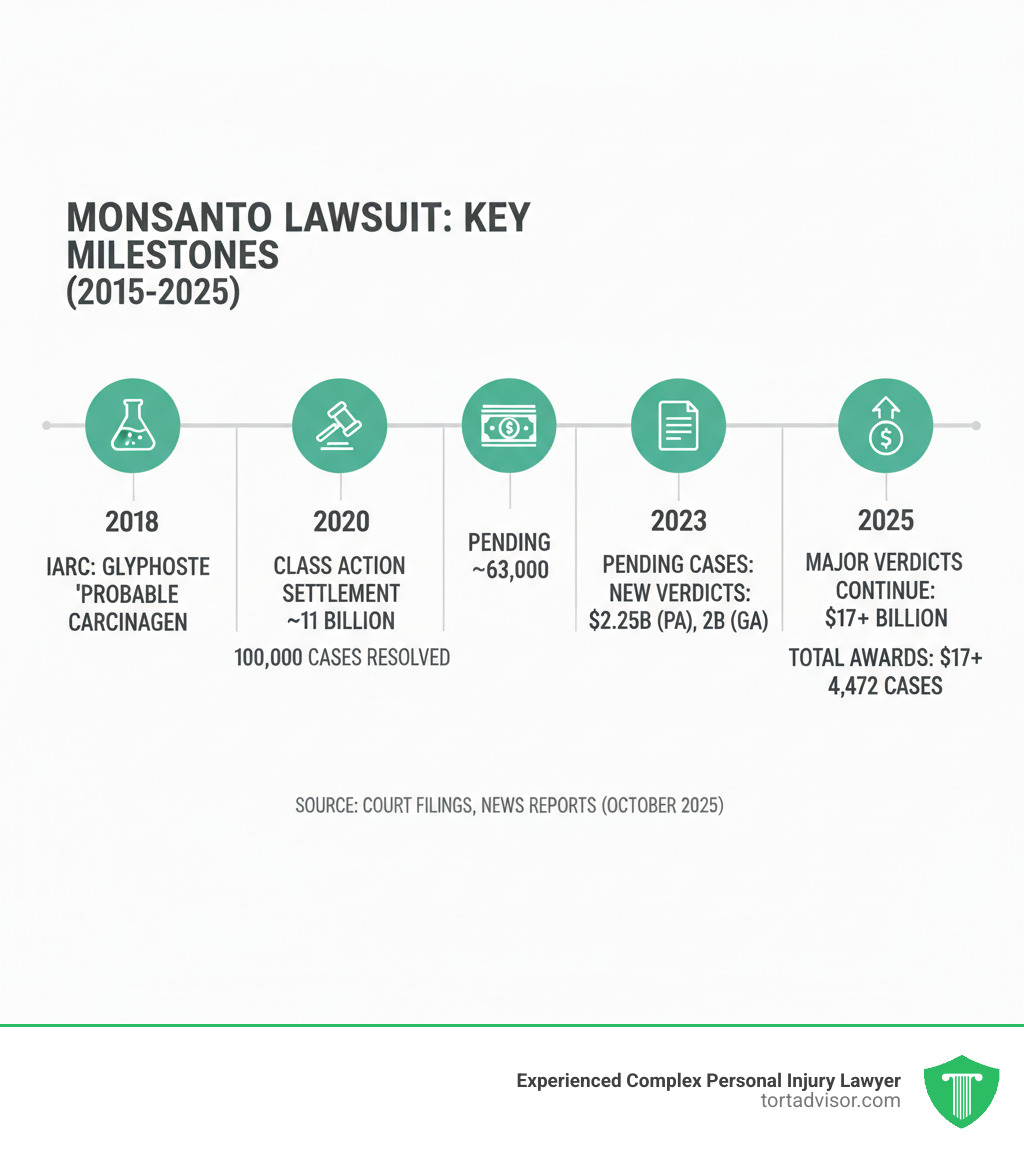
The following sections detail the current status of the litigation, recent verdicts, the science behind the claims, and what it means for potential claimants.
Current Status of Roundup Litigation
The Roundup litigation is one of the largest mass torts in U.S. history. Since 2018, juries have returned several billion-dollar verdicts to plaintiffs who developed cancer after using Monsanto’s weedkiller, many of them later reduced by judges, reflecting the scale of the alleged harm and the fight for accountability.
As of October 2025, about 170,000 claims have been filed against Bayer and Monsanto nationwide. These claims represent individuals across the country who believe Roundup caused their cancer.
Bayer has paid roughly $11 billion to settle about 100,000 cases, but the litigation is not over. Tens of thousands of claims remain pending in federal and state courts, and Monsanto’s proposed 2026 class settlement is meant to resolve current and future claims if it receives final approval.
The proposed 2026 class settlement would fund claims through declining capped annual payments of up to $7.25 billion over 17 to 21 years, which shows how long the company expects claims to continue.
Several verdicts since October 2023 have exceeded $100 million, although judges have reduced some of the largest ones after trial.
For anyone trying to understand the full scope of these numbers, our Monsanto Roundup Lawsuit Numbers Guide breaks down the statistics in detail.
The Scope of the Litigation
Most federal Roundup cases are consolidated in Multidistrict Litigation (MDL) No. 2741 in the Northern District of California. This mechanism streamlines pre-trial procedures by grouping similar cases, handling common questions efficiently for thousands of plaintiffs.
As of October 1, 2026, 1,104 cases were pending in the federal MDL. The rest of the pending cases are working their way through state courts across the country.
Back in 2020, Bayer’s $10.9 billion settlement fund resolved tens of thousands of claims, but it did not end the litigation. New cases continued to be filed by people who were newly diagnosed or had only recently connected their illness to the weedkiller.
The Monsanto lawsuit news landscape is constantly changing. With new trials, appeals, and lawsuits filed regularly, this is an ongoing legal battle with high stakes for Bayer and the thousands of people still awaiting justice.
Latest Monsanto Lawsuit News: A String of Billion-Dollar Verdicts
Recent Monsanto lawsuit news features headlines of billion-dollar verdicts and massive punitive damages, with Bayer appealing every major loss. The last two years have been difficult for the company, as juries delivered some of the largest awards in mass tort history.
Each verdict represents a person who used Roundup for years and later developed cancer. Juries have heard these stories and awarded not only compensatory damages for medical bills and suffering, but also massive punitive damages to punish the company for perceived corporate negligence.
While Bayer appeals and judges sometimes reduce awards, the pattern is clear: plaintiffs are winning big at trial. For a detailed breakdown of these verdicts, see our Roundup Lawsuit Verdict page.
Landmark 2024-2025 Verdicts Shake Bayer
The most recent Monsanto lawsuit news has centered on several jaw-dropping verdicts:
In January 2024, a Philadelphia jury awarded John McKivison a $2.25 billion verdict ($2 billion in punitive damages) after he developed cancer from years of Roundup use. A judge later reduced the award to $400 million, still one of the largest payouts in the litigation.
In March 2025, a Georgia jury awarded John Barnes over $2 billion. He had used Roundup at his home for two decades before developing non-Hodgkin’s lymphoma. His case highlights how homeowners trusted Monsanto’s safety claims and suffered health consequences.
In May 2025, a Missouri appeals court upheld a $611 million judgment, and in October 2025 the Missouri Supreme Court refused to review it. The original $1.56 billion award for three plaintiffs had been reduced, but the high court’s refusal to intervene left the judgment in place, making Missouri a challenging legal battleground.
In October 2023, Philadelphia man Ernest Caranci received a $175 million verdict ($150 million punitive) for his non-Hodgkin’s lymphoma linked to Roundup use. The Pennsylvania Superior Court later upheld a $177 million verdict and denied Monsanto’s request for a new trial.
Key Historical Monsanto Lawsuit News and Settlements
Today’s verdicts build on a foundation of earlier landmark cases.
The first major verdict came in August 2018 for Dewayne “Lee” Johnson, a school groundskeeper who developed an aggressive non-Hodgkin’s lymphoma. A California jury awarded him $289 million (later reduced to $78 million). This watershed case proved plaintiffs could win and opened the floodgates for thousands of subsequent lawsuits.
In May 2019, California couple Alva and Alberta Pilliod were awarded $2 billion after both developed non-Hodgkin’s lymphoma from using Roundup. The award was later reduced to $87 million, but the initial verdict showed jury anger over perceived corporate indifference.
By June 2020, Bayer agreed to a $10.9 billion global settlement to resolve approximately 100,000 pending lawsuits. However, not everyone accepted the terms, and new cases continued to be filed.
Edwin Hardeman’s March 2019 verdict of $80 million (reduced to $25 million) was another key early victory. He successfully argued that decades of Roundup use was a substantial factor in causing his non-Hodgkin’s lymphoma.
These early cases set legal precedents, revealed internal “Monsanto Papers,” and provided a roadmap for future plaintiffs. The consistent theme is that juries believe the science linking Roundup to cancer and are holding Bayer accountable with significant verdicts.
The Core of the Lawsuits: Cancer Links and Conflicting Science
Every Monsanto lawsuit news story asks: Does Roundup cause cancer? For thousands of plaintiffs, the answer is yes. Their cases are built on scientific evidence, expert testimony, and internal documents suggesting what Monsanto knew and when.
The legal claims rest on several pillars: failure to warn (that Monsanto knew of cancer risks but didn’t tell consumers), design defect (that the product was inherently dangerous), and corporate negligence (that the company prioritized profits over health).
Juries have found these arguments compelling, reflecting their belief that Monsanto failed in its responsibility to protect consumers.
What Cancers Are Linked to Roundup?
The litigation primarily focuses on Non-Hodgkin’s Lymphoma (NHL), a cancer of the lymphatic system. NHL is an umbrella term for several related cancers starting in white blood cells called lymphocytes.
The specific forms of NHL most frequently cited include B-cell lymphoma and T-cell lymphoma. Plaintiffs have also developed follicular lymphoma, chronic lymphocytic leukemia, and hairy cell leukemia. Other related conditions like lymphoblastic lymphoma, mantle cell lymphoma, and marginal zone lymphoma have also been linked to glyphosate exposure in court.
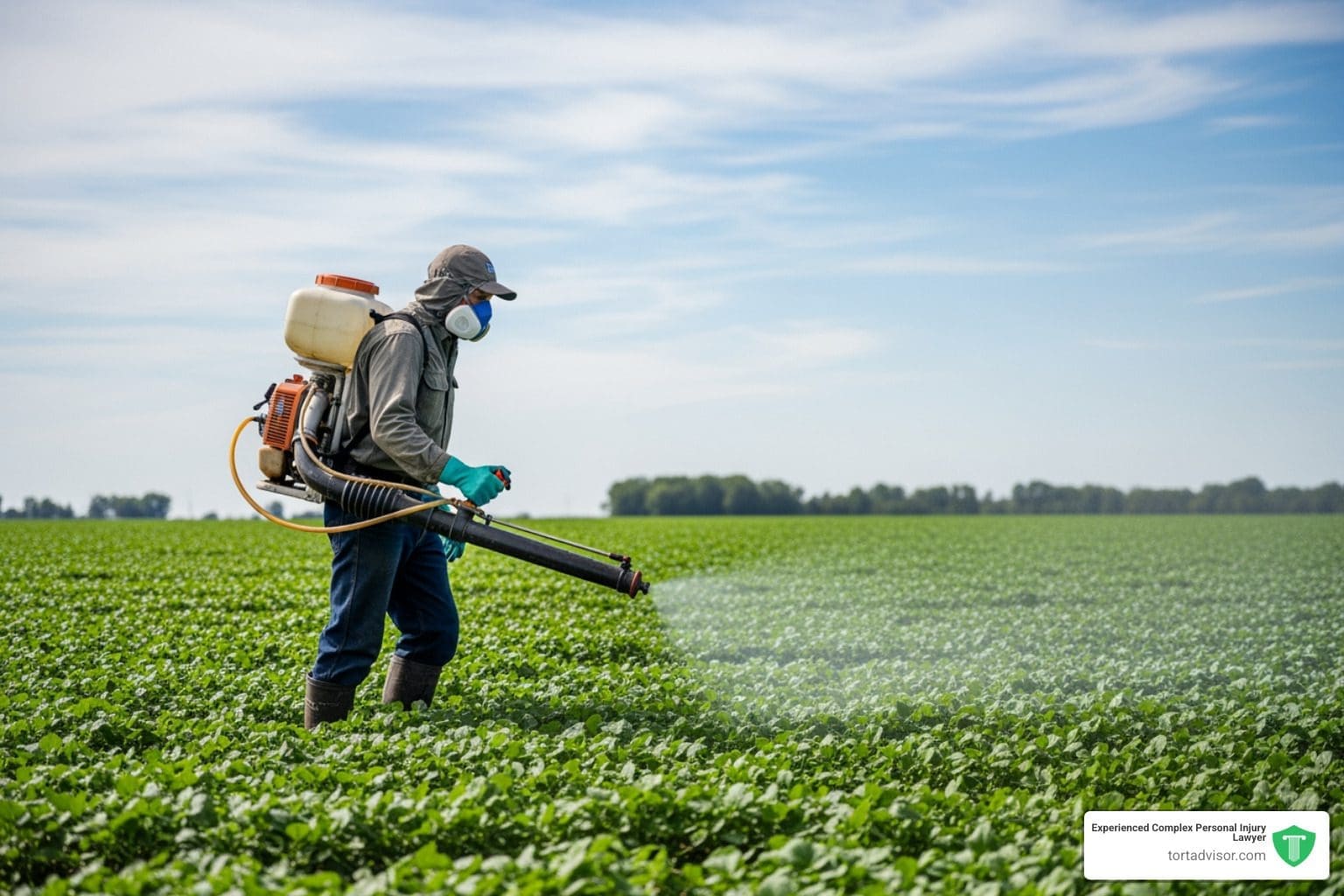
Many plaintiffs were farmers, landscapers, or homeowners who used the product regularly for years without any warning of potential danger. If you or a loved one received one of these diagnoses after significant Roundup use, understanding this link is critical for evaluating your legal options.
The Scientific Debate: IARC vs. EPA
The science is complicated, with two major scientific bodies reaching opposite conclusions about glyphosate.
In 2015, the International Agency for Research on Cancer (IARC), part of the World Health Organization, classified glyphosate as “probably carcinogenic to humans.” This conclusion by a panel of international experts opened the floodgates for lawsuits.
However, the U.S. Environmental Protection Agency (EPA) has repeatedly stated that glyphosate is “not likely to be carcinogenic to humans,” disagreeing with the IARC’s conclusion. Bayer uses the EPA’s assessment as its primary defense.
So who is right? Plaintiffs’ attorneys argue the EPA’s position may have been influenced by Monsanto, introducing the “Monsanto Papers” as evidence. These internal documents allegedly show company efforts to manipulate scientific research and influence regulators.
Juries have found these internal documents convincing, often siding with cancer victims when presented with evidence that a company may have hidden risks. While the academic debate continues, the courtroom pattern is clear: plaintiffs are winning.
Bayer’s Strategy and Future Implications
Since acquiring Monsanto in 2018, Bayer has faced one of the most expensive legal battles in corporate history. The financial toll from settlements and verdicts has been staggering. In response, Bayer has launched a multi-layered defense strategy, from courtroom appeals to lobbying.
The implications of this litigation affect how herbicides are formulated, labeled, and regulated. For farmers, landscapers, and consumers, these changes will shape what products are available for years to come.
If you’re trying to understand who’s ultimately responsible for these products and their legal troubles, our page on the Roundup Weed Killer Manufacturer provides helpful context.
Bayer’s Multi-Front Defense
Bayer is fighting the Monsanto lawsuit news crisis on multiple fronts to reduce liability and protect future sales.
In the courtroom, Bayer routinely appeals large jury verdicts, often succeeding in reducing them. For example, a $2.25 billion verdict was reduced to $400 million. This strategy can lower damages and pressure plaintiffs into smaller settlements to avoid lengthy appeals.
Bayer’s federal preemption argument is a key legal weapon. The company claims EPA label approval should override state “failure to warn” claims. This has seen mixed success; the 3rd Circuit Court of Appeals sided with Bayer, but other courts in states like Georgia and Missouri rejected it, allowing large verdicts to stand. On June 25, 2026, the U.S. Supreme Court resolved the split in Monsanto’s favor in Monsanto v. Durnell, holding that federal pesticide law preempts state failure-to-warn claims that conflict with EPA-approved labeling.
Beyond the courtroom, Bayer has been actively lobbying Congress for legislative shields in spending bills and the Farm Bill to make it harder for plaintiffs to sue.
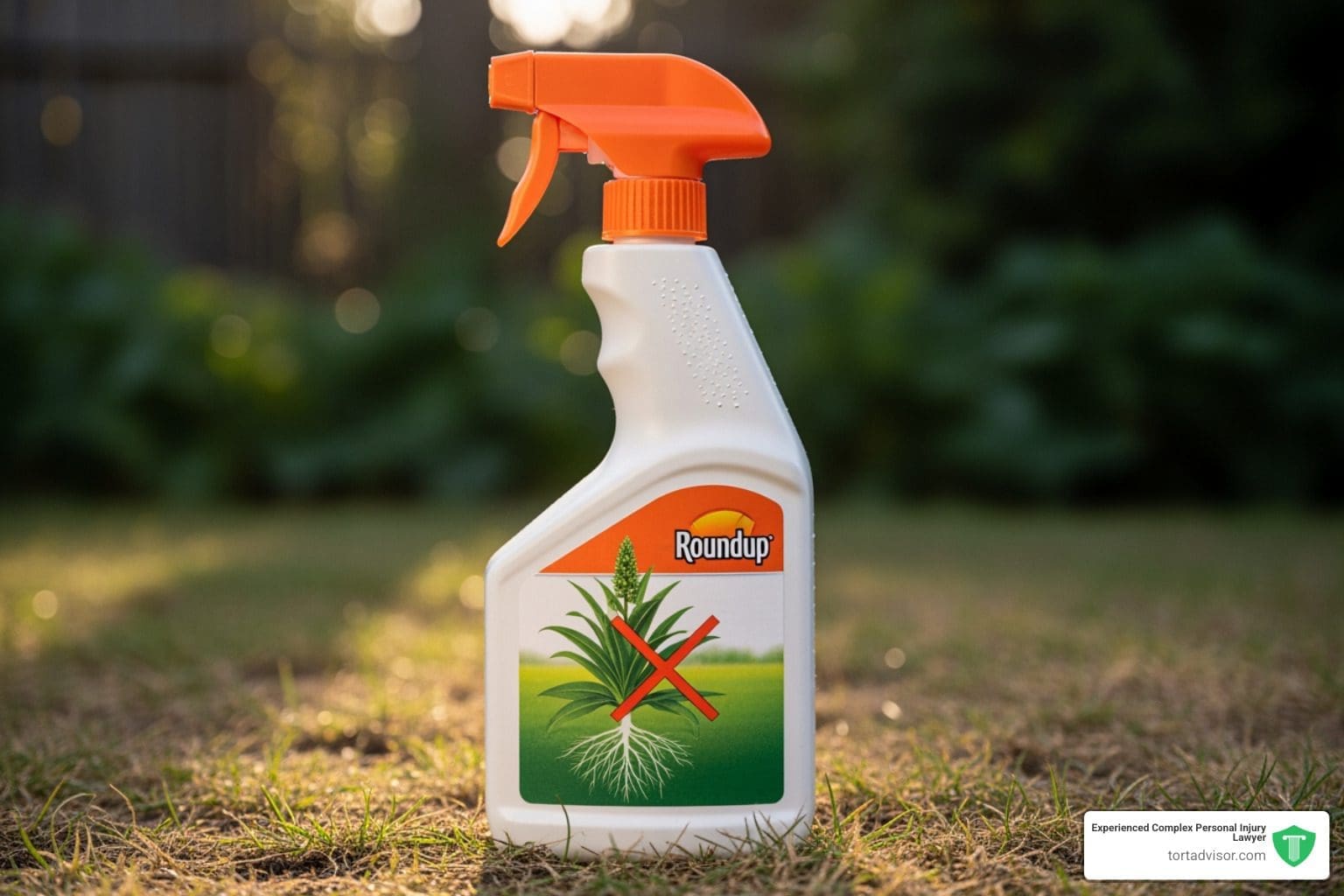
On the product side, Bayer phased out glyphosate-based Roundup for U.S. home use by 2023, replacing it with alternative formulations. This move reduces future liability from the residential market, which is the source of most lawsuits, without affecting commercial sales.
Looking ahead, Bayer is developing new herbicides to eventually replace glyphosate, acknowledging the reputational damage to Roundup. Its proposed 2026 class settlement, paid out over as long as 21 years, signals that it expects claims to continue for years.
Still unsure where you stand?
Have a trained case advisor review your own facts — free, confidential, and with no obligation.
- Free — no cost, no obligation
- About a minute to complete
- Reviewed by a trained case advisor
- Nothing you submit is published
Your details are sent over a secure connection and reviewed confidentially.
Frequently Asked Questions about Monsanto Lawsuit News
If you’ve been following Monsanto lawsuit news and wondering whether you might have a case, you’re not alone. Here are answers to common questions.
Who is eligible to file a Roundup lawsuit?
Eligibility depends on your specific situation, but successful Roundup claims share common factors.
First, you need significant exposure to Roundup, meaning regular use over months or years. This often applies to professional landscapers, farmers, groundskeepers, or dedicated home gardeners.
Second, you must have a diagnosis of a qualifying cancer, primarily non-Hodgkin’s Lymphoma or its subtypes like B-cell lymphoma, T-cell lymphoma, and chronic lymphocytic leukemia. The diagnosis should have occurred after your period of Roundup use.
Third, a provable causal link between your exposure and illness must be established by attorneys and medical experts.
Finally, you must file within your state’s statute of limitations, a strict legal deadline. If these factors apply to you, speak with an attorney to evaluate your individual circumstances.
What is the average payout for a Roundup lawsuit?
This is a common question, but there’s no simple answer. Roundup payouts vary dramatically between settlements and jury verdicts.
Bayer did not publish individual payouts from its 2020 settlement program of up to $10.9 billion. For the proposed 2026 class settlement, the court-authorized class notice publishes a range of $6,000 to $165,000 or more for class members diagnosed with non-Hodgkin lymphoma.
Jury verdicts can be much higher, sometimes reaching billions, but these are often reduced after trial or on appeal. For example, a $2.25 billion verdict was later reduced to about $400 million by the trial judge.
Potential compensation depends on the specifics of your case: duration and intensity of Roundup use, cancer type and severity, medical bills, lost income, and impact on your quality of life.
Our Roundup Settlement Calculator can offer a rough estimate, but only an attorney can provide a real assessment after reviewing your case.
Is it too late to file a claim?
While Bayer has settled many cases, it’s generally not too late to file a Roundup lawsuit. However, you don’t have unlimited time.
The biggest hurdle is your state’s statute of limitations, typically one to three years. In many states, the clock starts not from your diagnosis date, but from when you reasonably should have realized Roundup might have caused your illness (the “discovery rule”). This can extend your time to file.
The federal MDL is still active, with 1,104 cases pending as of October 1, 2026, and Monsanto’s proposed class settlement of up to $7.25 billion is designed to cover future claims as well.
That said, you must act quickly to avoid missing your deadline. Our guide on When Will I Get My Roundup Settlement Check explains the timeline after filing.
The bottom line is not to wait. Exploring your options with an attorney now is free and can preserve your right to compensation. A consultation will provide clarity on your standing.
Navigating Your Legal Options
Recent Monsanto lawsuit news tells a story of justice and accountability. Despite Bayer’s aggressive defense, juries have consistently sided with people who developed cancer after using Roundup. The billions awarded in verdicts and settlements represent real families who fought back and won.
Winning these cases requires experienced legal representation. You’re facing a global giant with vast resources, so going it alone or choosing an inexperienced attorney is not advisable.
That’s why Tort Advisor exists. We connect you with skilled personal injury attorneys who have won Roundup cases. They understand the science, documents, and strategies for success. We can connect you with a lawyer with a proven track record in your state, whether it’s California, Pennsylvania, Missouri, Georgia, or elsewhere.
Here’s what makes this easier: Our partner attorneys work on contingency. That means you pay nothing upfront. They only get paid if they win your case, so there’s no financial risk to you.
The litigation is still very much alive. If you or someone you love used Roundup regularly and later developed non-Hodgkin’s lymphoma or another qualifying cancer, time matters. Statutes of limitations can close the door on your legal options.
We understand this is overwhelming. But you don’t have to figure it out yourself. Explore the legal options available for Monsanto Roundup lawsuits and let us help you take that first step. A simple, free conversation with an experienced attorney can help you understand your rights and whether you have a case worth pursuing.
You deserve answers and accountability. Let us connect you with an attorney who will fight for the compensation you’re entitled to.
Additional Resources
Related Posts

Learn how to file a Roundup wrongful death claim after cancer loss. Eligibility, proof, compensation & settlements guide.
Find a Roundup cancer attorney to fight your Non-Hodgkin's lymphoma claim. Explore eligibility, verdicts & settlements today!
Diagnosed with cancer after Roundup? Learn about the monsanto roundup lawsuits, eligibility criteria, and how to pursue your claim.