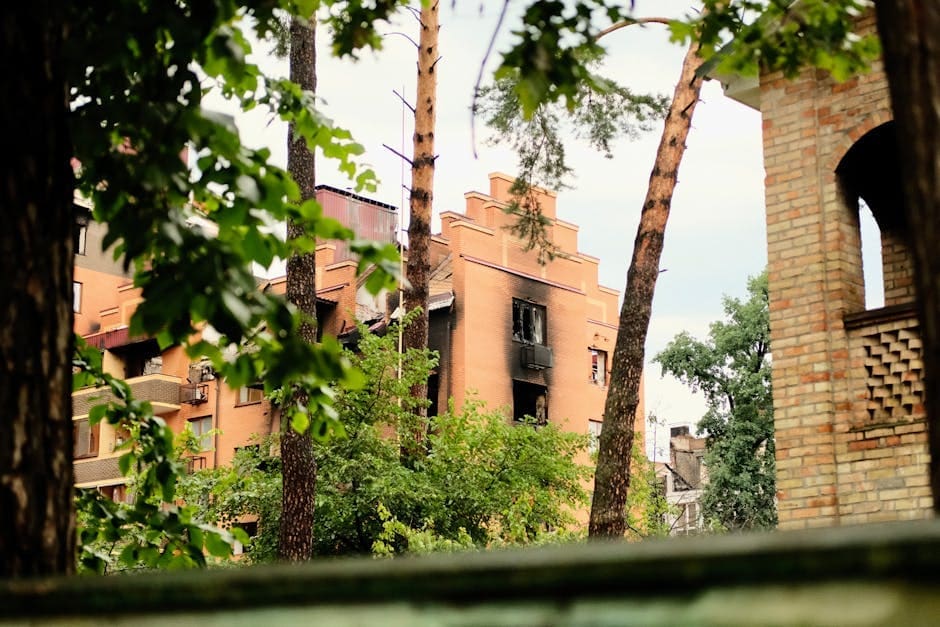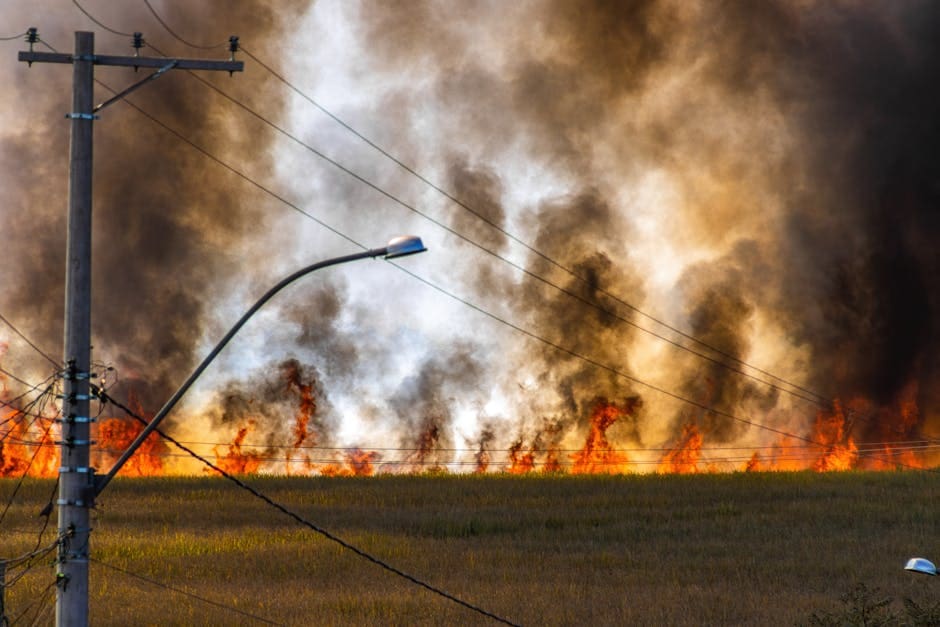
The Burning Question: What You Need to Know About Wildfire Lawsuits in California
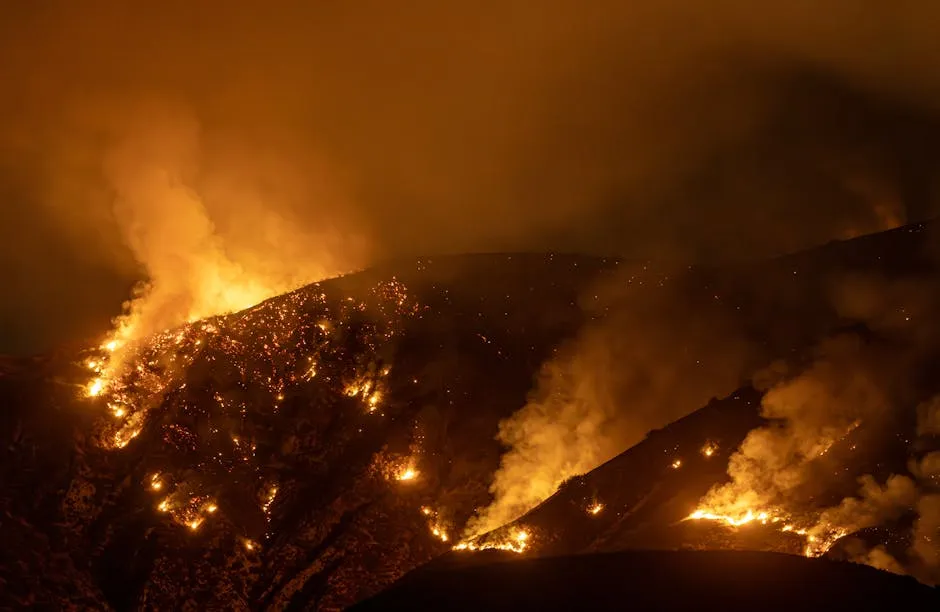
When Homes Turn to Ashes: Understanding Your Legal Rights After a California Wildfire
California wildfire lawsuits offer a path for victims to seek compensation from negligent parties—most often utility companies—for the devastating losses caused by fires. Homeowners, renters, and business owners who have suffered property damage, personal injuries, or the wrongful death of a loved one can file a claim. Common defendants include major utilities like Southern California Edison (SCE) and Pacific Gas & Electric (PG&E).
The January 2025 Los Angeles wildfires, including the Eaton and Palisades Fires, have already resulted in dozens of lawsuits. These fires caused 29 deaths, destroyed over 14,000 structures, and may represent the costliest wildfire disaster in U.S. history, with total losses estimated between $135-150 billion. Evidence suggests that faulty equipment from SCE may have sparked these catastrophic blazes, echoing the circumstances of previous utility-caused fires.
Find out if you may have a claim
Answer a few questions and a trained case advisor will review your situation — most people finish in about a minute.
- Free — no cost, no obligation
- About a minute to complete
- Reviewed by a trained case advisor
- Nothing you submit is published
Your details are sent over a secure connection and reviewed confidentially.
If you’ve been impacted by a wildfire, you are likely feeling overwhelmed. While many victims turn to their homeowners insurance first, they often find that their policies don’t cover the full extent of their losses. Insurance companies may undervalue claims, deny coverage for certain types of damage, or enforce policy limits that are insufficient for a complete recovery.
This is where a wildfire lawsuit becomes essential. It provides a way to pursue the compensation the evidence supports beyond what insurance offers, holding negligent corporations financially accountable. California law is particularly favorable to victims due to the legal doctrine of inverse condemnation. This allows you to hold a utility strictly liable for damages if their equipment caused the fire, even without proving they were negligent. Understanding your rights is the first step toward securing the compensation you need to rebuild.
The Spark of Litigation: Why Wildfire Lawsuits Are Ignited
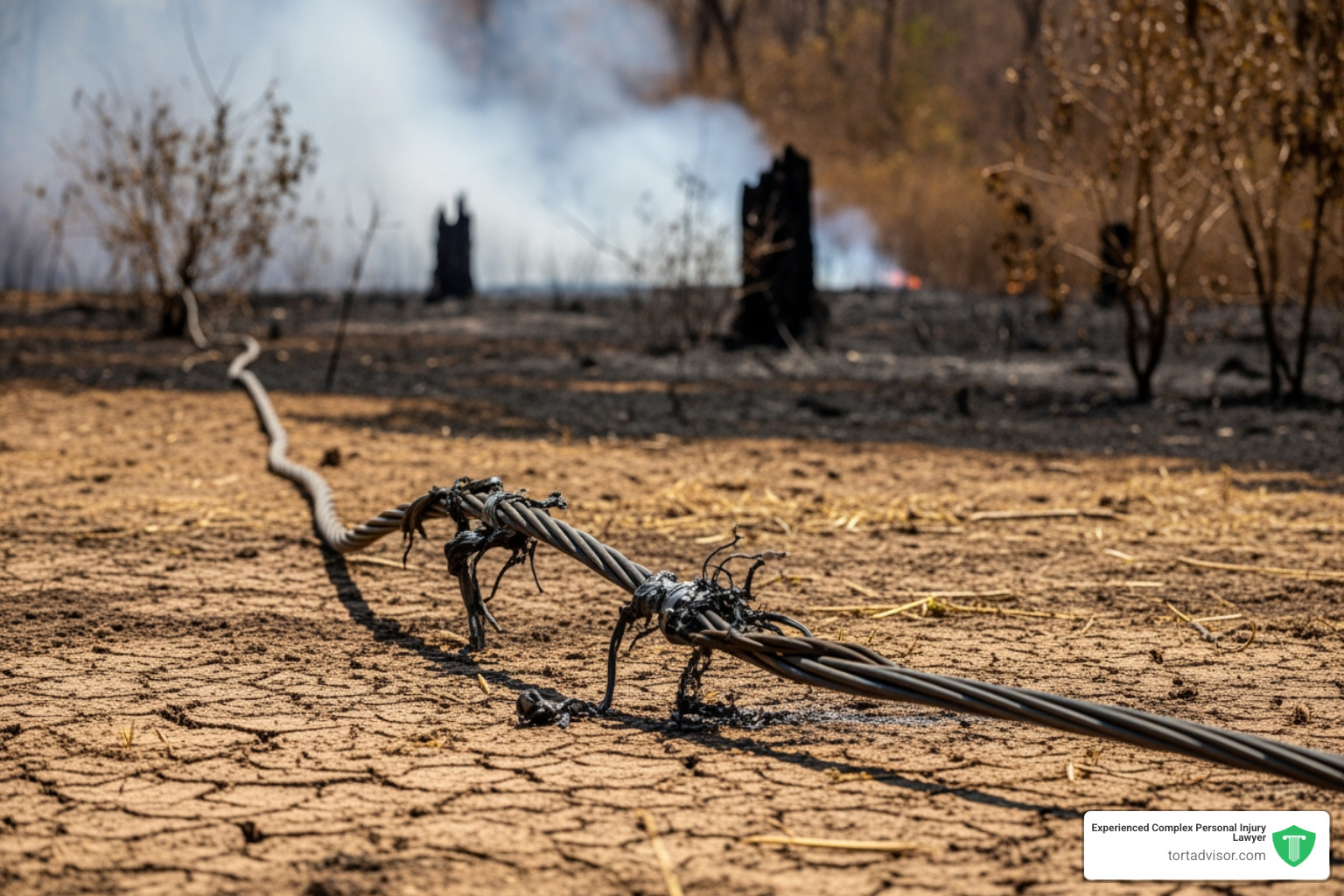
Catastrophic wildfires are rarely “natural disasters.” California wildfire lawsuits arise because these events are often the predictable result of corporate negligence and poorly maintained infrastructure.
Primary Causes
Most of California’s worst recent wildfires were sparked by man-made equipment. The primary causes cited in lawsuits include:
- Utility Negligence: Power companies are responsible for maintaining thousands of miles of electrical lines and towers. When they cut corners on inspections or delay repairs, the consequences can be deadly.
- Inadequate Vegetation Management: Trees and dry brush near power lines are a major fire hazard. Utility companies are often accused of failing to perform adequate tree trimming and clearance work. The 2021 Dixie Fire, for instance, was traced to a tree falling on PG&E power lines.
- Delayed Power Shutoffs: During extreme fire weather, utilities are expected to de-energize power lines via Public Safety Power Shutoffs (PSPS). Companies have been criticized for hesitating to cut power, allegedly prioritizing customer convenience over safety.
- Extreme Weather: While not a direct cause, prolonged droughts and high winds turn small sparks into uncontrollable infernos, making proper utility maintenance even more critical.
Key Defendants
The state’s major utility companies are the most common defendants in California wildfire lawsuits.
- Southern California Edison (SCE) is currently facing intense legal scrutiny for its role in the January 2025 fires. The U.S. government is seeking millions in damages, and Los Angeles County has filed suit alleging SCE’s equipment sparked the deadly Eaton Fire.
- Pacific Gas & Electric (PG&E) has a long history of wildfire liability, including sparking the 2018 Camp Fire that killed 85 people. The company faced a criminal conviction for involuntary manslaughter in that case.
- Other defendants can include government agencies like the Los Angeles Department of Water and Power (LADWP), which is facing lawsuits over claims its mismanagement of water resources hampered firefighting efforts during the Palisades Fire.
Recent Lawsuits and Government Action
The January 2025 Los Angeles wildfires have already triggered a wave of legal action. Over 20 lawsuits have been filed against SCE for the Eaton Fire alone, with attorneys for victims arguing the cases highlight a pattern of negligence. Evidence has also emerged regarding an inactive, 50-year-old tower that may have been the source of the fire, contradicting SCE’s initial statements.
The federal government is also taking action. The U.S. Department of Justice has sued Southern California Edison for approximately $77 million in damages from the Eaton and 2022 Fairview Fires. The DOJ alleges that SCE’s failure to maintain its infrastructure led to fires that burned tens of thousands of acres of National Forest land. The U.S. Attorney’s Office has indicated that these lawsuits are intended to recover taxpayer dollars and force a “cultural change” within the utility, sending a clear message that negligence will not be tolerated.
Navigating the Legal Aftermath: How California Wildfire Lawsuits Unfold
While the legal process can seem complex, California wildfire lawsuits follow a predictable path. Understanding these steps can help you feel more in control during a difficult time.
The Legal Process
A wildfire lawsuit generally proceeds through several key stages:
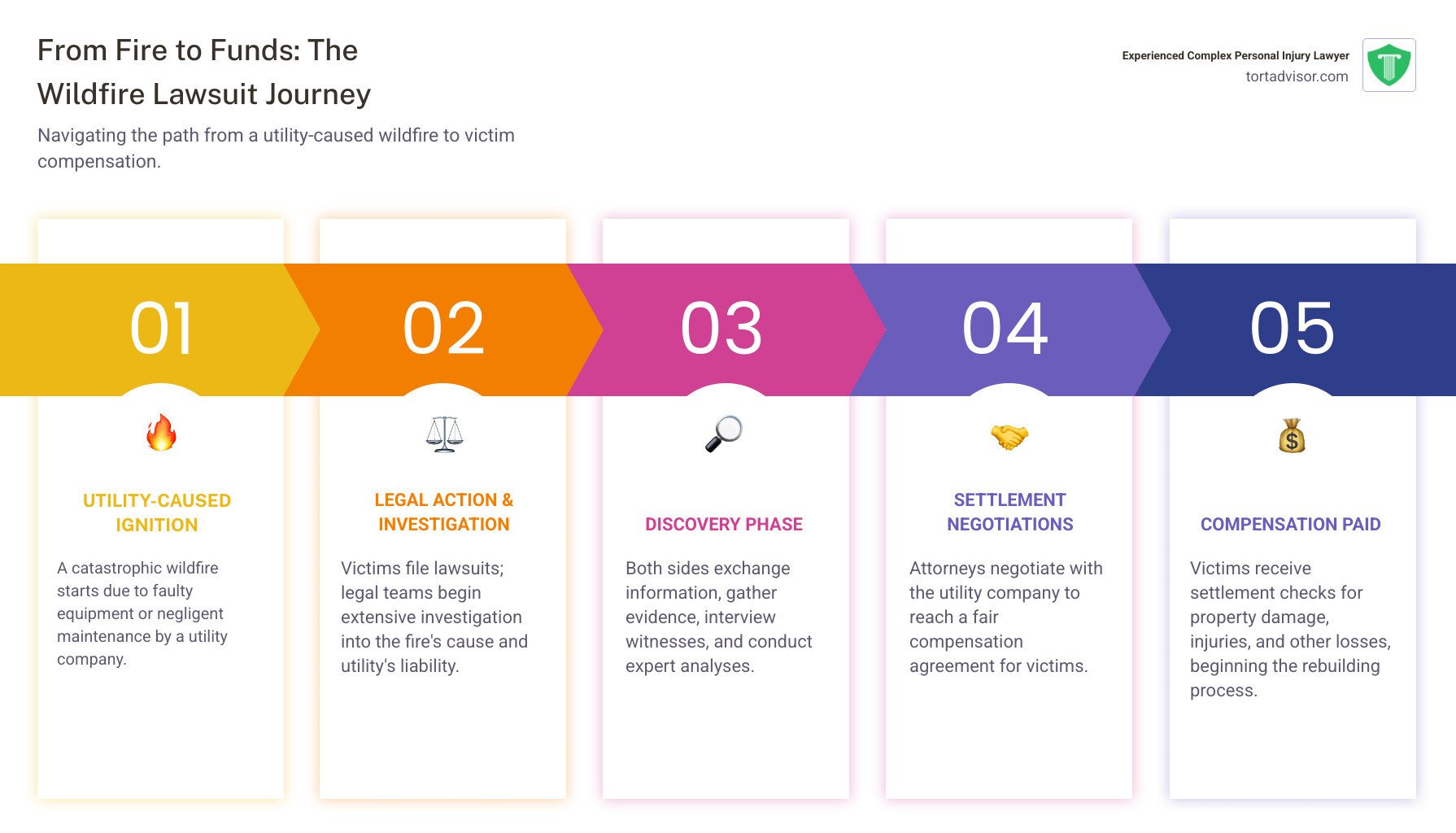
- Investigation: Your legal team, along with forensic experts, investigates the fire’s origin. They examine utility equipment, maintenance records, weather data, and eyewitness accounts to build your case.
- Filing a Claim: Once evidence points to a responsible party, your attorney files a claim. This may be an individual lawsuit, or you may join a class action or mass tort with other victims.
- Discovery: Both sides exchange documents and information, such as inspection reports and internal communications. Attorneys also take depositions (sworn testimony) from witnesses, utility employees, and experts.
- Settlement Negotiations: Most wildfire lawsuits are resolved through settlement. After the evidence is presented, utilities often prefer to negotiate a payout rather than face a jury.
- Bellwether Trials: For disasters with thousands of claims, courts may use “bellwether” or test trials. The outcomes of these initial trials help guide settlement negotiations for the remaining cases.
Key Legal Concepts
California law provides powerful tools for wildfire victims:
- Inverse Condemnation: This is a game-changer for victims. The doctrine of inverse condemnation means you only need to prove that a utility’s equipment caused the fire and that you suffered damages. You do not need to prove the utility was negligent. If their equipment caused the fire, they are strictly liable.
- Negligence: This claim argues the utility failed to act with reasonable care. Examples include not trimming trees near power lines or delaying power shutoffs during high winds. A negligence claim can lead to punitive damages, which are intended to punish reckless behavior.
Types of Lawsuits and the Role of Insurance
Victims can file several types of claims, often simultaneously. These include property damage, personal injury, and tragic wrongful death claims. For widespread disasters, class action lawsuits allow many victims to join forces against a single defendant.
Your insurance company also plays a role. After paying your claim, your insurer may pursue subrogation by suing the utility to recover its own costs. However, many victims are shocked to find underinsurance gaps, where their policy limits are too low to cover the actual cost of rebuilding. A lawsuit against the negligent utility is crucial for covering these gaps and other losses that insurance won’t pay for, such as emotional distress.

Seeking Justice: Compensation and Settlements in Wildfire Cases
California wildfire lawsuits are designed to address the full scope of a victim’s losses, from destroyed property to the invisible wounds that take years to heal.
Types of Damages Victims Can Claim
California law allows victims to pursue several categories of damages:
- Economic Damages: These cover all documented financial losses. This includes the cost to rebuild or repair your home, replace personal property, repair smoke and ash damage, and cover evacuation expenses like temporary housing. It also includes lost wages and medical bills for injuries like burns or respiratory problems.
- Non-Economic Damages: These compensate for intangible losses that don’t have a specific price tag but are just as real. This includes emotional distress, PTSD, anxiety, and the loss of enjoyment of life.
- Wrongful Death Damages: In the most tragic cases where a life is lost, families can seek compensation for funeral expenses, lost financial support, and the loss of companionship.
- Punitive Damages: These are not meant to compensate for a loss but to punish the defendant for particularly reckless behavior, such as ignoring known safety risks. They are intended to deter similar conduct in the future.
Understanding Settlement Amounts
While every case is unique, past settlements in California wildfire lawsuits provide a sense of the potential compensation.
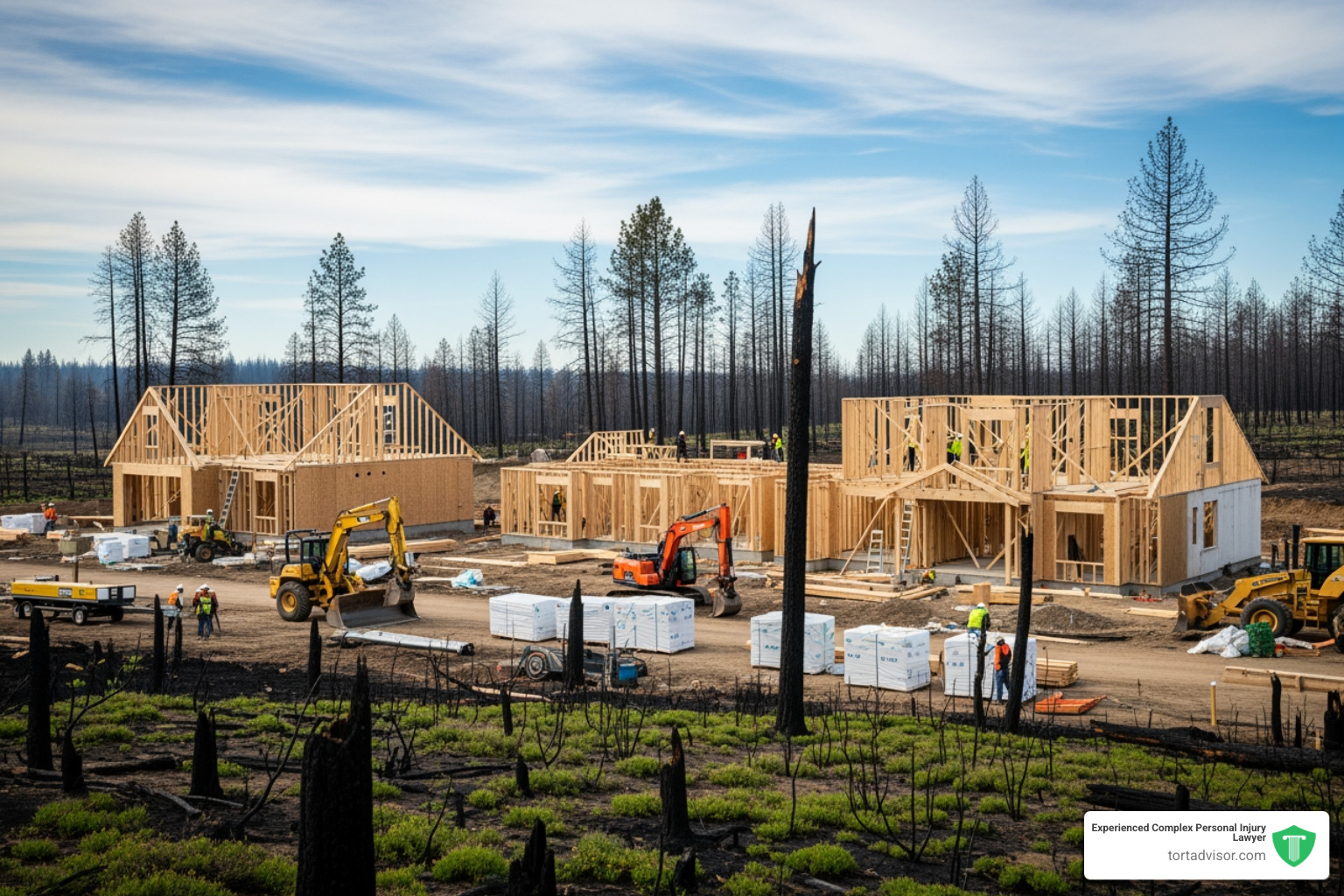
The PG&E Camp Fire settlement set a major precedent at $13.5 billion, which was distributed to tens of thousands of victims. Other significant cases include an $80 million settlement paid by SCE for the 2017 Thomas Fire. This trend extends beyond California, with multi-billion dollar settlements for fires in Hawaii and Colorado.
For the January 2025 LA wildfires, analysts project insured losses could exceed $20 billion, with total economic impact estimated as high as $150 billion. Individual settlement amounts will vary based on the extent of property loss, the severity of injuries, and the strength of documentation. In large-scale cases, a points-based system is often used to allocate settlement funds proportionally among thousands of claimants based on the severity of their losses.
A lawsuit can help cover the significant gaps left by insurance. While insurance payouts are offset to prevent double recovery, a legal claim can provide compensation for underinsured property, denied claims, and non-economic damages that insurance policies rarely cover.
What Is Actually Being Paid Right Now
Historic settlement totals are useful context but they are not a guide to what is happening today, and the most current California wildfire figures come from a company filing rather than a court order. Southern California Edison is running a direct compensation programme for the January 2025 Eaton Fire, and because Edison International is publicly traded it has to report the programme’s progress to investors.
As of 24 July 2026, the company reported that more than 4,000 claims had been submitted covering over 12,300 individuals, trusts and legal entities. It had extended more than 2,200 offers totalling over $775 million to nearly 5,500 claimants, and more than 2,400 claimants had been paid, totalling over $375 million. Read those four numbers together rather than separately: offers extended are roughly double the money actually paid, and claimants paid are about half the people who have received an offer, which is what a live, mid-stream claims programme looks like rather than a finished one.
The company has not put a total figure on the fire. In the same filing SCE said it is “currently unable to estimate potential losses,” while stating that it is not aware of evidence pointing to another ignition source and that it believes it is “likely that its equipment was associated with the ignition.” It also said it believes it can make a good-faith showing that its conduct in the preliminary area of origin was reasonable, which is the argument that decides how much of the cost it ultimately bears rather than whether victims are paid.
The reason a company can pay hundreds of millions while declining to estimate its total exposure is the statutory structure behind it. The first $1 billion is customer-funded self-insurance; above that the utility can seek reimbursement from the statewide Wildfire Fund, whose administrator has estimated claim-paying capacity for this fire at about $21 billion; above that, costs may be securitised under SB 254 subject to approval by the California Public Utilities Commission. That is why participating in a programme early and accepting an offer are two different decisions, and only the second one is irreversible.
Primary source, checked 17 October 2026: Edison International business update, Exhibit 99.1, filed 30 July 2026. The programme figures are as of 24 July 2026 and move every quarter.
The Bigger Picture: Precedents, Prevention, and Future Outlook
California wildfire lawsuits do more than secure compensation for victims; they drive systemic change, forcing utility companies to improve safety and pushing lawmakers to enact stronger protections.
How Past Cases Shape Current Lawsuits
Every major wildfire lawsuit sets a precedent for future cases.
- The PG&E Bankruptcy: Facing over $30 billion in liabilities, PG&E’s 2019 bankruptcy and subsequent $13.5 billion settlement for Camp Fire victims sent a clear message: negligence has severe financial consequences.
- Criminal Convictions: The Camp Fire litigation also led to PG&E pleading guilty to 84 counts of involuntary manslaughter. This criminal conviction acknowledged the profound human cost of utility negligence.
- Executive Accountability: More recently, legal actions have begun targeting not just the corporations but also the executives who made key decisions. The Fire Victim Trust, for example, filed lawsuits against former PG&E officers and directors.
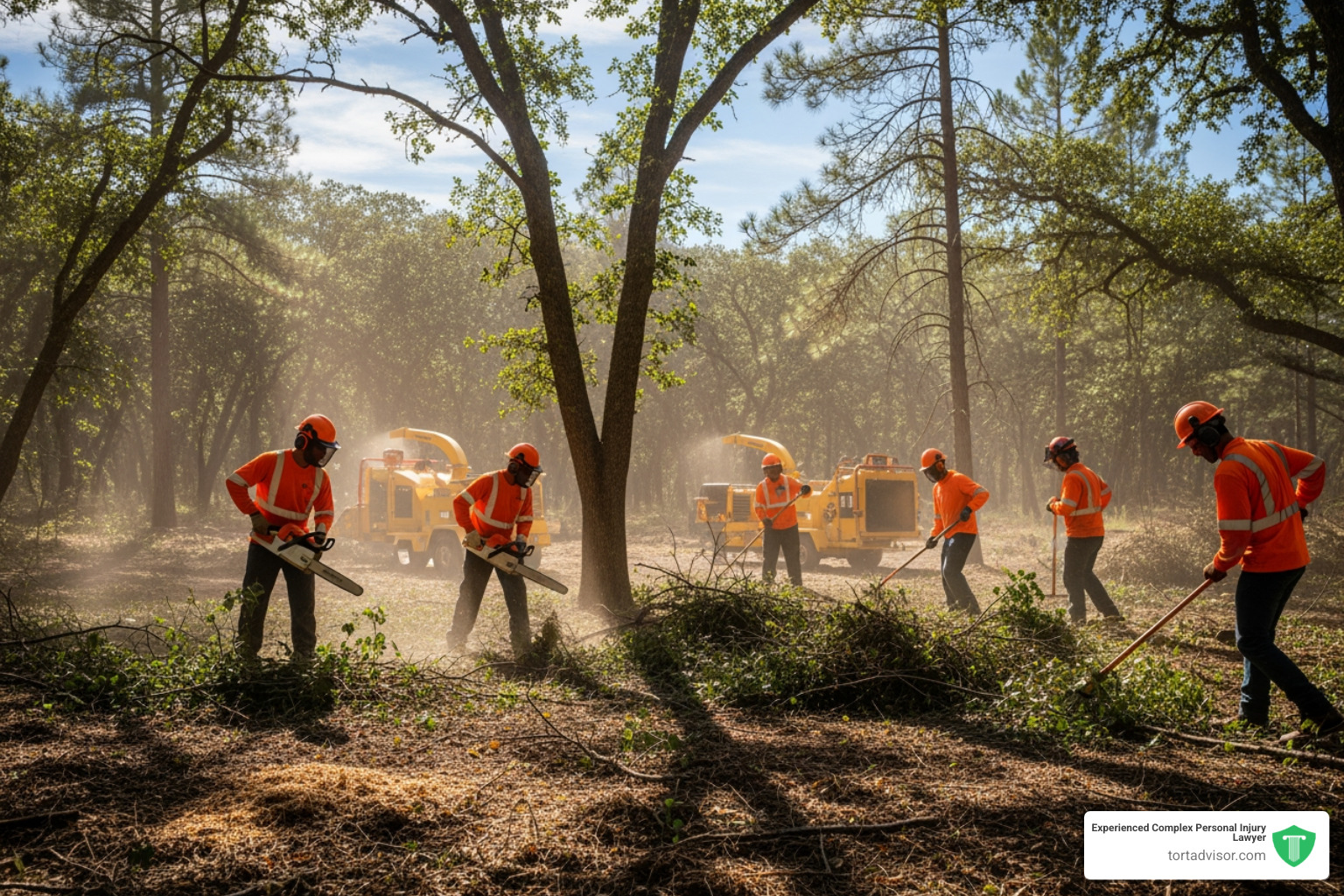
This legal pressure is intended to force a “culture change” within utilities, as noted by federal prosecutors. The goal is to make public safety a non-negotiable priority, leading to upgraded infrastructure, better vegetation management, and more proactive safety measures.
New Regulations and Prevention Efforts
In response to the ongoing crisis, lawmakers have introduced new regulations. At the federal level, the Federal Disaster Tax Relief Act (H.R. 5863) was approved to ensure that compensation received by wildfire victims is not treated as taxable income.
In California, new laws like Senate Bill 254 and Senate Bill 429 have been enacted to improve funding for mitigation projects and develop more accurate risk assessment models. Critically, utilities are now required to submit detailed utility mitigation plans to state regulators. These plans outline specific procedures for infrastructure inspection, vegetation management, and de-energizing power lines during dangerous weather. Failure to comply with these plans can result in significant liability.
This combination of aggressive litigation and new regulation creates a two-pronged approach. Lawsuits provide justice for past victims, while new rules aim to prevent future tragedies.
What to Do If You’ve Been Affected: A Step-by-Step Guide
If you have been affected by a California wildfire, the aftermath can feel chaotic. Taking these steps can protect your health and your legal rights, setting the foundation for a financial recovery and potential California wildfire lawsuits.
For the current litigation status, evidence requirements and settlement research behind this topic, see TortAdvisor’s toxic exposure lawsuits research.
- Prioritize Safety. Your first priority is your health and safety. Ensure your family is accounted for and seek medical attention for any injuries. Be cautious when returning to damaged property, as burn zones can contain toxic materials and unstable structures.
- Document Everything. Before any cleanup begins, use your phone to take extensive photos and videos of the damage to your home, vehicles, and personal belongings. This visual evidence is critical for both insurance claims and any future legal action.
- Contact Your Insurance Company. Notify your insurer immediately to start the claims process. Be aware that your policy may not cover all your losses due to policy limits or exclusions. Keep detailed records of every conversation, including dates, names, and what was discussed.
- Create a Detailed Inventory of Losses. Make a comprehensive list of all lost or damaged property, from large appliances to personal items. Gather any receipts, medical bills, and proof of lost income you can find. This documentation is the foundation of your claim for damages.
- Understand Your Legal Rights. You have legal rights that extend beyond your insurance policy. If a utility’s negligence caused the fire, you can sue for compensation to cover the gaps left by your insurance and for other damages like emotional distress.
- Consult a Wildfire Attorney. California has a statute of limitations—typically two years for property damage and personal injury—so it is crucial to act quickly. An experienced wildfire attorney can evaluate your case, identify all liable parties, and fight for the the compensation the evidence supports you deserve. Most work on a contingency basis, meaning you pay no fees unless they win your case.
Conclusion: Rebuilding from the Ashes with the Right Support
The devastation caused by California wildfires is profound, but amid the ashes, there is a path to recovery. California wildfire lawsuits are a critical tool for victims to obtain full financial compensation and hold negligent corporations accountable for their actions. These legal cases aim not only to secure justice for victims but also to drive a “culture change” within utility companies, forcing them to prioritize public safety.
California law, particularly the doctrine of inverse condemnation, gives victims a powerful advantage by holding utilities strictly liable for fires caused by their equipment. A lawsuit can provide the compensation needed to bridge the significant gaps often left by insurance policies, covering everything from property loss and medical bills to emotional distress.
If you have suffered losses from a California wildfire, you do not have to face this challenge alone. Understanding your legal options is the first step toward rebuilding your life.
At TortAdvisor, we connect clients with participating attorneys who handle complex California wildfire lawsuits. These attorneys typically work on a contingency basis, so you pay no attorney fee unless they recover compensation for you. They have successfully represented thousands of wildfire victims and secured billions in compensation. To learn more about your rights and the legal process, explore our comprehensive California wildfire lawsuit guide.
Additional Resources
Related Posts

Find a wildfire property damage attorney to claim compensation for wildfire losses, fight insurance denials, and maximize recovery fast.

Wildfire damage? A wildfire insurance claim lawyer helps you navigate claims, fight denials, and secure maximum compensation.
Understand your rights after a California wildfire. Learn how to file a wildfire lawsuit California, claim compensation, and hold utilities accountable.